1
COMMGR Reference Manual
Introduction
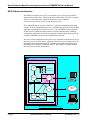
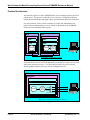
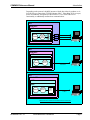
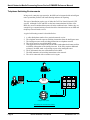
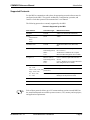
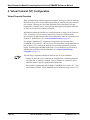
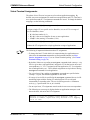
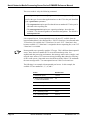
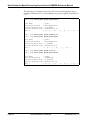
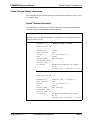
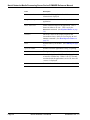
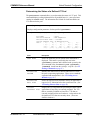
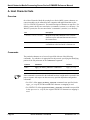
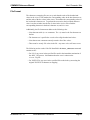
The system processes relevant to host communications are described below.
MPS System Software
VSH
V-shell is the command interface for MPS configuration and operations. Configuration and status
commands can be issued via the VSH tool or from the system’s configuration files. VSH receives
status information from the various system processes and displays messages on the console as
appropriate.
ASE
The Application Service Environment software is dedicated to providing the data and services
requested by applications. The ASE exists on a separate workstation, referred to as the applications
processor. The workstation can be either an open-systems Solaris or Windows NT implementation.
applications Interactive Voice Response or multimedia script created with PeriProducer. An
application runs on a system phone line. Multiple instances of the same application
can be assigned to different lines. Each application is associated with it’s own VT.
VOS
VENGINE
Software process that executes an application. A single VENGINE process is required
for each application telephone line.
VMS
The VENGINE Message Server provides a message funnel between the ASE and VOS
processes. On a node that contains multiple MPS systems, VMS provides connectivity
between the application processor and each MPS. One VMS is required for each
MPS.
MXVMT
The Media Transaction VENGINE Message Translator relays messages between the
ASE and VOS processes. One MXVMT process is required for each MPS.
The Voice Operating Software is the set of processes that provide the low-level system functions in
the MPS. These functions include telephony and host I/O, and are common to most types of
applications.
COMMGR
The Communications Manager provides a generic application interface for host
communications services. A single COMMGR is required for each MPS in the
network.
protocol
daemon
Software process that implements the particular communications protocol. The
protocol layer links the COMMGR with the host computer. With some protocols (e.g.,
CCA, ATTE, etc.), the protocol daemon invokes driver programs to manage individual
VT sessions.
CCM
The Call Control Manager configures and controls low-level telephony interaction.
#P0988083 Ver. 1.0
Nortel Networks Confidential
Page 5