1
1.5
1.5.2
CLOUD INFRASTRUCTURE MANAGEMENT
21
Case Studies
In this section, we describe the main features of the most popular VI managers
available. Only the most prominent and distinguishing features of each tool are
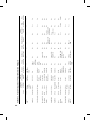
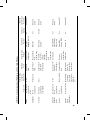
discussed in detail. A detailed side-by-side feature comparison of VI managers
is presented in Table 1.1.
Apache VCL. The Virtual Computing Lab [60, 61] project has been incepted
in 2004 by researchers at the North Carolina State University as a way to
provide customized environments to computer lab users. The software components that support NCSU’s initiative have been released as open-source and
incorporated by the Apache Foundation.
Since its inception, the main objective of VCL has been providing desktop
(virtual lab) and HPC computing environments anytime, in a flexible costeffective way and with minimal intervention of IT staff. In this sense, VCL was
one of the first projects to create a tool with features such as: self-service Web
portal, to reduce administrative burden; advance reservation of capacity, to
provide resources during classes; and deployment of customized machine
images on multiple computers, to provide clusters on demand.
In summary, Apache VCL provides the following features: (i) multi-platform
controller, based on Apache/PHP; (ii) Web portal and XML-RPC interfaces;
(iii) support for VMware hypervisors (ESX, ESXi, and Server); (iv) virtual
networks; (v) virtual clusters; and (vi) advance reservation of capacity.
AppLogic. AppLogic [62] is a commercial VI manager, the flagship product of
3tera Inc. from California, USA. The company has labeled this product as a
Grid Operating System.
AppLogic provides a fabric to manage clusters of virtualized servers,
focusing on managing multi-tier Web applications. It views an entire application as a collection of components that must be managed as a single entity.
Several components such as firewalls, load balancers, Web servers, application
servers, and database servers can be set up and linked together. Whenever the
application is started, the system manufactures and assembles the virtual
infrastructure required to run it. Once the application is stopped, AppLogic
tears down the infrastructure built for it [63].
AppLogic offers dynamic appliances to add functionality such as Disaster
Recovery and Power optimization to applications [62]. The key differential of
this approach is that additional functionalities are implemented as another
pluggable appliance instead of being added as a core functionality of the VI
manager.
In summary, 3tera AppLogic provides the following features: Linux-based
controller; CLI and GUI interfaces; Xen backend; Global Volume Store (GVS)
storage virtualization; virtual networks; virtual clusters; dynamic resource
allocation; high availability; and data protection.