1
Thermal Specifications
6.2.4
PROCHOT# Signal Pin
An external signal, PROCHOT# (processor hot), is asserted when the processor die
temperature has reached its factory configured trip point. If the Thermal Monitor is
enabled (note that the Thermal Monitor must be enabled for the processor to be
operating within specification), the TCC will be active when PROCHOT# is asserted. The
processor can be configured to generate an interrupt upon the assertion or deassertion of PROCHOT#. Refer to the IA-32 Intel® Architecture Software Developer’s
Manual and the Cedar Mill Processor Family BIOS Writer’s Guide for specific register
and programming details.
PROCHOT# is designed to assert at or a few degrees higher than maximum TCASE (as
specified by the thermal profile) when dissipating TDP power, and cannot be interpreted
as an indication of processor case temperature. This temperature delta accounts for
processor package, lifetime, and manufacturing variations and attempts to ensure the
Thermal Control Circuit is not activated below maximum TCASE when dissipating TDP
power. There is no defined or fixed correlation between the PROCHOT# trip
temperature, the case temperature, or the thermal diode temperature. Thermal
solutions must be designed to the processor specifications and cannot be adjusted
based on experimental measurements of TCASE, PROCHOT#, or Tdiode on random
processor samples.
6.2.5
FORCEPR# Signal Pin
The FORCEPR# (force power reduction) input can be used by the platform to force the
Dual-Core Intel Xeon processor 7100 series to activate the TCC. If the Thermal Monitor
is enabled, the TCC will be activated upon the assertion of the FORCEPR# signal. The
TCC will remain active until the system deasserts FORCEPR#. FORCEPR# is an
asynchronous input. FORCEPR# can be used to thermally protect other system
components. To use the voltage regulator (VR) as an example, when the FORCEPR# pin
is asserted, the TCC in the processor will activate, reducing the current consumption of
the processor and the corresponding temperature of the VR.
It should be noted that assertion of FORCEPR# does not automatically assert
PROCHOT#. As mentioned previously, the PROCHOT# signal is asserted when a high
temperature situation is detected. A minimum pulse width of 500 microseconds is
recommended when FORCEPR# is asserted by the system. Sustained activation of the
FORCEPR# pin may cause noticeable platform performance degradation.
Refer to the appropriate platform design guide for details on implementing the
FORCEPR# signal feature.
6.2.6
THERMTRIP# Signal Pin
Regardless of whether or not Thermal Monitor or Thermal Monitor 2 is enabled, in the
event of a catastrophic cooling failure, the processor will automatically shut down when
the silicon has reached an elevated temperature (refer to the THERMTRIP# definition in
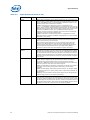
Table 5-1). At this point, the system bus signal THERMTRIP# will go active and stay
active as described in Table 5-1. THERMTRIP# activation is independent of processor
activity and does not generate any bus cycles. Intel also recommends removal of VTT.
6.2.7
TCONTROL and Fan Speed Reduction
TCONTROL is a temperature specification based on a temperature reading from the
thermal diode. The value for TCONTROL_OFFSET will be calibrated in manufacturing and
configured for each processor. The TCONTROL temperature for a given processor can be
80
Dual-Core Intel® Xeon® Processor 7100 Series Datasheet