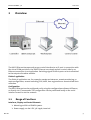
1
Functions and their Configuration
INSYS ETHERNET 5.X
ethernet
transmission
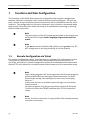
Modul#1
Collect data from
RS232: block A
Collect data from
RS232: block B
Collect data from
RS232: block C
Output data via
RS232: block A
Modul#2
ethernet
transmission
ethernet
transmission
Output data via
RS232: block B
Output data via
RS232: block C
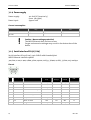
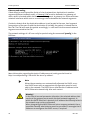
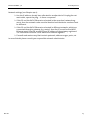
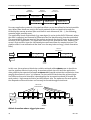
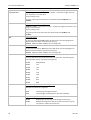
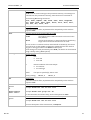
For some application protocols, this pipeline effect can not be utilized in the best possible
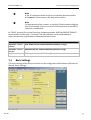
way. When data blocks are sent in the serial protocol of the end application and confirmed by the remote terminal (the next block is sent afterwards, etc. ...), the following
scenario might possibly occur:
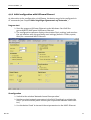
The application sends a data block (e.g. 1400 bytes) in series to the INSYS Ethernet, where
the data is collected and forward by Ethernet after the block forming time has extended.
The second INSYS Ethernet receives the packet and sends the data in series to the remote
terminal of the application. The application itself will not forward the data, however, because it first needs to have the last 1400 bytes confirmed from its remote terminal. The
pipeline effect is not utilized and the data is on the way twice as long (+ block formation
time).
ethernet
transmission
TX
Transmit data block
A
Collect data block A
Collect data block B
Transmit data block
B
RX
ACK v.
remote
station
ACK v.
remote
station
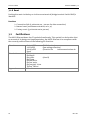
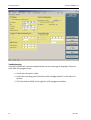
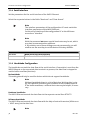
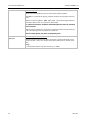
In this case, the maximum block size could be reduced with AT#MSS=<n> to be able to
use the pipeline effect at least partly. A maximum block size of 1/4 of the application
data packet to be expected (example: AT#MSS=350) would reduce the transmission time
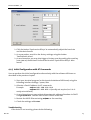
roughly from factor 2.0 to 1.25. However, for too small IP block sizes the achieved pipeline effect on the serial interface is destroyed by the increased overhead (IP header for
each packet = high amount of data) on the Ethernet side. The optimum for each application depends on several factors and can only be found through actual tests.
ethernet
transmission
TX
A1
A2
A3
A4
A3
B1
A4
B2
B3
B4
B4
RX
ACK A
ACK B
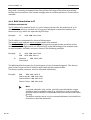
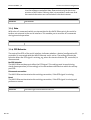
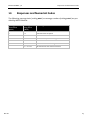
IP block formation when a trigger byte occurs
46
Nov-06