Download proxim wireless 5054 (MP.11a) Specifications
Transcript
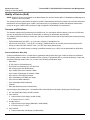
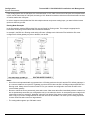
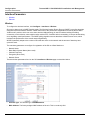
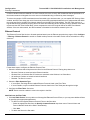
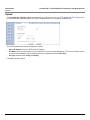
Configuration System Parameters Tsunami MP.11 5012/5054-SUI Installation and Management A bridge works at the data-link (physical) layer of a network, copying a data packet from one network to the next network along the communications path. The default Bridging Mode is Transparent Bridging. This mode works if you do not use source routing in your network. If your network is configured to use source routing, then you should use either Multi-Ring SRTB or Single-Ring SRTB mode. In Multi-Ring SRTB mode, each unit must be configured with the Bridge number, Radio Ring number, and Token Ring number. The Radio Ring number is unique for each Token Ring Access Point and the Bridge number is unique for each Token Ring Access Point on the same Token Ring segment. Alternatively, you may use the Single-Ring SRTB mode. In this mode, only the Token Ring number is required for configuration. Routing Mode Routing mode can be used by customers seeking to segment their outdoor wireless network using routers instead of keeping a transparent or bridged network. By default the unit is configured as a bridge device, which means traffic between different outdoor locations can be seen from any point on the network. By switching to routing mode, your network now is segmented by a layer 3 (IP) device. By using Routing mode, each network behind the BSU and SUs can be considered a separate network with access to each controlled through routing tables. The use of a router on your network also blocks the retransmission of broadcast and multicast packets on your networks, which can help to improve the performance on your outdoor network in larger installations. The use of Routing mode requires more attention to the configuration of the unit and thorough planning of the network topology of your outdoor network. BSU and SUs can use routing mode in any combination. For example, you may have the BSU in Routing mode and the SU in Bridge mode, or vice versa. When using Routing mode, pay close attention to the configuration of the default gateway both on your unit and on your PCs and servers. The default gateway controls where packets with unknown destinations (Internet) should be sent. Be sure that each device is configured with the correct default gateway for the next hop router. Usually this is the next router on the way to your connection to the Internet. You can configure routes to other networks on your Intranet through the addition of static routes in your router’s routing table. Key Reasons to Use Routing Mode One key reason why customers would use Routing mode is to implement virtual private networks (VPNs) or to let nodes behind two different SUs communicate with each other. Many customers do this same thing in Bridging mode by using secondary interfaces on the router at the BSU or virtual interfaces at the BSU in VLAN mode to avoid some of the drawbacks of IP Routing mode. Routing mode prevents the transport of non-IP protocols, which may be desirable for Service Providers. Routing mode is usually more efficient because Ethernet headers are not transported and non-IP traffic is blocked. Benefits of using Routing Mode • Enabling RIP makes the 5012/5054-SUI easier to manage for a Service Provider that uses RIP to dynamically manage routes. RIP is no longer very common for Service Providers or Enterprise customers and an implementation of a more popular routing protocol like OSPF would be desirable. • Routing mode saves bandwidth by not transporting non-IP protocols users might have enabled, like NetBEUI or IPX/ SPX, which eliminates the transmission of broadcasts and multicasts. – The MAC header is: • Destination MAC 6 bytes • Source MAC 6 bytes • Ethernet Type 2 bytes 60