1
2
Connections
Connecting audio
The Metavox will work in many different applications, whether
you are connecting an instrument directly into it, or connecting it
through a mixing console.
Signal processor vs. synthesizer
Unlike other signal processors, a vocoder is half processor, half
synthesizer. A signal processor takes an input signal and makes it
sound different. But a vocoder uses an input signal (usually from
a microphone) to control the amplitude and tone of an internal
oscillator (or an external input); none of the controlling signal is
mixed in with the output signal. Because of this, a vocoder is
usually connected in a different way from most other signal
processors. For example, it’s not likely that you’ll connect the
Metavox in the effect send/return path of a mixing console.
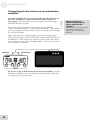
When connecting audio
cables and/or turning power
on and off, make sure that all
devices in your system are
turned off and the volume
controls are turned down.
Mic preamplification options
To get the classic “talking guitar” or “talking robot” sounds
associated with vocoding, you’ll probably want to use a vocal
microphone as the controlling input of the Metavox. Since
microphones are low-output devices, they must be amplified to
line level before the Metavox can “read” them. You have several
options for this:
•
•
•
•
18
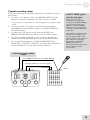
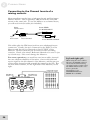
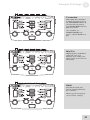
Direct Out of mixer channel: Connect a microphone to a
mixer channel. Adjust the channel’s input gain (trim) in the
normal way to get a strong output. Connect the DIRECT
OUT of the mixer channel to the [LEFT INPUT] of the
Metavox. If possible, turn off any assignment switches in the
mixer channel to the groups or stereo mixes.
Outboard mic preamp: Especially for live use, it may be a
good idea to get a small mic preamp and dedicate a special
microphone just for vocoding use to it. Connect the output
of the preamp to the [LEFT INPUT] of the Metavox.
Aux send of mixer: If your mixer has an extra pre-fader aux
send or monitor send, connect the output of that mix to the
left input of the Metavox. This has the advantage of letting
several different sources be the controller.
Insert point: If you don’t have a DIRECT OUT on your
mixer, sometimes the INSERT point can act as a pre-fader
direct out by plugging a 1/4” cable in to the “first click”
(about 1/4” before the plug is all the way in) without
interrupting the signal flow to the mixer. Or, if you use a
regular insert cable connected to the input and output of the
Metavox, the microphone level will be set by the TRIM of the
channel, and the channel will “hear” the output of the
Metavox.
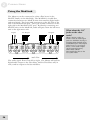
If you’re using a high-output
dynamic microphone, a goodquality passive line
transformer might provide
enough gain to control the
Metavox, with the [TRIM]
control up full.