1
Functions and Parameter Descriptions
FLANGER
Function
Flanging splits the input signal into two individual delayed signals (Voice 1
and Voice 2), then modulating the delayed signals so that, when summed back
with the direct signal, phase cancellations will occur at some frequencies while
peaks in the response will occur at others.
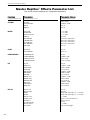
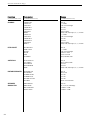
The PARAMETER SELECT control will allow you to access these FLANGER parameters:
FLANGER I/O
The FLANGER I/O parameter determines whether the flange circuit is
active or bypassed for the current preset.
FLN OUT 1
The FLANGER OUTPUT 1 parameter determines the overall volume
of Voice 1.
FLN PAN1
The FLANGER PAN 1 parameter allows you to pan Voice 1 to the left
or right channel.
FLN DPTH 1
The FLANGER DEPTH 1 parameter adjusts the amount of modulation
of Voice 1. Lower DEPTH settings produce more subtle effects, while
higher settings will result in a more drastic effect.
FLN RATE 1
The FLANGER RATE 1 parameter determines the speed at which
Voice 1 is modulated.
TIME1
The TIME1 parameter determines the multiplier by which a new
modulation rate will be selected for the RATE 1 parameter when the
Tap Delay feature of the Replifex™ is used. (See Section 7: "Tap Delay"
for more information on the Tap Delay feature.)
FLN OUT 2
The FLANGER OUTPUT 2 parameter determines the overall volume
of Voice 2.
FLN PAN2
The FLANGER PAN 2 parameter allows you to pan Voice 2 to the left
or right channel.
FLN DPTH 2
The FLANGER DEPTH 2 parameter adjusts the amount of modulation
of Voice 2. Lower DEPTH settings produce more subtle effects, while
higher settings will result in a more drastic effect.
FLN RATE 2
The FLANGER RATE 2 parameter determines the speed at which
Voice 2 is modulated.
TIME2
The TIME2 parameter determines the multiplier by which a new
modulation rate will be selected for the RATE 2 parameter when the
Tap Delay feature of the Replifex™ is used. (See Section 7: "Tap Delay"
for more information on the Tap Delay feature.)
FLN REGEN
The FLANGER REGENERATION parameter determines how much of
the the delayed output signal is fed back into the input. More regeneration produces a more pronounced "jet airplane" type of effect.
25