1
THETHREE
OPERATING
MODES OF THE
COMMODORE 128D
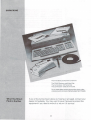
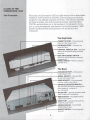
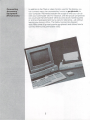
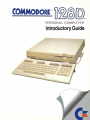
The Commodore 128D is actually three computers in one, offering
three primary operating modes:
• C128 Mode
• C64 Mode
• CP/M Mode
Here's a summary of what each mode gives you.
C128DMode
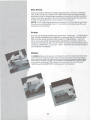
In C128™ Mode, the Commodore 128 Personal Computer provides
128K of RAM (Random Access Memory). This supplies all the mem
ory needed to run even sophisticated applications like word process
ing, spreadsheets, database programs, or integrated software pro
grams like JANE. And you can easily expand the RAM to 256K or
640K with optional RAM expansion modules.
C128 Mode also incorporates a powerful extended Commodore
BASIC language, known as BASIC 7.0. Offering over 140 commands,
statements and functions, BASIC 7.0 provides better, quicker and
easier ways to perform what otherwise would be complex and timeconsuming programming tasks, such as graphics, animation, sound
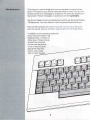
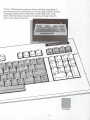
and music. C128 mode also offers both 40- and 80-column output,
and a 92-key keyboard. The keyboard features a numeric keypad as
well as Escape, Tab, ALPHA Lock, and Help keys.
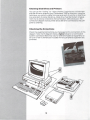
The powerful capabilities available in C128 mode are complemented
by the family of new peripheral devices from Commodore (1571 fast
disk drive, 1902 40/80-column RGBI monitor, etc.). And you can still
use all standard Commodore peripherals as well.
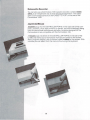
lnC64 Mode, the Commodore 128 retains all the capabilities of the
commercially successful Commodore 64, thus allowing you to take
full advantage of the wide range of available Commodore 64 soft
ware. You also have full compatibility with standard Commodore 64
peripherals, including user port and serial devices, cassette
recorder, joysticks, composite video monitors, and TV output.
C64 Mode provides the BASIC 2.0 language, 40- column output and
access to 64K of RAM. The keyboard provides the same functions
available on a Commodore 64 computer. And all the Commodore 64
graphics, color and sound capabilities are retained, used exactly as
on a Commodore 64 computer.