1
12
Appendix A
the leak requires a large flowrate and waiting for an extended time for the gas to diffuse
into the fitting. Because of the flowrate and time, it is possible that the test gas can travel
to adjacent tube fittings and cause a misleading indication of a leak. Often times
“fugitive” leaks appear and disappear at a specific fitting. What is happening is that the
test gas is inadvertently flowing to another fitting, which has a real leak. Whether this
inadvertent gas flow occurs depends on exactly how the test gas is applied to the fitting
with the “fugitive” leak. Small air currents caused by equipment fans or ventilation
systems can move the test gas in unpredictable ways. Confining the test gas to the fitting
under question can help, but the RGA provides a easier solution: use a gas other than
helium. Helium will spread in air quickly and diffuse into many fittings. A heavy gas
like argon or tetraflouroethane is far easier to confine to a specific fitting. Once the
moderate leaks have been located and eliminated, a follow up with helium to check for
tiny leaks is warranted.
Bellow Valves
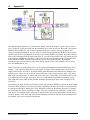
Bellow valves can be difficult to leak test due to the large volume of gas contained
between the bellow and the valve body. To perform a quick leak test it is required to
change the composition of the gas in this trapped volume quickly. Unfortunately, for
some valves, this volume of gas is not highly accessible. This greatly reduces the
response time of a leak test. For a leak causing a base pressure of 10-7 mbar in a vacuum
system with a 70 l s-1 pump, the volumetric flowrate of gas entering from the atmospheric
side of the leak is 7 nanoliters per second. For a bellow with a trapped volume of 1 ml
trapped, the response time constant would be over 40 hours. This emphasizes the
importance of leak test ports on vacuum hardware.
In such situation it is common to place a bag over the body of the valve and fill the bag
with helium. The RGA allows us to consider using gases other than helium. The
permeability of helium through elastomeric seals can give a false leak reading. And as in
manifolds, unless the helium can be strictly confined to the valve body, it may spread to
adjacent connections. Given the amount of work and lost time required to remove and
repair large valves, false leak readings are expensive. A second test with another gas,
such as argon, can confirm that a suspect valve is leaking before starting out on the
repair.
SRS Residual Gas Analyzer