1
Appendix A
13
Conclusion
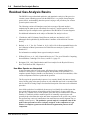
An RGA is a real eye opener for users of vacuum systems. With an RGA the process of
working with vacuum systems is elevated from an empirical trial and error approach to a
systematic approach. The status of the vacuum system can be constantly assessed. When
an experiment or process is having problems, the possibility of contamination or leaks in
the vacuum system can be immediately ascertained. The RGA provides not only
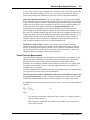
troubleshooting but also historical data. Slow trends in a vacuum system can be noticed
and acted on before they become serious problems. Hard to correlate cause-effect
relations are much easier to establish with the wealth of statistical data that can be
obtained with a daily spectrum analysis. Good procedure and strict adherence to them
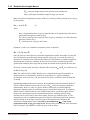
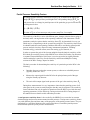
allows a user to infer the integrity of a vacuum system. An RGA allows users to prove
the integrity of a vacuum system with hard data.
Further Reading
Dawson, P.H., Quadrupole Mass Spectrometry and its Applications, American Institute
of Physics, 1995.
Drinkwine, M.J., and Lichtman, D., Partial Pressure Analyzers and Analysis, American
Vacuum Society, New York.
Wilson, N.G., Beavis, L.C., Handbook of Vacuum Leak Detection, American Vacuum
Society, New York, 1979.
SRS Residual Gas Analyzer