1
without saturating the transformer core. (Core saturation is the magnetic
equivalent of clipping, and results in a distorted signal)
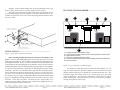
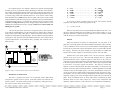
To install a transformer in the standard input, cut and remove the two
jumpers (solid color with one black stripe) for each transformer, as indicated in
figure 2. These jumpers are referenced on the circuit board as well. Insert the
transformer assembly into the five pin socket and fasten with the provided screws.
CL-2 DUAL COMPRESSOR/LIMITER ..............................
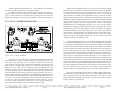
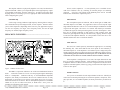
Figure 3: CL-2 compressor/limiter
The Ashly CL-2 is a peak-sensitive, adjustable threshold AGC (automatic
gain control) device which is optimized primarily for speaker protection. It's
ratio, attack time, and release time are all preset at desirable levels for this
purpose. We use the same VCA (voltage controlled amplifier) found in our other
AGC products, assuring highly accurate, low distortion gain reduction. By
design, our VCA circuit acts as a transparent unity gain amplifier unless it's
detector threshold is exceeded. You can select the input signal level below which
the limiter remains inactive. When signal level rises above this threshold, the
limit LED lights up and the VCA reduces it's gain proportionally. The ratio, or
amount of gain reduction vs. signal level above the threshold, gradually increases
as the signal above threshold increases. This technique has become known as
"over-easy" or "soft knee" among others. The CL-2 ratio settles in at around 10:1
for more of a "brick wall" limiter appropriate for speaker protection. It's fast
attack time (1mSec) and relatively slow release (1.5sec) properly handle transients and excessively high levels, yet maintain a natural sound.
Speakers can be damaged by either excessive power or more often, a clipped
signal waveform. This kind of sound system distortion occurs when an amplifier
is overdriven and runs out of power during peak signals. In this case, nice round
waveforms turn into harsh sounding squared-off waveforms. Overdriving an
Ashly amplifier will usually be inconsequential to the amp, however the loudspeaker load will ultimately suffer. Looking at it from the perspective of a speaker
diaphragm, clipped or distorted operation requires an instant acceleration, instant
stop, a change of direction, and instant acceleration again. Since speaker
diaphragms are subject to the laws of physics, they won't take this kind of
punishment for long. The diaphragm may shatter, or it's voice coil may overheat.
In addition to the damage caused by sustained overload, the speaker may also be
damaged by occasional, one-shot high level overload, for example, the sound of
a microphone falling face first onto a hard floor. Even if this type of transient
doesn't destroy a speaker outright, it may damage the speaker surround in such a
way as to cause mechanical abrasion and future failure. Rather than occupy
valuable rack space with outboard limiters, the CL-2 provides driver protection
within the confines of the amplifier itself.
Another application for the CL-2 is to reduce the dynamic range of a signal
in environments with high ambient noise levels. When intelligibility is important,
a wide dynamic range would render much of the signal inaudible, as the quieter
portions of audio would fall below the ambient noise. If the signal were increased
so that the quietest part could be heard above the ambient noise, most likely the
loudest passage would be too loud. In this application, the CL-2 becomes a
compressor because it literally squeezes the dynamic range into a smaller space.
The difference between the loudest signal and the softest signal is reduced by a
factor of up to ten, depending on where the threshold is set. For example, if the
loudest signal were 50 dB above the softest signal (FM radio has a dynamic range
of 60) and you adjusted your CL-2 threshold control so that the LED threshold
indicator was always on, your resulting dynamic range would be about 5dB. Of
course this is a bit extreme but it illustrates the application. Induction loop systems
are another application which benefit from compression of the dynamic range.
The level control on the CL-2 follows the VCA circuitry, so you can adjust the
amplifier output level without affecting the action of the compressor/limiter.
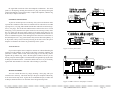
Stereo, mono, and bridged mono modes are available. When in either mono
or bridged mono, only channel one input is used. The grounding jumper on the
barrier strip input connects the input cable ground (pin 1) to the chassis. Under
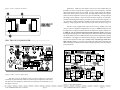
normal conditions, this should be left in place. See figure 4 for specific connector
locations of the CL-2 input option.
○ ○ ○ ○ ○ ○ ○ ○ ○ ○ ○ ○ ○ ○ ○ ○ ○ ○ ○ ○ ○ ○ ○ ○ ○ ○ ○ ○ ○ ○ ○ ○ ○ ○ ○ ○ ○ ○ ○ ○ ○ ○ ○ ○ ○ ○ ○ ○ ○ ○ ○ ○ ○ ○ ○ ○ ○ ○ ○ ○ ○ ○ ○ ○ ○ ○ ○ ○ ○ ○ ○ ○ ○ ○ ○ ○ ○ ○ ○ ○ ○ ○ ○ ○ ○ ○ ○ ○
Ashly POWERCARD Owners Manual
Page 4
Ashly POWERCARD Owners Manual
Page 5