1
Section 4. Sensor Support
within the ±5000 mV common-mode input range of the amplifier. The
amplifier cannot properly reject common-mode signals that fall outside of the
±5000 mV common-mode input range. See Section 16.2 for more information
on common-mode range.
NOTE
Two sets of numbers are assigned to analog channels. For
differential measurements, analog channels are numbered 1 - 8.
Each differential channel as two inputs: high (H) and low (L).
For single-ended measurement, analog channels are numbered
1-16.
NOTE
Sustained voltages in excess of ±16 V input to the analog
channels will damage CR1000 circuitry.
4.2.1 Measurement Sequence
The CR1000 measures analog voltage by integrating the input signal for a fixed
duration and then holding the integrated value during the successive
approximation analog-to-digital (A/D) conversion. The CR1000 can make and
store measurements from up to 8 differential or 13 single-ended channels at the
minimum scan rate of 10 ms (100 Hz) using the fastest available voltage
measurements. The maximum conversion rate is 2700 per second for
measurements made on a single channel.
The timing of CR1000 measurements is precisely controlled. The
measurement schedule is determined at compile time and loaded into memory.
This schedule sets interrupts that drive the measurement task.
Using two different voltage measurement instructions with the same voltage
range takes the same measurement time as using one instruction with two
repetitions.
Historical Lesson: This is not the case with legacy CR10X, 21X, CR23X, and
CR7(X) dataloggers. Using multiple measurement “reps” in these dataloggers
reduced overall measurement time.
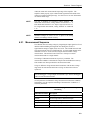
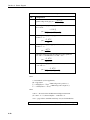
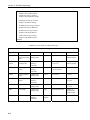
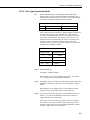
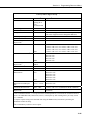
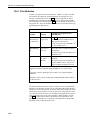
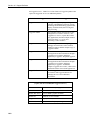
Several parameters in CRBASIC voltage measurement instructions VoltDiff()
and VoltSE() vary the sequence and timing of measurements. TABLE 4.2-1
lists these parameters.
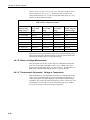
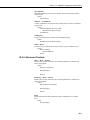
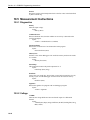
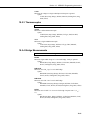
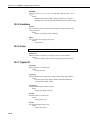
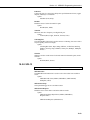
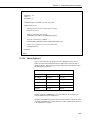
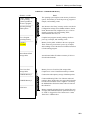
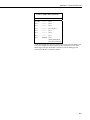
TABLE 4.2-1. CRBASIC Parameters Varying Measurement Sequence
and Timing
CRBASIC Parameter
Description
MeasOfs
Correct ground offset on single-ended measurements.
RevDiff
Reverse high and low differential inputs.
SettlingTime
Sensor input settling time.
Integ
Duration of input signal integration.
RevEx
Reverse polarity of excitation voltage.
4-3