1
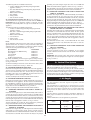
The complete installation including the gas meter must be tested
for soundness and purged. See BS 6891.
Gas
Discharge
Rate (m3/hr)
Total Length of Gas Supply Pipe (metres)
3
6
9
8.7
5.8
4.6
18.0
12.0
9.4
2.11 SYSTEM NOTES.
WARNING:
CHECK THAT NO DIRT IS LEFT IN EITHER THE GAS OR WATER
PIPEWORK AS THIS COULD CAUSE DAMAGE TO THE APPLIANCE.
THOROUGHLY FLUSH THE HEATING SYSTEM, AND THE WATER
SUPPLY IN ACCORDANCE WITH THE RECOMMENDATIONS OF
BS 7593:1992.
PURGE THE GAS SUPPLY BEFORE FINALLY CONNECTING THE
APPLIANCE.
The water pipe connections throughout a sealed system must be
capable of sustaining a pressure of up to 3 bar.
Radiator valves must conform to the requirements of
BS2767(10):1972.
The relief valve drain outlet must be directed away from any
electrical components or where it would cause a hazard to the
user.
A drain cock to BS 2879 must be fitted to the lowest point of the
system.
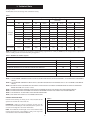
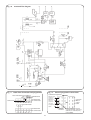
For circuit design purposes it is important that due note is taken
of the information given in Table 4 relating to the available pump
head.
2.12 SHOWERS, BIDETS, TAPS AND MIXING VALVES.
Hot and cold taps and mixing valves used in the system must be
suitable for operating at mains pressure.
Thermostatically controlled or pressure equalising shower valves
will guard against the flow of water at too high a temperature.
Hot and cold mains fed water can be supplied direct to an overrim flushing bidet subject to local water company requirements.
With all mains fed systems the flow of water from the individual
taps will vary with the number of outlets operated
simultaneously and the cold water mains supply pressure to the
property. Flow balancing using ‘Ball-o-Fix’ type valves is
recommended to avoid an excessive reduction in flow to
individual outlets. For further information contact Worcester
Heat Systems Ltd.
2.13 SAFETY CONSIDERATIONS.
The appliance must not be operated in a waterless condition.
The appliance must not be operated with the boiler inner casing
cover removed.
Work must not be carried out on the appliance without the gas
and electricity supplies being turned off.
Checks must be made to ensure that the ventilation openings
made into walls and partitions are of the correct size and are not
obstructed.
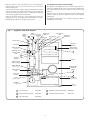
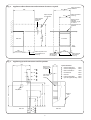
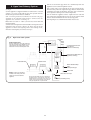
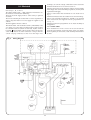
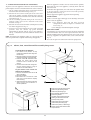
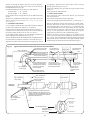
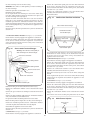
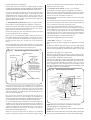
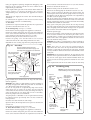
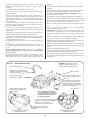
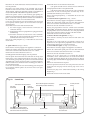
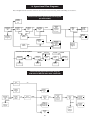
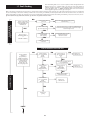
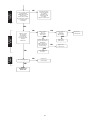
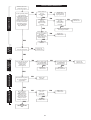
2.14 OPERATION. See Fig. 1.
HOT WATER MODE:
With the appliance in a standby condition, i.e. heatbank at the
temperature set by the hot water control thermostat, burner off,
fan off, pump off and a demand is made for hot water:
The flow switch will energise the pump and circulate primary hot
water around the boiler and water to water heat exchanger. The
burner will light at its maximum setting, to maintain the
temperature of the heatbank and the fan will operate.
When hot water is no longer required the appliance will continue
to operate, the burner will cycle a number of times, until the
heatbank has returned to temperature. The pump will continue
to run for about five minutes to dissipate the residual heat from
the appliance.
NOTE: The appliance may be used for Hot Water only before the
central heating circuit is completed.
Pipe
Diameter
(mm)
22
28
2.7 PACKING.
The appliance and flue components are packed in separate
cartons.
2.8 GENERAL INSTALLATION.
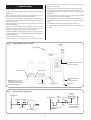
The appliance is supplied for connection to a sealed system but
is suitable for use with an open system.
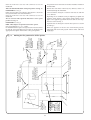
The specified ventilation openings made into a wall or
compartment door must not be obstructed.
If the appliance is to be fitted into a compartment then the
compartment must conform to the requirements of BS
6798:1987: Section 6.
The clearances specified for installation and servicing must be
maintained.
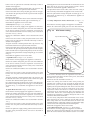
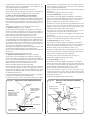
2.9 FLUE.
The appliance has a multi-directional balanced fanned flue
system : rear, right or left.
A terminal guard, Type K2, GC 393 553, is available from Tower
Flue Components, Vale Rise, Tonbridge,TN9 1TB.
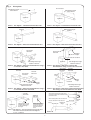
The standard horizontal flue assembly length is from 100 mm to
500 mm when the appliance is flued to the rear. When flued to
the side the standard flue length is from 100 mm to 1000 mm.
Extended flue lengths up to 3000 mm are available in 1000 mm
lengths as optional extras.
To flue the appliance right, left or upwards 90° flue bends are
available as optional extras.
A maximum of three 90° flue bends are available for the flue
system.
N.B. When using an extra 90° flue bend or bends the maximum
flue length is reduced. See Section 5b.
Do not allow the flue terminal fitted to the outside wall to
become obstructed or damaged.
An optional extra internal flue fixing kit is available. When
ordering the kit the following part number must be quoted
ZEGAS206. For fitting instructions refer to section 11.7.
A vertical balanced flue is available with a flue length from 100
mm to 4500 mm
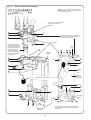
2.10 CONTROLS.
The electronic control system via the gas valve operates the heat
input in response to the central heating and domestic hot water
temperature settings.
The Operating switch provides for the selection of domestic hot
water (WATER) only or central heating and domestic hot water
(HEATING and WATER) or Off.
A facia mounted programmer is available as an optional extra. A
remote mounted programmer may be connected to the
appliance.
The control thermostats for central heating and domestic hot
water are mounted on the integral facia.
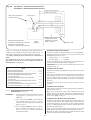
There is provision for the connection of a mains voltage room
thermostat. Refer to Section 10.
Frost Protection.
When the appliance and heating system are exposed to low
temperatures it is advised to fit a frost thermostat Refer to
Section 10.
Thermostatic radiator valves can be used in the system. The
appliance incorporates an adjustable by-pass between the
central heating flow and return.
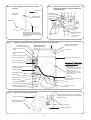
CENTRAL HEATING MODE:
With the appliance in a standby condition and a demand is
made for heating:
The water diverter valve will open, pump will energise and
circulate primary water around the heating system, burner will
light to the nominal setting pressure and the fan will operate.
3