1
Introduction
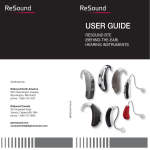
Congratulations on the purchase of your new hearing instruments. ReSound’s innovative sound technology and design,
combined with the customized set-up selected by your hearing care professional, will make hearing a more enjoyable experience. Hearing instruments will enable you to hear sounds
that you may not have heard in years because of your hearing
loss. Practice and a positive attitude are important in learning
to use hearing instruments. Your ReSound instruments have
been adjusted according to your individual hearing loss and
needs. Some people adjust quickly to wearing hearing instruments in their ears and hearing new sounds; other people
may need more time.
Please read this manual carefully in order to wholly benefit
from the use of your hearing instruments. With proper care,
maintenance, and usage, your hearing instruments will aid
you in better communication for many years. Ask your hearing care professional if you have any questions.
ReSound is a registred trade mark of GN ReSound A/S
Intended Use
Generic air-conduction hearing instruments are wearable
sound-amplifying devices intended to compensate for impaired hearing. The fundamental operating principle of hearing instruments is to receive, amplify, and transfer sound to
the ear drum of a hearing impaired person.
Notice:
1. A hearing aid will not restore normal hearing and will not
prevent or improve a hearing impairment resulting from organic conditions.
2. Consistent use of the aid is recommended. In most cases,
infrequent use does not permit you to attain full benefit from it.
3. The use of a hearing aid is only part of hearing rehabilitation
and may need to be supplemented by auditory training and
instructions in lip-reading.
Important Notice for Prospective Hearing Aid Users
Good health practice requires that a person with a hearing loss
have a medical evaluation by a licensed physician (preferably a
physician who specializes in diseases of the ear) before purchasing a hearing aid. Licensed physicians who specialize in diseases
2
of the ear are often referred to as otolaryngologists, otologists or
otorhinolaryngologists. The purpose of the medical evaluation is
to assure that all medically treatable conditions that may affect
hearing are identified and treated before the hearing aid is purchased.Following the medical evaluation, the physician will give
you a written statement that states that your hearing loss has
been medically evaluated and that you may be considered a candidate for a hearing aid. The physician will refer you to an audiologist or a hearing aid dispenser, as appropriate, for a hearing aid
evaluation.The audiologist or hearing aid dispenser will conduct
a hearing aid evaluation to assess your ability to hear with and
without a hearing aid. The hearing aid evaluation will enable the
audiologist or dispenser to select and fit a hearing aid to your individual needs.If you have reservations about your ability to adapt
to amplification, you should inquire about the availability of a trialrental or purchase-option program. Many hearing aid dispensers
now offer programs that permit you to wear a hearing aid for a
period of time for a nominal fee after which you may decide if you
want to purchase the hearing aid.Federal law restricts the sale of
hearing aids to those individuals who have obtained a medical
evaluation from a licensed physician. Federal law permits a fully
informed adult to sign a waiver statement declining the medical
evaluation for religious or personal beliefs that preclude consultation with a physician. The exercise of such a waiver is not in your
best health interest and its use is strongly discouraged.
Children with hearing loss
In addition to seeing a physician for a medical evaluation, a
child with a hearing loss should be directed to an audiologist
for evaluation and rehabilitation because hearing loss may
cause problems in language development and the educational and social growth of a child. An audiologist is qualified
by training and experience to assist in the evaluation and rehabilitation of a child with hearing loss.
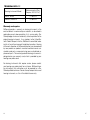
Hearing instrument model:
Model
Battery size
Tube type:
VE10
10A
VE30
312
VE50
13
Dome size:
Left serial number:
Right serial number:
3