1
intelligent Ventilation
Intelligent
ventilation
t
ac
tr
in
le
t
ex
ex
t
us
ha
f
r
h ai
r es
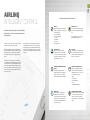
LOW ENERGY CONSUMPTION
No draughts or cold air discomfort
WITH HIGH HEAT RECOVERY
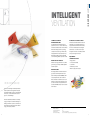
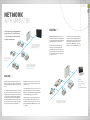
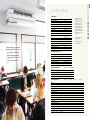
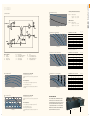
Airmaster's decentralised ventilation units are all
The decentralised unit with heat exchanger is
fitted with motor-controlled air dampers for the
placed in the room close to an outer wall. The very
supply and exhaust air. When the unit is inactive,
short distance extracted air has to travel combined
the motor-controlled damper is closed against
with the heat exchanger mean very low energy
direct air access. Cold outdoor air cannot pass
consumption. No need for long ventilation ducts,
through the unit into the room. Similarly, warm air
meaning minimum heat loss (transmission loss).
cannot pass through to the outdoors.
Decentralised ventilation supplies an individual
room without being difficult or expensive to install.
Major benefits
of Airmaster solutions
efficient EC motor technology
• Energy-efficient
Airmaster uses energy-efficient EC motors, which
• Low noise level: 30 dB(A)
give low energy consumption, flexible adjustment
• Cost-effective
and silent operation.
• Quick and easy to install
• Efficient cooling module as option
High heat recovery
We use highly-efficient counterflow heat exchangers, and document temperature ratio in accordance with European standard DS/EN3081, which
is a dry temperature ratio, under conditions in
which condensation of exhaust air does not occur.
Ventilation in balance
Airmaster's counterflow heat exchangers perform
up to 85% measured as a dry temperature ratio in
accordance with EN308, and up to 95% if condensation is included.
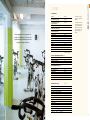
Fresh air is a human right. And that's why Airmaster
has developed the most energy-efficient and quiet,
decentralised ventilation solutions on the market with
heat recovery - solutions which can be used in all
types of rooms and buildings.
Airmaster's decentralised ventilation solutions keep
energy consumption for ventilation and heating in a
building to a minimum. Only those rooms where and
when ventilation is needed are serviced. No wasted
energy on unnecessary ventilation.
4
1
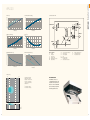
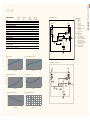
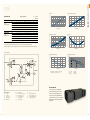
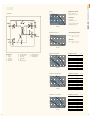
Testing conditions:
Ambient temperature
Room exhaust temperature
Airflow test range Internal or external leakage
5°C
25°C
50-150% of nominal airflow
<3% of nominal airflow. Supply and exhaust air is in balance.
5 5