1
9200_Ins_eng
5/18/05
8:34 AM
Page 21
Installation and Setup
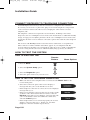
Discussion of Potential Mounting Sites
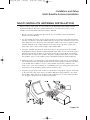
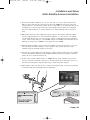
• You can mount the satellite antenna on a metal pole that is attached to an existing
building. Using this method, you can raise the satellite antenna to gain a line-of-sight
view of the satellite if you cannot find a better location. Be sure to follow all safety
requirements, and properly ground the satellite antenna and pole.
• You can also mount the satellite antenna on a metal pole installed in the ground, as
long as the soil provides a firm foundation and the pole does not allow the antenna to
move during windy weather.
Be sure to locate and avoid underground sewer, gas, water, and telephone
lines before digging. Your local utility companies can tell you where these
are located.
Before you attach the pole to its mounting surface or install the pole in the
ground, you should make sure that you can route the cable from the
mounting location into the building, drilling holes where necessary, to the
receiver. If the pole is installed in the ground, be sure that you can route the
cable overhead or underground in a conduit or with a direct burial cable.
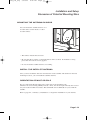
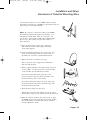
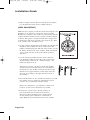
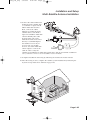
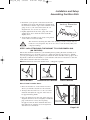
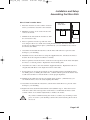
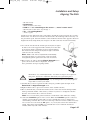
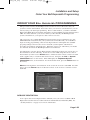
1. The most common method to install the pole in the ground is to
use cement to secure it in a hole. Be sure that the pole remains
at 90˚ from horizontal as the cement dries. You may want to use
guy wires or braces to keep the pole steady. The bottom of the hole
should be 15 centimeters below the frost line in areas where
temperatures fall below freezing. In most areas of Canada, a
1-meter-deep hole for the pole should be sufficient.
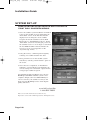
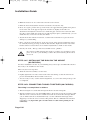
2. A way of ensuring that the pole does not rotate in the dried
cement is to cut the bottom of the pole at an angle, and to place
a brick or flat rock in the bottom of the hole to support the pole
before pouring in the cement.
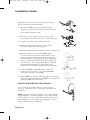
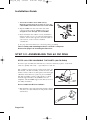
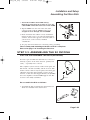
3. Use a plumb line to ensure that the pole is at 90˚ from horizontal. Take at least two
measurements on different sides of the pole periodically while the cement is drying.
Having the pole plumb allows you to accurately aim the antenna. If the pole is slightly
off plumb, you can still aim the antenna for good reception, but it is very difficult.
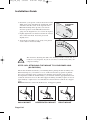
4. Typically, the cable is routed down outside the pole. However, if you want to feed the
LNBF cable up through the pole in the same manner as you would through the mast,
you will need to drill a hole in the pole big enough to do this. The hole should be
above ground after the pole has been set in the cement.
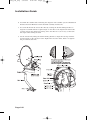
You will not need the metal foot and mast assembly provided with the antenna for this
installation, but we recommend you keep the assembly in case you wish to relocate the
antenna later.
5. Follow the instructions for mounting the satellite antenna mast, but use the metal pole
in place of the mast and foot.
6. Bring the LNBF cable down the outside of the pole. Be sure to secure the cable firmly,
but not too tightly, to the pole using tie-downs.
Page I-17