1
generation was set to produce random packet contents for a duration of 1,000,000 packets. The
average result over the test interval was extracted by using a VB script. The script can be found
in Appendix 1. The traffic generation and data logging functions are not integrated in IP Traffic,
so the data logging had to be started manually before the traffic generation, and then stopped
after the traffic generation section had completed. The script finds the first instance of
throughput and averages the data until the link is silent again. Test results are discussed in
Section 5.
Subsequent testing was done to determine the effect of RSSI on throughput. To do this the
packet size was fixed at 1300 bytes and the amount of attenuation on the link was varied
throughout the operating range of the transceiver. This packet size is close to the size of packets
sent by AAC sensors. The sensitivity of the receiver is –86 dbm, and the dynamic range is
specified as >50db. So the attenuation when connected to 20dbm source had to range from
below 56db to 106db to cover the entire operating range. Throughput was extracted from the
raw data files collected by IP Traffic using the VB script, as stated above. The RSSI data was
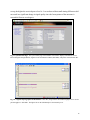
manually observed from the web interface, in the initial testing. Later testing using the Iperf
software also included the use of RF Monitor, which graphed the values of RSSI and SNR. The
Iperf software provided the average result over the test interval so no additional analysis was
needed on that data. More information on Iperf can be found in Appendix 2 and the test results
in Section 5.
The next testing was to determine the effect of additive noise on the throughput of the system.
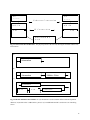
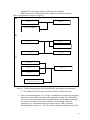
This test used architecture B, shown in figure 3.2. To do this a signal level was set by adding in
a fixed amount of attenuation, then adjusting the attenuator on the noise source set the noise
level. The SNR was adjusted over a range so that the throughput varied from optimum (no
additive noise) to total link loss. The traffic generation and data logging was only done with IP
Traffic for this test, due to the availability of the noise source. The average throughput was
extracted from the raw data files using the VB script, as before. Results are given in Section 5.
For the field testing the radio was run on different channels and with different software
configurations to see if they had any effect on end user throughput. A link was set up between
20






























![Identifying Embeded Web Servers - [media.blackhat.com]](http://vs1.manualzilla.com/store/data/005833288_1-dd26f65aacb79f754f7b5aa134b8197a-150x150.png)