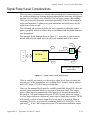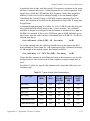
1
E n t r y C h a n n e l M o d e S w i t c h in g
required acquisition time of the receiver and the amount of time allowed for
M&C packet transactions.
All Remotes will receive the TAP message from the Hub, but a Remote will
only transmit back to the Hub if it is a member of the specified group. Upon
receipt of the TAP, the Remote resets its timing and uses the provided slot information to determine the next transmit opportunity. This allows each Remote to
transmit at a discrete time to minimize the chance of collision. When a transmission to the Hub is not received, the Remote uses a random back-off (next slot)
algorithm to further reduce contention, and will try again until a Hub response is
received.
Upon valid reception of the Remote’s transmission, the Hub channel controller
will place the Remote into queue for assignment of switching into a dSCPC
channel. The Remote will be registered in the VMS, then await the availability
of the hardware and bandwidth resources necessary for execution of the switch
request. The TAP will continue to be received even after the Remote has been
switched out into SCPC.
Only management traffic is allowed while a Remote is in ECM. No data traffic
is transmitted until the Remote is switched out of ECM and is operating in
dSCPC mode.
Hub Configuration
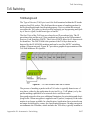
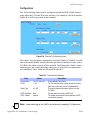
The Hub channel controller is a dedicated demodulator that has been selected as
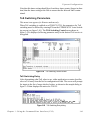
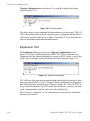
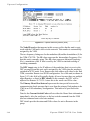
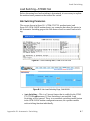
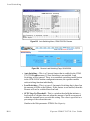
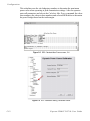
an ECM controller. The Entry Channel configuration settings of this demodulator (figure B-19) determine the channel parameters that are transmitted in the
TAP message and include:
• ECMv2 Enable
• Group ID
• TAP IP Multicast Address
• Preamble
• Guard Band
• LNB LO Frequency
• Satellite Frequency Conversion
• Total Slot Count
Appendix B - Automatic Switching
B-31