1
inches at the stack. The draft may be accurately
measured with any good draft gauge.
GAS
Excessive draft causes high stack temperatures and
consequently a waste of fuel. Therefore, a reliable
draft regulator is strongly recommended for
practically all installations. Proper, uniform draft
insures efficient, economical operation of the burner.
A good draft regulator will usually pay for itself in a
short time through a substantial savings in fuel costs.
D. Blower Adjustment
Fresh air requirement into the furnace room for
satisfactory combustion is 1 square inch of free area
for each 1,000 BTU input and a minimum of 100 sq.
in.
Because the Cox Heating unit is so versatile in its
application, it is impossible to be specific in
recommending blower speed. Obviously, the
quantity and quality of the duct work and the manner
in which it is applied affects the air delivery.
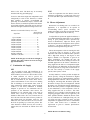
Minimum recommended chimney sizes: Gas
Draft Hood &
Input/hour
Flue Pipe Size
To adjust blower speed to the applied conditions, it
is recommended that the thermostat be set at highest
setting to gain prolonged burner operation. By
means of thermometers, adjust the blower speed
until the temperature rise through the unit is equal to
75 degrees – 80 degrees (difference in temperature
between air entering and leaving the unit).
Up to 120,000…………………………... 5”
120,001-180,000………………………….. 6”
180,001-250,000………………………….. 7”
250,001-320,000………………………….. 8”
320,001-410,000………………………….. 9”
410,001-510,000………………………….. 10”
510,001-610,000………………………….. 11”
610,001-730,000………………………….. 12”
730,001-860,000………………………….. 13”
860,001-1,000,000………………………... 14”
1,000,001-1,140,000……………………… 15”
Unless the temperature of the air entering the units
is excessively high (75 degrees or more) such
adjustment will result in continued burner operation
with a high limit setting of 180 degrees to 200
degrees. Should it be impossible to gain an 85
degree temperature rise through the unit, the
indications are that the fan is running too fast for the
intended application of the furnace. Should the air
being supplied to the unit be at a temperature higher
than 95 degrees, the indications are that the heated
air leaving the unit is being short circuited back to
the unit. The remedy is revision of the supply
system, return system, or both.
NOTE: If the flue pipe exceeds 10 ft. in length, or
contains more than 2 elbows use next size larger
pipe and draft hood.
C. Combustion Air Supply
OIL
Do not install in rooms with insufficient air to
supply combustion. Occasionally, it is necessary to
install windows or louvers in a door to these rooms,
to obtain sufficient air and to prevent less
atmospheric air pressure in the room. If there is a
lack of combustion air, the burner flame will be
yellow and formation of soot will occur in heating
unit. In buildings of conventional frame, brick or
stone construction without utility rooms, basement
windows, or stair doors, infiltration is normally
adequate to provide air for combustion and for
operation of the barometric draft control. For
installation in an enclosed utility room with an
outside wall, a fresh air opening to the outside
should be made with a free cross sectional area of
twice the area of the flue outlet of 100 sq. inches for
each gallon nozzle size (Example: 10x10 for 1.00
GPH). For each 1,000 feet above sea level, increase
the fresh air opening by at least four percent. The
room should be isolated from any area served by
exhaust fans. Do not install an exhaust fan in this
room.
In many instances, it will be possible to adjust the
blower speed by setting the thermostat to highest
setting (for purposes of continued burner operation
during adjustment) and limit control 180 degrees to
200 degrees, increasing then, the blower speed until
the burner no longer cuts out on high limit. Should
the burner cycle on high limit setting, indications are
that the duct static pressure is higher than intended
by the manufacturer, or the temperature of the air
being supplied the unit is excessive. This latter
method is not as reliable as that described in the
foregoing paragraph which will be applied by the
better qualified installer. Should the blower motor
cut out, indications are: inadequate firing rate, fan
off setting too high, overload of motor, too high
temperature air supplied to the unit or a combination
of same. Duct heaters have a minimum air
requirement as given in “Furnace Specification”
Section Chart.
NOTE: Do not exceed motor rating.
6