1
DEVICE BLOCKS
All variables and parameters of the transmitter are
structured in blocks with respect to their assignment
of components or functions. This structure is termed
the Function Block Application Process (FBAP) and
has been designed to support five primary operational
characteristics:
1. Configuration and definition of function
blocks
2. Configuration of function block links
3. Alert processing
4. Access to information for operator interface,
remote
operation,
diagnostics,
and
configuration
5. Coordinating function block execution and
communication
used in a wide range of process control and
monitoring devices.
The Resource Block contains the hardware specific
characteristics associated with a device. This block
does not have input and output parameters; instead, it
contains an algorithm that monitors and controls the
general operation of the physical device hardware.
For example, the mode of the Resource Block
impacts all of the other blocks. Other Resource Block
parameters include but are not limited to the
manufacturer's name, device name, and serial
number. Only one resource block is included per
device.
The Transducer Blocks connect input and output
functions to other function blocks residing in the same
device. It interfaces with sensor input hardware and
provides a measured value and status to connected
function blocks.
Transducer Block parameters
include but are not limited to sensor type, temperature
sensor type, calibration data and routines, calibration
date and diagnostic conditions. Usually only one
Transducer Block is present per device.
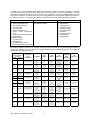
The basic elements of the FBAP are as follows:
•
Block Objects and Parameters
− Resource Block
− Transducer Block
− Function Block (e.g., Analog Input,
Analog Output, PID, etc.)
•
Link Objects: Allows the transfer of data
between blocks as defined by the Virtual
Communication Relationship (VCR).
•
Alert Objects: Used to communicate alerts
and/or events to other devices.
•
Trend Objects: Used to maintain a history of
values of an individual parameter.
•
View Objects: Used to group a subset of
operation and configuration data.
•
Domain and Program Invocation Objects:
Used to support download and upload
services.
The Function Blocks are fundamental for providing
the control system behavior. Function Blocks contain
input and output parameters and algorithms and can
be linked to other function blocks within the same
device or to other devices in the fieldbus network. In a
single User Application, several function blocks can
be available and precisely scheduled in terms of
execution.
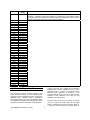
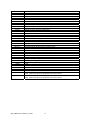
The Fieldbus Foundation specifications have defined
a set of standard function blocks. These are as
follows:
Blocks are logical groups of device functionality that
define a particular application using a common model.
In general, blocks process input parameters and
events through one or more process algorithms and
execution controls in order to produce the expected
output parameters and events. Block parameters
control the function and execution of the block and
are visible over the fieldbus network.
Data
communicated over the fieldbus is expressed as an
"object description". Object descriptions are collected
together in a structure called an Object Dictionary
(OD) and are identified within the OD by their index.
During system operation, block parameters are
accessed using an OD index.
•
•
•
•
•
•
•
•
•
•
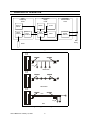
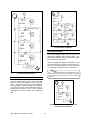
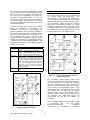
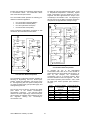
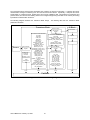
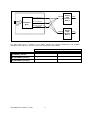
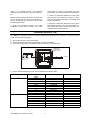
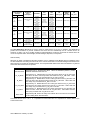
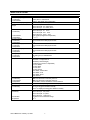
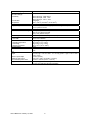
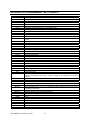
The TB82EC FF Transmitter has one Resource
Block, two Analog Input Function Blocks (AI), and one
enhanced, custom Transducer Block with calibration
capability. The following figure shows block elements
for the TB82EC FF Transmitter.
Since most plants have many different process
control requirements, the type of functions can greatly
vary. The Fieldbus Foundation specifications identify
a range of function blocks, each addressing a
different need.
These standard function blocks
provide a common structure for defining block inputs,
outputs, control parameters, events, alarms, and
modes. This common structure can then be easily
I-E67-TB82FF-2A February 13, 2002
Analog Input (AI)
Analog Output (AO)
Discrete Input (DI)
Discrete Output (DO)
Proportional/Derivative (PD)
Proportional/Integral/Derivative (PID)
Bias (B)
Control Selector (CS)
Manual Loader (ML)
Ratio (RA)
23