1
IMPORTANT SAFETY INFORMATION
Continued from page 3
15. An unvented gas-fired heater uses air (oxygen)
from the room in which it is installed. Provisions for
adequate combustion and ventilation air must be
provided. See installation guidelines.
16. Keep room area clear and free from combustible
materials, gasoline and other flammable vapors
and liquids.
17. Unvented gas heaters are a supplemental zone
heater. They are not intended to be a primary heating appliance.
18. Unvented gas heaters emit moisture into the living
area. In most homes of average construction, this
does not pose a problem. In houses of extremely
tight construction, additional mechanical ventilation
is recommended.
23. Do not use this room heater if any part has been
under water. Immediately call a qualified service
technician to inspect the room heater and to replace
any part of the control system and any gas control
which has been under water.
24. Never burn solid fuels in a fireplace where a
unvented room heater is installed.
25. Always have a fireplace screen in place when the
appliance is in operation, and unless other provisions for combustion air are provided, the screen
shall have an opening(s) for induction of combustion air.
26. Do not fill spaces around the firebox with insulation
or other materials. These spaces must be maintained to prevent the firebox from coming in contact
with combustible materials.
19. During manufacturing, fabricating and shipping,
various components of this appliance are treated
with certain oils, films or bonding agents. These
chemicals are not harmful but may produce annoying smoke and smells as they are burned off during
the initial operation of the appliance; possibly causing headaches, or eye or lung irritation. This is a
normal and temporary occurrence.
20. Input ratings are shown in BTU per hour and are for
elevations up to 2,000 feet. For elevations above
2,000 feet, input ratings should be reduced 4 percent for each 1,000 feet above sea level. Refer to
the National Fuel Gas Code.
www.nficertified.org
WARNING
The initial break-in operation should last two to three
hours with the burner at the highest setting. Provide
maximum ventilation by opening windows or doors
to allow odors to dissipate. Any odors remaining
after this initial break-in period will be slight and will
disappear with continued use.
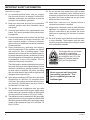
We suggest that our gas hearth
products be installed and
serviced by professionals who
are certified in the U.S. by the
National Fireplace Institute®
(NFI) as Gas Specialists.
Never connect unit to private
(non-utility) gas wells. This
gas is commonly known as
wellhead gas.
21. The appliance and its appliance main gas valve
must be disconnected from the gas supply piping
system during any pressure testing of that system
at test pressures in excess of 1/2 psig (3.5 kPa).
22. The appliance must be isolated from the gas supply
piping system by closing its equipment shutoff valve
during any pressure testing of the gas supply piping
system at test pressures equal to or less than 1/2
psig (3.5 kPa).
61D1013