1
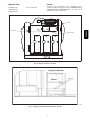
HKRNKA
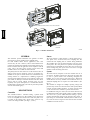
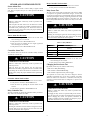
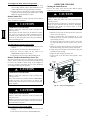
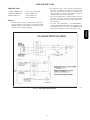
Combination duct smoke sensor and controller
Duct smoke sensor
Duct smoke sensor
controller
C07284
Fig. 1 -- Controller and Detector
GENERAL
This document provides information and guidance on smoke
detectors that are factory installed on the applicable units.
For field installed smoke detector applications, these same
detectors may be used. However, unless a field installed kit is
provided, the installer must determine and install the detectors in a
manner consistent with the application and in compliance with all
codes. Due to the wide variety of both of these issues, field
installation kits are not available for all unit models.
The primary intent of these detectors is to shut down the unit’s air
delivery services upon an alarm trip. They are not designed as a
substitute for an open area smoke detector nor a substitute for early
warning detection or a replacement for a building’s regular fire
detection system. Smoke detectors are not designed to detect toxic
gases which can build up to hazardous levels in some fires. These
devices will not operate without electrical power. As fires
frequently cause power interruptions, it is recommended that the
installer further safeguards with your local fire protection specialist
and code enforcement agency.
DESCRIPTIONS
Controller
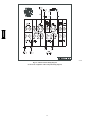
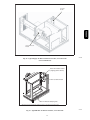
The controller includes a controller housing, a printed circuit
board, and a clear plastic cover. The controller can be connected to
one or two compatible duct smoke sensors. The clear plastic cover
is secured to the housing with a single captive screw for easy
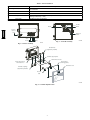
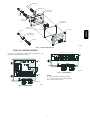
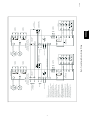
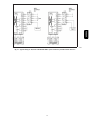
access to the wiring terminals. (See Fig. 1, 3, and 4.)
Sensor
The sensor includes a plastic housing, a printed circuit board, a
clear plastic cover, an exhaust tube, and a sampling tube. The
exhaust tube and sampling tube are attached during installation.
The sampling tube varies in length depending on the size of the
rooftop unit. The clear plastic cover permits visual inspections
without having to disassemble the sensor. The cover attaches to the
sensor housing using four captive screws and forms an airtight
chamber around the sensing electronics.
System
The smoke detector comprises a four--wire controller and one or
two sensors. Its primary function is to shut down the rooftop unit
in order to prevent smoke from circulating throughout the
building. It is not to be used as a life saving device. When these
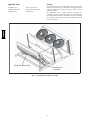
smoke detectors are factory installed on the units listed above, no
additional sampling tubes are required to be field installed. (See
Fig. 5.)
The controller is designed for multiple operating voltages and
provides relay contacts for connection to fire alarm systems, HVAC
controls, and other auxiliary functions. A remote test/reset station
can be connected to the controller to provide these functions.
For installations using two sensors, the duct smoke detector does
not differentiate which sensor signals an alarm or trouble condition.
The sensor uses a process called differential sensing to prevent
gradual environmental changes from triggering false alarms. A
rapid change in environmental conditions, such as smoke from a
fire, causes the sensor to signal an alarm state but dust and debris
accumulated over time does not.
2