1
B101
Refrigerator Overfreezing
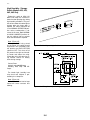
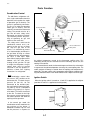
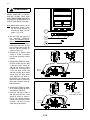
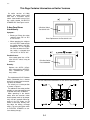
1. With gas supply off, hook up
your U-tube or gas manometer
as shown.
2. A part which can cause this
symptom is the combination
control.
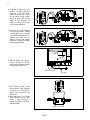
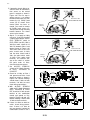
3. Remove the capillary tube
from the fins. Place a cup of
ice water on the top shelf of
the refrigerator. Immerse the
capillary tube in the ice water
as shown in Figure 3.30.
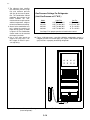
4. If the pressure readings are not
within the specifications as
shown in the Gas Pressure chart,
replace the combination control.
5. Another possible cause for
overfreezing is that the capillary tube is not properly attached to the evaporator fins.
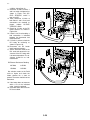
6. The capillary tube must be attached to the 5th fin as shown
in Figure 3.31.
Capillary Tube Immersed In Ice Water
Figure 3.30
Check for Overfreezing
Fifth Fin
From Right
The Refrigerator Will Not
Operate or Cool on AC
Figure 3.31
Capillary Tube Location
Figure 3.32
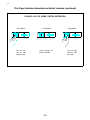
Check for AC Supply Voltage
Figure 3.33
Checking F1 Fuse for Continuity
WARNING
USE EXTREME CAUTION WHEN
WORKING ON THE AC ELECTRICAL COMPONENTS OF THE REFRIGERATOR. BEFORE REPLACING ANY ELECTRICAL COMPONENTS, DISCONNECT THE AC
POWER SOURCE TO THE REFRIGERATOR. ELECTRICAL VOLTAGE CAN CAUSE SEVERE INJURY OR DEATH.
1. If the refrigerator is not functioning on AC, the first step is to
check incoming supply voltages
as shown in Figure 3.32. The
minimum is 108 Volts AC.
2. Once you have established a
good AC supply voltage, then
remove the 5 Amp fuse and
check for continuity as shown
in Figure 3.33. If reading is
good, reinstall fuse and proceed to next step.
3-15