1
ELM323
OBD (ISO) to RS232 Interpreter
Description
Features
Since the 1996 model year, North American
automobiles have been required to provide an OBD
(On Board Diagnostics) data port for the connection
of test equipment. This port is used to obtain
emissions-related diagnostics information, and in
some cases can also be used to obtain real-time
vehicle operating parameters.
The ELM323 is a 14 pin integrated circuit that,
with only a few external components, is able to
convert between the OBD data format and the
standard RS232 serial data format. This allows
virtually any personal computer or PDA to
communicate with a vehicle using only a standard
serial port and a terminal program. If desired,
hobbyists can even create their own custom ‘scan
tool’ by adding an interface program.
Please note that while this integrated circuit has
undergone significant changes recently, it is still
considered to be an experimenter’s circuit. It does
support a great many of the ISO9141 and ISO14230
(KWP2000) protocol vehicles, but not all of them,
due to the many interpretations of these standards
that are to be found in use.
• Low power CMOS design
• Crystal controlled for accuracy
• ISO 9141-2 and ISO 14230-4 protocols
• Configurable with AT commands
• Standard ASCII character output
• Four high current LED drive outputs
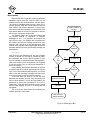
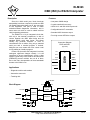
Connection Diagram
PDIP and SOIC
(top view)
VDD
1
14
VSS
XT1
2
13
OBDK
XT2
3
12
OBDL
LFmode
4
11
OBDIn
RS232Rx
5
10
OBDTx
RS232Tx
6
9
OBDRx
RSRx
7
8
RSTx
13
OBDK
12
OBDL
11
OBDIn
Applications
• Diagnostic trouble code readers
• Automotive scan tools
• Teaching aids
3.58 MHz
Block Diagram
XT1
LFmode
RS232Rx
5
RS232Tx
6
2
3
XT2
Timing and
Control
4
RS232
Interface
OBD
Interface
Interpreter
ELM323DSD
RSRx
7
10
OBDTx
RSTx
8
9
OBDRx
Elm Electronics – Circuits for the Hobbyist
< http://www.elmelectronics.com/ >
1 of 19
ELM323
Pin Descriptions
VDD (pin 1)
This pin is the positive supply pin, and should always
be the most positive point in the circuit. Internal
circuitry connected to this pin is used to provide
power on reset of the microprocessor, so an external
reset signal is not required. Refer to the Electrical
Characteristics section for further information.
XT1 (pin 2) and XT2 (pin 3)
A 3.579545 MHz NTSC television colourburst crystal
is connected between these two pins. Crystal
loading capacitors (typically 27pF) will also normally
be connected between each of these pins and the
circuit common (Vss).
LFmode (pin 4)
This input is used to select the default linefeed mode
after a power-up or system reset. If it is at a high
level, then by default messages sent by the ELM323
will be terminated with both a carriage return and a
linefeed character. If it is at a low level, lines will be
terminated by a carriage return only. This behavior
can always be modified by issuing AT L0 or AT L1
commands (see the section on AT Commands).
RS232Rx (pin5)
A computer’s RS232 transmit signal can be directly
connected to this pin from the RS232 line as long as
a current limiting resistor (typically about 47KΩ) is
installed in series. (Internal protection diodes will
pass the resistor current safely to the supply
connections, protecting the ELM323.) Internal signal
inversion and Schmitt trigger waveshaping provide
the necessary signal conditioning.
RS232Tx (pin 6)
This is the RS232 transmit or data output pin. The
signal level is compatible with most interface ICs,
and there is sufficient current drive to allow
interfacing using only a PNP transistor, if desired.
LED Drive Outputs (pins 7, 8, 9, and 10)
These four pins are driven to low levels when the
ELM323 is transmitting or receiving RS232 or OBD
data. Otherwise, they are at a high level. Current
capability is suitable for directly driving most LEDs
through current limiting resistors. If unused, these
pins should be left open-circuited.
OBDIn (pin11)
The OBD data is input to this pin, with a high logic
level representing the active state of the OBD K line.
No Schmitt trigger input is provided, so the OBD
signal should be buffered to minimize transition
times for the internal CMOS circuitry.
OBDL (pin 12) and OBDK (pin 13)
These are the active high output signals which are
used to drive the OBD bus, using external NPN
transistors. Data transfer normally occurs only by the
K line, but the standards require that the L line be
implemented as well in order to properly initialize the
bus. See the Example Applications section for more
details.
VSS (pin 14)
Circuit common is connected to this pin. This is the
most negative point in the circuit.
Ordering Information
These integrated circuits are available in either the 300 mil plastic DIP format, or in the 150 mil SOIC surface mount
type of package. To order, add the appropriate suffix to the part number:
300 mil Plastic DIP...................................ELM323P
150 mil SOIC........................................ ELM323SM
All rights reserved. Copyright 2001 to 2009 by Elm Electronics Inc.
Every effort is made to verify the accuracy of information provided in this document, but no representation or warranty can be
given and no liability assumed by Elm Electronics with respect to the accuracy and/or use of any products or information
described in this document. Elm Electronics will not be responsible for any patent infringements arising from the use of these
products or information, and does not authorize or warrant the use of any Elm Electronics product in life support devices and/or
systems. Elm Electronics reserves the right to make changes to the device(s) described in this document in order to improve
reliability, function, or design.
ELM323DSD
Elm Electronics – Circuits for the Hobbyist
< http://www.elmelectronics.com/ >
2 of 19
ELM323
Absolute Maximum Ratings
Storage Temperature....................... -65°C to +150°C
Ambient Temperature with
Power Applied....................................-40°C to +85°C
Voltage on VDD with respect to VSS............ 0 to +7.0V
Note:
Stresses beyond those listed here will likely damage
the device. These values are given as a design
guideline only. The ability to operate to these levels
is neither inferred nor recommended.
Voltage on any other pin with
respect to VSS........................... -0.6V to (VDD + 0.6V)
Electrical Characteristics
All values are for operation at 25°C and a 5V supply, unless otherwise noted. For further information, refer to note 1 below.
Characteristic
Minimum
Typical
Supply voltage, VDD
4.5
5.0
VDD rate of rise
0.05
Average supply current, IDD
1.0
Maximum Units
5.5
Conditions
V
V/ms
see note 2
2.4
mA
see note 3
Input low voltage
VSS
0.15 x VDD
V
Input high voltage
0.85 x VDD
VDD
V
0.6
V
Current (sink) = 8.7mA
V
Current (source) = 5.4mA
Output low voltage
Output high voltage
RS232Rx pin input current
RS232 baud rate
VDD - 0.7
-0.5
+0.5
9600
mA
see note 4
baud
see note 5
Notes:
1. This integrated circuit is produced with a Microchip Technology Inc.’s PIC16C505 as the core embedded
microcontroller. For further device specifications, and possibly clarification of those given, please refer to the
appropriate Microchip documentation (available at http://www.microchip.com/).
2. This spec must be met in order to ensure that a correct power on reset occurs. It is quite easily achieved
using most common types of supplies, but may be violated if one uses a slowly varying supply voltage, as
may be obtained through direct connection to solar cells, or some charge pump circuits.
3. Device only. Does not include any load currents.
4. This specification represents the current flowing through the protection diodes when applying large voltages
to the RS232Rx input (pin 5) through a current limiting resistance. Currents quoted are the maximum that
should be allowed to flow continuously.
5. Nominal data transfer rate when the recommended 3.58 MHz crystal is used as the frequency reference.
Data is transferred to and from the ELM323 with 8 data bits, no parity, and 1 stop bit (8 N 1).
ELM323DSD
Elm Electronics – Circuits for the Hobbyist
< http://www.elmelectronics.com/ >
3 of 19
ELM323
Overview
The following describes how to use the ELM323 to
obtain a great deal of information from your vehicle. To
some, the following information will be overwhelming,
and for others it will not be nearly enough.
We begin by discussing just how to talk to the IC
using a PC, then go on to explain how to change
options using ‘AT’ commands, and finally go on to
actually use the ELM323 to obtain trouble codes (and
reset them). For the more advanced experimenters,
there are also sections on how to use some of the
programmable features of this product as well.
Using the ELM323 is not as daunting as it first
seems. Many users will never need to issue an ‘AT’
command, adjust timeouts or change the headers. For
most, all that is required is a PC or a PDA with a
terminal program (such as HyperTerminal or ZTerm),
and knowledge of one or two OBD commands, which
we provide in the following…
Communicating with the ELM323
The ELM323 relies on a standard RS232 type
serial connection to communicate with the user. The
data rate is fixed at 9600 baud, with 8 data bits, no
parity bit, 1 stop bit, and no handshaking (often
referred to as 9600 8N1). All responses from the IC
are terminated with a single carriage return character
and, optionally, a linefeed character. Make sure your
software is configured properly for the mode you have
chosen.
Properly connected and powered, the ELM323 will
energize the four LED outputs in sequence (as a ‘lamp
test’) and will then send the message:
ELM323 v2.0
>
In addition to identifying the version of this IC,
receiving this string is a good way to confirm that the
computer connections and terminal software settings
are correct. However, at this point no communications
have taken place with the vehicle, so the state of that
connection is still unknown.
The ‘>’ character displayed above is the ELM323’s
prompt character. It indicates that the device is in its
idle state, ready to receive characters on the RS232
port. Messages sent from the computer can either be
intended for the ELM323’s internal use, or for
reformatting and passing on to the OBD bus.
The ELM323 can quickly determine where the
received characters are to be directed by analyzing the
entire string once the complete message has been
received. Commands for the ELM323’s internal use
will always begin with the characters ‘AT’ (as is
common with modems), while commands for the OBD
bus are only allowed to contain the ASCII codes for
hexadecimal digits (0 to 9 and A to F).
Whether an ‘AT’ type internal command or a hex
string for the OBD bus, all messages to the ELM323
ELM323DSD
must be terminated with a carriage return character
(hex ‘0D’) before it will be acted upon. The one
exception is when an incomplete string is sent and no
carriage return appears. In this case, an internal timer
will automatically abort the incomplete message after
about 15 seconds, and the ELM323 will print a single
question mark (‘?’) to show that the input was not
understood (and was not acted upon).
Messages that are not understood by the ELM323
(syntax errors) will always be signalled by a single
question mark. These include incomplete messages,
incorrect AT commands, or invalid hexadecimal digit
strings, but are not an indication of whether or not the
message was understood by the vehicle. One must
keep in mind that the ELM323 is a protocol interpreter
that makes no attempt to assess the OBD messages
for validity – it only ensures that an even number of
hex digits were received, combined into bytes, and
sent out the OBD port, and it does not know if the
message sent to the vehicle is in error.
Incomplete or misunderstood messages can also
occur if the controlling computer attempts to write to
the ELM323 before it is ready to accept the next
command (as there are no handshaking signals to
control the data flow). To avoid a data overrun, users
should always wait for the prompt character (‘>’)
before issuing the next command.
Finally, there are a few convenience items to note.
The ELM323 is not case-sensitive, so ‘ATZ’ is
equivalent to ‘atz’, and to ‘AtZ’. Also, it ignores space
characters and all control characters (tab, linefeed,
etc.) in the input, so they can be inserted anywhere to
improve readability. Another feature is that sending
only a single carriage return character will always
repeat the last command (making it easier to request
updates on dynamic data such as engine rpm).
Elm Electronics – Circuits for the Hobbyist
< http://www.elmelectronics.com/ >
4 of 19
ELM323
AT Commands
Several parameters within the ELM323 can be
adjusted in order to modify its behaviour. These do not
normally have to be changed before attempting to talk
to the vehicle, but occasionally the user may wish to
customize the settings; for example by turning the
character echo off, adjusting a timeout value, or
changing the header bytes. In order to do this, internal
‘AT’ commands must be issued.
Those familiar with PC modems will immediately
recognize AT commands as a standard way in which
modems are internally configured. The ELM323 uses
essentially the same method, always watching the
data sent by the PC, looking for messages that begin
with the character ‘A’ followed by the character ‘T’. If
found, the next characters will be interpreted as
internal configuration or ‘AT’ commands, and will be
executed upon receipt of a terminating carriage return
character. The ELM323 will usually reply with the
characters ‘OK’ on the successful completion of a
command, so the user knows that it has been
executed.
Some of the following commands allow passing
numbers as arguments in order to set the internal
values. These will always be hexadecimal numbers
which must be provided in pairs. The hexadecimal
conversion chart in the OBD Commands section may
prove useful if you wish to interpret the values. Also,
one should be aware that for the on/off types of
commands, the second character is a number (1 or 0),
the universal terms for on and off respectively.
The following is a summary of all of the AT
commands that are recognized by the current version
of the ELM323, listed alphabetically. Users of previous
versions of this product (v1.x) should note that their
ICs will not support all of the functions shown.
AR
received on the OBD connection. This command
shows the entire OBD buffer contents as a length byte
followed by 11 data bytes. Since not all of the data
bytes are likely to be relevant, be sure to check the
value contained in the length byte before interpreting
the data. The format of the data returned by this
command will follow the data mode in effect at the time
(Packed Data or Formatted Data) so you may want to
adjust that before viewing the data.
[ Automatically set the Receive address ]
Responses from the vehicle will be acknowledged
and displayed by the ELM323, if its internally stored
receive address matches the address that the
message is being sent to. With the Auto Receive mode
in effect, the value used for the receive address will be
chosen based on the current header bytes, and will
automatically be updated whenever the header bytes
are changed.
The value that is used for the receive address is
determined based on several factors. If the IC is
connected to a KWP2000 (ISO14230) system, the
third byte of the header will always be used as the
receive address. If the IC is connected to an ISO9141
system, the receive address will depend on the
contents of the first header byte. If the first byte shows
that the message uses physical addressing, the third
byte of the header will be used for the address,
otherwise (for functional addressing) the second
header byte, increased in value by 1, will be used.
Auto Receive is turned on by default.
BD
[ OBD receive Buffer Dump ]
There may be times when a bus initialization is not
successful, or perhaps the OBDRx LED flickers but
nothing is sent on the RS232 connection. In these
cases, it may be an advantage to see just what was
ELM323DSD
D
[ set all to Defaults ]
This command is used to set all of the options to
their default or ‘factory’ settings, as listed in these
pages. This lets you experiment with different settings,
but be able to quickly restore them all to the original
settings using only one command.
To summarize the changes, E will be on, H will be
off, and L will be set according to the level at pin 4.
The Auto Receive mode (AR) will be selected, data will
be transmitted in the standard formatted way (as if
chosen by FD), and both the ‘NO DATA’ timeout and
the period between bus idle (wakeup) messages will
be reset to their default values. As well, the header
bytes will be set to the prescribed values for OBDII
operation, and the receive address will be adjusted
accordingly. If the bus had been initiated, it will remain
active.
Elm Electronics – Circuits for the Hobbyist
< http://www.elmelectronics.com/ >
5 of 19
ELM323
AT Commands (continued)
E0 and E1
[ Echo off (0) or on(1) ]
These commands control whether or not
characters received on the RS232 port are
retransmitted (or echoed) back to the host computer.
To reduce traffic on the RS232 bus, users may wish to
turn echoing off by issuing ATE0. The default is E1
(echo on).
FD
[ send Formatted Data ]
This command requests that all of the vehicle’s
responses be returned as standard ASCII characters
(which are readable with virtually all terminal
programs). Byte values are sent as a pair of ASCII
characters, each representing a hexadecimal digit,
with a space character sent between each pair as a
separator. Every line will end with a carriage return
character and (optionally) a linefeed character,
ensuring that each response appears on a new line.
This is the default output mode.
L0 and L1
[ Linefeeds off (0) or on(1) ]
Whether or not the ELM323 transmits a linefeed
character after each carriage return character is
controlled by this option. If an ATL1 is issued, linefeed
generation will be turned on, and for AT L0, it will be
off. Users may wish to have this option on if using a
terminal program, but off if using a custom interface
(as the extra characters transmitted will only serve to
slow the vehicle polling down). The default setting is
determined by the level at pin 4 when the IC is reset
(power-on or AT Z), or when the default values are
restored (AT D).
MA
[ Monitor All messages ]
These commands control whether or not the
header information is shown in the responses. All OBD
messages have an initial (header) string of three bytes
and a trailing check digit, which are normally not
displayed by the ELM323. To see this extra
information, users can turn the headers on by issuing
an ATH1. The default is H0 (headers off).
Using this command places the ELM323 into a
bus monitoring mode, in which it displays all messages
as it sees them on the OBD bus. This continues
indefinitely until stopped by activity on the RS232
input. To stop the monitoring, one should send any
single character then wait for the ELM323 to respond
with a prompt character (‘>’). Waiting for the prompt is
necessary as the response time is unpredictable,
varying depending on what the IC was doing when
interrupted. If, for instance, it was in the middle of
printing a line, it will first complete the line then return
to the command state, then issue the prompt
character. If the ELM323 was simply waiting for OBD
input, it would return immediately. The character which
stops the monitoring will always be discarded, and will
not affect subsequent commands.
This command has been provided as a
convenience, and should be used with caution. No
periodic ‘wakeup’ messages are sent by the ELM323
while monitoring the bus in this mode, so if the bus
had been initialized before this command was invoked,
the vehicle connection will likely ‘go to sleep’ and will
have to be re-initialized. The ELM323 will not be aware
that the connection was lost, however, and will likely
have to be reset with an AT SW 00, or an AT Z
command.
I
PD
FI
[ perform a Fast bus Init ]
Issuing this command forces the ELM323 to
perform a fast (KWP / ISO14230) bus initialization
sequence, regardless of the present state of the bus.
Note that the bus does not need to be manually
initalized with this command, as it will be performed
automatically by the ELM323 when required. (It will
first try a slow initialization, and if it is not successful, it
will then attempt a fast initialization sequence.)
H0 and H1
[ Headers off (0) or on(1) ]
[ Identify yourself ]
Issuing this command causes the chip to identify
itself, by printing the startup product ID string (this is
currently ‘ELM323 v2.0’). Software can use this to
determine exactly which version of the integrated
circuit it is connected to, without having to reset the IC.
ELM323DSD
[ send Packed Data ]
This option is for those that are building a
computer interface and want the fastest data transfer
rate possible while still operating at 9600 baud. When
selected, all of the data obtained from the vehicle will
be sent as a single length byte, followed by the actual
Elm Electronics – Circuits for the Hobbyist
< http://www.elmelectronics.com/ >
6 of 19
ELM323
AT Commands (continued)
response bytes that were received from the vehicle.
There will be no added space characters, and no
trailing carriage returns or linefeed characters inserted
between messages. This provides a very compact
format for data transfer.
Note that the length byte only represents the total
number of data bytes following, and does not include
itself. Also, if there was a data (checksum) error, this
length byte will have its most significant bit set, making
it appear that the length is greater than 128. If you
ignore the most significant bit (or subtract 128 from the
value), the other 7 bits will still provide a valid byte
count for the remainder of the message.
When the vehicle does not provide a response to
a query (a ‘NO DATA’ condition), the response has no
data bytes, but still sends a length byte with value ‘0’.
SH xx yy zz
[ Set the Header to xx yy zz ]
This command allows the user to control the
values that are sent as the three initial (header) bytes
in each message. The value of hex digits xx will be
used for the first or priority/type byte, yy will be used
for the second or target byte, and zz will be used for
the third or source byte. These values will remain in
effect until set again, or until restored to the default
values with the AT D, or AT Z commands.
For ISO9141 vehicles, the default header values
are 68 6A F1, while for ISO14230 (KWP2000), they
are Cn 33 F1, where n represents the number of data
bytes in the message. Note that when assigning
header bytes for ISO14230 systems, whatever value
you provide for ‘n’ will be ignored by the ELM323, and
the appropriate value will automatically be calculated
and inserted just before sending each message.
A feature has been added to this version of the IC
to allow experimenting with the header bytes, while not
affecting the periodic ‘wakeup’ messages. That is, a
separate set of header bytes can be used for the
periodic wakeup messages and for those used by the
standard requests. This is accomplished by first
assigning header bytes (or leaving them as the default
ones) then initializing the OBD bus. Whatever header
bytes are being used when the bus is initialized will be
‘locked in’ at that point and used for all of the periodic
messages until the IC is reset (or the AT SW 00 is
used to turn them off). Issuing the AT SH command
after the bus has been initialized will only affect the
requests that follow, and will have no effect on any of
the periodic wakeup messages.
ELM323DSD
SI
[ perform a Slow bus Init ]
Issuing this command forces the ELM323 to
perform a slow (5 baud) bus initialization sequence,
regardless of the present state of the bus. Note that
the bus does not have to be manually initialized with
this command. If it is not active when a command is
issued to the vehicle, the ELM323 will automatically try
a slow initialization, and if that is not successful, will
then attempt a fast initialization.
SR hh
[ Set the Receive address to hh ]
Depending on the application, users may wish to
manually set the address for which the ELM323 will
display responses. Issuing this command will turn off
the AR mode, and force the IC to only accept
responses from the vehicle that are addressed to hh,
ignoring all others.
ST hh
[ Set Timeout to hh ]
After sending a request, the ELM323 waits a
preset time before declaring that there was no
response from the vehicle (the ‘NO DATA’ response).
Depending on the application (and priority of the
request), users may want to modify this timeout period
to allow more or less time. The ST command is used
to do that.
The actual time allowed before a timeout occurs is
(approximately) 4 ms x the byte value passed as the
hexadecimal argument. Passing a value of FF thus
results in a maximum time of about 1020 ms. Note that
a setting of 00 (zero) is not allowed, and will be
replaced internally with the default setting value – hex
32 (decimal 50) resulting in a timeout value of
200 milliseconds.
SW hh
[ Set Wakeup to hh ]
Once a data connection is made with a vehicle,
there needs to be data flow every few seconds, or the
connection will ‘go to sleep’. The ELM323 will
automatically generate ‘wakeup’ messages in order to
maintain this connection whenever the user is not
requesting any data. (The responses from these
messages are always ignored, and not seen by the
user.)
The time between these periodic ‘wakeup’
messages can be adjusted in 20 msec increments
using the AT SW hh command, where hh is any
Elm Electronics – Circuits for the Hobbyist
< http://www.elmelectronics.com/ >
7 of 19
ELM323
AT Commands Summary
hexadecimal value from 00 to FF. The maximum
possible time delay of 5.10 seconds thus occurs when
a value of FF (or decimal 255) is used. The default
setting is 7D (or decimal 125) which provides a
nominal delay of 2.5 seconds between messages.
Note that the value 00 (zero) is treated as a very
special case, and must be used with caution. It is used
to stop all periodic messages, by telling the ELM323
internally that the bus is no longer active. This can be
convenient if the vehicle has timed out (perhaps when
using the AT MA command) and you wish to inform
the ELM323 of that without performing a full reset.
Issuing AT SW 00 will not change the previous setting
for the time between wakeup messages.
Attempting to communicate with the vehicle after
issuing AT SW 00 will result in the ELM323 perfoming
a bus initialization sequence.
Z
[ reset all ]
This command causes the chip to perform a
complete reset as if power were cycled off and then on
again. All settings are returned to their default values,
and the chip will be put in the idle state, waiting for
characters on the RS232 bus.
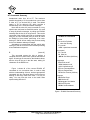
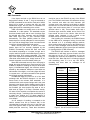
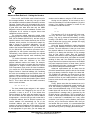
Figure 1 shows all of the current ELM323 AT
commands in one convenient chart. In order to help
with the understanding of these, we have grouped the
commands into four functional areas, but this has no
bearing on how they need to be used – it is only for
clarity. You may find this chart to be useful when
experimenting with the IC.
ELM323 AT Commands
general
D set all to Defaults
I show the ID string
Z reset all
<CR> repeat last command
bus control
FI Fast Init
SI Slow Init
SW hh Set Wake (hh*20ms)
responses
E1/0 Echo on/off
H1/0 Headers on/off
L1/0 Linefeeds on/off
FD use Formatted Data
PD use Packed Data
ST hh Set Timeout (hh*4ms)
requests
BD Buffer Dump
MA Monitor All
SH xx yy zz Set Header
AR Auto Receive
SR hh Set Rx address
Figure 1. ELM323 Command Summary
ELM323DSD
Elm Electronics – Circuits for the Hobbyist
< http://www.elmelectronics.com/ >
8 of 19
ELM323
Bus Initiation
Both the ISO 9141-2 and ISO 14230-4 (KWP2000)
standards require that the vehicle’s OBD bus be
initialized before any communications can take place.
The ISO 9141 standard allows for only a slow (2 to 3
second) process, while ISO 14230 allows for both the
slow method, and a faster alternative. In either case,
once the bus has been initiated, communications must
take place at least once every five seconds, or the bus
will revert to a low-power ‘sleep’ mode.
The ELM323 takes care of this bus initiation and
the periodic sending of ‘keep-alive’ or ‘wakeup’
messages for you – it is automatic and requires no
input from the user. The ELM323 will not perform the
bus initiation until the first message needs to be sent,
however, and it will do so by first attempting the slow
method, and if that fails then trying the fast. During the
automatic initiation process, the following message will
be displayed:
need to initialize
the bus
Try a slow init
yes
any
response
?
BUS INIT: ...
with the three dots appearing as the slow initiation
process is carried out. This will be followed by either
the expression ‘OK’ to say it was successful, or else
an error message to indicate that there was a problem.
(The most common error encountered is in forgetting
to turn the vehicle’s key to ‘ON’ before attempting to
talk to the vehicle.)
Once initiated, the ELM323 does what is required
to keep the bus alive, without any intervention from the
user. If you have installed monitoring LEDs, you will be
able to see that automatic messages are being sent
every few seconds in order to create bus activity.
If the user does not wish to use the two step
automatic bus initiation process, they can specify that
only the Slow Initiation, or only the Fast Initiation, be
attempted, by issuing the commands AT SI or AT FI
respectively. Note that the three dots are only printed
during a slow initiation, so if AT FI is issued, they will
not appear.
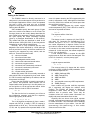
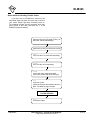
The chart at the right shows the automatic bus
initiation process in more detail:
no
KWP
or
ISO
?
no
yes
Lock/set the
keep-alive headers
yes
Try a fast init
any
response
?
no
print ERROR
print OK
Bus is alive so
resume activities
Figure 2. Initializing the Bus
ELM323DSD
Elm Electronics – Circuits for the Hobbyist
< http://www.elmelectronics.com/ >
9 of 19
ELM323
OBD Commands
If the bytes received on the RS232 bus do not
begin with the letters ‘A’ and ‘T’, they are assumed to
be OBD commands for the vehicle. Each pair of ASCII
bytes will be tested to ensure that they are valid
hexadecimal digits, and will then be combined into
single data bytes for transmitting to the vehicle.
OBD commands are actually sent to the vehicle
embedded in a data packet. The standards require
that three header bytes and an error checksum byte
be included with every message, and the ELM323
adds these extra bytes to your command bytes
automatically. The initial (default) values for these
header bytes are usually adequate for most requests,
but if you wish to change them, there is a method to do
so (see the Advanced Data Retrieval section).
When receiving data from a vehicle, the extra
header bytes are not normally displayed by the
ELM323. Occasionally vehicles will have more than
one module responding to a request, though, and it
may be useful to see the extra header bytes in order to
determine which ECU module responded. (The third
byte of the response is the address of the sender). To
view these extra header bytes, simply issue an AT H1
internal command, to turn the header printing on.
Most OBD commands are only one or two bytes in
length, but some can be three or more bytes long. The
ELM323 is capable of sending as many as seven data
bytes (14 hexadecimal digits), the maximum number
allowed by the standards. Attempts to send either an
odd number of hex digits, or too many digits will result
in a syntax error – the entire command is then ignored
and a single question mark printed.
Hexadecimal digits are used for all of the data
exchange with the ELM323 because it is the data
format used in the relevant SAE standards. It is
consistent with mode request listings and is the most
frequently used format used to display results. With a
little practice, it should not be very difficult to deal in
hex numbers, but some people may want to use a
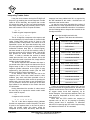
table such as Figure 3, or keep a calculator nearby.
All users will be required to manipulate the results in
some way, though – combining bytes and dividing by 4
to obtain rpm, dividing by 2 to obtain degrees of
advance, etc., and may find a software front-end to be
more helpful.
As an example of sending a command to the
vehicle, assume that A6 (or decimal 166) is the
command that is required to be sent. In this case, the
user would type the letter A, then the number 6, then
would press the return key. These three characters
ELM323DSD
would be sent to the ELM323 by way of the RS232
port. The ELM323 would store the characters as they
are received, and when the third character (the
carriage return) was received, would begin to assess
the other two. It would see that they are both valid hex
digits, and would convert them to a one byte value
(decimal value is 166). Three header bytes and a
checksum byte would be added, and a total of five
bytes would be sent to the vehicle. Note that the
carriage return character is only a signal to the
ELM323, and is not sent on to the vehicle.
After sending the command, the ELM323 listens
on the OBD bus for messages, looking for ones that
are directed to it. If a message address matches,
those received bytes will be sent on the RS232 port to
the user, while messages received that do not have
matching addresses will be ignored (but still available
for viewing with the AT BD command).
The ELM323 will continue to wait for messages
addressed to it until there are none found in the time
that was set by the AT ST command. As long as
messages are received, the ELM323 will continue to
reset this timer. Note that the IC will always respond
with something, even if it is to say ‘NO DATA’,
(meaning that there were no messages at all
addressed to it).
Hexadecimal
Number
Decimal
Equivalent
0
1
2
3
4
5
6
7
8
9
A
B
C
D
E
F
0
1
2
3
4
5
6
7
8
9
10
11
12
13
14
15
Figure 3. Hex to Decimal Conversion
Elm Electronics – Circuits for the Hobbyist
< http://www.elmelectronics.com/ >
10 of 19
ELM323
Talking to the Vehicle
The ELM323 cannot be directly connected to a
vehicle as it is, but needs support circuitry as shown in
the Example Applications section. Once incorporated
into such a circuit, one need only use a terminal
program to send bytes to and receive them from the
vehicle via the ELM323.
SAE standards specify that each group of bytes
sent to the vehicle must adhere to a set format. The
first byte (known as the ‘mode’) always describes the
type of data being requested, while the second, third,
etc. bytes specify the actual information required
(given by a ‘parameter identification’ or PID number).
The modes and PIDs are described in detail in the
SAE document J1979 (ISO 15031-5), and may also be
expanded on by the vehicle manufacturers.
Normally, one is only concerned with the nine
diagnostic test modes described by J1979 (although
there is provision for more). All of these modes are not
required to be supported by every vehicle, and are
often not. These are the nine modes:
01
02
03
04
05
06
07
08
09
: show current data
: show freeze frame data
: show diagnostic trouble codes
: clear trouble codes and stored values
: test results, oxygen sensors
: test results, non-continuously monitored
: test results, continuously monitored
: special control mode
: request vehicle information
Within each mode, PID 00 is normally reserved to
show which PIDs are supported by that mode. Mode
01, PID 00 must be supported by all vehicles, and can
be accessed as follows:
Ensure that the ELM323 is properly connected to
your vehicle, and powered. Most vehicles will not
respond without the ignition key in the ON position, so
turn the ignition on, but do not start the vehicle. At the
prompt, issue the mode 01 PID 00 command:
>01 00
The first time the bus is accessed, you will see a
bus initialization message, and then the response,
which might typically be as follows:
41 00 BE 1F B8 10
The 41 00 signifies a response (4) from a mode 1
request with PID 00 (a mode 2, PID 00 request is
answered with a 42 00, etc.). The next four bytes (BE,
1F, B8, and 10) represent the requested data, in this
ELM323DSD
case a bit pattern showing the PIDs supported by this
mode (1=supported, 0=not). Although this information
is not very useful for the casual user, it does prove that
the connection is working.
Another example requests the current engine
coolant temperature (ECT). This is PID 05 in mode 01,
and can be requested as follows:
>01 05
The response will be of the form:
41 05 7B
This shows a mode 1 response (41) from PID 05,
with value 7B. Converting the hexadecimal 7B to
decimal, one gets 7 x 16 + 11 = 123. This represents
the current temperature in degrees Celsius, but the
zero value is offset to allow for subzero temperatures.
To convert to the actual coolant temperature, simply
subtract 40. In this case, then, the coolant temperature
is 123 - 40 = 83 degrees C.
A final example shows a request for the OBD
requirements to which this vehicle was designed. This
is PID 1C of mode 01, so at the prompt, type:
>01 1C
A typical response would be:
41 1C 01
The returned value (01) shows that this vehicle
conforms to OBDII (California ARB) standards. Some
of the defined responses are :
01
02
03
04
05
06
: OBDII (California ARB)
: OBD (Federal EPA)
: OBD and OBDII
: OBD I
: not intended to meet any OBD requirements
: EOBD (Europe)
Some modes may provide multi-line responses
(09, if supported, can display the vehicle’s serial
number). The ELM323 will attempt to display all
responses in these cases, but only if it is allowed
sufficient time to process each. There may be
occasions when the vehicle sends information too
rapidly and some intermediate lines are lost.
Hopefully this has shown how typical requests
proceed. It has not been meant to be a definitive guide
on modes and PIDs – this information can be obtained
from the manufacturer of your vehicle, from the SAE
(www.sae.org), ISO (www.iso.org), or from various
other sources on the web.
Elm Electronics – Circuits for the Hobbyist
< http://www.elmelectronics.com/ >
11 of 19
ELM323
Interpreting Trouble Codes
Likely the most common use that the ELM323 will
be put to is in obtaining the current Diagnostic Trouble
Codes or DTCs. Minimally, this requires that a mode
03 request be made, but first one should determine
how many trouble codes are presently stored. This is
done with a mode 01 PID 01 request as follows:
>01 01
To which a typical response might be:
response has been padded with 00’s as required by
the SAE standard for this mode – the 0000’s do not
represent actual trouble codes.
As was the case when requesting the number of
stored codes, the most significant bits of each trouble
code also contain additional information. It is easiest to
use the following table to interpret the extra bits in the
first digit as follows:
If the first hex digit received is this,
Replace it with these two characters
41 01 81 07 65 04
The 41 01 signifies a response to the request, and
the next data byte (81) is the number of current trouble
codes. Clearly there would not be 81 (hex) or 129
(decimal) trouble codes present if the vehicle is at all
operational. In fact, this byte does double duty, with
the most significant bit being used to indicate that the
malfunction indicator lamp (MIL, or ‘Check Engine’)
has been turned on by one of this module’s codes (if
there are more than one), while the other 7 bits of this
byte provide the actual number of stored trouble
codes. In order to calculate the number of stored
codes when the MIL is on, then, subtract 128 (or 80
hex). When the result is less than 128, simply read the
number of stored codes directly.
The above response then indicates that there is
one stored code, and it was the one that set the Check
Engine Lamp or MIL on. The remaining bytes in the
response provide information on the types of tests
supported by that particular module (see the SAE
document J1979 for further information).
In this instance, there was only one line to the
response, but if there were codes stored in other
modules, they each could have provided a line of
response. To determine which module is reporting the
trouble code, one would have to turn the headers on
(AT H1) and then look at the third byte of the three
byte header for the address of the module that sent
the information.
Having determined the number of codes stored,
the next step is to request the actual trouble codes
with a mode 03 request:
>03
A response to this could be:
43 01 33 00 00 00 00
The ‘43’ in the above response simply indicates
that this is a response to a mode 03 request. The other
6 bytes in the response have to be read in pairs to
show the trouble codes (the above would be
interpreted as 0133, 0000, and 0000). Note that the
ELM323DSD
0
P0
Powertrain Codes - SAE defined
1
P1
“
“ - manufacturer defined
2
P2
“
“ - SAE defined
3
P3
“
“ - jointly defined
4
C0
Chassis Codes - SAE defined
5
C1
“
“ - manufacturer defined
6
C2
“
“ - manufacturer defined
7
C3
“
“ - reserved for future
8
B0
Body Codes - SAE defined
9
B1
“
“ - manufacturer defined
A
B2
“
“ - manufacturer defined
B
B3
“
“ - reserved for future
C
U0
Network Codes - SAE defined
D
U1
“
“ - manufacturer defined
E
U2
“
“ - manufacturer defined
F
U3
“
“ - reserved for future
Taking the example trouble code (0133), the first
digit (0) would then be replaced with P0, and the 0133
reported would become P0133 (which is the code for
an ‘oxygen sensor circuit slow response’). As for
further examples, if the response had been D016, the
code would be interpreted as U1016, while a 1131
would be P1131.
More than one ECU module can respond to
requests such as this, so be prepared to possibly
receive several lines of responses. To determine
which ECU is reporting each line would require turning
the headers on with the AT H1 command.
Elm Electronics – Circuits for the Hobbyist
< http://www.elmelectronics.com/ >
12 of 19
ELM323
Resetting Trouble Codes
The ELM323 is quite capable of resetting
diagnostic trouble codes, as this only requires issuing
a mode 04 command. The consequences should
always be considered before sending it, however, as
more than the MIL (or ‘Check Engine’ lamp) will be
reset. In fact, issuing a mode 04 will:
- reset the number of trouble codes
- erase any diagnostic trouble codes
- erase any stored freeze frame data
- erase the DTC that initiated the freeze frame
- erase all oxygen sensor test data
- erase mode 06 and 07 test results
Clearing of all of this information is not unique to
the ELM323 – it occurs whenever a scan tool is used
to reset the codes. The biggest problem with losing
this data is that your vehicle may run poorly for a short
time, while it performs a recalibration.
To avoid inadvertently erasing stored information,
the SAE specifies that scan tools must verify that a
mode 04 is intended (“Are you sure?”) before actually
sending it to the vehicle, as all trouble code
information is immediately lost when the mode is sent.
Recall that the ELM323 does not monitor the content
of the messages, so it will not know to ask for
confirmation of the mode request – this would have to
be the duty of a software interface if one is written.
As stated, to actually erase diagnostic trouble
codes, one need only issue a mode 04 command. A
response of 44 from the vehicle indicates that the
mode request has been carried out, the information
erased, and the MIL turned off. Some vehicles may
require a special condition to occur (eg. the ignition on
but the engine not running) before they will respond to
a mode 04 command.
That is all there is to clearing the codes. Once
again, be very careful not to accidentally send an 04!
Error Messages
When hardware or data problems are
encountered, the ELM323 will respond with one of the
following short messages. Here is a brief description of
each:
BUS BUSY
The ELM323 tried to send the mode command or
initialize the bus, but detected too much activity to
insert a message. This could be because the bus was
in fact busy, but is often due to wiring problems that
result in a continuously active input at OBDIn.
FB ERROR
This message is sent when a ‘feedback’ error is
detected. When the K Line is first energized, a check
is made to ensure that the signal is seen at OBDIn. If it
does not appear there, this message is displayed.
Check your wiring before proceeding.
DATA ERROR
There was a response from the vehicle, but the
information was incorrect or could not be recovered. In
the case of a bus initialization, this error signifies that
the format bytes received were not as required, so
initiation could not continue. If the error occurs during
normal operation, it means that the response did not
ELM323DSD
contain enough bytes to be a valid message (which
can occur if the signal is interrupted during a data
transmission).
<DATA ERROR
The error checksum result was not as expected,
indicating a data error in the line pointed to (the
ELM323 still shows you what it received). There could
have been a noise burst which interfered, or a circuit
problem. Try re-sending the command.
NO DATA
The IC waited for the period of time that was set
by AT ST, and detected no response from the vehicle.
It may be that the vehicle had no data to offer, that the
mode requested was not supported, or that the vehicle
was attending to higher priority issues and could not
respond to the request in the allotted time. Try
adjusting the AT ST time to be sure that you have
allowed sufficient time to obtain a response.
?
This is the standard response for a misunderstood
command received on the RS232 bus. Usually it is due
to a typing mistake.
Elm Electronics – Circuits for the Hobbyist
< http://www.elmelectronics.com/ >
13 of 19
ELM323
Monitoring the Bus
Some vehicles use the OBD bus for information
transfer during normal vehicle operation, passing a
great deal of information over it. A lot can be learned if
you have the good fortune to connect to one of these
vehicles, and are able to decipher the contents of the
messages. Other vehicles cannot be initialized, and
instead continually send information; the only way to
read the data from them is by monitoring everything
that is being sent, and extracting the useful data.
To see how your vehicle uses the OBD bus, you
will have to enter the ELM323’s ‘Monitor All’ mode, by
sending the command AT MA from your terminal
program. Once received, the IC will continually display
information that it sees on the OBD bus, regardless of
transmitter or receiver addresses. Note that the
periodic ‘wakeup’ messages are not sent while in this
mode, so the bus may ‘go to sleep’ in a short time.
The monitoring mode can only be stopped by
sending a single character over the RS232 connection
to the ELM323. Any single character will interrupt the
IC, returning it to the command mode (waiting for an
input). Note that the character you send will be
discarded, and will have no effect on any subsequent
commands. The time it takes to respond to this
interrupting character will depend on what the ELM323
is doing when it is received. The IC will always finish a
task that is in progress (printing a line, for example)
before returning to wait for input, so you should always
wait for the prompt character (‘>’) before continuing to
issue other commands.
If the headers are not currently displayed, simply
typing AT MA shows only the contents of messages, not
the transmitter and receiver addresses. To show who is
sending to whom, you will need to first turn headers on
(AT H1) before beginning to monitor (AT MA).
There is a slight possibility that OBD messages
could be missed by the ELM323 while it is retransmitting
a previous OBD message on the RS232 connection.
This is due to the fact that the ELM323 is a singletasking microprocessor that does not have hardware to
buffer all of the OBD data in the background while it is
performing other tasks. Should an OBD message begin
while the IC is ‘talking’ on the RS232 bus, several bytes
may be missed, and a ‘<DATA ERROR’ message will
likely be displayed. Usually the vehicle ECUs provide
tens of milliseconds between messages and this is not a
problem, but we are just warning that if an ECU should
be transmitting data at a very high rate, it may
overwhelm the ELM323, and DATA ERRORs could
result. If this occurs, you may want to reduce the amount
of RS232 data sent by turning linefeeds off, and using
the ‘packed data’ mode. Most users will never encounter
this problem, and so this limitation will not be noticeable.
Computer Control – Using Packed Data
If a person is simply asking a vehicle for the
current Diagnostic Trouble Codes, speed is normally
not an issue, as data is displayed (essentially) as
quickly as it can be read. If interfaced to a computer,
however, speed may be very important.
The ‘Packed Data’ mode is a convenient means to
effectively triple the ELM323’s data transfer rate while
maintaining the 9600 baud connection. Once entered
(with AT PD), all OBD messages will be returned as a
single length byte followed by the actual data bytes.
There are no space characters sent between the
bytes, and no carriage returns or linefeeds between
messages either – the data is simply retransmitted
exactly as received from the vehicle. While no longer
readable by a person, computers will understand this
information, and will gain speed through both reduced
transfer and reduced data conversion times. The
ELM323 does not function any differently when in this
ELM323DSD
mode – if the headers are to be displayed, they are
sent, if in monitoring mode, data is continually sent,
etc. The only difference is in the format in which the
OBD responses are returned to the controlling
computer.
Often there is no response from the vehicle for a
particular request. When in the default (formatted data)
mode, this is shown with ‘NO DATA’ being printed, but
while in the Packed Data mode you will only receive a
single length byte of value 0 (zero).
While rare, errors may occasionally be detected in
the vehicle’s data. Normally, a ‘<DATA ERROR’ would
be printed for this, but in the Packed Data mode,
checksum errors are identified by setting the most
significant bit of the length byte. Because of this, one
should always check the length byte for a value of 128
or greater before processing the remainder of the
message.
Elm Electronics – Circuits for the Hobbyist
< http://www.elmelectronics.com/ >
14 of 19
ELM323
Advanced Data Retrieval – Setting the Headers
Prior to v2.0, the ELM323 used a fixed format for
the message headers, so that only one type of data
(the mandated emissions-related information) could be
retrieved. Starting with v2.0, the header bytes can be
specified by the user, allowing for the direct retrieval of
a great deal more data. Note that only the OBDII
diagnostic codes have been mandated, so there is no
requirement for all vehicles to support these extra
capabilities, and some do not.
The emissions related diagnostic trouble codes
that most people are familiar with are described in the
SAE J1979 standard (ISO15031-5), and are really a
specific instance of the modes allowed by the J2178-4
standard, which provides for information transfer by
what is known as ‘functional addressing’. For the
OBDII mandated diagnostics, requests are actually
made to the functional addresses 6A (for ISO9141) or
33 (for ISO14230), with whatever processor that is
responsible for that function answering the request.
Theoretically, many different processors can respond
to a single functional request, each contributing their
own data.
To retrieve information beyond that of the OBDII
requirements, either the functional or the ECU
physical ‘address’ needs to be known. For example,
consider that you want to request that the processor
responsible for Engine Coolant provide the current
Fluid Temperature, and you do not know its address.
You consult the J2178 standards and determine that
Engine Coolant is functional address 48. Combining
this with the knowledge that the ELM323 does not
support in-frame responses (so it only allows message
types 8 to 15), and a scan tool is normally address F1,
you may decide to set the three header bytes to A8 48
and F1. This is done with the Set Header command,
which is used as follows:
>AT SH A8 48 F1
The three header bytes assigned in this manner
will stay in effect until changed by the next AT SH
command, a reset, or an AT D. If the default Auto
Receive mode is in effect when the header bytes are
set, the ELM323 will also adjust the receive address
as appropriate – since the first byte tells us that this is
a functional address, then for ISO9141 systems, the
receive address will automatically be set to the
functional address plus one (49). For ISO14230
systems, the physical address of the sender (F1) will
be used for the receive address. If you decide that this
is not appropriate for your case, you can always set
ELM323DSD
another receive address, using the AT SR command.
Having set the headers, all one needs to do is
issue the secondary ID for fluid temperature (10) at the
prompt. If the display of headers is turned off, the
conversation could look like this:
>10
10 2E
The response to ID 10 is the byte 2E in this case.
You may find that some requests, being of a low
priority, may not be answered immediately, possibly
causing a ‘NO DATA’ result. In these cases, you may
want to adjust the timeout value, perhaps first trying
the maximum (with AT ST FF).
Using the physical addressing modes described
by the J2190 standard involves an almost identical
process. The main difference is that you must know
the physical address of the device that you want to
speak to (it is always the third byte of any message
sent by that device), rather than the functional
address. One caution to note with physical addressing
is that there are modes which can initiate the constant
sending of data, and if the ELM323’s timeout is set
longer than the time between responses, the ELM323
may send responses forever. In these cases, just like
in the Monitoring All mode, a single character will have
to be sent to interrupt the stream of data.
Advanced experimenters will be aware that the
ISO14230 standard also specifies that the first header
byte must always include the length of the data field.
The ELM323 will calculate and insert these six bits
automatically for each message, no matter what you
provided for them in your header definition. It does not
however, alter the two most significant bits of that first
header byte.
Finally, please note that the headers that are in
effect when the bus is initiated will remain locked-in for
all of the following ‘keep-alive’ messages, no matter
what is issued afterwards using AT SH. These same
header bytes will also be the ones used for the ‘start
communications’ message that is generated by the
ELM323 during a fast initiation. This is provided as a
feature to allow experimentation with the header bytes
once a connection is established, but it may cause
confusion if you first try to set the headers, then initiate
the bus, only to find that the initiation fails. Until you
are familiar with your vehicle, it is recommended that
you send a simple command (01 00 or such) to first
start bus activity, then try changing the header bytes.
Elm Electronics – Circuits for the Hobbyist
< http://www.elmelectronics.com/ >
15 of 19
ELM323
Quick Guide for Reading Trouble Codes
If you don’t use your ELM323 for some time, this
entire data sheet may seem like quite a bit to review if
your ‘Check Engine’ light does eventually come on.
The following provides a quick procedure which may
prove helpful in that case (note that the ‘>’ is the
ELM323’s prompt character):
Connect using HyperTerminal, ZTerm, etc.,
9600 8N1, and no handshaking
Ignition Key to ON, but vehicle not running
>ATZ
to be sure the IC is reset and responding
>0100
to be sure the car is responding
>0101
to see how many codes are present
(look at the second digit of the 3rd byte)
>03
to see the codes
Ignore the first byte and read the others in
pairs. The table on page 12 helps.
FIX THE VEHICLE!
>04
to reset the codes
ELM323DSD
Elm Electronics – Circuits for the Hobbyist
< http://www.elmelectronics.com/ >
16 of 19
ELM323
Example Applications
The SAE J1962 standard dictates that all OBD
compliant vehicles must provide a standard connector
near the driver’s seat, the shape and pinout of which is
shown in Figure 4 below. The circuitry described here
can be used to connect to this J1962 plug without
modification to your vehicle.
The male J1962 connector required to mate with a
vehicle’s connector may be difficult to obtain in some
locations, and you could be tempted to improvise by
making your own connections to the back of your
vehicle’s connector. If doing so, we recommend that
you do nothing that would compromise the integrity of
your vehicle’s OBD network. The use of any connector
which could easily short pins (such as an RJ11 type
telephone connector) is definitely not recommended.
The circuit of Figure 5 on the next page shows
how the ELM323 could typically be used. Circuit power
is obtained from the vehicle (via OBD pins 16 and 5)
and, after some capacitive filtering, is presented to a
five volt regulator. (Note that a few vehicles have been
reported not to have a pin 5. On these, you use pin 4
instead of pin 5.) The regulator powers several points
in the circuit as well as an LED (for visual confirmation
that power is present).
The remaining two connections to the vehicle
(OBD pins 7 and 15) are for the two data lines
prescribed by the ISO 9141 and ISO 14230 standards.
To meet the standards, the ELM323 controls both lines
through the NPN transistors shown, with the pullup
resistors connected to their collectors. The 510Ω value
for these resistors is specified in the standards, and
substituting for a larger value would only increase rise
times, possibly making the circuit inoperable.
Reducing the value could cause circuit damage, so try
to keep as close as possible to the 510Ω. Note also
that 1/2W resistors should be used (and that 1/4W
240Ω + 270Ω resistors work well, too).
Data is received from the K Line of the OBD bus
and inverted by the PNP transistor shown before being
applied to pin 11 of the ELM323. This transistor raises
the threshold voltage to about 4V from the inherent
2.5V with the CMOS input of the ELM323. This helps
to increase noise immunity while reducing transition
times at the input pin, because of the amplification.
A very basic RS232 interface is shown connected
to pins 5 and 6 of the ELM323. This circuit ‘steals’
power from the host computer in order to provide a full
swing of the RS232 voltages without the need for a
negative supply. The RS232 pin connections shown
are for a standard 9 pin connector. If you are using the
ELM323DSD
older 25 pin style, please refer to the web site help
pages for the equivalent pins.
RS232 data from the computer is directly
connected to pin 5 of the ELM323 through a 47KΩ
current limiting resistor. This resistor allows for voltage
swings in excess of the supply levels while preventing
damage to the ELM323. A single 100KΩ resistor is
also shown in this circuit so that pin 5 is not left floating
if the computer is disconnected.
Transmission of RS232 data is via the PNP
transistor shown connected to pin 6. This transistor
allows the output voltage to swing between +5V and
the negative voltage stored on the 0.1µF capacitor
(which is charged by the computer’s TxD line). Using
the computer’s own supply guarantees that the RS232
voltage levels will be compatible. Note also that the
ELM323’s pin 4 has been tied to VDD, so that by
default linefeed characters will be sent whenever a
carriage return is sent.
The four LEDs shown (on pins 7 to 10) have been
provided as a visual means of confirming circuit
activity. Resistors are shared among Tx and Rx LEDs
as they will not be on at the same time (the ELM323 is
not capable of true multitasking). The OBD bus may
be in an initialization phase while data is being sent or
received on the RS232 bus, though, so separate
resistors are shown for these two groups.
Finally, the crystal shown connected between pins
2 and 3 is a common TV type that can be easily and
inexpensively obtained. The 27pF crystal loading
capacitors shown are typical only, and you may have
to select other values depending on what is specified
for the crystal you obtain.
This completes the description of Figure 5. While it
is the minimum required to talk to an OBD equipped
vehicle, it is a fully functional circuit. Page 19 shows
one more example circuit – that of an OBD monitor.
1
8
9
16
Figure 4. Vehicle Connector
Elm Electronics – Circuits for the Hobbyist
< http://www.elmelectronics.com/ >
17 of 19
ELM323
OBD
Interface
78L05
16
(Battery
Positive)
+5V
0.01µF
0.1µF
750Ω
5
(Signal
Ground)
Notes: -
NPN transistors are
2N3904 or similar
-
PNP transistors are
2N3906 or similar
-
Diodes are 1N4148,
1N4001, etc.
‘Power On’
LED
510Ω
15
(L Line)
2.2KΩ
+5V
+5V
510Ω
(K Line)
7
330Ω
330Ω
2.2KΩ
Status
LEDs
14
+5V
13
12
11
10
9
+5V
RS232
Interface
(DB9F)
8
10KΩ
323
10KΩ
2 (RxD)
+5V
10KΩ
1
2
3
4
5
6
7
4.7KΩ
0.1µF
5 (SG)
3.58MHz
4.7KΩ
27pF
27pF
3 (TxD)
47KΩ
100KΩ
1 (DCD)
4 (DTR)
6 (DSR)
Figure 5. Typical OBD to RS232 Interface
7 (RTS)
8 (CTS)
ELM323DSD
Elm Electronics – Circuits for the Hobbyist
< http://www.elmelectronics.com/ >
18 of 19
ELM323
Example Applications (continued)
As a final example, we provide an OBD monitor.
There are times when it would be convenient to be
able to simply monitor the OBD bus for one reason or
another – personal learning, monitoring others in
teaching environments, and also there are apparently
some vehicles produced that continually send OBD
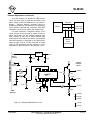
information, so can not be ‘read’ in the standard way.
For these situations, a simplified version of the
circuit in Figure 5 can be used as shown in Figure 6
below. The K and L line bus transmit interfaces have
been removed as they are no longer required (and
would only serve to load the bus down). The simplified
three-wire interface is connected to the OBD bus as
shown at right, and an AT MA command is issued
(refer to the Monitoring the Bus section for more
information on that command). That’s all there is to it!
OBD Bus
Vehicle
Monitor
Circuit
(as in Fig 6)
78L05
16
(Battery
Positive)
Scan Tool
(as in Fig 5)
+5V
0.01µF
0.1µF
+5V
5
(Signal
Ground)
+5V
10KΩ
14
13
12
11
10
9
8
2 (RxD)
10KΩ
10KΩ
323
+5V
4.7KΩ
4.7KΩ
0.1µF
1
7
(K Line)
RS232
Interface
(DB9F)
2
3
4
5
6
5 (SG)
7
3.58MHz
3 (TxD)
27pF
27pF
47KΩ
OBD
Interface
100KΩ
1 (DCD)
4 (DTR)
6 (DSR)
Figure 6. A Simplified OBD Monitor Circuit
7 (RTS)
8 (CTS)
ELM323DSD
Elm Electronics – Circuits for the Hobbyist
< http://www.elmelectronics.com/ >
19 of 19