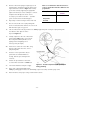
1
ACTIVITY VI: FIBER TERMINATIONS
Overview
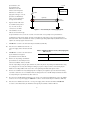
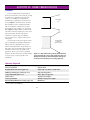
In the preceding activity we learned about
Fresnel losses and how to reduce them. As you may
already know, the preparation of the fiber optic
"end", or core/cladding, is very important in
determining the coupling between two fibers. At
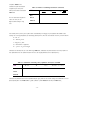
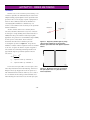
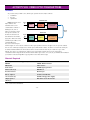
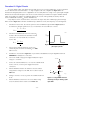
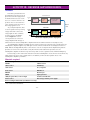
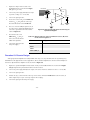
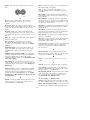
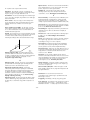
the top of Figure 6.1 is an illustration of an ideal
fiber termination. It has a completely flat surface
with no irregularities or imperfections to scatter
light outside the expected light cone. The bottom
half of Figure 6.1 depicts a fiber end with a rough
end surface which causes light rays to scatter over a
much greater angle. When the light rays are
scattered over a greater angle, the adjoining
detector or fiber does not capture as much of the
exiting light.
In this activity we will go through the various
steps of terminating an optical fiber and measure
improvements in coupling with each step. The
baseline measurement will be an optical fiber cut
with a wire cutter. (Using a fiber with such a poor
termination would never be acceptable in real
applications. We do so here only for educational
purposes.) The fiber will then be cut and polished in
successive steps to create a proper fiber end
termination.
Normal light
cone
Expanded light
cone due to
imperfect surface
1470.eps
Figure 6.1 (Top) Fiber with a perfectly flat termination,
arrows depicting the cone of light exiting the fiber core.
(Bottom) A poor fiber polish/termination showing the
resultant increased divergence of exiting light rays.
Materials Required
Phototransistor, LPT80A in black sidelooker housing
Solderless breadboard*
2-meter optical fiber
Paper Towels*
Red LED (IF-E96-blue housing-pink dot)
Single-edge razor blade or sharp knife*
2000 grit polishing paper (dark gray color)
Diagonal-cutting pliers*
3 µm polishing film (pink color)
Water, light oil or glycerin*
390 Ω resistor
18-gauge wire stripper*
1-meter optical fiber
Variable voltage power supply*
Infrared LED (IF-E91C-blue housing-copper dot)
Multimeter*
* Not included in the IF-LMH kit
- 24 -