1
CHAPTER 1 REASON FOR A WINDOW WATCHDOG
1.1 Reason and benefit of a watchdog in general
In an application, after reset, the microcontroller has to control the functionality of a device. Usually the
system works properly up to the time, the device is switched off.
In rare cases, it might happen that the microcontroller is running out of control. Several reasons can be
responsible for that phenomena and the effect of being out of control to the application can show a lot
of different behaviors.
One example for malfunction might be a software bug, which guides the software into an endless loop.
In thiscase, the microcontroller shows no reaction or action at all for ever. So, the application is out of
order. The user has to initiate a reset ( e.g. by switching off and on the power ) to reactivate the
application.
A watchdog is an internal or external peripheral, which has to be restarted by the software sequential
within a pre-defined timing range. If the software runs fail ( e.g. by stucking in an endless loop ) and
the watchdog is not restarted within the expected time, the watchdog generates an hardware reset.
Using such kind of security - peripheral, it is given that an application does not stuck for all time and
the application restarts and recovers. This does not prohibit the malfunction, but it recovers the
application.
1.2 Advantage of a window watchdog compared to a usual watchdog
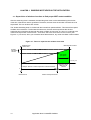
A usual watchdog has only one ( selectable ) time period within the watchdog can be restarted. The
restart can be anywhere up to the time where the watchdog time has elapsed. There is only one
restriction for proper functionality of the application: restart has to be done before watchdog - timer
overflows.
If the microcontroller stucks in an endless loop in which restarting of the watchdog – timer is
implemented accidently, the microcontroller will also stuck for ever, as if no watchdog is implemented
at all.
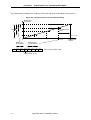
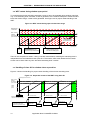
The window watchdog timer ( WDT ) has two time stamps within the restart is allowed: A dedicated
time after WDT start and the overflow time, the so called “open window”. When a restart is triggered
during this time frame, WDT restart is done. If the restart is triggered outside this window, a reset of
the microcontroller is initiated.
The chance that the microcontroller will stuck just within an endless loop where a restart of the
watchdog – timer is implemented by accident might be very seldom. Stucking in an endless loop
where a restart of the watchdog – timer is implemented just within the watchdog window open time
frame might be nearly impossible.
So, the window watchdog increase the security level of the system, compared to a simple watchdog.
An internal window watchdog is implemented in 78K0/Fx2/Kx2/Lx2 subseries.
8
Application Note U18758EE1V1AN00