1
54
Programming Techniques and List Processing
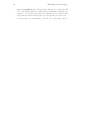
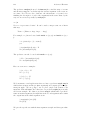
This is a very desirable property for programs. For example, if we could write
a program to determine that a given string of words was a legitimate sentence
then we could use the same program to generate arbitrary grammatical
sentences. Unfortunately, it not always possible to give a declarative reading
to a Prolog program.
6.1.1
Evaluation in Prolog
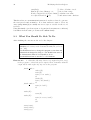
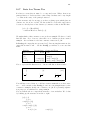
Unlike many programming languages, Prolog does not automatically evaluate ‘expressions’. For example, in Pascal,
Y := 2 + 1;
the term 2 + 1 is automatically evaluated and Y is assigned the value 3.
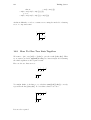
Here is an attempt to do ‘the same thing’ in Prolog using =/2:
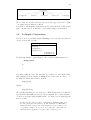
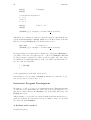
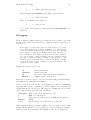
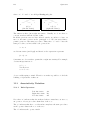
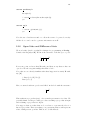
Y = 2 + 1.
with the consequence that the term 2+1 is unevaluated and the term Y is
unified with the term 2+1 with the result that Y is bound to 2+1.
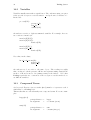
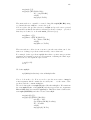
Similar problems arise in relation to LISP. LISP will generally seek to
evaluate expressions. For example, in
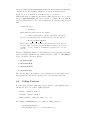
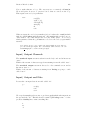
(foo (+ 1 2) 3)
LISP evaluates the term (s-expression) (foo (+ 1 2) 3) by evaluating
(+ 1 2) to 3 and then evaluating (foo 3 3). A naive attempt to
construct a similar expression in Prolog might look like:
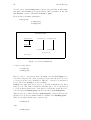
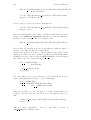
foo(1+2,3)
but Prolog does not try to evaluate the term 1+2.
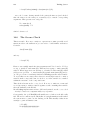
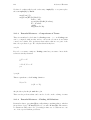
Of course, there are times when evaluation is exactly what is wanted. Sometimes, particularly with arithmetic expressions, we want to evaluate them.
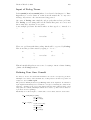
A special predicate is/2 is provided. This predicate can be used as in:
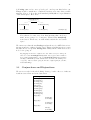
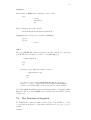
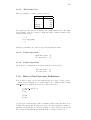
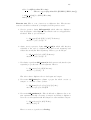
Y is 2 + 1.
In this case, the term 2+1 is evaluated to 3 and Y is unified with this term
resulting in Y being bound to 3.
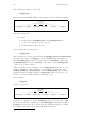
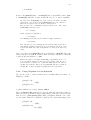
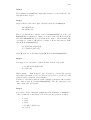
We can use is/2 to implement a successor relation:
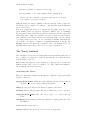
successor(X,Y):Y is X + 1.