1
AMD ACCELERATED PARALLEL PROCESSING
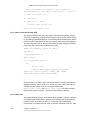
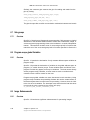
possible overloaded functions with respect to vectors, but this is not expected to
be a particular burden to developers because explicit conversion can always be
applied at the point of function evocation.)
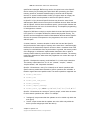
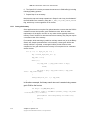
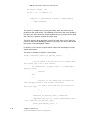
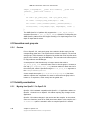
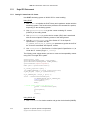
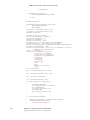
For overloaded kernels, the following syntax is used as part of the kernel name:
foo(type1,...,typen)
where type1,...,typen must be either an OpenCL scalar or vector type, or can
be a user-defined type that is allocated in the same source file as the kernel foo.
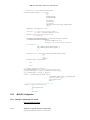
To allow overloaded kernels, use the following syntax:
__attribute__((mangled_name(myMangledName)))
The kernel mangled_name is used as a parameter to pass to the
clCreateKernel() API. This mechanism is needed to allow overloaded kernels
without changing the existing OpenCL kernel creation API.
5.3.5
Templates
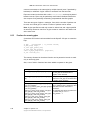
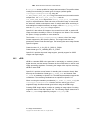
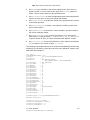
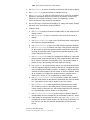
OpenCL C++ provides unrestricted support for C++ templates, as defined in
Section 14 of the C++ language specification. The arguments to templates are
extended to allow for all OpenCL base types, including vectors and pointers
qualified with OpenCL C address spaces (i.e. __global, __local, __private,
and __constant).
OpenCL C++ kernels (defined with __kernel) can be templated and can be
called from within an OpenCL C (C++) program or as an external entry point
(from the host).
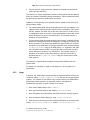
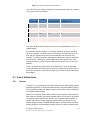
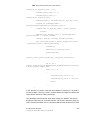
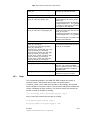
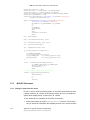
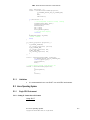
For kernel templates, the following syntax is used as part of the kernel name
(assuming a kernel called foo):
foo<type1,...,typen>
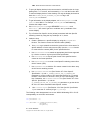
where type1,...,typen must be either OpenCL scalar or vector type, or can be
a user-defined type that is allocated in the same source file as the kernel foo. In
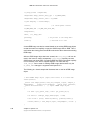
this case a kernel is both overloaded and templated:
foo<type1,...,typen>(typen+1,...,typem)
Note that here overloading resolution is done by first matching non-templated
arguments in order of appearance in the definition, then substituting template
parameters. This allows intermixing of template and non-template arguments in
the signature.
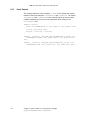
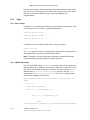
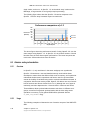
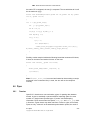
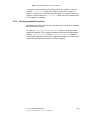
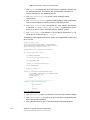
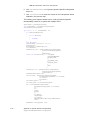
To support template kernels, the same mechanism for kernel overloading is used.
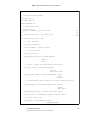
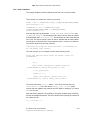
Use the following syntax:
__attribute__((mangled_name(myMangledName)))
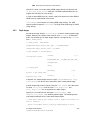
The kernel mangled_name is used as a parameter to passed to t he
clCreateKernel() API. This mechanism is needed to allow template kernels
5.3 Additions and Changes to Section 6 - The OpenCL C Programming Language
Copyright © 2013 Advanced Micro Devices, Inc. All rights reserved.
5-5