1
Small Vision System User Manual
6.5.3
69
Projection
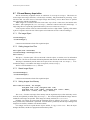
bool Project3D(double *x, double *y, double X, double Y, double Z,
int which)
This function can be used to project a 3D point to its corresponding point in the rectified image. The
argument which is either svsLEFT or svsRIGHT. If there is no image or rectification, the function
returns false.
6.5.4
Controlling the Image Stream
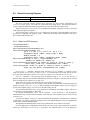
bool CheckParams()
bool Start()
bool Stop()
svsStereoImage *GetImage(int ms)
An acquisition object acquires stereo images and returns them when requested. These functions
control the image streaming process.
CheckParams() determines if the current acquisition parameters are consistent, and returns true if
so. This function is used in video acquisition, to determine if the video device supports the modes that
have been set. If the device is not opened, CheckParams() returns false.
Start() starts the acquisition streaming process. At this point, images are streamed into the object,
and can be retrieved by calling GetImage(). GetImage() will up to ms milliseconds for a new image
before it returns; if no image is available in this time, it returns NULL. If an image is available, it returns
an svsStereoImage object containing the image, rectified if rectification is turned on. The
svsStereoImage object is controlled by the acquisition object, and the user program should not delete
it. The contents of the svsStereoImage object are valid until the next call to GetImage().
Start() returns false if the acquisition process cannot be started. Stop() will stop acquisition.
NOTE: GetImage() returns a pointer to an svsStereoImage object. This object can be manipulated
by the user program until the next call to GetImage(), at which point its data can change. The user
program should not delete the svsStereoImage object, or any of its buffers. All object and buffer
allocation is handled by the acquisition system. If the application needs to keep information around across
calls to GetImage(), then the svsStereoImage object or its buffers can be copied.
6.5.5
Error String
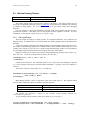
char *Error()
Call this function to get a string describing the latest error on the acquisition object. For example, if
video streaming could not be started, Error() will contain a description of the problem.