1
which a user can specify various parameters from which it calculates the mobility, along with related values such as the conductivity and carrier density.
The program is open source, and users may add any semiconductor they wish,
provided that they have the necessary data.
2
Theory
The Mobility is determined by the rate at which electrons are scattered by
impurities and defects within the crystal structure of the semiconductor. This
rate 1/τ (s− 1) is the reciprocal of the relaxation time τ (s), the average time
between collisions. The relaxation time can be adjusted to account for the
varying degrees of scattering on any given collision. This is called the momentum
relaxation time τm . The mobility is dependent upon τm by the equation
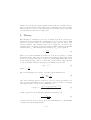
µ=
qτm
m∗
(2)
There are several mechanisms by which the electrons are scattered. Ionized
impurities interact with electrons and holes, attracting/repelling them via the
electric force. Electrons can also be scattered by neutral impurities, dislocations
in the crystal structure, and by acoustic and optical phonons. The equations
for the momentum relaxation times are given in Table 1 in the form
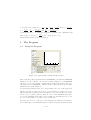
τi (x) = τi xri
Where x =
(3)
E
kT
The total scattering rate is equal to the sum of the individual rates.
X 1
1
=
τm (x)
τi (x)
(4)
Since these scattering rates are a function of electron energy, they must be averaged over the Fermi Dirac electron distribution. The procedure for averaging
the relaxation time over the electron distribution is
R∞
2 0 τm (x)(−∂f0 /∂x)xt+3/2 dx
t
R∞
(5)
< τm (x)x >=
3
f0 x1/2 dx
0
[1] The equation for the Fermi Dirac Distribution function f0 is
1
1 + exp(
E−Ef
kT
)
(6)
[1] where E is the electron energy, Ef is the Fermi Energy, k is Boltzmann’s
constant, and T is the Temperature.
A-2