1
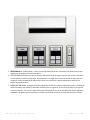
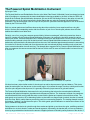
1. SPASM Mode or "INTRO" Mode: A short (15 second) mode that serves to accustom the patient to the touch
and feel of the handset on the back and spine.
2. REFLEX Mode: Stimulates the cervical, thoracic and lumbo-sacral paraspinal muscles. Also serves to stimulate
stretch reflexes in these muscle groups. As practitioners are taught, the para-spinal reflexes enable protective
responses at each vertebral level and assist the spine in the countless, constant adjustments necessary for
balance and good posture.
3. MOBILIZATION Mode: As taught by Geoffrey Maitland, the father of modern mobilization theory, mobilization
restores flexibility and mobility to individual vertebral joints or segments, in turn restoring function, the goal of
all physical therapy. The counter-rotated forces generated with the use of the handset break fibrous adhesions.
In addition, the gentle passive movements increase synovial fluid circulation and help lubricate joint surfaces.
Advanced Therapy Systems
Page 18 of 333