1
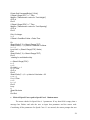
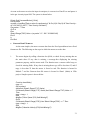
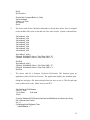
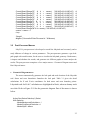
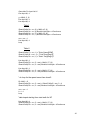
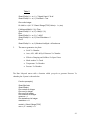
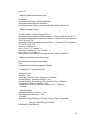
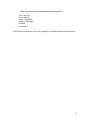
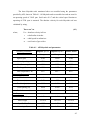
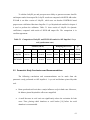
Three cases are run using the above parameters. Table 4-2 shows results for synchronous
and non-synchronous type of whirl. Effective cross-coupling stiffness is calculated using
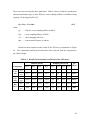
equation 4-2 developed by Kirk [5].
Qe = Kxy – Cxx*ωNcr
(4-2)
where,
Qe
= effective cross-coupling stiffness in lbf/in
Kxy
= cross-coupling stiffness in lbf/in
Cxx
= direct damping in lbf-s/in
ωNcr = rotor natural frequency in rad/sec.
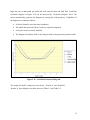
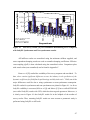
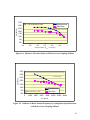
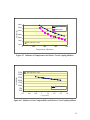
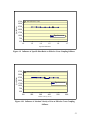
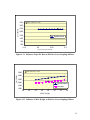
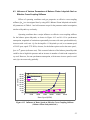
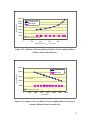
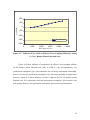
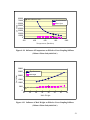
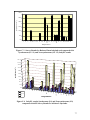
Results are then compared to the results of the API survey respondents in Figure
4-1. Two respondents with major deviation have been removed from the comparison to
get a better insight.
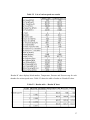
Table 4-2 Results for the dynamic coefficients of the API survey
Stiffness (lbf/in)
Imp #
5 eye
laby
Bal.
Piston
Qe
Kxx
Kxy
Kyx
Kyy
Cxx
Cxy
Cyx
Cyy
(lbf/in)
Syn
-641.06
4193.50
-4193.50
-641.06
2.08
0.10
-0.10
2.08
2734.6
NonSyn
-786.11
2623.20
-2623.20
-786.11
0.64
0.24
-0.24
0.64
2174.9
Syn
-1288.10
5379.10
-5379.10
-1288.10
2.66
0.31
-0.31
2.66
3510
NonSyn
-1149.30
3413.00
-3413.00
-1149.00
0.84
0.35
-0.35
0.84
2827.9
Syn
-75232
23923
-23923
-75232
10.23
31.00
-31.00
10.23
16741
NonSyn
-19564
6581.9
-6581.9
-19564
1.41
7.00
-7.00
1.41
5592
Component
Imp #
1 eye
laby
Damping (lbf-sec/in)
46