1
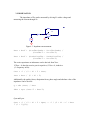
The Measure() function is the most important one, as it handles the whole
measurement and results calculation (2). First the relative demodulator LO phase is set
to 0 degrees, the four PSoC measurement inputs VIN0, 1, 2, 3 (or 4) are converted to a
digital value by the ADC, then the phase is set to 90 degrees and the measurement is
repeated. From these 8 values, 4 differences are calculated and are used to derive all the
measurement results (Rser, Cser, etc) according to the procedure described above. A
user-selectable averaging (1 to 8 measurements) is performed by the function reading
the ADC result in Measure.c.
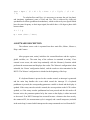
An autorange function is performed, which uses the measured values as decision
inputs. Depending on the range, either the reference resistors of the current-to-voltage
converter are switched, or the PGA gain in front of the demodulator is increased, or the
attenuated input VIN4 is used instead of VIN3. The functions in Measure.c support the
measurement procedure by setting hardware parameters. Meas_SetSineGenFreq() sets
the carrier frequency as described above. The divider ratios for the Counter8_SineGen
and for the Measure_ADC_Prescaler counters are read from an array 'FreqDivArr'
which is contained in the file Freqarr.c. This file has been generated by the TurbiC
program 'DivCalc.exe' which determines both divider ratios in such a way that the
integral relationship between both divider ratios are kept as described above, and that
the ADC conversion time is as close as the one for which the specified ADC parameters
in the datasheet are valid.
The display functions are contained in Disp.c. The important ones are
Disp_FreqFloatToTmpStr() and Disp_MeasFloatToStr(). The first one converts the
frequency in Hz contained in a float to a formatted string which can be displayed. The
second one converts a measurement result also to a formatted string with four
significant digits and adds multiplier ('p' to 'M').