1
ROSE Compiler Framework
Wikibooks.org
March 17, 2013
On the 28th of April 2012 the contents of the English as well as German Wikibooks and Wikipedia
projects were licensed under Creative Commons Attribution-ShareAlike 3.0 Unported license. An
URI to this license is given in the list of figures on page 213. If this document is a derived work
from the contents of one of these projects and the content was still licensed by the project under
this license at the time of derivation this document has to be licensed under the same, a similar or a
compatible license, as stated in section 4b of the license. The list of contributors is included in chapter
Contributors on page 211. The licenses GPL, LGPL and GFDL are included in chapter Licenses on
page 217, since this book and/or parts of it may or may not be licensed under one or more of these
licenses, and thus require inclusion of these licenses. The licenses of the figures are given in the list of
figures on page 213. This PDF was generated by the LATEX typesetting software. The LATEX source
code is included as an attachment (source.7z.txt) in this PDF file. To extract the source from the
PDF file, we recommend the use of http://www.pdflabs.com/tools/pdftk-the-pdf-toolkit/
utility or clicking the paper clip attachment symbol on the lower left of your PDF Viewer, selecting
Save Attachment. After extracting it from the PDF file you have to rename it to source.7z. To
uncompress the resulting archive we recommend the use of http://www.7-zip.org/. The LATEX
source itself was generated by a program written by Dirk Hünniger, which is freely available under
an open source license from http://de.wikibooks.org/wiki/Benutzer:Dirk_Huenniger/wb2pdf.
This distribution also contains a configured version of the pdflatex compiler with all necessary
packages and fonts needed to compile the LATEX source included in this PDF file.
Contents
1
About the Book
1.1 Goal . . . . . . . . . . .
1.2 How To Contribute . . .
1.3 Tracking Wiki Changes .
1.4 Wikibook Writing Tips .
.
.
.
.
.
.
.
.
.
.
.
.
.
.
.
.
.
.
.
.
.
.
.
.
.
.
.
.
.
.
.
.
.
.
.
.
.
.
.
.
.
.
.
.
.
.
.
.
.
.
.
.
.
.
.
.
.
.
.
.
.
.
.
.
.
.
.
.
.
.
.
.
.
.
.
.
.
.
.
.
.
.
.
.
.
.
.
.
.
.
.
.
.
.
.
.
.
.
.
.
.
.
.
.
.
.
.
.
.
.
.
.
3
3
3
4
5
2
ROSE's Documentations
3
Obtaining ROSE
3.1 Git Repositories . . . . . . . . . .
3.2 Virtual Machine Image . . . . . .
3.3 git 1.7.10 or later for github.com
3.4 EDG source code . . . . . . . . .
3.5 EDG tarball . . . . . . . . . . . .
.
.
.
.
.
.
.
.
.
.
.
.
.
.
.
.
.
.
.
.
.
.
.
.
.
.
.
.
.
.
.
.
.
.
.
.
.
.
.
.
.
.
.
.
.
.
.
.
.
.
.
.
.
.
.
.
.
.
.
.
.
.
.
.
.
.
.
.
.
.
.
.
.
.
.
.
.
.
.
.
.
.
.
.
.
.
.
.
.
.
.
.
.
.
.
.
.
.
.
.
.
.
.
.
.
.
.
.
.
.
.
.
.
.
.
9
9
10
10
11
12
Installation
4.1 Platform Requirement . .
4.2 Software Requirement . .
4.3 ./build . . . . . . . . . . .
4.4 configure . . . . . . . . . .
4.5 make . . . . . . . . . . . .
4.6 make check . . . . . . . .
4.7 make install . . . . . . . .
4.8 set environment variables
4.9 try out a rose translator .
4.10 Trouble shooting . . . . .
.
.
.
.
.
.
.
.
.
.
.
.
.
.
.
.
.
.
.
.
.
.
.
.
.
.
.
.
.
.
.
.
.
.
.
.
.
.
.
.
.
.
.
.
.
.
.
.
.
.
.
.
.
.
.
.
.
.
.
.
.
.
.
.
.
.
.
.
.
.
.
.
.
.
.
.
.
.
.
.
.
.
.
.
.
.
.
.
.
.
.
.
.
.
.
.
.
.
.
.
.
.
.
.
.
.
.
.
.
.
.
.
.
.
.
.
.
.
.
.
.
.
.
.
.
.
.
.
.
.
.
.
.
.
.
.
.
.
.
.
.
.
.
.
.
.
.
.
.
.
.
.
.
.
.
.
.
.
.
.
.
.
.
.
.
.
.
.
.
.
.
.
.
.
.
.
.
.
.
.
.
.
.
.
.
.
.
.
.
.
.
.
.
.
.
.
.
.
.
.
.
.
.
.
.
.
.
.
.
.
.
.
.
.
.
.
.
.
.
.
.
.
.
.
.
.
.
.
.
.
15
15
15
17
17
17
18
18
18
18
19
5
Virtual machine image
5.1 How to use the virtual machine image . . . . . . . . . . . . . . . . . . . .
5.2 How was the virtual machine made . . . . . . . . . . . . . . . . . . . . . .
5.3 How to create a new virtual image . . . . . . . . . . . . . . . . . . . . . .
21
21
22
23
6
ROSE tools
6.1 prerequisites . . . . . . . . . .
6.2 identityTranslator . . . . . . .
6.3 AST dot graph generators . .
6.4 call graph generator . . . . .
6.5 Control flow graph generator
6.6 TODO . . . . . . . . . . . . .
25
25
25
26
28
28
28
4
7
.
.
.
.
.
.
.
.
.
.
.
.
.
.
.
.
.
.
.
.
.
.
.
.
.
.
.
.
.
.
.
.
.
.
.
.
.
.
.
.
.
.
.
.
.
.
.
.
.
.
.
.
.
.
.
.
.
.
.
.
.
.
.
.
.
.
.
.
.
.
.
.
.
.
.
.
.
.
.
.
.
.
.
.
.
.
.
.
.
.
.
.
.
.
.
.
.
.
.
.
.
.
.
.
.
.
.
.
.
.
.
.
.
.
.
.
.
.
.
.
.
.
.
.
.
.
.
.
.
.
.
.
.
.
.
.
.
.
.
.
.
.
.
.
.
.
.
.
.
.
.
.
.
.
.
.
.
.
.
.
.
.
.
.
.
.
.
.
.
.
.
.
.
.
.
.
.
.
.
.
.
.
.
.
.
.
.
.
.
.
III
Contents
7
8
9
Supported Programming Languages
7.1
OpenMP . . . . . . . . . . . . . . .
7.2
UPC . . . . . . . . . . . . . . . . .
7.3
CUDA . . . . . . . . . . . . . . . .
7.4
OpenCL . . . . . . . . . . . . . . .
.
.
.
.
.
.
.
.
.
.
.
.
.
.
.
.
.
.
.
.
.
.
.
.
.
.
.
.
.
.
.
.
.
.
.
.
.
.
.
.
.
.
.
.
.
.
.
.
29
29
29
30
30
Abstract Syntax Tree (Intermediate Representation)
8.1
Sanity Check . . . . . . . . . . . . . . . . . . . . . . .
8.2
Visualization of AST . . . . . . . . . . . . . . . . . . .
8.3
Text Output of an AST . . . . . . . . . . . . . . . . .
8.4
Preprocessing Information . . . . . . . . . . . . . . . .
8.5
AST Construction . . . . . . . . . . . . . . . . . . . .
.
.
.
.
.
.
.
.
.
.
.
.
.
.
.
.
.
.
.
.
.
.
.
.
.
.
.
.
.
.
.
.
.
.
.
.
.
.
.
.
.
.
.
.
.
.
.
.
.
.
.
.
.
.
.
31
31
32
32
32
33
.
.
.
.
.
.
.
.
.
.
.
.
Program Translation
9.1
Documentation . . . . . . . . . . . . . . .
9.2
Expected behavior of a ROSE Translator
9.3
SageBuilder and SageInterface . . . . . . .
9.4
Steps for writing translators . . . . . . . .
9.5
Order to traverse AST . . . . . . . . . . .
9.6
Example translators . . . . . . . . . . . .
9.7
Trouble shooting . . . . . . . . . . . . . .
10 Program Analysis
10.1 control flow graph . . . . . .
10.2 Virtual Function Analysis . .
10.3 Def-use analysis . . . . . . . .
10.4 Pointer Analysis . . . . . . .
10.5 SSA . . . . . . . . . . . . . .
10.6 Side Effect Analysis . . . . .
10.7 Generic Dataflow Framework
10.8 Dependence analysis . . . . .
.
.
.
.
.
.
.
.
.
.
.
.
.
.
.
.
.
.
.
.
.
.
.
.
.
.
.
.
.
.
.
.
.
.
.
.
.
.
.
.
11 Generic Dataflow Framework
11.1 Introduction . . . . . . . . . . . . . . .
11.2 Implemented analysis . . . . . . . . . .
11.3 Function, nodeState and FunctionState
11.4 Lattices . . . . . . . . . . . . . . . . .
11.5 Transfer Function . . . . . . . . . . . .
11.6 Control flow graph and call graph . . .
11.7 Analysis Driver . . . . . . . . . . . . .
11.8 Inter-procedural analysis . . . . . . . .
11.9 How to use one analysis . . . . . . . .
11.10 Testing . . . . . . . . . . . . . . . . . .
11.11 How to debug . . . . . . . . . . . . . .
11.12 TODO . . . . . . . . . . . . . . . . . .
12 Program Optimizations
IV
.
.
.
.
.
.
.
.
.
.
.
.
.
.
.
.
.
.
.
.
.
.
.
.
.
.
.
.
.
.
.
.
.
.
.
.
.
.
.
.
.
.
.
.
.
.
.
.
.
.
.
.
.
.
.
.
.
.
.
.
.
.
.
.
.
.
.
.
.
.
.
.
.
.
.
.
.
.
.
.
.
.
.
.
.
.
.
.
.
.
.
.
.
.
.
.
.
.
.
.
.
.
.
.
.
.
.
.
.
.
.
.
.
.
.
.
.
.
.
.
.
.
.
.
.
.
.
.
.
.
.
.
.
.
.
.
.
.
.
.
.
.
.
.
.
.
.
.
.
.
.
.
.
.
.
.
.
.
.
.
.
.
.
.
.
.
.
.
.
.
.
.
.
.
.
.
.
.
.
.
.
.
.
.
.
.
.
.
.
.
.
.
.
.
35
35
35
35
35
36
36
37
.
.
.
.
.
.
.
.
.
.
.
.
.
.
.
.
.
.
.
.
.
.
.
.
.
.
.
.
.
.
.
.
.
.
.
.
.
.
.
.
.
.
.
.
.
.
.
.
.
.
.
.
.
.
.
.
.
.
.
.
.
.
.
.
.
.
.
.
.
.
.
.
.
.
.
.
.
.
.
.
.
.
.
.
.
.
.
.
.
.
.
.
.
.
.
.
.
.
.
.
.
.
.
.
.
.
.
.
.
.
.
.
.
.
.
.
.
.
.
.
.
.
.
.
.
.
.
.
.
.
.
.
.
.
.
.
.
.
.
.
.
.
.
.
39
39
43
43
44
45
46
46
46
.
.
.
.
.
.
.
.
.
.
.
.
49
49
49
50
53
55
58
59
69
71
73
74
77
.
.
.
.
.
.
.
.
.
.
.
.
.
.
.
.
.
.
.
.
.
.
.
.
.
.
.
.
.
.
.
.
.
.
.
.
.
.
.
.
.
.
.
.
.
.
.
.
.
.
.
.
.
.
.
.
.
.
.
.
.
.
.
.
.
.
.
.
.
.
.
.
.
.
.
.
.
.
.
.
.
.
.
.
.
.
.
.
.
.
.
.
.
.
.
.
.
.
.
.
.
.
.
.
.
.
.
.
.
.
.
.
.
.
.
.
.
.
.
.
.
.
.
.
.
.
.
.
.
.
.
.
.
.
.
.
.
.
.
.
.
.
.
.
.
.
.
.
.
.
.
.
.
.
.
.
.
.
.
.
.
.
.
.
.
.
.
.
.
.
.
.
.
.
.
.
.
.
.
.
.
.
.
.
.
.
.
.
.
.
.
.
.
.
.
.
.
.
.
.
.
.
.
.
79
Contents
13 ROSE Projects
13.1 minitermite . . . . . . . . . . . . . . . . . . . . . . . . . . . . . . . . . . .
81
82
14 Developer's Guide
14.1 Basic skills for ROSE developers
14.2 Valued Contributions . . . . . . .
14.3 Milestones for a ROSE developers
14.4 Termination checklist . . . . . . .
14.5 code review . . . . . . . . . . . .
14.6 Working from a Lab machine . .
.
.
.
.
.
.
83
83
83
84
85
85
86
.
.
.
.
.
87
87
87
88
89
90
.
.
.
.
.
.
.
.
.
.
.
.
.
.
.
.
.
.
15 Workflow
15.1 Motivation and Goals . . . . . . . . .
15.2 Development Guide . . . . . . . . . . .
15.3 High Level Workflow . . . . . . . . . .
15.4 Proposing Workflow Changes . . . . .
15.5 Reviewing Workflow Change Proposals
.
.
.
.
.
.
.
.
.
.
.
.
.
.
.
.
.
.
.
.
.
.
.
.
.
.
.
.
.
.
.
.
.
.
.
.
.
.
.
.
.
.
.
.
.
.
.
.
.
.
.
.
.
.
.
.
.
.
.
.
.
.
.
.
.
.
.
.
.
.
.
.
.
.
.
.
.
.
.
.
.
.
.
.
.
.
.
.
.
.
.
.
.
.
.
.
.
.
.
.
.
.
.
.
.
.
.
.
.
.
.
.
.
.
.
.
.
.
.
.
.
.
.
.
.
.
.
.
.
.
.
.
.
.
.
.
.
.
.
.
.
.
.
.
.
.
.
.
.
.
.
.
.
.
.
.
.
.
.
.
.
.
.
.
.
.
.
.
.
.
.
.
.
.
.
.
.
.
.
.
.
.
.
.
.
.
.
.
.
.
.
.
.
.
.
.
.
.
.
.
.
.
.
.
.
.
.
.
.
16 Coding Standard
16.1 What to Expect and What to Avoid
16.2 Git Convention . . . . . . . . . . . .
16.3 Design Document . . . . . . . . . . .
16.4 Testing . . . . . . . . . . . . . . . . .
16.5 Programming Languages . . . . . . .
16.6 Naming Conventions . . . . . . . . .
16.7 Directories . . . . . . . . . . . . . . .
16.8 Files . . . . . . . . . . . . . . . . . .
16.9 README . . . . . . . . . . . . . . .
16.10 Source Code Documentation . . . . .
16.11 Functions . . . . . . . . . . . . . . .
16.12 Comments . . . . . . . . . . . . . . .
16.13 Coding . . . . . . . . . . . . . . . . .
16.14 Classes . . . . . . . . . . . . . . . . .
16.15 Statements . . . . . . . . . . . . . .
16.16 Expressions . . . . . . . . . . . . . .
16.17 AST Translators . . . . . . . . . . .
16.18 References . . . . . . . . . . . . . . .
.
.
.
.
.
.
.
.
.
.
.
.
.
.
.
.
.
.
.
.
.
.
.
.
.
.
.
.
.
.
.
.
.
.
.
.
.
.
.
.
.
.
.
.
.
.
.
.
.
.
.
.
.
.
.
.
.
.
.
.
.
.
.
.
.
.
.
.
.
.
.
.
.
.
.
.
.
.
.
.
.
.
.
.
.
.
.
.
.
.
.
.
.
.
.
.
.
.
.
.
.
.
.
.
.
.
.
.
.
.
.
.
.
.
.
.
.
.
.
.
.
.
.
.
.
.
.
.
.
.
.
.
.
.
.
.
.
.
.
.
.
.
.
.
.
.
.
.
.
.
.
.
.
.
.
.
.
.
.
.
.
.
.
.
.
.
.
.
.
.
.
.
.
.
.
.
.
.
.
.
.
.
.
.
.
.
.
.
.
.
.
.
.
.
.
.
.
.
.
.
.
.
.
.
.
.
.
.
.
.
.
.
.
.
.
.
.
.
.
.
.
.
.
.
.
.
.
.
.
.
.
.
.
.
.
.
.
.
.
.
.
.
.
.
.
.
.
.
.
.
.
.
.
.
.
.
.
.
.
.
.
.
.
.
.
.
.
.
.
.
.
.
.
.
.
.
.
.
.
.
.
.
.
.
.
.
.
.
.
.
.
.
.
.
.
.
.
.
.
.
.
.
.
.
.
.
.
.
.
.
.
.
.
.
.
.
.
.
.
.
.
.
.
.
.
.
.
.
.
.
.
.
.
.
.
.
.
.
.
.
.
.
.
.
.
.
.
.
.
.
.
.
.
.
.
.
.
.
.
.
.
.
.
.
.
.
.
.
.
.
.
.
.
.
.
.
.
.
91
91
93
94
96
97
97
102
103
105
106
109
109
109
109
110
113
113
113
17 Code Review Process
17.1 Motivation . . . . . . . .
17.2 Goals . . . . . . . . . . .
17.3 Software . . . . . . . . .
17.4 Developer Checklist . . .
17.5 Reviewer Checklist . . .
17.6 Who should review what
17.7 What to avoid . . . . . .
17.8 Criticism . . . . . . . . .
17.9 Troubleshooting . . . . .
.
.
.
.
.
.
.
.
.
.
.
.
.
.
.
.
.
.
.
.
.
.
.
.
.
.
.
.
.
.
.
.
.
.
.
.
.
.
.
.
.
.
.
.
.
.
.
.
.
.
.
.
.
.
.
.
.
.
.
.
.
.
.
.
.
.
.
.
.
.
.
.
.
.
.
.
.
.
.
.
.
.
.
.
.
.
.
.
.
.
.
.
.
.
.
.
.
.
.
.
.
.
.
.
.
.
.
.
.
.
.
.
.
.
.
.
.
.
.
.
.
.
.
.
.
.
.
.
.
.
.
.
.
.
.
.
.
.
.
.
.
.
.
.
.
.
.
.
.
.
.
.
.
.
.
.
.
.
.
.
.
.
.
.
.
.
.
.
.
.
.
.
.
.
.
.
.
.
.
.
.
.
.
.
.
.
.
.
.
115
116
116
117
117
120
123
123
123
124
.
.
.
.
.
.
.
.
.
.
.
.
.
.
.
.
.
.
.
.
.
.
.
.
.
.
.
.
.
.
.
.
.
.
.
.
.
.
.
.
.
.
.
.
.
.
.
.
.
.
.
.
.
.
.
.
.
.
.
.
.
.
.
V
Contents
17.10
17.11
17.12
17.13
Past Software Experience
TODO . . . . . . . . . . .
Connection to Jenkins . .
References . . . . . . . . .
.
.
.
.
.
.
.
.
.
.
.
.
.
.
.
.
.
.
.
.
.
.
.
.
.
.
.
.
.
.
.
.
.
.
.
.
.
.
.
.
.
.
.
.
.
.
.
.
.
.
.
.
.
.
.
.
.
.
.
.
.
.
.
.
.
.
.
.
.
.
.
.
.
.
.
.
.
.
.
.
.
.
.
.
.
.
.
.
.
.
.
.
.
.
.
.
.
.
.
.
.
.
.
.
.
.
.
.
125
125
126
126
18 Continuous Integration
18.1 Motivation . . . . . . . . . .
18.2 Overview . . . . . . . . . .
18.3 Tests on Jenkins . . . . . .
18.4 Installed Software Packages
18.5 Check Testing Results . . .
18.6 Frequently Failed Jobs . . .
18.7 Connection to Code Review
18.8 TODO . . . . . . . . . . . .
18.9 References . . . . . . . . . .
.
.
.
.
.
.
.
.
.
.
.
.
.
.
.
.
.
.
.
.
.
.
.
.
.
.
.
.
.
.
.
.
.
.
.
.
.
.
.
.
.
.
.
.
.
.
.
.
.
.
.
.
.
.
.
.
.
.
.
.
.
.
.
.
.
.
.
.
.
.
.
.
.
.
.
.
.
.
.
.
.
.
.
.
.
.
.
.
.
.
.
.
.
.
.
.
.
.
.
.
.
.
.
.
.
.
.
.
.
.
.
.
.
.
.
.
.
.
.
.
.
.
.
.
.
.
.
.
.
.
.
.
.
.
.
.
.
.
.
.
.
.
.
.
.
.
.
.
.
.
.
.
.
.
.
.
.
.
.
.
.
.
.
.
.
.
.
.
.
.
.
.
.
.
.
.
.
.
.
.
.
.
.
.
.
.
.
.
.
.
.
.
.
.
.
.
.
.
.
.
.
.
.
.
.
.
.
.
.
.
.
.
.
.
.
.
.
.
.
.
.
.
.
.
.
.
.
.
.
.
.
.
.
.
127
127
128
128
129
129
129
130
131
132
.
.
.
.
.
.
.
133
133
137
141
144
147
148
149
19 Frequently Asked Questions (FAQ)
19.1 General . . . . . . . . . . . . . . .
19.2 Compilation . . . . . . . . . . . . .
19.3 AST . . . . . . . . . . . . . . . . .
19.4 Translation . . . . . . . . . . . . .
19.5 Unparsing . . . . . . . . . . . . . .
19.6 Daily work . . . . . . . . . . . . . .
19.7 Portability . . . . . . . . . . . . . .
20 How-tos
20.1 How to
20.2 How to
20.3 How to
20.4 Sample
20.5 How to
20.6 How to
20.7 How to
20.8 How to
20.9 How to
20.10 How to
20.11 How to
.
.
.
.
.
.
.
.
.
.
.
.
.
.
.
.
.
.
.
.
.
.
.
.
.
.
.
.
.
.
.
.
.
.
.
.
.
.
.
.
.
.
.
.
.
.
.
.
.
.
.
.
.
.
.
.
.
.
.
.
.
.
.
.
.
.
.
.
.
.
.
.
.
.
.
.
.
.
.
.
.
.
.
.
.
.
.
.
.
.
.
.
.
.
.
.
.
.
.
.
.
.
.
.
.
.
.
.
.
.
.
.
.
.
.
.
.
.
.
.
.
.
.
.
.
.
.
.
.
.
.
.
.
.
.
.
.
.
.
.
.
.
.
.
.
.
.
.
.
.
.
.
.
.
.
.
.
.
.
.
.
.
.
.
.
.
.
.
.
.
.
.
.
.
.
.
.
.
.
.
.
.
.
.
.
.
.
.
.
.
.
.
.
.
.
.
.
.
.
.
.
.
.
.
.
.
.
.
.
.
.
.
.
.
.
.
.
.
.
.
.
.
.
.
.
.
.
.
.
.
.
.
.
.
.
.
.
.
.
.
.
.
.
.
.
.
.
.
.
.
.
.
.
.
.
.
.
.
.
.
.
.
.
.
.
.
.
.
.
.
.
.
.
.
.
.
.
.
.
.
.
.
.
.
.
.
.
.
.
.
.
.
.
.
.
.
.
.
.
.
.
.
.
.
.
.
.
.
.
.
.
.
151
151
157
158
161
161
161
163
166
171
176
177
21 Lessons Learned
21.1 Do Not Format/Indent other people's code . . . .
21.2 Physical locations matter . . . . . . . . . . . . .
21.3 Choose your development platform carefully . . .
21.4 Use different git repositories for different tasks . .
21.5 Introducing software dependencies very carefully
21.6 Create Exacting Tests Early and Often . . . . . .
21.7 Keep Code Readable While Coding . . . . . . . .
21.8 Think Before You Code . . . . . . . . . . . . . .
21.9 Remember The User . . . . . . . . . . . . . . . .
.
.
.
.
.
.
.
.
.
.
.
.
.
.
.
.
.
.
.
.
.
.
.
.
.
.
.
.
.
.
.
.
.
.
.
.
.
.
.
.
.
.
.
.
.
.
.
.
.
.
.
.
.
.
.
.
.
.
.
.
.
.
.
.
.
.
.
.
.
.
.
.
.
.
.
.
.
.
.
.
.
.
.
.
.
.
.
.
.
.
.
.
.
.
.
.
.
.
.
.
.
.
.
.
.
.
.
.
.
.
.
.
.
.
.
.
.
.
.
.
.
.
.
.
.
.
179
179
179
179
180
180
180
181
181
181
VI
write a How-to . . . . . . . . . . .
incrementally work on a project .
create a translator . . . . . . . . .
translators . . . . . . . . . . . . .
build your translator . . . . . . .
create a cross-language translator
set up the makefile for a translator
debug a translator . . . . . . . . .
add a new project directory . . . .
fix a bug . . . . . . . . . . . . . .
add a ROSE commandline option
.
.
.
.
.
.
.
.
.
.
.
.
.
.
.
.
.
.
.
.
.
.
.
.
.
.
.
.
.
.
.
.
.
Contents
21.10 The User is Paramount . . . . . . . . . . . . . . . . . . . . . . . . . . . . . 181
21.11 references . . . . . . . . . . . . . . . . . . . . . . . . . . . . . . . . . . . . 182
22 Testing
22.1 make check rules .
22.2 Benchmarks . . . .
22.3 Modena Jt++ Test
22.4 Jenkins . . . . . . .
23 Git
23.1
23.2
23.3
23.4
23.5
23.6
23.7
.
.
.
.
.
.
.
.
.
.
.
.
.
.
.
.
.
.
.
.
.
.
.
.
.
.
.
.
.
.
.
.
.
.
.
.
.
.
.
.
.
.
.
.
.
.
.
.
.
.
.
.
.
.
.
.
.
.
.
.
.
.
.
.
.
.
.
.
.
.
.
.
.
.
.
.
.
.
.
.
.
.
.
.
.
.
.
.
.
.
.
.
183
183
183
184
184
Introduction . . . . . . . . . . . . .
git 1.7.10 or later for github.com .
Converting from a Subversion user
Git Convention . . . . . . . . . . .
Push . . . . . . . . . . . . . . . . .
Rebase . . . . . . . . . . . . . . . .
References . . . . . . . . . . . . . .
.
.
.
.
.
.
.
.
.
.
.
.
.
.
.
.
.
.
.
.
.
.
.
.
.
.
.
.
.
.
.
.
.
.
.
.
.
.
.
.
.
.
.
.
.
.
.
.
.
.
.
.
.
.
.
.
.
.
.
.
.
.
.
.
.
.
.
.
.
.
.
.
.
.
.
.
.
.
.
.
.
.
.
.
.
.
.
.
.
.
.
.
.
.
.
.
.
.
.
.
.
.
.
.
.
.
.
.
.
.
.
.
.
.
.
.
.
.
.
.
.
.
.
.
.
.
.
.
.
.
.
.
.
.
.
.
.
.
.
.
.
.
.
.
.
.
.
.
.
.
.
.
.
.
185
185
185
186
187
188
189
190
.
.
.
.
.
.
.
.
.
.
191
191
191
192
192
193
194
194
194
195
195
. . . .
. . . .
Suite .
. . . .
.
.
.
.
.
.
.
.
.
.
.
.
24 Lattices
24.1 Introduction . . . . . . . . . . .
24.2 Poset . . . . . . . . . . . . . . .
24.3 Lattice Definition . . . . . . . .
24.4 Infinite vs. Finite lattices . . .
24.5 Example: Bit vector Lattices .
24.6 Monotonic Functions . . . . . .
24.7 Examples . . . . . . . . . . . .
24.8 Lattice Tuples . . . . . . . . . .
24.9 integer value: ICP . . . . . . .
24.10 Relevance to data flow analysis
.
.
.
.
.
.
.
.
.
.
.
.
.
.
.
.
.
.
.
.
.
.
.
.
.
.
.
.
.
.
.
.
.
.
.
.
.
.
.
.
.
.
.
.
.
.
.
.
.
.
.
.
.
.
.
.
.
.
.
.
.
.
.
.
.
.
.
.
.
.
.
.
.
.
.
.
.
.
.
.
.
.
.
.
.
.
.
.
.
.
.
.
.
.
.
.
.
.
.
.
.
.
.
.
.
.
.
.
.
.
.
.
.
.
.
.
.
.
.
.
.
.
.
.
.
.
.
.
.
.
.
.
.
.
.
.
.
.
.
.
.
.
.
.
.
.
.
.
.
.
.
.
.
.
.
.
.
.
.
.
.
.
.
.
.
.
.
.
.
.
.
.
.
.
.
.
.
.
.
.
.
.
.
.
.
.
.
.
.
.
.
.
.
.
.
.
.
.
.
.
.
.
.
.
.
.
.
.
.
.
.
.
.
.
.
.
.
.
.
.
.
.
.
.
.
.
.
.
.
.
.
.
.
.
25 C++ Programming
197
26 Good API Design
26.1 Characteristics of a Good API . . . . . . . . . . . . . . . . . . . . . . . . .
26.2 The Process of API Design . . . . . . . . . . . . . . . . . . . . . . . . . .
26.3 General Principles . . . . . . . . . . . . . . . . . . . . . . . . . . . . . . .
199
199
199
200
27 Who
27.1
27.2
27.3
203
203
203
203
is using ROSE
Universities . . . . . . . . . . . . . . . . . . . . . . . . . . . . . . . . . . .
DOE national laboratories . . . . . . . . . . . . . . . . . . . . . . . . . . .
Companies . . . . . . . . . . . . . . . . . . . . . . . . . . . . . . . . . . . .
28 TODO List
28.1 How to backup/mirror this wikibook?
28.2 Maintain the print version . . . . . . .
28.3 Maintain the better pdf file . . . . . .
28.4 Documentation Alternatives . . . . . .
.
.
.
.
.
.
.
.
.
.
.
.
.
.
.
.
.
.
.
.
.
.
.
.
.
.
.
.
.
.
.
.
.
.
.
.
.
.
.
.
.
.
.
.
.
.
.
.
.
.
.
.
.
.
.
.
.
.
.
.
.
.
.
.
.
.
.
.
.
.
.
.
.
.
.
.
.
.
.
.
205
205
205
205
206
VII
Contents
29 Sandbox
29.1 How to create a new page .
29.2 How to do XYZ in wiki? . .
29.3 How to add comments which
29.4 Syntax highlighting . . . . .
29.5 Math formula . . . . . . . .
. . . . .
. . . . .
are only
. . . . .
. . . . .
. . . .
. . . .
visible
. . . .
. . . .
. . . . . . . . . . . .
. . . . . . . . . . . .
to editor, not readers
. . . . . . . . . . . .
. . . . . . . . . . . .
207
. . . . . 207
. . . . . 207
of a page?208
. . . . . 208
. . . . . 208
30 Contributors
211
List of Figures
213
31 Licenses
217
31.1 GNU GENERAL PUBLIC LICENSE . . . . . . . . . . . . . . . . . . . . 217
31.2 GNU Free Documentation License . . . . . . . . . . . . . . . . . . . . . . 218
31.3 GNU Lesser General Public License . . . . . . . . . . . . . . . . . . . . . . 219
1
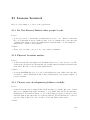
1 About the Book
FYI: http://wiki.rosecompiler.org redirects here.
1.1 Goal
The goal of this book is to have a community documentation providing extensive and
up-to-date instructional information about how to use the open-source ROSE compiler
framework1 , developed at Lawrence Livermore National Laboratory2 .
While the ROSE project website (http://www.rosecompiler.org) already has a variety
of official documentations, having a wikibook for ROSE allows anybody to contribute
to gathering instructional information about this software.
Again, please note that this wikibook is not the official documentation of ROSE. It is the
community efforts contributed by anyone just like you.
1.2 How To Contribute
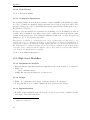
If you want to contribute, check to make sure your contributions to the wikibook are relevant
to this wikibook about ROSE
• Welcomed Contributions:
• Fix typos and grammar of existing pages to improve quality, clarity, and readability.
• Add new pages about ROSE-specific tutorials, how-tos, FAQ, and workflow
• Start discussions on the Discussion tab of an existing page about new suggestions of
how things can be done better than the current practice.
• What will be not be kept: Copy and paste of general guidelines of doing things: Please
just summary them in the ROSE-relevant wikibook page and give reference, URL to it.
Once you are certain the relevance of your contributions. Please read how to do one example
contribution.
• http://en.wikibooks.org/wiki/ROSE_Compiler_Framework/How_to_write_a_
How-to
• You can just test water how to edit in wikibook using http://en.wikibooks.org/wiki/
ROSE_Compiler_Framework/Sandbox
• Occasionally, you may want to insert figures into a wiki page. You can do this by
uploading file first through Left menu -> Toolbox->upload file
1
2
http://en.wikipedia.org/wiki/ROSE%20%28compiler%20framework%29
http://en.wikipedia.org/wiki/Lawrence%20Livermore%20National%20Laboratory
3
About the Book
• The upload link will direct you to Media Commons, more at link3
• Bottomline: make sure your contributions are visible in the print version of this book
and are logically consistent with the rest of the content.
• Link http://en.wikibooks.org/wiki/ROSE_Compiler_Framework/Print_version
• Thank you!
1.2.1 Conventions
• Technical names, identifiers, etc. should be enclosed in teletype, <tt></pre>
The FooBar class can be found in the foobar.cpp file.
• Source code should use a highlighted code block:
<source lang="<language>">
<Code goes here...>
</ source>
(Enclosing code in a <pre></pre> block is also okay, but the highlighted code block is
preferred.)
• Headings: The first word in a heading title should begin capitalized, every other word
should be in lowercase, where applicable.
1.3 Tracking Wiki Changes
Learn how to "Track Changes":
changes
http://en.wikibooks.org/wiki/Help:Tracking_
1.3.1 Enable Email Notifications for Changes to this book
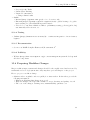
If you want to be notified of changes to this book, WikiBooks provides email notifications
for changes to Wiki pages that you explicitly choose to watch4 .
To use this feature:
1. Create an account with WikiBooks: http://en.wikibooks.org/w/index.php?
title=Special:UserLogin&returnto=Main+Page&type=signup
2. Login to WikiBooks and set your preferences (top right corner of the web page) for both
email notifications and your watch list:
• Email notification settings
• Preferences-> User profile-> E-mail notifications -> E-mail me when a page on my
watchlist is changed (check this on)
• Define your watchlist
3
4
4
http://en.wikipedia.org/wiki/Wikipedia:Wikimedia_Commons#Embedding_Wikicommons.27_
media_in_Wikipedia_articles
http://en.wikibooks.org/wiki/WATCH%23Watching_pages
Wikibook Writing Tips
• Preferences->Watchlist -> Advanced options -> you can select the options you want,
such as "Add pages I edit to my watchlist" and "Add pages I create to my watchlist"
• you can also individually watch and unwatch any wiki page: by click on the star on
the page's tab list (after View history)
Caveat: we don't know if wikibooks supports users to watch one entire book. So far, you
have to do this one page after another by editing them at some points.
1.4 Wikibook Writing Tips
1. What exactly is "BookCat" for? It is a category tag automatically added by wiki robot
scripts.
2. Should "BookCat" be at the end of the document? Any position in the page should be
fine. Having it at top may be better so it won't be accidentally deleted when we add new
things at the bottom.
5
2 ROSE's Documentations
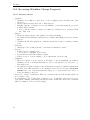
ROSE uses a range of materials to document the project.
Static content of ROSE web: http://rosecompiler.org/index.html
• ROSE manual: the design, algorithm, and implementation details. Written in LaTeX, the
content of the manual can come from published papers. It may contain intense academic
citations and math formula.
• ROSE tutorial: short code examples for tools built on top of ROSE, step-by-step
instructions for doing things. Tightly integrated into ROSE's build system so each
example is always verified to work with ROSE.
• Doxygen web reference: class/namespace references of source code
Wiki
• This wikibook: non-official, community documentation. Editable by anyone, aimed
to supplement official documents and to collect tutorials, FAQ and quick pointers to
important topics.
7
3 Obtaining ROSE
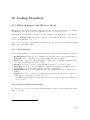
3.1 Git Repositories
ROSE's source files are managed by git, a distributed revision control and source code
management system. There are several ways to download the source tree:
3.1.1 Internal Repos
• Private Git Repositories Within LLNL
• Private git repository hosted within Lawrence Livermore National Laboratory: the
internal file path is /usr/casc/overture/ROSE/git/ROSE.git: central repository of
ROSE, in most cases this is automatically updated by Jenkins only after incoming
commits pass all regression tests
• Private git repository hosted by github.llnl.gov: used for daily pushes and code review,
accessible in LC. LC does not permit SSH, so you'll have to use HTTPS to clone repos
there.
Note: You may encounter SSL certificate problems. If you do, simply disable SSL verification
in cURL using either export GIT_SSL_NO_VERIFY=false or configuring git:
$ git config --global http.sslVerify false
HTTP 401 is unauthorized access. If you're not prompted for your username/password in
the Shell, then you need to use X-forwarding so the authentication windows will popup:
$ ssh -X <LC machine>
Otherwise, create a ˜/.netrc file with:
machine github.llnl.gov
login <username>
password <password>
3.1.2 Public repo
• Public Repositories
9
Obtaining ROSE
• Public git repository hosted at https://github.com/rose-compiler/rose: the content is identical to the private git repository at LLNL, except that the proprietary
EDG submodule is not released.
• Downloadable packages and a subversion repository (synchronized with stable snapshots of ROSE's git repository): https://outreach.scidac.gov/projects/rose/
3.2 Virtual Machine Image
It can take quite some time to install ROSE for the first time. A virtual machine image is
provided with a Ubuntu 10.04 OS with ROSE already installed.
You can download it and play it using VMware Player
3.2.1 Downloading The Virtual Machine Image
• http://www.rosecompiler.org/Ubuntu-ROSE-Demo.tar.gz
• Demonstration user account (sudo user in Ubuntu):
• account: demo
• password: password
• Warning: The file is quite large at 4.8 GB
More information is at ROSE Virtual Machine Image1
3.3 git 1.7.10 or later for github.com
github requires git 1.7.10 or later to avoid https cloning errors, as mentioned at https:
//help.github.com/articles/https-cloning-errors
Ubuntu 10.04's package repository contains git 1.7.0.4. So building later version of git is
needed. But you still need an older version of git to get the latest version of git.
apt-get install git-core
Now you can clone the latest git
git clone https://github.com/git/git.git
Install all prerequisite packages needed to build git from source files(assuming you already
installed GNU tool chain with GCC compiler, make, etc.)
sudo apt-get install gettext zlib1g-dev asciidoc
libcurl4-openssl-dev
1
10
Chapter 5 on page 21
EDG source code
$
$
$
$
#
cd git # enter the cloned git directory
make configure ;# as yourself
./configure --prefix=/usr ;# as yourself
make all doc ;# as yourself
make install install-doc install-html;# as root
3.4 EDG source code
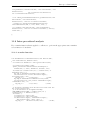
If you have an EDG license, we can provide you with ROSE's EDG source code. The original,
official EDG source code does NOT work with ROSE since we have modified EDG to better
serve our purposes.
Note: We provide you with a snapshot of our Git revision controlled ROSE-EDG source
code repository. This way, you can more easily contribute your EDG modifications back
into ROSE.
1. Send your EDG (research) license to two ROSE staff members, just in case one is on
vacation or on travel.
2. Provide ROSE staff with a drop-off location for the EDG source code (ssh or ftp server,
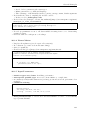
etc.)
3. Once you receive the EDG source code, you have two options:
3.4.1 As a submodule
a. Use ROSE-EDG as a submodule (assuming you have ROSE's Git source tree):
This is the recommended way to use the EDG git repo we provide. So the assumption is
that you use a local git clone of ROSE($ROSE).
Edit submodule path in $ROSE/.gitmodules to point to your ROSE-EDG repository:
[submodule "src/frontend/CxxFrontend/EDG"]
path = src/frontend/CxxFrontend/EDG
url = ../ROSE-EDG.git
+
url = <path/to/your/ROSE-EDG.git>
-[submodule "projects/vulnerabilitySeeding"]
path = projects/vulnerabilitySeeding
url = ../vulnerabilitySeeding.git
Run git-submodule2 commands:
$ cd $ROSE
$ git submodule init
$ git submodule update
The commands above will check out a version of the EDG submodule and save it into
ROSE/src/frontend/CxxFrontend/EDG
2
http://www.kernel.org/pub/software/scm/git/docs/git-submodule.html
11
Obtaining ROSE
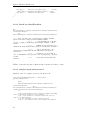
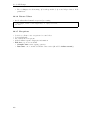
3.4.2 As a Drop-in
b. As a Drop-in
Move ROSE-EDG tarball into its correct location within the ROSE source tree:
$ROSE/src/frontend/EDG
$ tar xzvf ROSE-EDG-b12158aa2.tgz
$ ls
EDG ROSE-EDG-b12158aa2.tgz
$ mv EDG $ROSE/src/frontend/EDG
Warning: This method may not work because EDG is a submodule of ROSE and therefore,
requires a version synchronization between the two. For example, the latest version of ROSE
may not use the latest version of ROSE's EDG.
3.4.3 The remaining steps
4. In ROSE, run the $ROSE/build script from the top-level of the ROSE source tree, i.e.
$ROSE. This script bootstraps Autotools, including the Makefile.ams in the EDG source
tree.
5. Configure and build ROSE: Normally, during this process ROSE would attempt to
download an EDG binary tarball for you, but since you have the source code, this step will
be skipped.
3.5 EDG tarball
3.5.1 Process
If you don't have access to the EDG source code, you will be able to automatically download
a packaged EDG binary tarball during the ROSE build process. The download is triggered
during make in $ROSE_BUILD/src/frontend/CxxFrontend.
The EDG binary version is a computed binary compatibility signature relative to your version
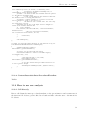
of ROSE. You can check this version by running the $ROSE/scripts/bincompat-sig, for
example:
$ ./scripts/bincompat-sig
7b1930fafc929de85182ee1a14c86758
You may encounter this error:
$ ./scripts/bincompat-sig
Unable to find a remote tracking a canonical repository. Please add
a
canonical repository as a remote and ensure it is up to date.
Currently
configured remotes are:
origin => https://github.com/rose-compiler/rose
12
EDG tarball
Potential canonical repositories include:
anything ending with "rose.git" (case insensitive)
If you do, simply add ".git" to the end of your origin's URL path. In our example, this
translates to:
https://github.com/rose-compiler/rose.git
3.5.2 List of binaries
View the list of available EDG binaries here: http://www.rosecompiler.org/edg_
binaries/edg_binaries.txt.
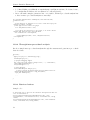
EDG binaries are generated for these platforms (Last updated on 12/22/2012):
Platform
amd64-linux
i686-linux
32bit-macos-10.5
64bit-macos-10.6
64bit-x86_64-macos10.6
34bit-debian
EDG 3.3
GCC 3.4.6, 4.0.4, 4.1.2,
4.2.4, 4.3.2, 4.4.1
GCC 3.4.6, 4.0.4, 4.1.2,
4.2.4, 4.3.2, 4.4.1
GCC 4.0.4
GCC 4.2.4
GCC 4.2.4
EDG 4.0
GCC 3.4.6, 4.0.4, 4.1.2,
4.2.4, 4.3.2, 4.4.1
GCC 3.4.6, 4.0.4, 4.1.2,
4.2.4, 4.3.2, 4.4.1
GCC 3.4.6, 4.0.4, 4.1.2,
4.2.4, 4.3.2, 4.4.1
GCC 3.4.6, 4.0.4, 4.1.2,
4.2.4, 4.3.2, 4.4.1
13
4 Installation
ROSE is released as an open source software package. Users are expected to compile and
install the software.
4.1 Platform Requirement
ROSE is portable to Linux and Mac OS X on IA-32 and x86-64 platforms. In particular,
ROSE developers often use the following development environments:
• Red Hat Enterprise Linux 5.6 or its open source equivalent Centos1 5.6
• Ubuntu 10.04.4 LTS. Higher versions of Ubuntu are NOT supported due to the GCC
versions supported by ROSE.
• Mac OS X 10.5 and 10.6
4.2 Software Requirement
Here is a list for prerequisite software packages for installing ROSE
• GCC 4.0.x to 4.4.x , the range of supported GCC versions is checked by support-rose.m42
during configuration
• gcc
• g++
• gfortran (optional for Fortran support)
• boost library: version 1.36 to 1.47. Again the range of supported Boost versions is checked
by support-rose.m43 during configuration
• Sun Java JDK
• GNU autoconf >=2.6 and automake >= 1.9.5, GNU m4 >=1.4.5
• libtool
• bison (byacc),
• flex
• glibc-devel
• git
• ZGRViewer, a GraphViz/DOT Viewer: essential to view dot graphs of ROSE AST
• install Graphviz first - Graph Visualization Software
Optional packages for additional features or advanced users
1
2
3
http://www.centos.org/
https://github.com/rose-compiler/rose/blob/master/config/support-rose.m4
https://github.com/rose-compiler/rose/blob/master/config/support-rose.m4
15
Installation
• libxml2-devel
• sqlite
• texlive-full, need for building LaTeX docs
4.2.1 Installing boost
The installation of Boost may need some special attention.
Download a supported boost version from http://sourceforge.net/projects/boost/
files/boost/
For version 1.36 to 1.38
./configure --prefix=/home/usera/opt/boost-1.35.0
make
make install
Ignore the warning like : Unicode/ICU support for Boost.Regex?... not found.
For version 1.39 and 1.47: create the boost installation directory first
In boost source tree
• ./bootstrap.sh --prefix=your_boost_install_path
• ./bjam -j4 install --prefix=your_boost_install_path --libdir=your_boost_install_path/lib
Remember to export LD_LIBRARY_PATH for the installed boost library, for example
LD_LIBRARY_PATH=$LD_LIBRARY_PATH:/home/leo/opt/boost_1.45.0_inst/lib
export PATH LD_LIBRARY_PATH
4.2.2 Installing Java JDK
Download Java SE JDK from http://www.oracle.com/technetwork/java/javase/
downloads/index.html
For example, you can download jdk-7u5-linux-i586.tar.gz for your Linux 32-bit system.
After untar it to your installation path, remember to set environment variables for Java
JDK
# jdk path should be search first before other paths
PATH=/home/leo/opt/jdk1.7.0_05/bin:$PATH
# lib path for libjvm.so
LD_LIBRAR
Y_PATH=$LD_LIBRARY_PATH:/home/leo/opt/jdk1.7.0_05/jre/lib/i386/server
# Don't forget to export both variables!!
export PATH LD_LIBRARY_PATH
16
./build
4.3 ./build
In general, it is better to rebuild the configure file in the top level source directory of ROSE.
Just type:
rose_sourcetree>./build
4.4 configure
The next step is to run configure in a separated build tree. ROSE will complain if you try
to build it within its source directory.
There are many configuration options. You can see the full list of options by typing
../sourcetree/configure --help . But only --prefix and --with-boost are required as the
minimum options.
mkdir buildrose
cd buildrose
../rose_sourcetree/configure --prefix=/home/user/opt/rose_tux284
--with-boost=/home/user/opt/boost-1.36.0/
ROSE's configure turns on debugging option by default. The generated object files should
already have debugging information.
Additional useful configure options
• Specify where a gcc's OpenMP runtime library libgomp.a is located. Only GCC 4.4's
gomp lib should be used to have OpenMP 3.0 support
• --with-gomp_omp_runtime_library=/usr/apps/gcc/4.4.1/lib/
4.5 make
In ROSE's build tree, type
cd buildrose
make -j4
will build the entire ROSE, including librose.so, tutorials, projects, tests, and so on. -j4
means to use four processes to perform the build. You can have bigger numbers if your
machine supports more concurrent processes. Still, the entire process will take hours to
finish.
For most users, building librose.so should be enough for most of their work. In this case,
just type
17
Installation
make -C src/ -j4
4.6 make check
Optionally, you can type make check to make sure the compiled rose pass all its shipped
tests. This takes hours again to go through all make check rules within projects, tutorial,
and tests directories.
To save time, you can just run partial tests under a selected directory, like the buildrose/tests
make -C tests/ check -j4
4.7 make install
After "make", it is recommended to run "make install" so rose's library (librose.so), headers
(rose.h) and some prebuilt rose-based tools can be installed under the specified installation
path using --prefix.
4.8 set environment variables
After the installation, you should set up some standard environment variables so you can
use rose. For bash, the following is an example:
ROSE_INS=/home/userx/opt/rose_installation_tree
PATH=$PATH:$ROSE_INS/bin
LD_LIBRARY_PATH=$LD_LIBRARY_PATH:$ROSE_INS/lib
# Don't forget to export variables !!!
export PATH LD_LIBRARY_PATH
4.9 try out a rose translator
There are quite some pre-built rose translators installed under $ROSE_INS/bin.
You can try identityTranslator, which just parses input code, generates AST, and unparses
it back to original code:
identityTranslator -c helloWorld.c
It should generate an output file named rose_helloWorld.c, which should just look like your
input code.
18
Trouble shooting
4.10 Trouble shooting
We list common issues associated with ROSE's installation.
4.10.1 EDG binary
If you do not have the EDG frontend source code, ROSE's build system will automatically
attempt to download an appropriate EDG binary using wget during the build process (i.e.
make -C src/frontend/CxxFrontend).
The EDG binaries are platform-specific and have historically been a cause of issues, i.e.
Autoconf detecting wrong host/build/platform types. One possible remedy to these problems
is to use the Autoconf Build and Host Options4 :
1. Check what build system Autoconf thinks you have:
$ ./config/config.guess
x86_64-unknown-linux-gnu
2. Use the appropriate Autoconf options during configuration of ROSE:
$ $ROSE/configure [--build|--host|--target|...]
See Using the Target Type5 .
A real user's solution:
Hi Justin,
Checking the config.guess file in source tree, I search the apple
darwin for detail information in --build option,
then I found that UNAME-PROCESSOR and UNAME_RELEASE are needed in
--build
First, I type uname -m (for finding UNAME_PROCESSOR in config.guess)
result : x86_64
Second, I type uname -r (for finding UNAME_RELEASE)
result : 10.8.0 (darwin kernel version)
Third, I type command to configure again, but I added --build
option, then autoconf can directly find the detail platform type
/Users/ma23/ROSE/configure --with-CXX_DEBUG=-ggdb3
--with-CXX_WARNINGS=-Wall
--with-boost=/Users/ma23/Desktop/ROSE/boost/BOOST_INSTALL
--with-gfortran=/Users/ma23/Desktop/macports/bin/gfortran-mp-4.4
--with-alternate_backend_fortran_compiler=gfortran-mp-4.4
GFORTRAN_PATH=/Users/ma23/Desktop/macports/bin/gfortran-mp-4.4
--build=x86_64-apple-darwin10
At last, make :)
Thanks:)
Regards,
4
5
http://sources.redhat.com/autobook/autobook/autobook_266.html
http://sources.redhat.com/autobook/autobook/autobook_261.html#SEC261
19
Installation
Hongyi Ma
20
5 Virtual machine image
The goal of this page is to document
• How users can download the virtual machine image (or virtual appliance) and use ROSE
out of box.
• how the virtual machine image for a fully installed ROSE is created.
5.1 How to use the virtual machine image
5.1.1 Obtain the Virtual Machine Image
Download the virtual machine image created by using VMware Player:
• http://www.rosecompiler.org/Ubuntu-ROSE-Demo.tar.gz
• Warning: it is a huge file of 4.8 GB.
• Demonstration user account (sudo user in Ubuntu):
• account: demo
• password: password
Warning: LLNL users may not be able to download it due to limitations to max downloaded
file size within LLNL. It may also be against LLNL's security policy to run a virtual machine
without authorization. So this image should not be used inside LLNL.
5.1.2 Content of the VM Image
Copy&paste from README within the virtual machine
This is a virtual machine image for the ROSE source-to-source compiler framework.
sourcetree, cloned from github.com/rose-compiler/rose on July 21, 2012
• /home/demo/rose
buildtree
• /home/demo/buildrose
installation tree (--prefix path)
• /home/demo/opt/rose-inst
A script to set environment variables to use the installed ROSE tools
• /home/demo/set.rose.env
21
Virtual machine image
A test translator
• /home/demo/myTranslator
Some dot graphs of a simplest function. Type "run.sh file.dot" will view a dot file
• /home/demo/dotGraphs
5.1.3 Install VMware Player
You have to install VMware Player to your machine to use the virtual machine image.
Goto http://www.vmware.com/go/downloadplayer/
Select the right bundle for your platform. For example: VMware-Player-4.0.4-744019.i386.txt
After downloading (assuming you are using Ubuntu 10.04)
• chmod a+x VMware-Player-4.0.4-744019.i386.txt
• sudo ./VMware-Player-4.0.4-744019.i386.txt
• follow the GUI to finish the installation
To start VMPlayer, goto Menu->Applications-> System Tools -> VMware Player
5.1.4 Open/Play the virtual machine
After downloading and untar the tar.gz package to a directory, use VMware player to open
the configuration file of the directory.
5.2 How was the virtual machine made
5.2.1 Host Machine
We used Ubuntu 10.04 LTS as a host machine to create the virtual machine image.
uname -a
Linux 8core-ubuntu 2.6.32-41-generic-pae #91-Ubuntu SMP Wed Jun 13
12:00:09 UTC 2012 i686 GNU/Linux
cat /etc/*release
DISTRIB_ID=Ubuntu
DISTRIB_RELEASE=10.04
DISTRIB_CODENAME=lucid
DISTRIB_DESCRIPTION="Ubuntu 10.04.4 LTS"
5.2.2 Configurations
VMware player has been installed onto the host machine, as described above.
Basic configuration for the virtual machine
22
How to create a new virtual image
Hardware
• Memory : 2 GB
• Processors: 2
• Hard Disk size: 15 GB: We would like to keep it small while having enough space for
users.
• 5GB is used for Ubuntu system files and
• 10GB for the demonstration user's home directory
• Network Adapter: NAT: share the host's IP address
OS
• OS: Ubuntu 10.04 LTS
• Demonstration user account (sudo user in Ubuntu):
• account: demo
• password: password
• screen size: 1280x960 (4:3)
Download Ubuntu 10.04 LTS http://releases.ubuntu.com/lucid/ We currently use the
i386 desktop ISO as the start point
• http://releases.ubuntu.com/lucid/ubuntu-10.04.4-desktop-i386.iso
5.2.3 Within the virtual machine
We installed Software Prerequisites
• sudo apt-get install gcc g++ gfortran
• sudo apt-get install autoconf automake libtool
• sudo apt-get install git-core bison flex texlive-full graphviz python-all-dev
We then installed ROSE
• See ROSE installation1 for details about how this was done.
5.3 How to create a new virtual image
Here are some general guidelines for creating a new virtual machine. Following these exact
steps are not required, although they are recommended to ensure a consistent user experience
with the ROSE VM's.
Please make sure you document the whole process in its entirety.
These steps must be performed within the VM (guest OS):
1. Install the prerequisite software using the platform's software package manager. Only
as a last resort should you manually install software. Use the platform's default software
versions if possible. (Use bash as the default login shell.)
1
Chapter 4 on page 15
23
Virtual machine image
2. Setup the ROSE workspace
$ export ROSE_HOME=${HOME}/development/projects/rose
$ export ROSE_SOURCE=${HOME}/development/projects/rose/src
$ export ROSE_INSTALL=${HOME}/development/opt/rose
$ mkdir -p "$ROSE_HOME"
$ mkdir -p "$ROSE_INSTALL"
3. Clone the ROSE repository as src
$ cd "$ROSE_HOME"
$ git clone https://github.com/rose-compiler/rose "$ROSE_SOURCE"
4. Configure, build, and install ROSE
$ cd "$ROSE_SOURCE"
# Run ROSE‚s Autotools bootstrap script
$ "${ROSE_SOURCE}/build"
# Configure ROSE using the minimal useful configuration
$ "${ROSE_SOURCE}/configure" --prefix="${ROSE_INSTALL}"
--with-boost=</local/opt>
$ make
$ make install
5. Verify ROSE installation works
6. Create simple demo translator(s) in $ROSE_HOME/demo
24
6 ROSE tools
ROSE is a compiler framework to build customized compiler-based tools. A set of example
tools are provided as part of the ROSE release to demonstrate the use of ROSE. Some of
them are also useful for daily work of ROSE developers.
We list and briefly explain some tools built using ROSE. They are installed under ROSE_INSTALLATION_TREE/bin .
6.1 prerequisites
You have to install ROSE first, by typing configure, make, make install, etc.
You also have to set the environment variables properly before you can call ROSE tools
from command line.
For example: if the installation path (or --prefix path in configure) is /home/opt/rose/install,
you can have the following script to set the environment variables using bash:
ROSE_INS=/home/opt/rose/install
export ROSE_INS
PATH=$ROSE_INS/bin:$PATH
export PATH
LD_LIBRARY_PATH=$ROSE_INS/lib:$LD_LIBRARY_PATH
export LD_LIBRARY_PATH
6.2 identityTranslator
Source: http://www.rosecompiler.org/ROSE_Tutorial/ROSE-Tutorial.pdf (chapter 2)
This is the simplest tool built using ROSE. It takes input source files , builds AST, and then
unparses the AST back to compilable source code. It tries its best to preserve everything
from the input file.
6.2.1 Uses
Typical use cases
• without any options, test if ROSE can compile your code: replace the compiler used by
your Makefile with identityTranslator
25
ROSE tools
• turn on some built-in analysis, translation or optimization phases, such as rose:openmp:lowering to support OpenMP
• type "identityTranslator --help" to see all options
• debug a ROSE-based translator: the first step is often to use identityTranslator to rule
out if it is a compilation problem using ROSE
• use the source of the identityTranslator as a start point to add custom analysis and
transformation. The code in the identityTranslator is indeed the minimum code required
for almost all kinds of ROSE-based tools.
6.2.2 Source code
identityTranslator.c
#include "rose.h"
int main(int argc, char *argv[]){
// Build the AST used by ROSE
SgProject *project = frontend(argc, argv);
// Run internal consistency tests on AST
AstTests::runAllTests(project);
// Insert your own manipulation of the AST here...
}
// Generate source code from AST and call the vendor‚s compiler
return backend(project);
6.2.3 Limitations
But due to limitations of the frontends and the internal processing, it cannot generate 100%
identical output compared to the input file.
Some notable changes it may introduce include:
• "int a, b, c;" are transformed to three SgVariableDeclaration statements,
• macros are expanded.
• extra brackets are added around constants of typedef types (e.g. c=Typedef_Example(12);
is translated in the output to c = Typedef_Example((12));)
• Converting NULL to 0.
6.3 AST dot graph generators
Tools to generate AST graph in dot format. There are two versions
• dotGenerator: simple AST graph generator showing essential nodes and edges
• dotGeneratorWholeASTGraph: whole AST graph showing more details. It provides filter
options to show/hide certain AST information.
command line:
26
AST dot graph generators
dotGeneratorWholeASTGraph
yourcode.c
dotGeneratorWholeASTGraph --help
-rose:help
show this help message
-rose:dotgraph:asmFileFormatFilter
[0|1] Disable
enable asmFileFormat filter
-rose:dotgraph:asmTypeFilter
[0|1] Disable
enable asmType filter
-rose:dotgraph:binaryExecutableFormatFilter [0|1] Disable
enable binaryExecutableFormat filter
-rose:dotgraph:commentAndDirectiveFilter
[0|1] Disable
enable commentAndDirective filter
-rose:dotgraph:ctorInitializerListFilter
[0|1] Disable
enable ctorInitializerList filter
-rose:dotgraph:defaultFilter
[0|1] Disable
enable default filter
-rose:dotgraph:defaultColorFilter
[0|1] Disable
enable defaultColor filter
-rose:dotgraph:edgeFilter
[0|1] Disable
enable edge filter
-rose:dotgraph:expressionFilter
[0|1] Disable
enable expression filter
-rose:dotgraph:fileInfoFilter
[0|1] Disable
enable fileInfo filter
-rose:dotgraph:frontendCompatibilityFilter
[0|1] Disable
enable frontendCompatibility filter
-rose:dotgraph:symbolFilter
[0|1] Disable
enable symbol filter
-rose:dotgraph:emptySymbolTableFilter
[0|1] Disable
enable emptySymbolTable filter
-rose:dotgraph:typeFilter
[0|1] Disable
enable type filter
-rose:dotgraph:variableDeclarationFilter
[0|1] Disable
enable variableDeclaration filter
-rose:dotgraph:variableDefinitionFilter
[0|1] Disable
enable variableDefinitionFilter filter
-rose:dotgraph:noFilter
[0|1] Disable
enable no filtering
Current filter flags' values are:
m_asmFileFormat = 0
m_asmType = 0
m_binaryExecutableFormat = 0
m_commentAndDirective = 1
m_ctorInitializer = 0
m_default = 1
m_defaultColor = 1
m_edge = 1
m_emptySymbolTable = 0
m_expression = 0
m_fileInfo = 1
m_frontendCompatibility = 0
m_symbol = 0
m_type = 0
m_variableDeclaration = 0
m_variableDefinition = 0
m_noFilter = 0
or
or
or
or
or
or
or
or
or
or
or
or
or
or
or
or
or
27
ROSE tools
6.4 call graph generator
Command line:
buildCallGraph -c yourprogram.cpp
6.5 Control flow graph generator
Command line:
virtualCFG -c yourprogram.c
6.6 TODO
6.6.1 refactor the tool translators
Refactor the tools into a dedicated rose/tools directory. So they will always be built and
available by default, with minimum dependency on other things, like which languages are
turned on or off (when applicable of course)
Our current idea is we should separate translators used as examples or tutorials AND
translators used for creating end-user tools.
• For tutorial translators, they should NOT be installed as tools by default. Their purpose
is to be included in Manual or Tutorial pdf files to illustrate something to developers by
examples. Examples should be concise and to the point.
• On the other hand, translators used to build end-user tools should have much higher
standard to accept command options for different, even advanced features. These
translators can be very sophisticated since they don't have the page limitation as tutorial
examples do.
28
7 Supported Programming Languages
ROSE supports a wide range of main stream programming languages, with different degrees
of maturity. The list of supported languages includes:
• C and C++: based on the EDG C++ frontend1 version 3.3.
• An ongoing effort is to upgrade the EDG frontend to its recent 4.4 version.
• Another ongoing effort is to use clang as an alternative, open-source C/C++ frontend
• Fortran 77/95/2003: based on the Open Fortran Parser2
• OpenMP 3.0: based on ROSE's own parsing and translation support for both C/C++
and Fortran OpenMP programs.
• UPC 1.1: this is also based on the EDG 3.3 frontend
7.1 OpenMP
ROSE supports OpenMP 3.0 for C/C++ (and limited Fortran support).
• The ROSE manual has a chapter (Chapter 12 OpenMP Support) explaining the details.
pdf3
• A paper was published for the uniqueness of the ROSE OpenMP Implementation pdf4
• Frontend parsing source files (ompparser.yy and ompFortranParser.C) are located under
https://github.com/rose-compiler/rose/tree/master/src/frontend/SageIII
• The transformation of OpenMP into threaded code is located in omp_lowering.cpp, under https://github.com/rose-compiler/rose/blob/master/src/
midend/programTransformation/ompLowering
• The OpenMP runtime interface is defined in libxomp.h and xomp.c under the same
ompLowering directory mentioned above
Experimental OpenMP Acclerator Model Implementation
• OpenMP Acclerator Model Implementation5
7.2 UPC
UPC 1.1.1: this is based on the EDG 3.3 frontend
1
2
3
4
5
http://www.edg.com/index.php?location=c_frontend
http://fortran-parser.sourceforge.net/
http://rosecompiler.org/ROSE_UserManual/ROSE-UserManual.pdf
http://rosecompiler.org/ROSE_ResearchPapers/2010-06-AROSEBasedOpenMP3.
0ResearchCompiler-IWOMP.pdf
http://en.wikibooks.org/wiki/ROSE%20Compiler%20Framework%2FOpenMP%20Acclerator%
20Model%20Implementation
29
Supported Programming Languages
• The supported version is limited by the EDG 3.3 frontend, which only supports UPC
1.1.1 ( UPC VERSION string is defined as
200310L). ROSE uses EDG 3.3 currently and it originally only supported UPC 1.0. We
merged the UPC 1.1.1 support from EDG 3.10 into our EDG 3.3 frontend. We have also
added the required work to support UPC 1.2.
Documentation:
• Chapter 13 UPC Support, of the ROSE manual http://rosecompiler.org/ROSE_
UserManual/ROSE-UserManual.pdf
Tests: make check rule under
• rose/tests/CompileTests/UPC_tests
An example UPC-to-C translator: roseupcc
• Not full featured. Only intended to serve as a start point for anybody who is interested/funded to implement UPC in ROSE
• roseupcc is located in ROSE/projects/UpcTranslation
• Documented by 13.5 An Example UPC-to-C Translator Using ROSE of the ROSE manual
7.3 CUDA
ROSE has an experimental connection to EDG 4.0, which helps us support CUDA.
To enable parsing CUDA codes, please use the following configuration options:
--enable-edg-version=4.0 --enable-cuda --enable-edg-cuda
Chapter 16 of ROSE User Manual has more details about this.
More details from Tristan on Sept. 24, 2012
• "--enable-cuda" option enable CUDA IR in ROSE (IR, preinclude, ...)
• "--enable-edg-cuda" option only apply to EDG: it activates the EDG support in EDG 4.x
(actually I need to patch EDG 4.4)
• When "--enable-edg-cuda" is present, we also need to have "--enable-edg-version=4.x" (x
= {0, 3})
• "--enable-cuda" is relevant for --enable-only-cuda as the "-edg-" options are targeting only
EDG (which is usually distributed as binary).
7.4 OpenCL
30
8 Abstract Syntax Tree (Intermediate
Representation)
The main intermediate representation of ROSE is its abstract syntax tree (AST).
8.1 Sanity Check
We provide a set of sanity check for AST. We use them to make sure the AST is consistent.
It is also highly recommended that ROSE developers add a sanity check after their AST
transformation is done. This has a higher standard than just correctly unparsed code to
compilable code. It is common for an AST to unparse correctly but then fail on the sanity
check.
The recommend sanity check is
• AstTests::runAllTests(project); from src/midend/astDiagnostics. Internally, it calls the
following checks:
• TestAstForProperlyMangledNames
• TestAstCompilerGeneratedNodes
• AstTextAttributesHandling
• AstCycleTest
• TestAstTemplateProperties
• TestAstForProperlySetDefiningAndNondefiningDeclarations
• TestAstSymbolTables
• TestAstAccessToDeclarations
• TestExpressionTypes
• TestMangledNames::test()
• TestParentPointersInMemoryPool::test()
• TestChildPointersInMemoryPool::test()
• TestMappingOfDeclarationsInMemoryPoolToSymbols::test()
• TestLValueExpressions
• TestMultiFileConsistancy::test() //2009
• TestAstAccessToDeclarations::test(*i); // named type test
There are some other functions floating around.
AstTests::runAllTests(project)
But they should be merged into
• FixSgProject(*project); //in Qing's AST interface
• Utility::sanityCheck(SgProject* )
• Utility::consistencyCheck(SgProject*) // SgFile*
31
Abstract Syntax Tree (Intermediate Representation)
8.2 Visualization of AST
We provide ROSE_INSTALLATION_TREE/bin/dotGeneratorWholeASTGraph (complex
graph) and dotGenerator (a simpler version) to generate a dot graph of the detailed AST of
input code.
To visualize the generated dot graph, you have to install
• ZGRViewer here: http://zvtm.sourceforge.net/zgrviewer.html#download.
• Graphviz: http://www.graphviz.org/Download.php.
A complete example
# make sure the environment variables(PATH, LD_LIBRARY_PATH) for the
installed rose are correctly set
which dotGeneratorWholeASTGraph
˜/workspace/masterClean/build64/install/bin/dotGeneratorWholeASTGraph
# run the dot graph generator
dotGeneratorWholeASTGraph -c ttt.c
#see it
which run.sh
˜/64home/opt/zgrviewer-0.8.2/run.sh
run.sh ttt.c_WholeAST.dot
8.3 Text Output of an AST
Just call: SgNode::unparseToString(). You can call it from any SgLocatedNode within the
AST to dump partial AST's text format.
8.4 Preprocessing Information
In addition to nodes and edges, ROSE AST may have attributes in addition to nodes and
edges that are attached for preprocessing information like #include or #if .. #else. They
are attached before, after, or within a nearby AST node (only the one with source location
information.)
An example translator will traverse the input code's AST and dump information which may
include preprocessing information. For example
exampleTranslators/defaultTranslator/preprocessingInfoDumper -c
main.cxx
----------------------------------------------Found an IR node with preprocessing Info attached:
(memory address: 0x2b7e1852c7d0 Sage type: SgFunctionDeclaration) in
file
/export/tmp.liao6/workspace/userSupport/main.cxx (line 3 column 1)
-------------PreprocessingInfo #0 ----------- :
classification = CpreprocessorIncludeDeclaration:
String format = #include "all_headers.h"
32
AST Construction
relative position is = before
Source: http://www.rosecompiler.org/ROSE_Tutorial/ROSE-Tutorial.pdf (Chapter
29 - Handling Comments, Preprocessor Directives, And Adding Arbitrary Text to Generated
Code)
8.5 AST Construction
SageBuilder and SageInterface namespaces provide functions to create ASTs and manipulate
them.
33
9 Program Translation
With its high level intermediate representation, ROSE is suitable for building source-tosource translators. This is achieved by re-structuring the AST of the input source code,
then unparsing the transformed AST to the output source code.
9.1 Documentation
Official tutorial: Chapter 32 AST Construction of [ROSE Tutorial http://rosecompiler.
org/ROSE_Tutorial/ROSE-Tutorial.pdf]
Many beginners' questions should be readily answered after reading this chapter.
9.2 Expected behavior of a ROSE Translator
A translator built using ROSE is designed to act like a compiler (gcc, g++,gfortran ,etc
depending on the input file types).
So users of the translator only need to change the build system for the input files to use the
translator instead of the original compiler.
9.3 SageBuilder and SageInterface
The official guide for restructuring/constructing AST highly recommends using helper
functions from SageBuilder and SageInterface namespaces to create AST pieces and moving
them around. These helper functions try to be stable across low-level changes and be smart
enough to transparently set many edges and maintain symbol tables.
Users who want to have lower level control may want to directly invoke the member functions
of AST nodes and symbol tables to explicitly manipulate edges and symbols in the AST.
But this process is very tedious and error-prone.
It is possible that some builder functions are not yet provided, especially for C++ constructs
like template declaration etc. We are actively working on this. In the meantime, you can
directly use new operators and other member functions as a workaround.
9.4 Steps for writing translators
Generic steps:
35
Program Translation
• prepare a simplest source file (a.c) as an example input of your translator
• avoid including any system headers so you can visualize the whole AST
• use ROSE_INSTALLATION_TREE/bin/dotGeneratorWholeASTGraph to generate
a whole AST for a.c
• prepare another simplest source file (b.c) as an example output of your translator
• again, avoid including any system headers
• use ROSE_INSTALLATION_TREE/bin/dotGeneratorWholeASTGraph to generate
a whole AST for b.c
• compare the two dot graphs side by side
• use SageInterface or SageBuilder functions to restruct the source AST graph to be the
AST graph you want to generate
• if there is no SageBuilder function to create what you want. You may have to use new
operator to create the nodes and take care of edges, symbols yourself.
More details, see How to create a translator1
9.5 Order to traverse AST
Naive pre-order traversal is not suitable for building a translator since the translator may
change the nodes the traversal is expected to visit later on. Conceptually, this is essentially
a similar problem to C++ iterator invalidation.
To safely transform AST, It is recommended to use a reverse iterator of the statement list
generated by a preorder traversal. This is different from a list generated from a post order
traversal.
For example, assuming we have a subtree of : parent <child 1, child 2>,
• Pre order traversal will generate a list: parent, child 1, child2
• Post order traversal will generate a list: child 1, child2, parent.
• Reverse iterator of the pre order will give you : child2, child 1, and parent. Transforming
using this order is the safest based on our experiences.
9.6 Example translators
There are many test translators under https://github.com/rose-compiler/rose/tree/
master/tests/roseTests/astInterfaceTests
•
•
•
•
buildForStmt.C
buildFunctionCalls.C
buildPragmaDeclaration.C
and so on
Other examples:
1
36
Chapter 20.3 on page 158
Trouble shooting
• Split one complex statement into multiple simpler statements: ROSE/projects/backstroke/ExtractFunctionArguments.C
9.7 Trouble shooting
9.7.1 Assertion failed: (expr->get_startOfConstruct() != NULL)
Assertion failed: (expr->get_startOfConstruct() != NULL), function unparseExpression, file
../../../ROSE/src/backend/unparser/languageIndependenceSupport/unparseLanguageIndependentConstructs.C
line 812.
void visitorTraversal::visit(SgNode* sgn){
SageBuilder::pushScopeStack(body);
SgAssignOp* sao = isSgAssignOp(sgn);
if(!sao)
return;
SgVarRefExp* svr = SageBuilder::buildVarRefExp("mami");
SgIntVal* siv = SageBuilder::buildIntVal(33);
}
SgAssignOp* newsao = new SgAssignOp(svr, siv, NULL);
SageInterface::replaceWithPattern(sao, newsao);
SageBuilder::popScopeStack();
The cause is: SgAssignOp* newsao = new SgAssignOp(svr, siv, NULL);
expr->get_startOfConstruct() != NULL says there is no start file position. There is an
existing SageBuilder function to build Assign Op and take care of lots of details, including
file info objects. Otherwise you have to maintain these details by yourself if you use raw
new operators.
37
10 Program Analysis
ROSE have implemented the following compiler analysis
•
•
•
•
•
call graph analysis
control flow graph
data flow analysis: including liveness analysis, def-use analysis, etc.
dependence analysis
side effect analysis
10.1 control flow graph
ROSE provides several variants of control flow graphs
10.1.1 Virtual Control Flow Graph
The virtual control flow graph (vcfg) is dynamically generated on the fly when needed. So
there is no mismatch between the ROSE AST and its corresponding control flow graph. The
downside is that the same vcfg will be re-generated each time it is needed. This can be a
potentially a performance bottleneck.
Facts
• Documentation: virtual CFG is documented in Chapter 19 Virtual CFG of ROSE
tutorial pdf1
• Source Files:
• src/frontend/SageIII/virtualCFG/virtualCFG.h
• src/frontend/SageIII/virtualCFG/virtualCFG.C //not only give definitions of virtualCFG.h, but also extend AST node support in VirtualCFG
• src/ROSETTA/Grammar/Statement.code // prototypes of member functions for
SgStatement nodes, etc.
• src/ROSETTA/Grammar/Expression.code // prototypes of member functions for
SgExpression nodes, etc.
• src/ROSETTA/Grammar/Support.code // prototypes of member functions for SgInitialized(LocatedNode) nodes, etc.
• src/ROSETTA/Grammar/Common.code // prototypes of member functions for other
nodes, etc.
• src/frontend/SageIII/virtualCFG/memberFunctions.C // implementation of virtual
CFG related member functions for each AST node
1
http://www.rosecompiler.org/ROSE_Tutorial/ROSE-Tutorial.pdf
39
Program Analysis
• This file will help the generation of buildTree/src/frontend/SageIII/Cxx_Grammar.h
• Test directory: tests/CompileTests/virtualCFG_tests
• A dot graph generator: generate a dot graph for either the raw or interesting virtual
CFG.
• Source: tests/CompileTests/virtualCFG_tests/generateVirtualCFG.C
• Installed under rose_ins/bin
How to extend VirtualCFG to support OpenMP
• how to add CFGNode for SgOmpClause in
• 1.Identify the class name in ROSETTA in frontend
For example , if SgOmpPrivateClause or SgOmpSharedClause are not support in VirtualCFG,
it is necessary to check whether buildTree/src/frontend/SageIII/Cxx_Grammar.h has
function prototypes for adding CFGEdge of SgOmpClause, like SgOmpClause::cfgInEdge()
SgOmpClause::cfgOutEdge() If there is no prototypes, then that means you CFGNode does
not belong to SgExpression, SgStatement and SgExpression. SgOmpClause can be added in
src/ROSETTA/Grammar/Support.code,
• 2. add the function definitions in src/frontend/SageIII/virtualCFG/memberFunctions.C
to give the definitions of adding CFGNode and CFGEdge
step1: construct SgOmpClause::cfgndexForEnd()
this index is based on the AST graph of your source
code, the index is explicit in AST node
real example:
SgOmpClauseBodyStatement::cfgIndexForEnd() const {
int size = this->get_clauses().size(); // the number of clauses in
#pragma omp parallel
return (size + 1); // clauses + body
}
step2: construct cfgInEdge() for this CFGNode
please refer to AST, since AST can show all node
information,
real example:
std::vector<CFGEdge>
SgOmpClauseBodyStatement::cfgInEdges(unsigned int idx) {
std::vector<CFGEdge> result;
addIncomingFortranGotos(this, idx, result);
if( idx == 0 )
{
makeEdge( getNodeJustBeforeInContainer( this ), CFGNode( this,
idx ), result );
}
else
{
40
control flow graph
if( idx == ( this->get_clauses().size() + 1 ) )
{
makeEdge( this->get_body()->cfgForEnd(), CFGNode( this, idx )
, result ); //connect variables clauses first, then parallel body
}
else
{
if( idx < ( this->get_clauses().size() + 1 ) )
{
makeEdge( this->get_clauses()[idx -1]->cfgForEnd(),
CFGNode( this, idx ), result );//connect variables clauses first,
then parallel body
}
else
{
ROSE_ASSERT( !" Bad index for SgOmpClauseBodyStatement"
);
}
}
}
return result; }
step3: construct cfgOutEdge for CFGNode
For example:
std::vector<CFGEdge>
SgOmpClauseBodyStatement::cfgOutEdges(unsigned int idx) {//! edited
by Hongyi for edges between SgOmpClauseBodyStatement and SgOmpClause
std::vector<CFGEdge> result;
addIncomingFortranGotos( this, idx, result ); if( idx == (this->get_clauses().size() + 1 ) )
{
makeEdge( CFGNode( this ,idx), getNodeJustAfterInContainer( this
), result );
}
else
{
if( idx == this->get_clauses().size() )
{
makeEdge( CFGNode( this, idx ),
this->get_body()->cfgForBeginning(), result ); // connect variable
clauses first, parallel body last
}
else
{
if( idx < this->get_clauses().size() ) // connect variables
clauses first, parallel body last
{
makeEdge( CFGNode( this, idx ),
this->get_clauses()[idx]->cfgForBeginning(), result );
}
else
{
ROSE_ASSERT( !"Bad index for SgOmpClauseBodyStatement" );
}
}
}
return result; }
41
Program Analysis
• 3.How to check the result
First check AST graph /Users/ma23/Desktop/Screen shot 2012-08-24 at 11.51.33 AM.png In
this example, you will find that there are three subtree from SgOmpParallelStatement One
is get_body, the other two are SgOmpPrivateClasue and SgOmpSharedClauserespectively.
So the index is 3. // the order to visit CFGNode is to visit clauses first, then parallel body
Figure 1
42
Add caption here
Virtual Function Analysis
10.1.2 Static Control Flow Graph
Due to the performance concern of virtual control flow graph, we developed another static
version which persistently exists in memory like a regular graph.
Facts:
• Documentation: 19.7 Static CFG of ROSE tutorial pdf2
• Test Directory: rose/tests/CompileTests/staticCFG_tests
10.1.3 Static and Interprocedural CFGs
Facts:
• Documentation: 19.8 Static, Interprocedural CFGs of ROSE tutorial pdf3
• Test Directory: rose/tests/CompileTests/staticCFG_tests
10.2 Virtual Function Analysis
Facts
• Original contributor: Faizur from UTSA, done in Summer 2011
• Code: at src/midend/programAnalysis/VirtualFunctionAnalysis.
• Implemented with the techniques used in the following paper: "Interprocedural Pointer
Alias Analysis - http://citeseerx.ist.psu.edu/viewdoc/summary?doi=10.1.1.42.
2382". The paper boils down the virtual function resolution to pointer aliasing problem.
The paper employs flow sensitive inter procedural data flow analysis to solve aliasing
problem, using compact representation graphs to represent the alias relations.
• Some test files in the roseTests folder of the ROSE repository and he told me that the
implementation supports function pointers as well as code which is written across different
files (header files etc).
• Documentation: Chapter 24 Dataflow Analysis based Virtual Function Analysis, of ROSE
tutorial pdf
10.3 Def-use analysis
If you want a def-use analysis, try this http://www.rosecompiler.org/ROSE_HTML_
Reference/classVariableRenaming.html
VariableRenaming v(project);
v.run();
v.getReachingDefsAtNode(...);
2
3
http://www.rosecompiler.org/ROSE_Tutorial/ROSE-Tutorial.pdf
http://www.rosecompiler.org/ROSE_Tutorial/ROSE-Tutorial.pdf
43
Program Analysis
10.4 Pointer Analysis
https://mailman.nersc.gov/pipermail/rose-public/2010-September/000390.html
On 9/1/10 11:49 AM, Fredrik Kjolstad wrote:
> Hi all,
>
> I am trying to use Rose as the analysis backend for a refactoring
> engine and for one of the refactorings I am implementing I need
> whole-program pointer analysis. Rose has an implementation of
> steensgard's algorithm and I have some questions regarding how to
use
> this.
>
> I looked at the file steensgaardTest2.C to figure out how to invoke
> this analysis and I am a bit perplexed:
>
> 1. The file SteensgaardPtrAnal.h that is included by the test is
not
> present in the include directory of my installed version of Rose.
> Does this mean that the Steensgaard implementation is not a part
of
> the shipped compiler, or does it mean that I have to retrieve an
> instance of it through some factory method whose static return type
is
> PtrAnal?
I believe it is in the shipped compiler. And you're using the correct
file to figure out how to use it. It should be in the installed
include
directory --- if it is not, it's probably something that needs to be
fixed. But you can copy the include file from
ROSE/src/midend/programAnalysis/pointerAnal/ as a temporary fix
> 2. How do I initialize the alias analysis for a given SgProject?
Is
> this done through the overloaded ()?
The steensgaardTest2.C file shows how to set up everything to invoke
the
analysis. Right now you need to go over each function definition and
invoke the analysis explicitly, as illustrated by the main function
in
the file.
> 3. Say I want to query whether two pointer variables alias and I
have
> SGNodes to their declarations. How do I get the AstNodePtr needed
to
> invoke the may_alias(AstInterface&, const AstNodePtr&, const
> AstNodePtr&) function? Or maybe I should rather invoke the version
of
> may_alias that takes two strings (varnames)?
To convert a SgNode* x to AstNodePtr, wrap it inside
44
an
SSA
AstNodePtrImpl
object, i.e., do AstNodePtrImpl(x), as illustrated inside the ()
operator of TestPtrAnal in steensgaardTest2.C.
> 4. How do I query whether two parameters alias?
The PtrAnal class has the following interface method
may_alias(AstInterface& fa, const AstNodePtr& r1, const
AstNodePtr&
r2);
It is implemented in SteensgaardPtrAnal class, which inherit PtrAnal
class. To build AstInterface and AstNodePtr,
you simply need to wrap SgNode* with some wrapper classes,
illustrated
by steensgaardTest2.C
-Qing Yi
void func(void) {
int* pointer;
int* aliasPointer;
pointer = malloc(sizeof(int));
aliasPointer = pointer;
*aliasPointer = 42;
printf("%d\n", *pointer);
}
The SteensgaardPtrAnal::output function returns:
c:(sizeof(int )) LOC1=>LOC2
c:42 LOC3=>LOC4
v:func LOC5=>LOC6 (inparams: ) ->(outparams: LOC7)
v:func-0 LOC8=>LOC7
v:func-2-1 LOC9=>LOC10
v:func-2-3 LOC11=>LOC12 (pending LOC10 LOC13=>LOC14 =>LOC4 )
v:func-2-4 LOC15=>LOC16 =>LOC17
v:func-2-5 LOC18=>LOC14 =>LOC4
v:func-2-aliasPointer LOC19=>LOC14 =>LOC4
v:func-2-pointer LOC20=>LOC13 =>LOC14 =>LOC4
v:malloc LOC21=>LOC22 (inparams: LOC2) ->(outparams: LOC12)
v:printf LOC23=>LOC24 (inparams: LOC16=>LOC17 LOC14=>LOC4 )
->(outparams:
LOC25)
10.5 SSA
ROSE has implemented an SSA form. Some discussions on the mailing list: link4 .
Rice branch has an implementation of array SSA. We are waiting for their commits to be
pushed into Jenkins. --Liao5 (discuss6 • contribs7 ) 18:17, 19 June 2012 (UTC)
4
5
6
7
https://mailman.nersc.gov/pipermail/rose-public/2012-March/001496.html
http://en.wikibooks.org/wiki/User%3ALiao
http://en.wikibooks.org/wiki/User%20talk%3ALiao
http://en.wikibooks.org/wiki/Special%3AContributions%2FLiao
45
Program Analysis
10.6 Side Effect Analysis
Quick Facts
• The algorithm is based on the paper: K. D. Cooper and K. Kennedy. 1988. Interprocedural
side-effect analysis in linear time. In Proceedings of the ACM SIGPLAN 1988 conference
on Programming Language design and Implementation (PLDI '88), R. L. Wexelblat (Ed.).
ACM, New York, NY, USA, 57-66.
• Source Code: src/midend/programAnalysis/sideEffectAnalysis
• Tests: tests/roseTests/programAnalysisTests/sideEffectAnalysisTests
10.7 Generic Dataflow Framework
As the ROSE project goes on, we have collected quite some versions of dataflow analysis. It
is painful to maintain and use them as they
• Duplicate the iterative fixed-point algorithm
• Scatter in different directories and
• Use different representations for results.
An ongoing effort is to consolidate all dataflow analysis work within a single framework.
Quick facts
•
•
•
•
•
•
Original author: Greg Bronevetsky
Code reviewer: Chunhua Liao
Documentation:
Source codes: files under ./src/midend/programAnalysis/genericDataflow
Tests: tests/roseTests/programAnalysisTests/generalDataFlowAnalysisTests
Currently implemented analysis
• Dominator analysis: dominatorAnalysis.h dominatorAnalysis.C
• Livedead variable analysis, or liveness analysis: liveDeadVarAnalysis.h liveDeadVarAnalysis.C
• Constant propagation: constantPropagation.h constantPropagation.C: TODO need to
move the files into src/ from /tests
See more at Generic Dataflow Framework8
10.8 Dependence analysis
TODO: it turns out the interface work is not merged into our master branch. So the following
instructions do not apply!
The interface for dependence graph could be found in DependencyGraph.h. The underlying
representation is n DepGraph.h. BGL is required to access the graph.
8
46
Chapter 11 on page 49
Dependence analysis
Here9 are 6 examples attached with this email. In deptest.C, there are also some macros to
enable more accurate analysis.
If USE_IVS is defined, the induction variable substitution will be performed. if USE_FUNCTION is defined, the dependency could take a user-specified function side-effect
interface. Otherwise, if non of them are defined, it will perform a normal dependence
analysis and build the graph.
9
https://mailman.nersc.gov/pipermail/rose-public/2012-May/001620.html
47
11 Generic Dataflow Framework
11.1 Introduction
As the ROSE project goes on, we have collected quite some versions of dataflow analysis. It
is painful to maintain and use them as they
•
•
•
•
duplicate the iterative fixed-point algorithm,
scatter in different directories,
use different representations for results, and
has different level of maturity and robustness.
An ongoing effort is to consolidate all dataflow analysis work within a single framework.
Quick facts
• original author: Greg Bronevetsky
• code gatekeeper: Chunhua Liao
• Documentation:
• Chapter 18 Generic Dataflow Analysis Framework, of the ROSE tutorial pdf1 , git
commit2
• This wikibook page
• source codes: files under ./src/midend/programAnalysis/genericDataflow
• tests: tests/roseTests/programAnalysisTests/generalDataFlowAnalysisTests
11.2 Implemented analysis
List
• Constant Propagation3
• dominator analysis: dominatorAnalysis.h dominatorAnalysis.C
• livedead variable analysis, or liveness analysis: liveDeadVarAnalysis.h liveDeadVarAnalysis.C
• Pointer Analysis4
1
2
3
4
http://rosecompiler.org/ROSE_Tutorial/ROSE-Tutorial.pdf
http://github.com/rose-compiler/rose/commit/f4d5292dad1a68ee13cd9b38834efe4813db92ec
http://en.wikibooks.org/wiki/ROSE%20Compiler%20Framework%2FConstant%20Propagation
http://en.wikibooks.org/wiki/ROSE%20Compiler%20Framework%2FPointer%20Analysis
49
Generic Dataflow Framework
11.3 Function, nodeState and FunctionState
Function and nodeState are two required parameters to run data flow analysis:
They are stored together inside FunctionState //functionState.h
functionState.h
genericDataflow/cfgUtils/CallGraphTraverse.h
11.3.1 function
An abstraction of functions, internally connected to SgFunctionDeclaration *decl
declared in ./src/midend/programAnalysis/genericDataflow/cfgUtils/CallGraphTraverse.h
constructors:
• Function::Function(string name) based on function name
• Function::Function(SgFunctionDeclaration* sample) // core constructor
• Function::Function(SgFunctionDefinition* sample)
CGFunction* cgFunc; // call graph function
Function func(cgFunc);
11.3.2 NodeFact
any information related to a CFG node.
• It has no dataflow 's IN/OUT concept
• not meant to evolve during the dataflow analysis
class NodeFact: public printable
{
public:
// returns a copy of this node fact
virtual NodeFact* copy() const=0;
};
11.3.3 NodeState
Store information about multiple analyses and their corresponding lattices, for a given node
(CFG node ??)
./src/midend/programAnalysis/genericDataflow/state/nodeState.h
It also provide static functions to
• initialize NodeState for all DataflowNode
• to retrieve NodeState for a given DataflowNode
50
Function, nodeState and FunctionState
class NodeState
{
// internal types: map between analysis and set of lattices
typedef std::map<Analysis*, std::vector<Lattice*> > LatticeMap;
typedef std::map<Analysis*, std::vector<NodeFact*> >
NodeFactMap;
typedef std::map<Analysis*, bool > BoolMap;
that
that
that
// the dataflow information Above the node, for each analysis
// may be interested in the current node
LatticeMap dfInfoAbove; // IN set in a dataflow
// the Analysis information Below the node, for each analysis
// may be interested in the current node
LatticeMap dfInfoBelow; // OUT set in a dataflow,
// the facts that are true at this node, for each analysis
// may be interested in the current node
NodeFactMap facts;
// Contains all the Analyses that have initialized their
state at this node. It is a map because
// TBB doesn't provide a concurrent set.
BoolMap initializedAnalyses;
// static interfaces
// returns the NodeState object associated with the given
dataflow node.
// index is used when multiple NodeState objects are
associated with a given node
// (ex: SgFunctionCallExp has 3 NodeStates: entry, function
body, exit)
static NodeState* getNodeState(const DataflowNode& n, int
index=0);
// most useful interface: retrieve the lattices (could be only one)
associated with a given analysis
// returns the map containing all the lattices from above the
node that are owned by the given analysis
// (read-only access)
const std::vector<Lattice*>& getLatticeAbove(const Analysis*
analysis) const;
// returns the map containing all the lattices from below the
node that are owned by the given analysis
// (read-only access)
const std::vector<Lattice*>& getLatticeBelow(const Analysis*
analysis) const;
}
11.3.4 FunctionState
./src/midend/programAnalysis/genericDataflow/state/functionState.h
A pair of Function and NodeState.
51
Generic Dataflow Framework
• it provides static functions to initialize all FunctionState And retrieve FunctionState
class FunctionState
{
friend class CollectFunctions;
public:
Function func;
NodeState state;
// The lattices that describe the value of the function's
return variables
NodeState retState;
private:
static std::set<FunctionState*> allDefinedFuncs;
static std::set<FunctionState*> allFuncs;
static bool allFuncsComputed;
public:
FunctionState(Function &func):
func(func),
state(/*func.get_declaration()->cfgForBeginning()*/)
{}
// We should use this interface -------------// 1. returns a set of all the functions whose bodies are in the
project
static std::set<FunctionState*>& getAllDefinedFuncs();
}
// 2. returns the FunctionState associated with the given function
// func may be any declared function
static FunctionState* getFuncState(const Function& func);
...
FunctionState* fs = new FunctionState(func); // empty From FuntionState to NodeState
/*************************************
*** UnstructuredPassInterAnalysis ***
*************************************/
void UnstructuredPassInterAnalysis::runAnalysis()
{
set<FunctionState*> allFuncs =
FunctionState::getAllDefinedFuncs(); // call a static function to get
all function state s
}
// Go through functions one by one, call an intra-procedural
analysis on each of them
// iterate over all functions with bodies
for(set<FunctionState*>::iterator it=allFuncs.begin();
it!=allFuncs.end(); it++)
{
FunctionState* fState = *it;
intraAnalysis->runAnalysis(fState->func,
&(fState->state));
}
// runs the intra-procedural analysis on the given function, returns
true if
// the function's NodeState gets modified as a result and false
otherwise
// state - the function's NodeState
bool UnstructuredPassIntraAnalysis::runAnalysis(const Function& func,
52
Lattices
{
NodeState* state)
DataflowNode funcCFGStart =
cfgUtils::getFuncStartCFG(func.get_definition(),filter);
DataflowNode funcCFGEnd =
cfgUtils::getFuncEndCFG(func.get_definition(), filter);
if(analysisDebugLevel>=2)
Dbg::dbg <<
"UnstructuredPassIntraAnalysis::runAnalysis() function
"<<func.get_name().getString()<<"()\n";
// iterate over all the nodes in this function
for(VirtualCFG::iterator it(funcCFGStart);
it!=VirtualCFG::dataflow::end(); it++)
{
DataflowNode n = *it;
// The number of NodeStates associated with the given
dataflow node
//int numStates=NodeState::numNodeStates(n);
// The actual NodeStates associated with the given
dataflow node
const vector<NodeState*> nodeStates =
NodeState::getNodeStates(n);
}
// Visit each CFG node
for(vector<NodeState*>::const_iterator itS =
nodeStates.begin(); itS!=nodeStates.end(); itS++)
visit(func, n, *(*itS));
}
return false;
example: retrieve the liveness analysis's IN lattice
void getAllLiveVarsAt(LiveDeadVarsAnalysis* ldva, const NodeState& state, set<varID>&
vars, string indent)
• LiveVarsLattice* liveLAbove = dynamic_cast<LiveVarsLattice*>(*(state.getLatticeAbove(ldva).begin()));
11.4 Lattices
Caveat: lattice vs. lattice value
• A lattice by definition is a set of values. However, an instance of lattice type in Generic
dataflow framework is used to represent an individual value within a lattice also. Sorry
for this confusing. We welcome suggestions to fix this.
11.4.1 Basics
See more at ROSE Compiler Framework/Lattice5
Store the data flow analysis information attached to CFG nodes.
Fundamental operations:
5
Chapter 24 on page 191
53
Generic Dataflow Framework
•
•
•
•
what to store: lattice value set, bottom, up , and anything in between
initialization: LiveDeadVarsAnalysis::genInitState()
creation: transfer function
meet operation: a member function of the lattice
Example
• liveness analysis: the live variable set at the entry point of a CFG node:
• constant propagation: lattice values from no information (bottom) -> unkown --> constant
--> too much information (conflicting constant values, top),
// blindly add all of that_arg's values into current lattice's value
set
void LiveVarsLattice::incorporateVars(Lattice* that_arg)
// retrieve a subset lattice information for a given expr. This
lattice may contain more information than those about a given expr.
Lattice* LiveVarsLattice::project(SgExpression* expr)
// add lattice (exprState)information about expr into current
lattice's value set: default implementation just calls
meetUpdate(exprState)
bool LiveVarsLattice::unProject(SgExpression* expr, Lattice*
exprState)
11.4.2 below/above vs IN/OUT
The concept is based on the original CFG flow direction
• above: the incoming edge direction
• below: the outcoming edge direction
IN and OUT depends on the direction of the problem, forward vs. backward
• forward direction: IN == above lattice, OUT = below lattice
• backward direction: IN == below lattice, OUT = above lattice
11.4.3 Common Utility Lattices
the framework provides some pre-defined lattices ready for use.
lattice.h/latticeFull.h
• BoolAndLattice
•
11.4.4 LiveVarsLattice
class LiveVarsLattice : public FiniteLattice
{
public:
std::set<varID> liveVars; // bottom is all live variables,
top is the empty set, meet brings down the lattice -> union of
54
Transfer Function
variables.
...
};
// Meet operation: simplest set union of two lattices:
// computes the meet of this and that and saves the result in this
// returns true if this causes this to change and false otherwise
bool LiveVarsLattice::meetUpdate(Lattice* that_arg)
{
bool modified = false;
LiveVarsLattice* that =
dynamic_cast<LiveVarsLattice*>(that_arg);
// Add all variables from that to this
for(set<varID>::iterator var=that->liveVars.begin();
var!=that->liveVars.end(); var++) {
// If this lattice doesn't yet record *var as being
live
if(liveVars.find(*var) == liveVars.end()) { // this
if () statement gives a chance to set the modified flag.
//
otherwise, liveVars.insert() can be directly called.
modified = true;
liveVars.insert(*var);
}
}
}
return modified;
11.5 Transfer Function
basics: Data_flow_analysis#flow.2Ftransfer_function6
• IN = sum of OUT (predecessors)
• OUT = GEN + (IN - KILL)
The impact of program constructs on the current lattices (how to change the current lattices).
• lattices: stores IN and OUT information
• additional data members are necessary to store GEN and KILL set inside the transfer
function.
class hierarchy:
class IntraDFTransferVisitor : public ROSE_VisitorPatternDefaultBase
{
protected:
// Common arguments to the underlying transfer function
const Function &func; // which function are we talking about
const DataflowNode &dfNode; // wrapper of CFGNode
NodeState &nodeState;
// lattice element state, context
information?
const std::vector<Lattice*> &dfInfo; // data flow information
6
http://en.wikibooks.org/wiki/Data_flow_analysis%23flow.2Ftransfer_function
55
Generic Dataflow Framework
public:
IntraDFTransferVisitor(const Function &f, const DataflowNode &n,
NodeState &s, const std::vector<Lattice*> &d)
: func(f), dfNode(n), nodeState(s), dfInfo(d)
{ }
virtual bool finish() = 0;
virtual ˜IntraDFTransferVisitor() { }
};
class LiveDeadVarsTransfer : public IntraDFTransferVisitor
{
};
class ConstantPropagationAnalysisTransfer : public
VariableStateTransfer<ConstantPropagationLattice>
{}
11.5.1 Constant Propagation
template <class LatticeType>
class VariableStateTransfer : public IntraDFTransferVisitor
{
...
};
class ConstantPropagationAnalysisTransfer : public
VariableStateTransfer<ConstantPropagationLattice> {};
void
ConstantPropagationAnalysisTransfer::visit(SgIntVal *sgn)
{
ROSE_ASSERT(sgn != NULL);
ConstantPropagationLattice* resLat = getLattice(sgn);
ROSE_ASSERT(resLat != NULL);
resLat->setValue(sgn->get_value());
resLat->setLevel(ConstantPropagationLattice::constantValue);
}
11.5.2 LiveDead Variable
Functions to convert program point to Generator and KILL set. For liveness analysis7
• Kill (s) = {variables being defined in s}: //
• Gen (s) = {variables being used in s}
OUT = IN -KILL + GEN
7
56
http://en.wikibooks.org/wiki/liveness%20analysis
Transfer Function
• OUT is initialized to be IN set,
• transfer function will apply -KILL + GEN
class LiveDeadVarsTransfer : public IntraDFTransferVisitor
{
LiveVarsLattice* liveLat;
// the result of this analysis
bool modified;
// Expressions that are assigned by the current operation
std::set<SgExpression*> assignedExprs; // KILL () set
// Variables that are assigned by the current operation
std::set<varID> assignedVars;
// Variables that are used/read by the current operation
std::set<varID> usedVars;
// GEN () set
public:
LiveDeadVarsTransfer(const Function &f, const DataflowNode &n,
NodeState &s, const std::vector<Lattice*> &d, funcSideEffectUses
*fseu_)
: IntraDFTransferVisitor(f, n, s, d), indent("
"),
liveLat(dynamic_cast<LiveVarsLattice*>(*(dfInfo.begin()))),
modified(false), fseu(fseu_)
{
if(liveDeadAnalysisDebugLevel>=1) Dbg::dbg << indent <<
"liveLat="<<liveLat->str(indent + "
")<<std::endl;
// Make sure that all the lattice is initialized
liveLat->initialize();
}
}
bool finish();
// operationg on different AST nodes
void visit(SgExpression *);
void visit(SgInitializedName *);
void visit(SgReturnStmt *);
void visit(SgExprStatement *);
void visit(SgCaseOptionStmt *);
void visit(SgIfStmt *);
void visit(SgForStatement *);
void visit(SgWhileStmt *);
void visit(SgDoWhileStmt *);
// Helper transfer function, focusing on handling expressions.
// live dead variable analysis: LDVA,
// expression transfer: transfer functions for expressions
/// Visits live expressions - helper to LiveDeadVarsTransfer
class LDVAExpressionTransfer : public ROSE_VisitorPatternDefaultBase
{
LiveDeadVarsTransfer &ldva;
public:
// Plain assignment: lhs = rhs, set GEN (read/used) and KILL
(written/assigned) sets
void visit(SgAssignOp *sgn) {
ldva.assignedExprs.insert(sgn->get_lhs_operand());
// If the lhs of the assignment is a complex expression (i.e. it
refers to a variable that may be live) OR
// if is a known expression that is known to may-be-live
// THIS CODE ONLY APPLIES TO RHSs THAT ARE SIDE-EFFECT-FREE AND
WE DON'T HAVE AN ANALYSIS FOR THAT YET
/*if(!isVarExpr(sgn->get_lhs_operand()) ||
(isVarExpr(sgn->get_lhs_operand()) &&
57
Generic Dataflow Framework
}
...
}
liveLat->isLiveVar(SgExpr2Var(sgn->get_lhs_operand()))))
{ */
ldva.used(sgn->get_rhs_operand());
11.5.3 Call Stack
(gdb) bt
#0 LDVAExpressionTransfer::visit (this=0x7fffffffcea0, sgn=0xa20320)
at ../../../../sourcetree/src/midend/pro
gramAnalysis/genericDataflow/simpleAnalyses/liveDeadVarAnalysis.C:228
#1 0x00002aaaac3d9968 in SgAssignOp::accept (this=0xa20320,
visitor=...) at Cxx_Grammar.C:143069
#2 0x00002aaaadc61c04 in LiveDeadVarsTransfer::visit (this=0xaf9e00,
sgn=0xa20320)
at ../../../../sourcetree/src/midend/pro
gramAnalysis/genericDataflow/simpleAnalyses/liveDeadVarAnalysis.C:384
#3 0x00002aaaadbbaef0 in ROSE_VisitorPatternDefaultBase::visit
(this=0xaf9e00, variable_SgBinaryOp=0xa20320) at
../../../src/frontend/SageIII/Cxx_Grammar.h:316006
#4 0x00002aaaadbba04a in ROSE_VisitorPatternDefaultBase::visit
(this=0xaf9e00, variable_SgAssignOp=0xa20320) at
../../../src/frontend/SageIII/Cxx_Grammar.h:315931
#5 0x00002aaaac3d9968 in SgAssignOp::accept (this=0xa20320,
visitor=...) at Cxx_Grammar.C:143069
#6 0x00002aaaadbcca0a in IntraUniDirectionalDataflow::runAnalysis
(this=0x7fffffffd9f0, func=..., fState=0xafbd18,
analyzeDueToCallers=true, calleesUpdated=...)
at ../../../../sourcetr
ee/src/midend/programAnalysis/genericDataflow/analysis/dataflow.C:282
#7 0x00002aaaadbbf444 in IntraProceduralDataflow::runAnalysis
(this=0x7fffffffda00, func=..., state=0xafbd18)
at ../../../../sourcet
ree/src/midend/programAnalysis/genericDataflow/analysis/dataflow.h:74
#8 0x00002aaaadbb0966 in UnstructuredPassInterDataflow::runAnalysis
(this=0x7fffffffda50)
at ../../../../sourcetr
ee/src/midend/programAnalysis/genericDataflow/analysis/analysis.C:467
#9 0x000000000040381a in main (argc=2, argv=0x7fffffffdba8)
at ../../../../../sourcetree/tests/roseTests/programAna
lysisTests/generalDataFlowAnalysisTests/liveDeadVarAnalysisTest.C:101
11.6 Control flow graph and call graph
The generic dataflow framework works on virtual control flow graph in ROSE
11.6.1 Filtered Virtual CFG
The raw virtual CFG may not be desirable for all kinds of analyses since it can have too
many administrative nodes which are not relevant to a problem.
So the framework provides a filter parameter to the Analysis class. A default filter will be
used unless you specify your own filter.
58
Analysis Driver
// Example filter funtion deciding if a CFGnNode should show up or
not
bool gfilter (CFGNode cfgn)
{
SgNode *node = cfgn.getNode();
switch (node->variantT())
{
//Keep the last index for initialized names. This way the def of
the variable doesn't propagate to its assign initializer.
case V_SgInitializedName:
return (cfgn == node->cfgForEnd());
// For function calls, we only keep the last node. The function
is actually called after all its parameters are evaluated.
case V_SgFunctionCallExp:
return (cfgn == node->cfgForEnd());
//For basic blocks and other "container" nodes, keep the node that
appears before the contents are executed
case V_SgBasicBlock:
case V_SgExprStatement:
case V_SgCommaOpExp:
return (cfgn == node->cfgForBeginning());
}
// Must have a default case: return interesting CFGNode by default
in this example
default:
return cfgn.isInteresting();
}
// Code using the filter function
int
main( int argc, char * argv[] )
{
SgProject* project = frontend(argc,argv);
initAnalysis(project);
LiveDeadVarsAnalysis ldva(project);
ldva.filter = gfilter; // set the filter to be your own one
}
UnstructuredPassInterDataflow ciipd_ldva(&ldva);
ciipd_ldva.runAnalysis();
....
11.7 Analysis Driver
Key function:
bool IntraUniDirectionalDataflow::runAnalysis(const Function& func,
NodeState* fState, bool analyzeDueToCallers, set<Function>
calleesUpdated) // analysis/dataflow.C
Basic tasks: run the analysis by
• initialize data flow state: lattices and other information
• walk the CFG : find descendants from a current node
• call transfer function
59
Generic Dataflow Framework
11.7.1 Class Hierarchy
• Analysis -> IntraProceduralAnalysis -> IntraProceduralDataflow -> IntraUnitDataflow -> IntraUniDirectionalDataflow (INTERESTING level)-> IntraBWDataflow -> LiveDeadVarsAnalysis
class Analysis {}; // an empty abstract class for any analysis
class IntraProceduralAnalysis : virtual public Analysis
//analysis/analysis.h , any intra procedural analysis, data flow or
not
{
protected:
InterProceduralAnalysis* interAnalysis;
public:
void setInterAnalysis(InterProceduralAnalysis* interAnalysis) //
connection to inter procedural analysis
virtual bool runAnalysis(const Function& func, NodeState*
state)=0; // run this per function, NodeState stores lattices for
each CFG node, etc.
virtual ˜IntraProceduralAnalysis();
}
//No re-entry. analysis will be executed once??,
data flow ,
intra-procedural analysis
// now lattices are interested
class IntraProceduralDataflow : virtual public
IntraProceduralAnalysis //analysis/dataflow.h
{
// initialize lattice etc for a given dataflow node within a function
virtual void genInitState (const Function& func, const
DataflowNode& n, const NodeState& state,
std::vector<Lattice*>& initLattices, std::vector<NodeFact*>&
initFacts);
virtual bool runAnalysis(const Function& func, NodeState* state,
bool analyzeDueToCallers, std::set<Function> calleesUpdated)=0; //
the analysis on a function could be triggered by the state changes of
function's callers, or callees.
std::set<Function> visited; // make sure a function is initialized
once when visited multiple times
}
class IntraUnitDataflow : virtual public IntraProceduralDataflow
{
// transfer function: operate on lattices associated with a
dataflow node, considering its current state
virtual bool transfer(const Function& func, const DataflowNode& n,
NodeState& state, const std::vector<Lattice*>& dfInfo)=0;
};
// Uni directional dataflow: either forward or backward, but not both
directions!
class IntraUniDirectionalDataflow : public IntraUnitDataflow {
public:
bool runAnalysis(const Function& func, NodeState* state, bool
analyzeDueToCallers, std::set<Function> calleesUpdated);
protected:
60
Analysis Driver
bool propagateStateToNextNode (
const std::vector<Lattice*>& curNodeState, DataflowNode
curDFNode, int nodeIndex,
const std::vector<Lattice*>& nextNodeState, DataflowNode
nextDFNode);
std::vector<DataflowNode>
gatherDescendants(std::vector<DataflowEdge> edges,
(DataflowEdge::*edgeFn)() const);
DataflowNode
virtual NodeState*initializeFunctionNodeState(const Function
&func, NodeState *fState) = 0;
virtual VirtualCFG::dataflow*
getInitialWorklist(const Function &func, bool firstVisit,
bool analyzeDueToCallers, const set<Function> &calleesUpdated,
NodeState *fState) = 0;
0;
0;
virtual vector<Lattice*> getLatticeAnte(NodeState *state) =
virtual vector<Lattice*> getLatticePost(NodeState *state) =
// If we're currently at a function call, use the associated
inter-procedural
// analysis to determine the effect of this function call on
the dataflow state.
virtual void transferFunctionCall(const Function &func, const
DataflowNode &n, NodeState *state) = 0;
virtual vector<DataflowNode> getDescendants(const
DataflowNode &n) = 0;
virtual DataflowNode getUltimate(const Function &func) = 0;
// ultimate what?
final CFG node?
};
class IntraBWDataflow
Backward
public:
: public IntraUniDirectionalDataflow {//BW:
IntraBWDataflow()
{}
NodeState* initializeFunctionNodeState(const Function &func,
NodeState *fState);
VirtualCFG::dataflow*
getInitialWorklist(const Function &func, bool firstVisit,
bool analyzeDueToCallers, const set<Function> &calleesUpdated,
NodeState *fState);
virtual vector<Lattice*> getLatticeAnte(NodeState *state);
virtual vector<Lattice*> getLatticePost(NodeState *state);
void transferFunctionCall(const Function &func, const
DataflowNode &n, NodeState *state);
vector<DataflowNode> getDescendants(const DataflowNode &n);
// next CFG nodes, depending on the direction
{ return gatherDescendants(n.inEdges(),
&DataflowEdge::source); }
DataflowNode getUltimate(const Function &func); // the last
CFG should be the start CFG of the function for a backward dataflow
problem
{
return cfgUtils::getFuncStartCFG(func.get_definition());
}
61
Generic Dataflow Framework
};
foward intra-procedural data flow analysis: e.g. reaching definition ()
• class IntraFWDataflow : public IntraUniDirectionalDataflow
11.7.2 Initialization: InitDataflowState
Used to initialized the lattices/facts for CFG nodes. It is an analysis by itself. unstructured
pass
// super class: provides the driver of initialization: visit each CFG
node
class UnstructuredPassIntraAnalysis : virtual public
IntraProceduralAnalysis
{
public:
// call the initialization function on each CFG node
bool runAnalysis(const Function& func, NodeState* state);
// to be implemented by InitDataflowState
virtual void visit(const Function& func, const DataflowNode&
n, NodeState& state)=0;
}
bool UnstructuredPassIntraAnalysis::runAnalysis(const Function& func,
NodeState* state)
{
DataflowNode funcCFGStart =
cfgUtils::getFuncStartCFG(func.get_definition());
DataflowNode funcCFGEnd =
cfgUtils::getFuncEndCFG(func.get_definition());
if(analysisDebugLevel>=2)
Dbg::dbg <<
"UnstructuredPassIntraAnalysis::runAnalysis() function
"<<func.get_name().getString()<<"()\n";
// iterate over all the nodes in this function
for(VirtualCFG::iterator it(funcCFGStart);
it!=VirtualCFG::dataflow::end(); it++)
{
DataflowNode n = *it;
// The number of NodeStates associated with the given
dataflow node
//int numStates=NodeState::numNodeStates(n);
// The actual NodeStates associated with the given
dataflow node
const vector<NodeState*> nodeStates =
NodeState::getNodeStates(n);
// Visit each CFG node
for(vector<NodeState*>::const_iterator itS =
nodeStates.begin(); itS!=nodeStates.end(); itS++)
visit(func, n, *(*itS));
}
return false;
}
//-------------------- derived class provide link to a concrete
analysis, and visit() implementation
62
Analysis Driver
class InitDataflowState : public UnstructuredPassIntraAnalysis
{
IntraProceduralDataflow* dfAnalysis; // link to the dataflow
analysis to be initialized
public:
InitDataflowState(IntraProceduralDataflow* dfAnalysis/*,
std::vector<Lattice*> &initState*/)
{
this->dfAnalysis = dfAnalysis;
}
void visit(const Function& func, const DataflowNode& n,
NodeState& state);
};
void InitDataflowState::visit (const Function& func, const
DataflowNode& n, NodeState& state)
{
...
dfAnalysis->genInitState(func, n, state, initLats, initFacts);
state.setLattices((Analysis*)dfAnalysis, initLats);
state.setFacts((Analysis*)dfAnalysis, initFacts);
....
}
11.7.3 worklist
list of CFG nodes, accessed through an iterator interface
auto_ptr<VirtualCFG::dataflow> workList(getInitialWorklist(func, firstVisit, analyzeDueToCallers, calleesUpdated, fState));
class iterator //Declared in cfgUtils/VirtualCFGIterator.h
{
public:
std::list<DataflowNode> remainingNodes;
std::set<DataflowNode> visited;
bool initialized;
protected:
// returns true if the given DataflowNode is in the
remainingNodes list and false otherwise
bool isRemaining(DataflowNode n);
// advances this iterator in the given direction. Forwards if
fwDir=true and backwards if fwDir=false.
// if pushAllChildren=true, all of the current node's
unvisited children (predecessors or successors,
//
depending on fwDir) are pushed onto remainingNodes
void advance(bool fwDir, bool pushAllChildren);
public:
virtual void operator ++ (int);
bool eq(const iterator& other_it) const;
bool operator==(const iterator& other_it) const;
...
bool operator!=(const iterator& it) const;
63
Generic Dataflow Framework
};
void iterator::advance(bool fwDir, bool pushAllChildren)
{
ROSE_ASSERT(initialized);
/*printf("
iterator::advance(%d)
remainingNodes.size()=%d\n", fwDir, remainingNodes.size());
cout<<"
visited=\n";
for(set<DataflowNode>::iterator it=visited.begin();
it!=visited.end(); it++)
cout << "
<"<<it->getNode()->class_name()<<" | "<<it->getNode()<<" |
"<<it->getNode()->unparseToString()<<">\n";*/
if(remainingNodes.size()>0)
{
// pop the next CFG node from the front of the list
DataflowNode cur = remainingNodes.front();
remainingNodes.pop_front();
if(pushAllChildren)
{
// find its followers (either successors or
predecessors, depending on value of fwDir), push back
// those that have not yet been visited
vector<DataflowEdge> nextE;
if(fwDir)
nextE = cur.outEdges();
else
nextE = cur.inEdges();
for(vector<DataflowEdge>::iterator
it=nextE.begin(); it!=nextE.end(); it++)
{
DataflowNode nextN((*it).target()/*
need to put something here because DataflowNodes don't have a default
constructor*/);
if(fwDir) nextN = (*it).target();
else nextN = (*it).source();
/*cout << "
"<<(fwDir?"descendant":"predecessor")<<": "<<
iterator::advance
"<"<<nextN.getNode()->class_name()<<" | "<<nextN.getNode()<<" |
"<<nextN.getNode()->unparseToString()<<">, "<<
"visited="<<(visited.find(nextN) != visited.end())<<
"
remaining="<<isRemaining(nextN)<<"\n";*/
// if we haven't yet visited this
node and don't yet have it on the remainingNodes list
if(visited.find(nextN) ==
visited.end() &&
!isRemaining(nextN))
{
//printf("
pushing back
node <%s: 0x%x: %s> visited=%d\n",
nextN.getNode()->class_name().c_str(), nextN.getNode(),
nextN.getNode()->unparseToString().c_str(),
visited.find(nextN)!=visited.end());
remainingNodes.push_back(nextN);
}
}
}
// if we still have any nodes left remaining
64
Analysis Driver
}
if(remainingNodes.size()>0)
{
// take the next node from the front of the
list and mark it as visited
//visited[remainingNodes.front()] = true;
visited.insert(remainingNodes.front());
}
}
class dataflow :
public virtual iterator {};
class back_dataflow:
public virtual dataflow {};
void back_dataflow::operator ++ (int)
{
advance(false, true); // backward,
}
add all children
class IntraUniDirectionalDataflow : public IntraUnitDataflow
{ ...
virtual VirtualCFG::dataflow*
getInitialWorklist(const Function &func, bool firstVisit,
bool analyzeDueToCallers, const set<Function> &calleesUpdated,
NodeState *fState) = 0;
}
Implemented in derived classes:
• VirtualCFG::dataflow* IntraFWDataflow::getInitialWorklist ()
• VirtualCFG::dataflow* IntraBWDataflow::getInitialWorklist()
11.7.4 apply transfer function
b is a basic block in CFG
S
• IN[b] = p∈pred[b] OUT[p] // information goes into b is the union/join of information
comes out of all predecessor nodes of b
• OU T [b] = GEN[b] ∪ (IN[b] − KILL[b]) // information goes out out S is the information
generated by b minus information killed by b. This is the transfer function operating on
b!!
bool IntraUniDirectionalDataflow::runAnalysis(const Function& func,
NodeState* fState, bool analyzeDueToCallers, set<Function>
calleesUpdated)
{
// Iterate over the nodes in this function that are downstream
from the nodes added above
for(; it != itEnd; it++)
{
DataflowNode n = *it;
SgNode* sgn = n.getNode();
...
for(vector<NodeState*>::const_iterator itS =
nodeStates.begin(); itS!=nodeStates.end(); )
{
65
Generic Dataflow Framework
state = *itS;
const vector<Lattice*> dfInfoAnte =
// IN set
const vector<Lattice*> dfInfoPost =
getLatticePost(state);
// OUT set
getLatticeAnte(state);
// OUT = IN first
// transfer within
the node: from IN to OUT,
// Overwrite the Lattices below this node
with the lattices above this node.
// The transfer function will then operate on
these Lattices to produce the
// correct state below this node.
dfInfoPost.begin();
vector<Lattice*>::const_iterator itA, itP;
int j=0;
for(itA = dfInfoAnte.begin(), itP =
itA != dfInfoAnte.end() && itP !=
dfInfoPost.end();
{
itA++, itP++, j++)
if(analysisDebugLevel>=1){ //
Dbg::dbg << "
Meet Before:
Lattice "<<j<<": \n
"<<(*itA)->str("
")<<endl;
Dbg::dbg << "
Meet After:
Lattice "<<j<<": \n
"<<(*itP)->str("
")<<endl;
}
(*itP)->copy(*itA);
/*if(analysisDebugLevel>=1){
Dbg::dbg << "
Copied Meet
Below: Lattice "<<j<<": \n
"<<(*itB)->str("
")<<endl;
}*/
}
===================
// =================== TRANSFER FUNCTION
// (IN - KILL ) + GEN
if (isSgFunctionCallExp(sgn))
transferFunctionCall(func, n, state);
boost::shared_ptr<IntraDFTransferVisitor>
transferVisitor = getTransferVisitor(func, n, *state, dfInfoPost);
sgn->accept(*transferVisitor);
modified = transferVisitor->finish() ||
modified;
===================
...//
}
// =================== TRANSFER FUNCTION
}
11.7.5 propagate state to next (meetUpdate)
This is prove to be essential to propagate information along the path. Cannot commenting
it out!!
??? not sure about the difference between this step and the step before (Meet Before () /
Meet After)
66
Analysis Driver
meetUpdate() is called here also
// Propagates the dataflow info from the current node's NodeState
(curNodeState) to the next node's
//
NodeState (nextNodeState).
// Returns true if the next node's meet state is modified and false
otherwise.
bool IntraUniDirectionalDataflow::propagateStateToNextNode(
const vector<Lattice*>& curNodeState,
DataflowNode curNode, int curNodeIndex,
const vector<Lattice*>& nextNodeState,
DataflowNode nextNode)
{
bool modified = false;
vector<Lattice*>::const_iterator itC, itN;
if(analysisDebugLevel>=1){
Dbg::dbg << "\n
Propagating to Next Node:
"<<nextNode.getNode()<<"["<<nextNode.getNode()->class_name()<<" |
"<<Dbg::escape(nextNode.getNode()->unparseToString())<<"]"<<endl;
int j;
for(j=0, itC = curNodeState.begin(); itC !=
curNodeState.end(); itC++, j++)
Dbg::dbg << "
Cur node: Lattice
"<<j<<": \n
"<<(*itC)->str("
")<<endl;
for(j=0, itN = nextNodeState.begin(); itN !=
nextNodeState.end(); itN++, j++)
Dbg::dbg << "
Next node: Lattice
"<<j<<": \n
"<<(*itN)->str("
")<<endl;
}
// Update forward info above nextNode from the forward info
below curNode.
// Compute the meet of the dataflow information along the
curNode->nextNode edge with the
// next node's current state one Lattice at a time and save
the result above the next node.
for(itC = curNodeState.begin(), itN = nextNodeState.begin();
itC != curNodeState.end() && itN != nextNodeState.end();
itC++, itN++)
{
// Finite Lattices can use the regular meet operator,
while infinite Lattices
// must also perform widening to ensure convergence.
if((*itN)->finiteLattice())
modified = (*itN)->meetUpdate(*itC) ||
modified;
else
{
//InfiniteLattice* meetResult =
(InfiniteLattice*)itN->second->meet(itC->second);
InfiniteLattice* meetResult =
dynamic_cast<InfiniteLattice*>((*itN)->copy());
Dbg::dbg << "
*itN: " <<
dynamic_cast<InfiniteLattice*>(*itN)->str("
") << endl;
Dbg::dbg << "
*itC: " <<
dynamic_cast<InfiniteLattice*>(*itC)->str("
") << endl;
meetResult->meetUpdate(*itC);
Dbg::dbg << "
meetResult: " <<
meetResult->str("
") << endl;
// Widen the resulting meet
modified =
dynamic_cast<InfiniteLattice*>(*itN)->widenUpdate(meetResult);
delete meetResult;
}
}
67
Generic Dataflow Framework
if(analysisDebugLevel>=1) {
if(modified)
{
Dbg::dbg << "
Next node's in-data
modified. Adding..."<<endl;
int j=0;
for(itN = nextNodeState.begin(); itN !=
nextNodeState.end(); itN++, j++)
{
Dbg::dbg << "
Propagated:
Lattice "<<j<<": \n
"<<(*itN)->str("
")<<endl;
}
}
else
Dbg::dbg << "
No modification on this
node"<<endl;
}
return modified;
}
11.7.6 stop condition
class IntraUniDirectionalDataflow : public IntraUnitDataflow
{
public:
protected:
// propagates the dataflow info from the current node's
NodeState (curNodeState) to the next node's NodeState
(nextNodeState)
// return true if any state is modified.
bool propagateStateToNextNode(
const std::vector<Lattice*>& curNodeState, DataflowNode
curDFNode, int nodeIndex,
const std::vector<Lattice*>& nextNodeState, DataflowNode
nextDFNode);
}
11.7.7 live dead variable
Backward Intra-Procedural Dataflow Analysis: e.g. liveness analysis ( use --> backward -->
defined)
• class IntraBWDataflow : public IntraUniDirectionalDataflow
class LiveDeadVarsAnalysis : public IntraBWDataflow {
protected:
funcSideEffectUses* fseu;
public:
LiveDeadVarsAnalysis(SgProject *project, funcSideEffectUses*
fseu=NULL);
// Generates the initial lattice state for the given dataflow node,
in the given function, with the given NodeState
68
Inter-procedural analysis
void genInitState(const Function& func, const DataflowNode& n, const
NodeState& state,
std::vector<Lattice*>& initLattices,
std::vector<NodeFact*>& initFacts);
boost::shared_ptr<IntraDFTransferVisitor> getTransferVisitor(const
Function& func, const DataflowNode& n,
NodeState& state, const std::vector<Lattice*>& dfInfo)
{ return boost::shared_ptr<IntraDFTransferVisitor>(new
LiveDeadVarsTransfer(func, n, state, dfInfo, fseu)); }
bool transfer(const Function& func, const DataflowNode& n,
NodeState& state, const std::vector<Lattice*>& dfInfo) { assert(0);
return false; }
};
11.8 Inter-procedural analysis
Key: transfer function that is applied to call sites to perform the appropriate state transfers
across function boundaries.
11.8.1 transfer function
void IntraFWDataflow::transferFunctionCall(const Function &func,
const DataflowNode &n, NodeState *state)
{
vector<Lattice*> dfInfoBelow = state->getLatticeBelow(this);
vector<Lattice*>* retState = NULL;
dynamic_cast<InterProceduralDataflow*>(interAnalysis)->
transfer(func, n, *state, dfInfoBelow, &retState, true);
if(retState && !(retState->size()==0 || (retState->size() ==
dfInfoBelow.size()))) {
Dbg::dbg << "#retState="<<retState->size()<<endl;
for(vector<Lattice*>::iterator ml=retState->begin();
ml!=retState->end(); ml++)
Dbg::dbg << "
"<<(*ml)->str("
")<<endl;
Dbg::dbg << "#dfInfoBelow="<<dfInfoBelow.size()<<endl;
for(vector<Lattice*>::const_iterator l=dfInfoBelow.begin();
l!=dfInfoBelow.end(); l++)
Dbg::dbg << "
"<<(*l)->str("
")<<endl;
}
// Incorporate information about the function's return value into
the caller's dataflow state
// as the information of the SgFunctionCallExp
ROSE_ASSERT(retState==NULL || retState->size()==0 ||
(retState->size() == dfInfoBelow.size()));
if(retState) {
vector<Lattice*>::iterator lRet;
vector<Lattice*>::const_iterator lDF;
for(lRet=retState->begin(), lDF=dfInfoBelow.begin();
lRet!=retState->end(); lRet++, lDF++) {
Dbg::dbg << "
lDF Before="<<(*lDF)->str("
")<<endl;
69
Generic Dataflow Framework
}
}
}
Dbg::dbg << "
lRet Before="<<(*lRet)->str("
")<<endl;
(*lDF)->unProject(isSgFunctionCallExp(n.getNode()), *lRet);
Dbg::dbg << "
lDF After="<<(*lDF)->str("
")<<endl;
11.8.2 InterProceduralDataflow
Inte
rProceduralDataflow::InterProceduralDataflow(IntraProceduralDataflow*
intraDataflowAnalysis) :
Int
erProceduralAnalysis((IntraProceduralAnalysis*)intraDataflowAnalysis)
// !!! NOTE: cfgForEnd() AND cfgForBeginning() PRODUCE THE SAME
SgFunctionDefinition SgNode BUT THE DIFFERENT INDEXES
// !!!
(0 FOR BEGINNING AND 3 FOR END).
AS SUCH, IT DOESN'T MATTER WHICH ONE WE CHOOSE. HOWEVER, IT DOES
MATTER
// !!!
WHETHER WE CALL genInitState TO
GENERATE THE STATE BELOW THE NODE (START OF THE FUNCTION) OR ABOVE IT
// !!!
(END OF THE FUNCTION). THE
CAPABILITY TO DIFFERENTIATE THE TWO CASES NEEDS TO BE ADDED TO
genInitState
// !!!
AND WHEN IT IS, WE'LL NEED TO
CALL IT INDEPENDENTLY FOR cfgForEnd() AND cfgForBeginning() AND ALSO
TO MAKE
// !!!
TO SET THE LATTICES ABOVE THE
ANALYSIS
TODO: begin and end func definition issue is mentioned inside of this
11.8.3 simplest form:unstructured
Simplest form: No transfer action at call sites at all
class UnstructuredPassInterDataflow : virtual public
InterProceduralDataflow
{
public:
UnstructuredPassInterDataflow(IntraProceduralDataflow*
intraDataflowAnalysis)
: Inte
rProceduralAnalysis((IntraProceduralAnalysis*)intraDataflowAnalysis),
InterProceduralDataflow(intraDataflowAnalysis)
{}
// the transfer function that is applied to SgFunctionCallExp
nodes to perform the appropriate state transfers
// fw - =true if this is a forward analysis and =false if
this is a backward analysis
// n - the dataflow node that is being processed
// state - the NodeState object that describes the dataflow
70
How to use one analysis
state immediately before (if fw=true) or immediately after
//
(if fw=false) the SgFunctionCallExp node, as
established by earlier analysis passes
// dfInfo - the Lattices that this transfer function operates
on. The function propagates them
//
to the calling function and overwrites them with
the dataflow result of calling this function.
// retState - Pointer reference to a Lattice* vector that
will be assigned to point to the lattices of
//
the function call's return value. The callee may
not modify these lattices.
// Returns true if any of the input lattices changed as a
result of the transfer function and
//
false otherwise.
bool transfer(const Function& func, const DataflowNode& n,
NodeState& state,
const std::vector<Lattice*>& dfInfo,
std::vector<Lattice*>** retState, bool fw)
{
return false;
}
};
void runAnalysis();
// simply call intra-procedural analysis on each function one by one.
void UnstructuredPassInterDataflow::runAnalysis()
{
set<FunctionState*> allFuncs =
FunctionState::getAllDefinedFuncs();
// iterate over all functions with bodies
for(set<FunctionState*>::iterator it=allFuncs.begin();
it!=allFuncs.end(); it++)
{
const Function& func = (*it)->func;
FunctionState* fState =
FunctionState::getDefinedFuncState(func);
}
// Call the current intra-procedural dataflow as if
it were a generic analysi
intraAnalysis->runAnalysis(func, &(fState->state));
}
11.8.4 ContextInsensitiveInterProceduralDataflow
TODO
11.9 How to use one analysis
11.9.1 Call directly
Direct call: Runs the intra-procedural analysis on the given function and returns true if
the function's NodeState gets modified as a result and false otherwise state - the function's
NodeState
71
Generic Dataflow Framework
• bool IntraUniDirectionalDataflow::runAnalysis(const Function& func, NodeState* state,
bool analyzeDueToCallers, std::set<Function> calleesUpdated);
• direct call with a simpler parameter list : not feasible, all intra procedural analysis has
to have an inter procedural analysis set interally!
bool IntraProceduralDataflow::runAnalysis(const Function& func,
NodeState* state)
{
// Each function is analyzed as if it were called directly by the
language's runtime, ignoring
// the application's actual call graph
bool analyzeDueToCallers = true;
// We ignore the application's call graph, so it doesn't matter
whether this function calls other functions
std::set<Function> calleesUpdated;
}
return runAnalysis(func, state, analyzeDueToCallers,
calleesUpdated);
11.9.2 Through inter-procedural analysis
Invoke a simple intra-procedural analysis through the unstructured pass inter-procedural
data flow class
int main()
{
SgProject* project = frontend(argc,argv);
initAnalysis(project);
// prepare debugging support
Dbg::init("Live dead variable analysis Test", ".", "index.html");
liveDeadAnalysisDebugLevel = 1;
analysisDebugLevel = 1;
// basis analysis
LiveDeadVarsAnalysis ldva(project);
// wrap it inside the unstructured inter-procedural data flow
UnstructuredPassInterDataflow ciipd_ldva(&ldva);
ciipd_ldva.runAnalysis();
.....
}
11.9.3 Retrieve lattices
Sample code:
// Initialize vars to hold all the variables and expressions that are
live at DataflowNode n
//void getAllLiveVarsAt(LiveDeadVarsAnalysis* ldva, const
DataflowNode& n, const NodeState& state, set<varID>& vars, string
indent)
void getAllLiveVarsAt(LiveDeadVarsAnalysis* ldva, const NodeState&
state, set<varID>& vars, string indent)
72
Testing
{
LiveVarsLattice* liveLAbove = dy
namic_cast<LiveVarsLattice*>(*(state.getLatticeAbove(ldva).begin()));
LiveVarsLattice* liveLBelow = dy
namic_cast<LiveVarsLattice*>(*(state.getLatticeBelow(ldva).begin()));
}
// The set of live vars AT this node is the union of vars
that are live above it and below it
for(set<varID>::iterator var=liveLAbove->liveVars.begin();
var!=liveLAbove->liveVars.end(); var++)
vars.insert(*var);
for(set<varID>::iterator var=liveLBelow->liveVars.begin();
var!=liveLBelow->liveVars.end(); var++)
vars.insert(*var);
11.10 Testing
It is essential to have a way to test the analysis results are correct.
We currently use a primitive way to test the correctness of analysis: comparing pragma and
lattice string output
Two examples translators testing analysis correctness(comparing pragma and lattice string
output):
• https://github.com/rose-compiler/rose/blob/master/tests/
roseTests/programAnalysisTests/generalDataFlowAnalysisTests/
liveDeadVarAnalysisTest.C
• https://github.com/rose-compiler/rose/blob/master/tests/
roseTests/programAnalysisTests/generalDataFlowAnalysisTests/
constantPropagationTest.C
An example test input file for liveness analysis's correctness
• https://github.com/rose-compiler/rose/blob/master/tests/roseTests/
programAnalysisTests/generalDataFlowAnalysisTests/test5.C
int bar(int flag)
{
int a =1,b,c;
#pragma rose [LiveVarsLattice: liveVars=[flag, a, b]]
if (flag == 0) // flag is only read here, not written!
c = a;
else
c = b;
return c;
}
73
Generic Dataflow Framework
11.11 How to debug
11.11.1 Trace the analysis
Turn it on
liveDeadAnalysisDebugLevel = 1;
analysisDebugLevel = 1;
// find code with
if(analysisDebugLevel>=1) ...
check the web page dump using a browser
firefox index.html
How to read the trace file: start from the beginning: information is ordered based on the
CFG nodes visited. The order could be forward or backward order. Check if the order is
correct first, then for each node visited
==================================
Copying incoming Lattice 0:
[LiveVarsLattice: liveVars=[b]]
To outgoing Lattice 0:
[LiveVarsLattice: liveVars=[]]
==================================
Transferring the outgoing Lattice ...
liveLat=[LiveVarsLattice: liveVars=[b]]
Dead Expression
usedVars=<>
assignedVars=<>
assignedExprs=<>
#usedVars=0 #assignedExprs=0
Transferred: outgoing Lattice 0:
[LiveVarsLattice: liveVars=[b]]
transferred, modified=0
==================================
Propagating/Merging the outgoing Lattice to all descendant nodes
...
Descendants (1):
˜˜˜˜˜˜˜˜˜˜˜˜
Descendant: 0x2b9e8c47f010[SgIfStmt | if(flag == 0) c = a;else c
= b;]
Propagating to Next Node: 0x2b9e8c47f010[SgIfStmt | if(flag
== 0) c = a;else c = b;]
Cur node: Lattice 0:
[LiveVarsLattice: liveVars=[b]]
Next node: Lattice 0:
[LiveVarsLattice: liveVars=[a]]
Next node's in-data modified. Adding...
Propagated: Lattice 0:
[LiveVarsLattice: liveVars=[a, b]]
propagated/merged, modified=1
ˆˆˆˆˆˆˆˆˆˆˆˆˆˆˆˆˆˆ
A real example: if (flag) c = a; else c = b; // liveness analysis,
a, b are live in two branches, they are propagated backward to
74
How to debug
if-stmt
-----------------Descendants (1): // from c =a back to if-stmt (next node)
˜˜˜˜˜˜˜˜˜˜˜˜
Descendant: 0x2ac8bb95c010[SgIfStmt | if(flag == 0) c = a;else c
= b;]
Propagating to Next Node: 0x2ac8bb95c010[SgIfStmt | if(flag
== 0) c = a;else c = b;]
Cur node: Lattice 0:
[LiveVarsLattice: liveVars=[a]]
// current node's
lattice
Next node: Lattice 0:
[LiveVarsLattice: liveVars=[]]
// next node's lattice
before propagation
Next node's in-data modified. Adding...
Propagated: Lattice 0:
[LiveVarsLattice: liveVars=[a]] // propagate a into
if-stmt's lattice
propagated, modified=1
ˆˆˆˆˆˆˆˆˆˆˆˆˆˆˆˆˆˆ
-----------------Descendants (1): // from c = b --> if-stmt
˜˜˜˜˜˜˜˜˜˜˜˜
Descendant: 0x2ac8bb95c010[SgIfStmt | if(flag == 0) c = a;else c
= b;]
Propagating to Next Node: 0x2ac8bb95c010[SgIfStmt | if(flag
== 0) c = a;else c = b;]
Cur node: Lattice 0:
[LiveVarsLattice: liveVars=[b]]
Next node: Lattice 0:
[LiveVarsLattice: liveVars=[a]]
Next node's in-data modified. Adding...
Propagated: Lattice 0:
[LiveVarsLattice: liveVars=[a, b]] // now both a and b
are propagated/ merged
propagated, modified=1
ˆˆˆˆˆˆˆˆˆˆˆˆˆˆˆˆˆˆ
11.11.2 Dump cfg dot graph with lattices
A class analysisStatesToDot is provided generate a CFG dot graph with lattices information.
//AnalysisDebuggingUtils.C
class analysisStatesToDOT : public UnstructuredPassIntraAnalysis
{
private:
//
LiveDeadVarsAnalysis* lda; // reference to the source
analysis
Analysis* lda; // reference to the source analysis
void printEdge(const DataflowEdge& e); // print data flow edge
void printNode(const DataflowNode& n, std::string
state_string); // print date flow node
void visit(const Function& func, const DataflowNode& n,
NodeState& state); // visitor function
public:
std::ostream* ostr;
analysisStatesToDOT (Analysis* l): lda(l){ };
};
75
Generic Dataflow Framework
namespace Dbg
{
//....
void dotGraphGenerator (::Analysis *a)
{
::analysisStatesToDOT eas(a);
IntraAnalysisResultsToDotFiles upia_eas(eas);
upia_eas.runAnalysis();
}
} // namespace Dbg
11.11.3 Example use
// Liao, 12/6/2011
#include "rose.h"
#include
#include
#include
#include
#include
#include
<list>
<sstream>
<iostream>
<fstream>
<string>
<map>
using namespace std;
// TODO group them into one header
#include "genericDataflowCommon.h"
#include "VirtualCFGIterator.h"
#include "cfgUtils.h"
#include "CallGraphTraverse.h"
#include "analysisCommon.h"
#include "analysis.h"
#include "dataflow.h"
#include "latticeFull.h"
#include "printAnalysisStates.h"
#include "liveDeadVarAnalysis.h"
int numFails = 0, numPass = 0;
//----------------------------------------------------------int
main( int argc, char * argv[] )
{
SgProject* project = frontend(argc,argv);
initAnalysis(project);
// generating index.html for tracing the analysis
Dbg::init("Live dead variable analysis Test", ".",
"index.html");
liveDeadAnalysisDebugLevel = 1;
analysisDebugLevel = 1;
LiveDeadVarsAnalysis ldva(project);
UnstructuredPassInterDataflow ciipd_ldva(&ldva);
ciipd_ldva.runAnalysis();
// Output the dot graph *********************
Dbg::dotGraphGenerator (&ldva);
return 0;
}
76
TODO
11.12 TODO
• Hard to use the generated lattices since many temporary expression objects are generated
in lattices. But often users do not care about them (constant propagation, pointer
analysis)
• to see the problem: go to [build64/tests/roseTests/programAnalysisTests/generalDataFlowAnalysisTests]
• run make check
• see the dot graph dump of an analysis : run.sh test_ptr4.C_main_0x2b41e651c038_cfg.dot
77
12 Program Optimizations
ROSE provides the following program optimizations and tranformations:
• loop transformation, including loop fusion, fisson, unrolling, blocking, loop interchange,
etc.
• inlining
• outlining
• constant folding
• partial redundancy elimination
79
13 ROSE Projects
This page serves as a quite guide about what the major directories under rose/projects are:
Parsing
• pragmaParsing: An example translator using the parsing building blocks provided by
ROSE to parse pragmas
Translations:
• autoTuning: a project to use ROSE's parameterized translators to facilitate empirical
tuning (or autotuning)
• DataFaultTolerance: a project to use source-to-source translation to make application
resilient to memory faults
• extractMPISkeleton: extract MPI communication skeletons
• Fortran_to_C : A Fortran to C language translator
Static Analysis
• compass: a static analysis tool to find errors in applications
Dynamic Analysis
• RTED: runtime error detection using compiler instrumentation of library calls.
Binary Analysis:
• BinaryCloneDetection: detect similarities between binary executables.
• CloneDetection:
Optimizations of high-level abstractions
• arrayOptimization: optimizations based on array abstractions
• autoParallelization: A translator which can automatically insert OpenMP directives into
serial code, based on dependence analysis and optionally semantics of abstractions.
Parallel Programming Models:
• mint: a directive based programming model for GPUs
• OpenMP_Translator: the first version of OpenMP implementation using ROSE. Not
recommended for production use, kept just as an example.
• UpcTranslation: a preliminarily example project to demonstrate how ROSE can be used
to created a UPC compiler
81
ROSE Projects
13.1 minitermite
Problem: A student added some new IR nodes into ROSE. She is having trouble to pass
make for minitermite
Solution: projects/minitermite/HOWTO_ADD_NEW_SGNODE_VARIANTS
82
14 Developer's Guide
We briefly describe the workflow of ROSE developers.
14.1 Basic skills for ROSE developers
These are some basic skills that ROSE developers should have, or acquire:
• Shell programming: Bash (Bourne Again Shell) is the default shell for ROSE.
• Unix commands: grep, find, ssh, etc.
• C++ programming: be conscious of applying consistent coding-style conventions and
writing code that will be maintainable when you leave
• Debugging: GDB will be invaluable to make sure your code works as expected
• Git - Source code management (SCM): get familiar with the basics of Git: http:
//git-scm.com/
• Build systems: GNU Autotools (autoconf, automake), GNU Make, GNU libtool
• CMake: (primarily so you won't break our existing Windows port)
• LaTex: Document your work in ROSE/docs
• ROSE Documentation: Be familiar with ROSE documents (tutorials, installation, and
developer guides): http://rosecompiler.org/documents.html. This also includes the
project's Doxygen documentation.
• Compilers: ROSE is a compiler project, after all. Take some compiler courses!
• Read free online course materials related to compilers
• Keep learning topics related to your projects
References
• http://www.mediawiki.org/wiki/Git/Tutorial very good Git Tutorial
• http://eagain.net/articles/git-for-computer-scientists/
14.2 Valued Contributions
The ROSE project values the following contributions:
Development:
• Code: implementing new compiler features, improving existing work, passing code review
and Jenkins. Only commits which were merged into the central master branch
count as contributions.
• Parsing for language support
• AST
• analysis
83
Developer's Guide
• optimizations
• build system
• Bug fixes: passing code review and Jenkins (in the future, Klocwork, Coverity, etc.
analysis tools)
• reported by users on SciDAC outreach center's bug tracker
• found by ourselves, reported on github.com or redmine
• Documentation: write new ones, and improve existing ones
• how ROSE works
• Tutorial, manual, FAQ, etc.
• project documentation
• design/architecture/api documents,
• workflow documentation, etc
• System administration: Maintain and improve workflow components (mostly not student's
work, but suggestions are welcomed)
• Website: rosecompiler.org
• Git repository
• Project management: Redmine
• Code review: Github enterprise
• Jenkins: Continuous integration, improving testings
Research:
• Publications: technical reports, papers, presentations, posters
• If you have finished your presentation, please upload your slides to your relevant Redmine
project's @Files Tab@. @.pptx@ format is required since other people may want to edit
it in the future.
Proposal:
• write collaborative proposals
Feedback: we are continually looking for ways to improve our workflow, but there's always
more that we can do
• General struggles (administratively or implementation-wise)
• General improvement/enhancement ideas for both the software and the people
14.3 Milestones for a ROSE developers
Having been working with some interns with us, we roughly identify the following milestones
for a ROSE developer:
• Development environment: pick a platform of your choice (Linux or Mac OS), and get
familiar with that specific platform (shell, editors, environment variable setting, etc.)
• Physical location: locations MATTER! Sit closer to people you should interact often.
Make your desk/office accessible to others. Physically isolated office/desk may have
very negative impact on your productivity.
• Installing ROSE: being able to smoothly configure, compile, and install ROSE
• Build system: being able to add a project (first skeleton) into ROSE by modifying
Makefile.am, etc.
84
Termination checklist
• Contribution following ROSE Coding Standard1 and passing code review2
• Documentation: sufficient documentation about what you work is about
• Software Engineering:
• Style guidelines: Doxygen comments, naming conventions, where to put things,
etc.
• Interface: Does the code has a clean and simple interface to be used by users?
• Algorithm design: documented by source comments how things are expected to
work
• Coding implementation: correctly implement the designed algorithm
• Tests: Each contribution must have the accompanying tests to make sure it works as
expected
• Continuous integration: push commits to be code reviewed and tested by Jenkins every
two or three weeks for your incremental development results.
• Add a new test job if none of the existing ones tests your project
• Confirm your commits are merged into the ROSE project's central master branch:
github.com provides graphs for individual impact
• https://github.com/rose-compiler/rose/commits?author=author_email_here
14.4 Termination checklist
We often have interns/collaborators/subcontractors finishing up their official duties with us.
Here a brief checklist before their termination
• Complete the student program checklist (we have no idea what you need to do :-)
• Complete the performance evaluation form provided by us: mostly provide objective facts
to demonstrate contributions since subjective impressions can be very off.
• Complete a short feedback form provided by us, where you can discuss anything related
to developing ROSE or working with the ROSE team. Your candid feedback is essential
to the future of our collaborative program.
• Schedule a one-to-one meeting with at least one staff member two weeks before the official
end dates to do status check and plan the exit
• Turn in all documentations (LaTeX, word, powerpoint, etc) not in git repo by uploading
them to the redmine project File tab
• Stop developing any new features at least one week before the end date so we can focus
on making sure all source code contributions can pass Jenkins
• If you plan to continue collaborating with us, ask about getting internal access (e.g.
VPN), or setup some other method for collaboration.
14.5 code review
See the Code Review3 section for details.
1
2
3
Chapter 16 on page 91
Chapter 17 on page 115
Chapter 17 on page 115
85
Developer's Guide
14.6 Working from a Lab machine
14.6.1 Toolchain
There are many tools pre-installed on the /nfs/apps mount point:
$ ls /nfs/apps
apr
bin
etc
grace
java
pygobject sqlite
toolworks.old
asciidoc
binutils flex graphviz libtool
python
src
totalview
asymptote blender
gcc
hdf5
m4
subversion upc
autoconf
doc++
git
insure++ maple
rdesktop
swig
visit
automake
doxygen
gmp
intel
matlab
texinfo
xemacs
mpc
neon
mpfr
openssh
mpich
perl
mpich2
pgi
mplayer
psi
qt
ruby
The root of most of these tools contains a setup.sh file which you can source. This will
correctly setup your library path ($LD_LIBRARY_PATH) and program path ($PATH):
GCC
$ source /nfs/apps/gcc/4.5.0/setup.sh
This GCC setup.sh file should also source MPFR and GMP, but if not, please do it
manually:
$ source /nfs/apps/mpfr/3.0.0/setup.sh
$ source /nfs/apps/gmp/4.3.2/setup.sh
If you fail to properly source these dependencies, you may encounter this error:
/nfs/apps/gcc/4.3.2/libexec/gcc/x86_64-unknown-linux-gnu/4.3.2/f951:
error while loading shared libraries: libmpfr.so.1: cannot open
shared object file: No such file or directory
86
15 Workflow
15.1 Motivation and Goals
Quality comes from a good process.
The goal is to have a streamlined, simplified, and automated workflow involving both users
and developers to
• improve the qualify of ROSE: source codes and documentations
• improve our productivity: optimize and simplify our daily work process so we can do
more quality work using less time and other resources
15.2 Development Guide
Developing a big, sophisticated project entails many challenges. To mitigate some of these
challenges, we have adopted several best practices: incremental development, code review,
and continuous integration.
• Iterative and Incremental software development for early results, controllable risks, and
better engagement of stakeholders
• Code review for consistency, maintainability, usability, and quality
• Continuous Integration for automated testing, easy release, and scalable collaboration
15.2.1 Incremental Development
Developing new functionality in small steps, where the resulting code at each step is a
useful improvement over the previous state. Contrast to developing an entire feature fully
elaborated, with no points along the way at which it's externally usable.
Each ROSE developer is expected to push his/her work at least once every three weeks.
Major benefits of doing things incrementally
• You can have intermediate results along the path. So your sponsors will sleep better.
• You will get feedback early and frequently about if you are heading to the right direction.
• Your work will be tested and merged often into the master branch, avoiding the risks of
merge conflicts.
See more tips about How to incrementally work on a project1
1
Chapter 20.2 on page 157
87
Workflow
15.2.2 Code Review
See Code Review in ROSE2 .
15.2.3 Continuous Integration
Incorporating changes from work in progress into a shared mainline as frequently as possible,
in order to identify incompatible changes and introduced bugs as early as possible. The
integrated changes need not be particular increments of functionality as far as the rest of
the system is concerned.
In other words, incremental development is about making one's work valuable as early as
possible, and potentially about getting a better sense of what direction it should take, while
continuous integration is about reducing the risks that result from codebase divergence as
multiple people do development in parallel.
The question of whether to conditionalize new code is an interesting one. By doing so, one
narrows the scope of continuous integration to just checking for surface incompatibilities in
merging the changed code. Without actually running the new code against the existing tests,
the early detection of introduced bugs is lost. In exchange, multiple people working in the
same part of the codebase become less likely to step on each other's toes, because the relevant
code changes are distributed more rapidly.
See more at Continuous Integration3
15.3 High Level Workflow
15.3.1 Requirement Analysis
• External (https://github.com/rose-compiler/rose): start an issue to be discussed
• Wikibook:
• collect community input
• mailing list: interaction with users, feel users' need
15.3.2 Design
• Wikibook: community-based design documents and provoke discussion
• Powerpoint slides: more formal communication about what is the design
15.3.3 Implementation
• Redmine (http://hudson-rose-30:3000/): create projects based on milestones and
user input, create and track tasks
2
3
88
Chapter 17 on page 115
Chapter 18 on page 127
Proposing Workflow Changes
• Project-Specific Tasks
• Private Issue Tracking
• Private Documentation
• Using redmine's wiki
• Github:
• Internal (http://github.llnl.gov/): for code review only,
• External (https://github.com/rose-compiler/rose): public hosting code, pubic
issue tracking for general ROSE bugs and features.
• "Rosebot" to automate Github workflow: preliminary testing, policies (git-hooks),
automatically add reviewers, etc.
15.3.4 Testing
• Jenkins ((http://hudson-rose-30:8080/)): continuous integration of new features,
bugfixes
15.3.5 Documentation
• See more at ROSE Compiler Framework/Documentation4
15.3.6 Publicity
• Website (http://www.rosecompiler.org): content management system hooked up with
all other components
15.4 Proposing Workflow Changes
Major workflow improvements and changes should be thoroughly tested and reviewed by
staff members before deployment since they may have profound impact on the project
How to propose a workflow change
• Submit a ticket on github.com's rose-public/rose issue tracker. In the ticket, provide the
following information:
• What is it: Explain what change is proposed
• Why the changes: the long-term benefits for our productivity and quality of work
• The cost of the changes: learning curve, maintainability, purchase cost
4
Chapter 2 on page 7
89
Workflow
15.5 Reviewing Workflow Change Proposals
15.5.1 Review criteria
• Optimize
• Optimize our workflow to allow us to do more quality and use less time and other
resources.
• Address what is slowing us down or distracting us.
• Simplify daily life. Compare how we can eliminate or automate using the proposed
workflow improvements.
• It is counterproductive to improve workflow by adding more hoops/steps/clicks
into daily work.
• Improve:
• Allows the improvement of the quality of work incrementally:
• Accepting incremental improvements is more realistic than asking for perfection in the
first try.
• Workflow should allow quick new contributions and fast revision of existing contributions
• Automate:
• Additions to the workflow should be automated as much as possible.
• Preserve:
• It must preserve existing work:
• No creation of anything from scratch
• Does it interact well with existing workflow
• Is there a way to convert existing code/documents into the new form
• Simplicity:
• The more software tools we depend on, the harder to use and maintain our workflow.
Similarly, the more formats/standards we enforce, the harder for developers to do
their daily work
• Adopting new required software components and new required technical formats/standards in our workflow should be very carefully reviewed for the associated long-term
benefits and costs. Long-term means the range of 5 to 10 years and is not tied to a
temporary thing we use now.
• Preference of major contributors: Whoever contributes the most should has a little bit
more weight to say
• Documentation: We require major changes to be documented and reviewed before
deployment. Writing down things can help us clarify details and solicit wider comments
(instead of limited to face-to-face meeting)
90
16 Coding Standard
16.1 What to Expect and What to Avoid
This page documents the current recommended practice of how we should write code within
the ROSE project. It also serves as a guideline for our code review1 process.
New code should follow the conventions described in this document from the very beginning.
Updates to existing code that follows a different coding style should only be performed if
you are the maintainer of the code.
The order of sections in coding standard follows a top-down approach: big things first, then
drill down to fine-grain details.
16.1.1 Six Principles
We use coding standard to reflect the principal things we value for all contributions to ROSE
• Documentation: What are the commits about? Is this reflected in commit messages,
README, source comments, or LaTex files within the same commits?
• Style: Is the coding style consistent with the required and recommended formats? Is the
code clean and pleasant and easy to read?
• Interface: Does the code has a clean and simple interface to be used by users?
• Algorithm: Does the code has sufficient comments about what algorithm is used? Is
the algorithm correct and efficient (space and time complexity)?
• Implementation: Does the implementation correctly implement the documented algorithms?
• Testing: Does the code has the accompanying test translator and input to ensure the
contributions do what they are supposed to do?
• Is Jenkins being configured to trigger these tests? Local tests on developer's workstation
do not count.
16.1.2 Avoid Coding Standard War
We directly quote text from http://www.parashift.com/c++-faq/coding-std-wars.
html, as follows:
1
Chapter 17 on page 115
91
Coding Standard
"Nearly every software engineer has, at some point, been exploited by someone who used
coding standards as a power play. Dogmatism over minutia is the purvue of the intellectually weak. Don't be like them. These are those who can't contribute in any meaningful way,
who can't actually improve the value of the software product, so instead of exposing their
incompetence through silence, they blather with zeal about nits. They can't add value
in the substance of the software, so they argue over form. Just because "they" do
that doesn't mean coding standards are bad, however.
Another emotional reaction against coding standards is caused by coding standards set
by individuals with obsolete skills. For example, someone might set today's standards
based on what programming was like N decades ago when the standards setter was writing
code. Such impositions generate an attitude of mistrust for coding standards. As above, if
you have been forced to endure an unfortunate experience like this, don't let it sour you to
the whole point and value of coding standards. It doesn't take a very large organization to
find there is value in having consistency, since different programmers can edit the same code
without constantly reorganizing each others' code in a tug-of-war over the "best" coding
standard."
16.1.3 Must, Should and Can
The terms must, should and can have special meaning.
• A must requirement must be followed,
• A should is a strong recommendation,
• A can is a general guideline.
16.1.4 Got New Ideas, Suggestions
This is not a place to write down the new ideas/concepts/suggestions to be used in the
future. If you have suggestions, put into the discussion tab link2 of this page.
We do welcome suggestions for improvements and changes so we can do things faster and
better.
• For suggestions, please follow the procedure defined in Proposing_Workflow_Changes3
• The suggestions will be reviewed by the criteria defined in Reviewing_Workflow_Change_Proposals4
2
3
4
92
http://en.wikibooks.org/wiki/Talk:ROSE_Compiler_Framework/Coding_Standard
Chapter 15.4 on page 89
Chapter 15.5 on page 90
Git Convention
16.2 Git Convention
16.2.1 Name and Email
Before you commit your local changes, you MUST ensure that you have correctly configured
your author and email information (on all of your machines). Having a recognizable and
consistent name and email will make it easier for us to evaluate the contributions that you've
made to our project.
Guidelines:
• Name: You MUST use your official name you commonly use for work/business, not
nickname or alias which cannot be easily recognized by co-workers, managers, or sponsors.
• Email: You MUST use your email commonly used for work. It can be either your
company email or your personal email (gmail) if you DO commonly use that personal
email for business purpose.
To check if your author and email are configured correctly:
$ git config user.name
<your name>
$ git config user.email
<your email>
Alternatively, you can just type the following to list all your current git configuration
variables and values, including name and email information.
$ git config -l
To set your name and email:
$ git config --global user.name "<Your Name>"
$ git config --global user.email "<[email protected]>"
16.2.2 Commit messages
It is important to have concise and accurate commit messages to help code reviewers do
their work.
Example commit message, excerpt from link5
(Binary Analysis) SMT solver statistics; documentation
* Replaced the SMT class-wide number-of-calls statistic with a
more flexible and extensible design that also tracks the amount
of I/O between ROSE and the SMT solver. The new method tracks
statistics on a per-solver basis as well as a class-wide basis, and
allows the statistics to be reset at artibrary points by the user.
* More documentation for the new memory cell, memory state, and X86
5
https://github.com/rose-compiler/rose/commit/801c53d81526e2eae7a68e0eab1a9f21b9892ab2
93
Coding Standard
register state classes.
• (Required) Summary: the first line of the commit message is a one line summary (<50
words) of the commit. Start the summary with a topic, enclosed in parentheses, to
indicate the project, feature, bugfix, etc. that this commit represents.
• (Optional) Use a bullet-list (using an asterisk, *) for each item to elaborate on the commit
Also
see
messages.
http://spheredev.org/wiki/Git_for_the_lazy#Writing_good_commit_
16.3 Design Document
16.3.1 Overview
"The software design document is a written contract between you, your team, your project
manager and your client. When you document your assumptions, decisions and risks, it gives
the team members and stakeholders an opportunity to agree or to ask for clarifications and
modifications. Once the software design document is approved by the appropriate parties,
it becomes a baseline for limiting changes in the scope of the project." - How to Write a
Software Design Document | eHow.com6
We are still in the process of defining the requirements for design documents, but preliminarily,
here are the initial rules for writing a design document for a ROSE module (an analysis,
transformation, optimization, etc.).
(We thank Professor Vivek Sarkar7 at Rice University8 for his insightful comments for
some of the initial design document requirements.)
16.3.2 Guideline
• All new ROSE analyses, transformations, and optimizations must have an accompanying
design document, to be peer-reviewed, before the actual implementation begins.
• Be specific enough that someone with ROSE skills who is not the original designer could
(in principle) implement the design just by looking at the document.
• It's to be expected that different developers will make different low-level choices about
data structures, etc
16.3.3 Requirement vs. Design Document
If the requirements document is the "why" of the software, then the technical design document
is the "how to". For simplicity, we put both requirements and design into a single document
for now. We allow a separated requirement analysis document if necessary.
6
7
8
94
http://www.ehow.com/how_6734245_write-software-design-document.html#ixzz22E1xFTCS
http://www.cs.rice.edu/~vs3/home/Vivek_Sarkar.html
http://www.rice.edu/
Design Document
The purpose of writing the technical design document is to guide developers in implementing
(and fulfilling) the requirements of the software--it's the software's blueprint.
16.3.4 Format
Documents must be:
• Written in LaTex for re-usability in publications and proposals.
• Stored under version control to support collaborative writing.
Your document should, at a minimum, include these formal sections:
•
•
•
•
•
•
•
Title page
Author information: who participates in the major writing
Reviewer information: who reviews and approves the document
Table of contents
Page numbering format
Section numbers
Revision history
16.3.5 Content
Major Sections
• Overview
• Explain the motivation and goal of the module: what does this module do, the goal,
the problem to address, etc.
• Requirement analysis: what is required for this module
• Define the interface: namespace, function names, parameters, return values. How
others can call this module and obtain the returned results
• Performance requirement: time and space complexity
• Scope of input/test codes: what types of languages to be supported, the constructs of
a language to be supported, the benchmarks to be used
• Design considerations
• Assumptions
• Constraints
• Tradeoffs and limitations: why this algorithm, what are the priorities, etc.
• Non-standard elements: Definitions of any non-standard symbols, shapes, acronyms,
and unique terms in the document
• Game plan: How each requirement will be achieved
• Internal software workflow
• Diagrams: logical structure and logical processing steps: MUST have a UML diagram
or power point diagram
• Pseudo code: MUST have pseudo code to describe key data structures and high-level
algorithm steps
• Example: Must illustrate the designed algorithm by using at least one sample input
code to go through the important intermediate results of the algorithm.
• Error, alarm and warning messages, optional
95
Coding Standard
• Performance: MUST have complexity analysis. Estimate the time and space complexity
of this module so users can know what to expect
• Reliability (Optional)
• Related work: cite relevant work in textbooks and papers
16.3.6 Development guidelines
• Coding guidelines: standards and conventions.
• Standard languages and tools
• Definitions of variables and a description of where they are used
16.3.7 References
• A good resource is the SoftWare Improvement Networking Group (SWING) at LLNL:
https://swing.llnl.gov/.
• http://www.ehow.com/how_6734245_write-software-design-document.html#
ixzz22E1xFTCS
• http://www.ehow.com/how_6082541_write-analysis-design-document-software.
html
• http://technet.microsoft.com/en-us/library/cc506047
• http://gcc.gnu.org/wiki/, http://gcc.gnu.org/wiki/StructureOfGCC, http://
gcc.gnu.org/onlinedocs/gccint/index.html#Top
16.3.8 TODO
• a sample design document
16.4 Testing
Rules
• All contributions MUST have the accompanying test translator and input files to demonstrate the contributions work as expected.
• All tests MUST be triggered by the "make check" rule
• All test should have self-verification to make sure the correct results are generated
• All tests MUST be activated by at least one of the integration tests of Jenkins (the
test jobs used to check if something can be merged into our central repository's master
branch)
• This will ensure that no future commits can break your contributions.
96
Programming Languages
16.5 Programming Languages
16.5.1 Core Languages
Only C++ is allowed. Any other programming language is an exception on a case-by-case
basis.
Question: But Programming language XYZ is much better than C++ and I am really
good at XYZ!!!
Answer: We can allow XYZ only if
• You can teach at least one of old dogs (staff members) of our team the new tricks to
efficiently use XYZ
• You will be around in our team in the next 5 to 10 years to maintain all the code written
in XYZ if none of the old dogs have time/interest to switch to XYZ
• You can prove that XYZ can interact well with the existing C++ codes in ROSE
16.5.2 Scripting Languages
Only two scripting languages are allowed
• bash shell scripting
• perl
Again, this is just a preference of the staff members and what we have now. Allowing
uncontrolled number of scripting languages in a single project will make the project impossible
to maintain and hard to learn.
16.6 Naming Conventions
The order of sub-sections reflects a top-down approach for how things are added during the
development cycle: from directory --> file --> namespace --> etc.
16.6.1 General
• Language: all names should be written in English since it is the preferred language for
development, internationally
• fileName; // NOT: filNavn
16.6.2 Abbreviations and Acronyms
Avoid ambiguous abbreviations: obtain good balance between user-clarity and -productivity.
Abbreviations and acronyms should NOT be uppercase when used as name
• exportHtmlSource(); // NOT: exportHTMLSource();
97
Coding Standard
• openDvdPlayer(); // NOT: openDVDPlayer();
Likewise, commonly-lowercase abbreviations and acronyms should NOT start with a lowercase letter when used in a CamelCase name:
• SgAsmX86Instruction // NOT: SgAsmx86Instruction
• myIpod // NOT: myiPod
16.6.3 File/Directory
Case:
• camelCase like fileName.hpp: This is consistent with existing names used in ROSE
File Extension:
• Header files: .h or .hpp
• Source files: .cpp or .cxx
• .C should be avoided to work with file systems which do not distinguish between lower
or upper case.
16.6.4 Namespaces
• A namespace should represent a logical unit, usually encapsulated in a single header
file within a specific directory.
• CamelCase for namespaces, such as SageInterface, SageBuilder, etc.
• avoid lower case names, bad names: sage_interface
• use singular for nouns within namespace names, avoid plural
• use full words, avoid abbreviations
• use at least two words to reduce name collision
Reason: the name convention of namespace is meant to be compatible with existing code
and consistent with function names within namespaces.
• CamelCase namespace can nice be used with doSomething() like:
NameSpace::doSomething()
• lower case namespace names may look inconsistent, such as name_space_1::doSomething()
• many existing namespaces in ROSE already follow CamelCase, as shown at link9
[Note] Leo: I believe this should be more discussed with ROSE Compiler Framework/ROSE
API10 .
16.6.5 Types
MUST be in mixed case starting with an uppercase letter, as in SavingsAccount
9
10
98
http://rosecompiler.org/ROSE_HTML_Reference/namespaces.html
http://en.wikibooks.org/wiki/ROSE%20Compiler%20Framework%2FROSE%20API
Naming Conventions
16.6.6 Variables
• Length: variables with a large scope should have long names, variables with a small
scope can have short names
• Temporary variables used for temporary storage (e.g. loop indices) are best kept short.
A programmer reading such variables should be able to assume that its value is not used
outside of a few lines of code. Common scratch variables for integers are i, j, k, m, n.
Optionally, you can use ii, jj, kk, mm, and nn, which are easier to highlight when looking
for indexing bugs.
• Case: camelCase--mixed case starting with lowercase letter, as in functionDecl
• Variables are purposely to start with lowercase letter as compared to upper case letter
for Types. So it is clear by looking at the first letter to know if a name is a variable or
a type.
Booleans
Negated boolean variable names must be avoided. The problem arises when such a name is
used in conjunction with the logical negation operator as this results in a double negative.
It is not immediately apparent what !isNotFound means.
bool isError; // NOT: isNoError
bool isFound; // NOT: isNotFound
Collections
Plural form should be used on names representing a collection of objects. This enhances
readability since the name gives the user an immediate clue as to the type of the variable
and the operations that can be performed on its elements.
For example,
vector<Point> points;
int values[];
Constants
Named constants (including enumeration values): MUST be all uppercase using underscore
to separate words.
For example:
int MAX_ITERATIONS, COLOR_RED;
double PI;
In general, the use of such constants should be minimized. In many cases implementing the
value as a method is a better choice:
99
Coding Standard
int getMaxIterations() // NOT: MAX_ITERATIONS = 25
{
return 25;
}
Generic
Generic variables should have the same name as their type. This reduces complexity by
reducing the number of terms and names used. Also makes it easy to deduce the type given
a variable name only. If for some reason this convention doesn't seem to fit it is a strong
indication that the type name is badly chosen.
void setTopic(Topic* topic) // NOT: void setTopic(Topic* value)
// NOT: void setTopic(Topic* aTopic)
// NOT: void setTopic(Topic* t)
void connect(Database* database) // NOT: void connect(Database* db)
// NOT: void connect (Database*
oracleDB)
Non-generic variables have a role. These variables can often be named by combining role
and type:
Point
Name
startingPoint, centerPoint;
loginName;
Globals
Must always be fully qualified, using the scope-resolution operator ::.
For example, ::mainWindow.open() and ::applicationContext.getName()
In general, the use of global variables should be avoided. Instead,
• Place variable into a namespace
• Use singleton objects
Private class variables
Private class variables should have underscore suffix. Apart from its name and its type, the
scope of a variable is its most important feature. Indicating class scope by using underscore
makes it easy to distinguish class variables from local scratch variables.
For example,
class SomeClass {
private:
int length_;
}
An issue is whether the underscore should be added as a prefix or as a suffix. Both practices
are commonly used, but the latter is recommended because it seem to best preserve the
100
Naming Conventions
readability of the name. A side effect of the underscore naming convention is that it
nicely resolves the problem of finding reasonable variable names for setter methods and
constructors:
void setDepth (int depth)
{
depth_ = depth;
}
16.6.7 Methods and Functions
Names representing methods or functions: MUST be verbs and written in mixed case
starting with lower case to indicate what they return and procedures (void methods) after
what they do.
• e.g. getName(), computeTotalWidth(), isEmpty()
A method name should avoid duplicated object name.
• e.g. line.getLength(); // NOT: line.getLineLength();
The latter seems natural in the class declaration, but proves superfluous in use, as shown in
the example.
The terms get and set must be used where an attribute is accessed directly.
• e.g: employee.getName(); employee.setName(name); matrix.getElement(2, 4); matrix.setElement(2, 4, value);
The term compute can be used in methods where something is computed.
• e.g: valueSet->computeAverage(); matrix->computeInverse()
Give the reader the immediate clue that this is a potentially time-consuming operation, and
if used repeatedly, he might consider caching the result. Consistent use of the term enhances
readability.
The term find can be used in methods where something is looked up.
• e.g.: vertex.findNearestVertex(); matrix.findMinElement();
Give the reader the immediate clue that this is a simple look up method with a minimum of
computations involved. Consistent use of the term enhances readability.
The term initialize can be used where an object or a concept is established.
• e.g: printer.initializeFontSet();
The american initialize should be preferred over the English initialise. Abbreviation init
should be avoided.
The prefix is should be used for boolean variables and methods.
• e.g: isSet, isVisible, isFinished, isFound, isOpen
101
Coding Standard
There are a few alternatives to the is prefix that fit better in some situations. These are
the has, can and should prefixes:
• bool hasLicense();
• bool canEvaluate();
• bool shouldSort();
Parameters should be separated by a single space character, with no leading or trailing
spaces in the parameters list:
• YES: void foo(int x, int y)
• NO: void foo ( int x,int y )
16.7 Directories
16.7.1 Naming Convention
List of common names
• src: to put source files, headers
• include: to put headers if you have many headers and don't want to put them all into
./src
• tests: put test inputs
• docs: detailed documentation not covered by README
Please use camelCase for your directory name.
• you should avoid leading Capitalization
Examples of preferred names
• roseExtensions
• roseSupport
• roseAPI
What to avoid
• rose_api
• rose_support
16.7.2 Layout
TODO: big picture about where to put things within the ROSE git repository.
For each project directory under ./projects, it is our convention to have subdirectories for
different files
•
•
•
•
README: must have this
./src: for all your source files
./include: for all your headers if you don't want to put them all into ./src
./tests: for your test input files
102
Files
• ./doc: for your more extensive documentation if README is not enough
16.8 Files
A single file should contain one logical unit, or feature. Keep it modular!
16.8.1 Naming Conventions
A file name should be specific and descriptive about what it contains.
You should use camelCase (lowercase character in the beginning)
• good example: fileName.h
What should be avoided
• start with capitalization,
• bad example using underscore: file_name.h
Bad file name
• functions.h
• file_name.h
References
• http://geosoft.no/development/cppstyle.html/cppstyle.html#Files
• A couple good points: http://www.records.ncdcr.gov/erecords/filenaming_
20080508_final.pdf
16.8.2 Line Length
• File content should be kept within 80 columns.
80 columns is a common dimension for editors, terminal emulators, printers and debuggers,
and files that are shared between several people should keep within these constraints. It
improves readability when unintentional line breaks are avoided when passing a file between
programmers. If you write a tutorial with more than 80 columns it is likely to not fit on the
page. This effectively makes the tutorial useless without having to go into the code base
itself.
16.8.3 Indentation
Avoid tabs for your code indentation, except in cases where tabs (\t) are required, e.g.
Makefiles.
2 or 4 spaces is recommended for code indentation.
for (i = 0; i < nElements; i++)
103
Coding Standard
a[i] = 0;
Indentation of 1 is too small to emphasize the logical layout of the code. Indentation larger
than 4 makes deeply nested code difficult to read and increases the chance that the lines
must be split.
16.8.4 Characters
• Special characters like TAB and page break must be avoided.
These characters are bound to cause problem for editors, printers, terminal emulators or
debuggers when used in a multi-programmer, multi-platform environment.
We already have a built-in perl script to enforce this policy.
16.8.5 Header Files
File name:
• must be camelCase: such as fileName.h or fileName.hpp
• avoid file_name.h
Suffix
• For C header files: Use .h
• For C++ header files: Use .h or .hpp
Must have
• protected preprocesssing directives to prevent the header from being included more than
once, example
#ifndef _HEADER_FILE_X_H_
#define _HEADER_FILE_X_H_
#endif //_HEADER_FILE_X_H_
• try to put your variables, functions, classes within a descriptive namespace.
• Include statements must be located at the top of a file only.
• Avoid unwanted compilation side effects by "hidden" include statements deep into a
source file.
What to avoid
• global variables, functions, or classes ; // they will pollute the global scope
• using namespace std;
104
README
• this will pollute the global scope for each .cpp file which includes this header. using
namespace should only be used by .cpp files. More explanations are at link11 and
link212
• function definitions
References:
• http://www.parashift.com/c++-faq/hdr-file-ext.html
16.8.6 Source Files
Again, file names should follow the name convention
• camelCase file name: e.g. sageInterface.cpp
• Avoid capitalization, spaces, special characters
Preferred suffix
• Use .c for C source files
• Use .cpp or .cxx for C++ source files
What to avoid
• capitalized .C for source files. This will cause some issue when porting ROSE to caseinsensitive file systems.
References
• http://www.parashift.com/c++-faq/src-file-ext.html
16.9 README
All major directories within ROSE git repository should have a README file
• projects/projectXYZ MUST have a README file.
File name should be README
what to avoid
• README.txt
• readme
16.9.1 Required Content
For all major directories in ROSE, there should be a README explaining
• What is in this directory
• What does this directory accomplish
11
12
http://www.parashift.com/c++-faq/using-namespace-std.html
http://www.possibility.com/Cpp/CppCodingStandard.html#dgdu
105
Coding Standard
• Who added it and when
Each project directory must have a README to explain:
• What this project is about
• Name of the project
• Motivation: Why do we have this project
• Goal: What do we want to achieve
• Design/Implementation: So next person can quickly catch up and contribute to this
project
• How do we design/implement it.
• What is the major algorithm
• Brief instructions about how to use the project
• Installation
• Testing
• Or point out where to find the complete documentation
• Status
• What works
• What doesn't work
• Known limitations
• References and citations: for the underlying algorithms
• Authors and Dates
16.9.2 Format
Format of README
• text format with clear sections and bullets
• optionally, you can use styles defined by w:Markdown13
16.9.3 Examples
An example README can be found at
• https://github.com/rose-compiler/rose/blob/master/projects/OpenMP_
Translator/README
16.10 Source Code Documentation
The source code14 of ROSE is documented15 using the Doxygen documentation system16 .
13
14
15
16
106
http://en.wikipedia.org/wiki/Markdown
https://github.com/rose-compiler/rose
http://www.rosecompiler.org/ROSE_HTML_Reference/index.html
http://www.stack.nl/~dimitri/doxygen/
Source Code Documentation
16.10.1 General Guidelines
• English only
• Use valid Doxygen syntax (see "Examples" below)
• Make the code readable for a person who reads your code for the first time:
• Document key concepts, algorithms, and functionalities
• Cover your project, file, class/namespace, functions, and variables.
• State your input and output clearly, specifically the meaning of the input or output
• Users are more likely to use your code if they don't have to think about what the
output means or what the input should be
• Clever is often synonymous with obfuscated, avoid this form of cleverness in coding.
TODO, not ready yet
• Test your documentation by generating it on your machine and then manually inspecting
it to confirm its correctness
TODO: Generating Local Documentation
This does not work sometimes since we have a configuration file to indicate which directories
to be scanned to generate the web reference html files
$ make doxygen_docs -C ${ROSE_BUILD}/docs/Rose/
16.10.2 Use //TODO
This is a recommended way to improve your code's comments.
While doing incremental development, it is often to have something you decide to do in the
next iterations or you know your current implementation/functions have some limitations to
be fixed in the future.
A good way is to immediately put a TODO source comments (// TODO blar blar ..) into
the relevant code when you make such kind of decisions so you won't forget here is something
you want to do next time.
The TODOs also serve as some handy flags within the code for other people if they want to
improve your work after you are gone.
16.10.3 Examples
Single Line
Often a brief single line comment is enough
//! Brief description.
107
Coding Standard
Multiple lines
Doxygen supports comments with multiple lines.
/**
... text..
*/
/**
*
* ... text..
*
*/
/*******************************//**
*
text
*********************************/
/////////////////////////////////////
/// ... text <= 80 columns in length
//////////////////////////////////////
Combined single line and multiple lines
Doxygen can generate a brief comment for a function and optionally show detailed comments
if users click on the function.
Here are the options to support combined single-line and multiple-line source comments.
Option 1:
/**
* \brief Brief description.
*
Brief description continued.
*
* [Optional detailed description starts here.]
*/
Option 2:
/**
\brief Brief description.
Brief description continued.
[Optional detailed description starts here.]
*/
--Single line comment followed by multiple line comments:
You may extend an existing single line comment with a multiple line comments (Option 1
or 2). For example:
//! Brief description.
/**
108
Functions
* Detailed description starts here.
*/
TODO: provide a full, combined example.
16.11 Functions
Rules
• Except for simple functions like getXX() and setXX(), all other functions should have at
least one line comment to explain what it does
• Avoid global functions and global variables. Try to put them into a namespace.
• A function should not have more than 100 lines of code. Please refactor big functions
into smaller, separated functions.
• Limit the unconditional printf() so your translator will not print hundreds lines of
unnecessary text output when processing multiple input files
• Use an if condition to control printf() for debugging purposes such as " if (
SgProject::get_verbose() > 0 ) "
• The beginning part of the function should try to do sanity check for the function
parameters.
16.12 Comments
Rules
• Please follow Doxygen style comments
• Please explain in sufficient detail how your function works and the steps in the algorithm.
• Reviewers will read your commented information to understand your algorithm and
then read your code to see if the code implements the algorithm correctly and efficiently.
16.13 Coding
Correctly implement the designed/documented algorithms. Future users won't have time to
read your code directly to discern what it does.
Code should be efficient in terms of both time and space (memory) complexity.
Please be aware that your translator may handle thousands of statements with even more
AST nodes.
Be aware that people other than you may use your code or develop it further. Please make
this as easy as possible.
16.14 Classes
Try to use namespace when possible, avoid global variables or classes.
109
Coding Standard
16.14.1 Name Equals Functionality
Name the class after what it is. If you can't think of what it is that is a clue you have not
thought through the design well enough.
• A class name should be a noun.
Compound names of over three words are a clue your design may be confusing various
entities in your system. Revisit your design. Try a CRC card session to see if your objects
have more responsibilities than they should.
16.14.2 Explicit Access
All sections (public, protected, private) should be identified explicitly. Not applicable sections
should be left out.
16.14.3 Public Members First
The parts of a class should be sorted public, protected and private.
The ordering is "most public first" so people who only wish to use the class can stop reading
when they reach the protected/private sections.
16.14.4 Class Variables
Class variables should NOT be declared public.
The concept of C++ information hiding and encapsulation is violated by public variables.
Use private variables and access functions instead. One exception to this rule is when the
class is essentially a data structure, with no behavior (equivalent to a C struct). In this case
it is appropriate to make the class' instance variables public.
16.14.5 Avoid Structs
Structs are kept in C++ for compatibility with C only, and avoiding them increases the
readability of the code by reducing the number of constructs used. Use a class instead.
16.15 Statements
16.15.1 Loops
Only loop control statements may be included in the for() construction, nothing else is
allowed.
//Correct
sum = 0;
110
Statements
for (i = 0; i < 100; i++)
sum += value[i]; sum += value[i];
//Incorrect
for (i = 0, sum = 0; i < 100; i++)
This increases maintainability and readability. It also allows future developers to make a
clear distinction of what controls and what is contained in the loop.
Loop variables should be initialized immediately before the loop.
16.15.2 Type Conversions
Type conversions must always be done explicitly. Never rely on implicit type conversion.
//Correct
floatValue = static_cast<float>(intValue);
//Incorrect
floatValue = intValue;
By this, the programmer indicates that he is aware of the different types involved and that
the mix is intentional.
16.15.3 Conditionals
The body of a conditional must be put on a separate line.
if (isDone)
// NOT: if (isDone) doCleanup(); doCleanup();
This is for debugging purposes. When writing on a single line, it is not apparent whether
the test is really true or not.
There must be a space separating the keyword if from the condition statement (isDone).
if (isDone)
ˆ space
Complex conditional expressions must be avoided. You must introduce temporary boolean
variables instead
//recommended way
bool isFinished = (elementNo < 0) || (elementNo > maxElement);
bool isRepeatedEntry = elementNo == lastElement;
if (isFinished || isRepeatedEntry) { : }
// NOT: if ((elementNo < 0) || (elementNo > maxElement)|| elementNo
== lastElement) { : }
111
Coding Standard
By assigning boolean variables to expressions, the program gets automatic documentation.
The construction will be easier to read, debug and maintain. When the variables are well
named, it also helps future developers understand what each part of the construction is
accomplishing.
16.15.4 printf and cout
All screen output MUST be put into a if statement to be conditionally executed, either via
verbose level or other debugging option.
They MUST not print out information by default.
TODO: this can be enforced by a simple Compass checker in the future.
16.15.5 switch
Carefully differentiate
• things which are known to be allowed to ignore and
• things which are not yet handled by the current implementation.
switch(type->variantT())
{
case V_SgTypeDouble:
{
...
}
break;
case V_SgTypeInt:
{
...
}
break;
case V_SgTypeFloat: // things which are known to be allowed to be
ignored.
break;
default:
{
//Things which are not yet explicitly handled
cerr<<"warning, unhandled node type: "<<
type->class_name()<<endl;
}
16.15.6 assert
It is encouraged to use assert often to explicitly express and guarantee assumptions used in
the code.
Please use ROSE_ASSERT() or assert().
For each occurrence of assertion, you MUST add a printf or cerr message to indicate where
in the code and what goes wrong so users can immediately know the cause of the assertion
failure, without going through a debugger to find out what went wrong.
112
Expressions
16.15.7 Statements To Be Avoided
The following statements should usually be avoided:
• Goto statements should not be used. Goto statements violate the idea of structured
code. There are very few cases (for instance breaking out of deeply nested structures)
where goto should be considered, and only if the equivalent structured counterpart is less
readable.
• Executable statements in conditionals should be avoided. Conditionals with executable
statements are very difficult to read.
File* fileHandle = open(fileName, "w");
if (!fileHandle) { : }
// NOT: if (!(fileHandle = open(fileName, "w"))) { : }
16.16 Expressions
Guidelines for readability, simplicity and debuggability.
• Ternary operators (?:) should be replaced with if/else.
• Long expressions should be broken up into several simpler statements. Add assertion for
each pointer value obtained along the process to assist later debugging.
• Clever use of operator precedence, shortcut evaluation, assignment expressions, etc.
should be rewritten to easy-to-understand alternative forms.
• Always remember that future programmers will appreciate clear and simple code rather
than obfuscated cleverness.
16.17 AST Translators
All ROSE-based translators should call AstTests::runAllTests(project) after all the transformation is done to make sure the translated AST is correct.
This has a higher standard than just correctly unparsed to compilable code. It is common
for an AST to go through unparsing correctly but fail on the sanity check.
More information is at Sanity_check17
16.18 References
We list some external resources which are influential for us to define ROSE's coding standard
• http://www.possibility.com/Cpp/CppCodingStandard.html
17
Chapter 8.1 on page 31
113
Coding Standard
• Sutter and Alexandrescu, C++ Coding Standards, 220 pgs, Addison-Wesley, 2005, ISBN
0-321-11358-6.
• http://www.parashift.com/c++-faq/coding-standards.html
• http://geosoft.no/development/cppstyle.html/
• http://google-styleguide.googlecode.com/svn/trunk/cppguide.xml
114
17 Code Review Process
Figure 2
Code review using github.llnl.gov
115
Code Review Process
Figure 3
Connection between github and Jenkins
17.1 Motivation
Without code review, developers have:
• added unreadable contributions which do not conform to any consistent coding styles.
• added undocumented contributions which cannot be understood by anybody
else(essentially useless contributions).
• added untested contributions (codes without accompanying tests) so the contributions
do not work as expected or can be easily broken by other conflicting contributions (another
essentially less useful contributions)
• disabled tests to subvert our stringent Jenkins CI regression tests
• added files into wrong directories, with improper names
• committed hundreds of reformatted files
• re-invented the wheel by implementing features that already exist
• added 160MB MPI trace files into the git repository
See Phabricator's "Advantages of Review" document1 (a Facebook project).
17.2 Goals
Our primary goals for code reviewing ROSE are to:
• share knowledge about the code: coder + reviewer will know the code, instead of just the
coder
• group-study: learn through studying other peoples' code
1
116
http://www.phabricator.com/docs/phabricator/article/User_Guide_Review_vs_Audit.html#
advantages-of-review
Software
• enforce policies for consistent usability and maintainability of ROSE code: documented
and tested
• avoid reinventing the wheel and eliminating unnecessary redundancy
• safe-guarding the code: disallowing subversive attempts to disable or remove regression
tests
17.3 Software
We are currently testing Github Enterprise2 and looking into the possibility of leveraging
Redmine3 for internal code review.
In the past, we have looked at Google's Gerrit code review system4 .
17.3.1 Github
Releases: https://enterprise.github.com/releases
Support: https://support.enterprise.github.com
rosebot
(Under development)
An automated pull request analyzer to perform various tasks:
• Automatically add reviewers to Pull Requests based on hierarchical configuration
• "Pre-receive hook" analyses: file sizes, quantity of files, proprietary source, etc.
• more...
17.4 Developer Checklist
Read these tips and guidelines before sending a request for code review.
17.4.1 Coding Standards
Please go to Coding Standard5 for the complete guideline. Here we only summary some key
points.
Your code should be written in a way that makes it easily maintainable and reviewable:
2
3
4
5
https://enterprise.github.com/dashboard
http://www.redmine.org/
http://code.google.com/p/gerrit/
Chapter 16 on page 91
117
Code Review Process
• write easy to understand code; avoid using exotic techniques which nobody can easily
understand.
• add sufficient documentation (source-code comments, README, etc.) to aid the understandability of your code, your documentation should cover
• why do you do this (motivation)
• how do you do it (design and/or algorithm)
• where are the associated tests (works as expected)
• before submission of your code for review, make sure
• you have merged with the latest central repository's master branch without conflicts
• your working copy can pass local tests via: make, make check, and make distcheck
• you have fixed all compiler warnings of your code whenever possible
• submit a logical unit of work (one or more commits); something coherent like a bug fix,
an improvement of documentation, an intermediate stage for reaching a big new feature.
• balance code submissions with a good ratio of [lines of code] and [complexity of code]. A
good balance needs to be achieved to make the reviewer's life easier.
• the time needed to review your code should not exceed 1 hour. Please avoid pushing
thousands of lines at a time.
• Please also avoid pushing any trivial (fixed a typo, commented out a single line etc.)
to be reviewed.
17.4.2 One time setup
Steps for initializing code review:
1. Login to http://github.llnl.gov using your OUN and PAC.
2. Fork your own clone of the ROSE repository from http://github.llnl.gov/
rose-compiler/rose.
• Go to http://github.llnl.gov/rose-compiler/rose
• Click the Fork button at the upper right corner of the webpage
3. Add Collaborators:
• Go to http://github.llnl.gov/<your_account>/rose
• Click Admin
• Click Collaborators
• Add candidate code reviewers: liao6, too1. These developers will review and
merge your work.
• Add admins: hudson-rose. This user will automatically synchronize your master
branch with /nfs/casc/overture/ROSE/git/ROSE.git:master.
4. Create your public-private SSH key pair using ssh-keygen, and add the public
key to your github.llnl.gov account. Refer to Generating SSH Keys6 or use a public key tat
you already have. (github.llnl.gov only supports the SSH protocol for now; HTTPS is not
yet supported.)
6
118
https://help.github.com/articles/generating-ssh-keys
Developer Checklist
5. Configure Auto-syncs: Contact the Jenkins administrator (too1 and liao6) to have
your repository added to a white-list of repositories to be synced whenever new commits are
integrated into ROSE's official master branch.
6. Setup polling job: Contact the Jenkins administrator (too1 and liao6) to have your
Github repository polled for new changes on the master branch. When new changes are
detected, your master branch will be pushed to the central repository (and added to the
Jenkins testing queue) as <oun>-reviewd-rc.
17.4.3 Daily work process
• have a local git repo to do your work and submit local commits, you have two choices:
• clone it from /nfs/casc/overture/rose/rose.git as we usually do before
• clone your fork on github.llnl.gov to a local repo (only HTTPS is supported via LC)
Note: You may encounter SSL certificate problems. If you do, simply disable SSL verification
in cURL using either export GIT_SSL_NO_VERIFY=false or configuring git:
$ git config --global http.sslVerify false
• • don't use branches, use separated git repositories for each of your tasks. So status/progress of one task won't interfere with other tasks.
• When ready to push your commits, synchronize with the latest rose-compiler/master to
resolve merge conflicts, etc.
• type: git pull origin master # this should always work since master branches on
github.llnl.gov are automatically kept up-to-date
• make sure your local changes can pass 1)make -j8, 2)make check -j8, and 3)make
distcheck -j8
• push your commits to your fork's non-master branch, (like bugfix-rc , featurex-rc, workstatus, etc.) You have total freedom in creating any branches in your forked repo, with
any names you like
# If your local repository was cloned from
/nfs/casc/overture/ROSE/rose.git.
# There is no need to discard it. You can just add the
github.llnl's repo as an additional remote repository and push things
there:
git remote add github-llnl-youraccount-rose
http://github.llnl.gov/youraccount/rose.git
git push github-llnl-youraccount-rose HEAD:refs/heads/bugfix-rc
• • It is encouraged to push your work to a remote branch with a -status suffix, which will
trigger a pre-screening Jenkins Job: http://hudson-rose-30:8080/view/Status/
job/S0-pre-screening-before-code-review/. This is often useful to make sure
your pushes can pass a minimum make check rules, including your own, before reviewers
spend time on reading your code. Reviewers can also see both your code and your
code's actions.
• add a pull(merge) request to merge bugfix-rc into your own fork's master,
119
Code Review Process
• please note that the default pull request will use rose-compiler/rose's master as the base branch (destination of the merge). Please change it to be
your own fork's master branch instead.
• Also make sure the source (head) branch of the pull (merge) request is the one your
want (bugfix-rc in this example)
• Double check the diff tab of your pull request only shows the differences you
made, without other things brought in from the central repo. Or your own repo's
master is out-of-sync with the central repo's master. Notify system admin (too1) for
the problem or manually fix it using the troubleshooting section of this page.
• notify a reviewer that you have a pull request (requesting to merge your bugfix-rc into
your master branch)
• You can assign the pull request to the reviewer so an email notification will be
automatically sent to the reviewer
• Or you can add discussion within the pull request using @revieweraccount. NOTE:
please only click "Comment on this issue" once and manually refresh the web page.
Github Enterprise has a bug so it cannot automatically shown the newly added
comment. bug797
• Or you can just email the reviewer
• waiting for reviewer's feedback:
17.4.4 Review results
• There might be three kinds of results
• if passes, reviewer should have merged your bugfix-rc into your master. Jenkins will
automatically poll your master and do the testing/merging
• if reviewer wants additional changes such as better naming, better places to put files,
more source comments, accompanying regression tests, etc. Just repeat the process:
do local edits, local commits, push to your remote branch, send merge request again
• A third possible outcome is that reviewers may accept the commits. But some
additional tasks are needed in the future to improve the code.
• What to do next
• please look through the reviewer comments and try your best to address them
• some of the comments should indicate some mandatory changes, please follow them
• some of the comments may be just suggestions. Use your own judgement. The
bottomline is the balance between quality and productivity.
• Please do not close the pull request. You can push your new commits to the same
branch again and comment on the pull request to indicate there are new updates.
Please review them again. So the reviewer would not need to go to another pull request
to see what were the previous comments before.
17.5 Reviewer Checklist
What to look out for as a code reviewer?
7
120
https://github.com/rose-compiler/rose/issues/79
Reviewer Checklist
• Be familiar with the current Coding Standard8 as a general guideline to perform the code
review.
• Allocate up to 1 hour at a time to review approximately 500-1000 lines of code: a longer
time may not pay off due to the attention span limits of human brains
17.5.1 What to check
Six major things to check:
• Documentation: What are the commits about? Is this reflected in README, source
comments, or LaTex files?
• Style: Does the coding style follow our standard? Is the code clean, robust, and
maintainable?
• Interface: Does the code has a clean and simple interface to be used by users?
• Algorithm: Does the code have sufficient comments about what algorithm is used? Is
the algorithm correct and efficient (space and time complexity)?
• Implementation: Does the code correctly implement the documented algorithm(s)?
• Testing: Does the code have the accompanying test translator and input test codes to
ensure the contributions do what they are supposed to do?
• Is Jenkins being configured to trigger these tests (your work may require new prerequisite software or configure options)? Local tests on developer's workstation do not
count.
More details, quick summary from Coding Standard9
• Naming conventions: File and directory names follow our standards; clear and intuitive
• Directory structure: source code, test code, and documentation files are added into
the correct locations
• Maintainability: clarity of code; can somebody who did not write the code easily
understand what the code does?
• No looong functions: a function with hundreds of lines of code is a no-no
• Architecture/design: the reasons and motivations for writing the code, and its
design.
• No duplication: similar code may already exist or can be extended
• Re-use: can part of the code be refactored to be reusable by others?
• Unit tests: make check rules are associated with each new feature to ensure the new
feature will be tested and verified for expected behaviors
• Sanity: no turning off, or relaxing, other tests to make the developer's commits pass
Jenkins. In other words, no cheating.
17.5.2 Commenting
Reviewer comments should be clearly delimited into these three well-defined sections:
8
9
Chapter 16 on page 91
Chapter 16 on page 91
121
Code Review Process
1. Mandatory: the details of the comment must be implemented in a new commit and
added to the Pull Request before the code review can be completed.
2. Recommended: the details of the comment could represent a best-practice or, simply, it
could be intended to provide some insight to the developer that they may have not thought
about.
Both Mandatory and Recommended can be accompanied by the keyword Nitpick:
3. Nitpick: the details of the comment represent a fix that usually involves a spelling/grammatical or coding style correction. The main purpose of the nitpick indication is to let
the developer know that you're not trying to be on their case and make their life difficult,
but an error is an error, or there's a better way to do something.
17.5.3 Decisions
Make a clear and definitive decision for the code review:
• Pass: The code does what it is supposed to do with clear documentation and test cases.
Merge and close the pull request.
• Pass but with future tasks. The commits are accepted. But some additional tasks
are needed in the future to improve the code. They can be put into a separate set of
commits and pushed later on.
• Fail. Additional work is needed, such as better naming, better places to put files, more
source comments, add regression tests, etc. Notify the developers of the issues and ask
for a new set of commits to be pushed addressing the corrections or improvements.
17.5.4 Giving negative feedback
We directly quote from http://www.mediawiki.org/wiki/Code_review_guide#Giving_
negative_feedback
" Here are a few guidelines in the event you need to reject someone's submission or ask them
to clean up their work:
1. Focus your comments on the code and any objectively-observed behavior, not motivations; for example, don't state or imply assumptions about motivating factors like
whether the developer was just too lazy or stupid to do things right.
2. Be empathetic and kind. Recognize that the developer has probably put a lot of work
in their idea, and thank them for their contribution if you feel comfortable and sincere
in doing so (and try to muster the comfort and sincerity). Most importantly, put
yourself in their shoes, and say something that indicates you've done so.
3. Help them schedule their work. If their idea is a "not yet" kind of idea, try to
recommend the best way you know of to get their idea on a backlog (i.e. the backlog
most likely to eventually get revisited).
4. Let them know where they can appeal your decision. For example, if the contributor
doesn't have a history of being disruptive or dense, invite them to discuss the issue on
wikitech-l.
5. Be clear. Don't sugarcoat things so much that the central message is obscured.
122
Who should review what
6. Most importantly, give the feedback quickly. While tactful is better (and you should
learn from past mistakes), you can always apologize for a poorly-delivered comment
with a quick followup. Don't just leave negative feedback to someone else or hope they
aren't persistent enough to make their contribution stick."
17.6 Who should review what
Ideally, every ROSE contributor should participate in code review as a reviewer at some
point so the benefits of peer-review can fully be fulfilled.
However, due to the limited access to our internal github enterprise server, we currently
have a centralized review process in which ROSE staff members (liao6, too1) serve as the
default code reviewers. They are responsible for either reviewing the code themselves or
delegate to other developers who either has better knowledge about the contributions or
should be aware of the contributions.
We am actively looking at better options and will gradually expand the pool of reviewers so
the reviewing step won't become a bottleneck.
TODO: use rosebot to automatically assign reviewers according to a hierarchical configuration of the source-tree.
17.7 What to avoid
• Judging code by whether it's what the reviewer would have written
• Given a problem, there are usually a dozen different ways to solve it. And given a
solution, there's a million ways to render it as code.
• degenerating into nitpicks:
• perfectionism may hurt the progress. we should allow some non-critical improvements
to be done in the next version/commits.
• feel obligated to say something critical: it is perfectly fine to say "looks good, pass"
• delay in review: we should not rush it but we should keep in mind that somebody is
waiting for the review to be done to move forward
17.8 Criticism
Code reviews often degenerate into nitpicks. Brainstorming and design reviews to be more
productive.
• This makes sense, the early we catch the problems, the better. Design happens earlier.
Design should be reviewed. The same idea applies to requirement analysis also.
• To mitigate this risk, we now have rules for design document10 in our coding standard.
10
Chapter 16.3 on page 94
123
Code Review Process
17.9 Troubleshooting
17.9.1 master is out-of-sync
The master branch of each developer's git repository (http://github.llnl.gov)
should be automatically synchronized with the central git repository's master branch
(/nfs/casc/overture/ROSE/git/ROSE.git). In rare cases, it could be out-of-sync. Here is
an example to perform a manual synchronization:
1. Clone your Github repository:
$ cd ˜/Development/projects/rose
$ git clone [email protected]:<user_oun>/rose.git
Cloning into ROSE...
remote: Counting objects: 216579, done.
remote: Compressing objects: 100% (55675/55675), done.
remote: Total 216579 (delta 159850), reused 211131 (delta 155786)
Receiving objects: 100% (216579/216579), 296.41 MiB | 35.65 MiB/s,
done.
Resolving deltas: 100% (159850/159850), done.
2. Add the central repository as a remote repository:
$ git remote add central /nfs/casc/overture/ROSE/git/ROSE.git
$ git fetch central
From /nfs/casc/overture/ROSE/git/ROSE.git
* [new branch]
master
-> central/master
...
3. Push the central master branch to your Github's master branch:
-bash-3.2$ git push central central/master:refs/heads/master
Total 0 (delta 0), reused 0 (delta 0)
To [email protected]:<user_oun>/rose.git
16101fd..563b510 central/master -> master
17.9.2 master cannot be synchronized
In rare cases, your repository's master branch cannot be automatically synchronized. This is
most likely due to merge conflicts. You will receive an error message through an automated
email, resembling the following (last updated on 7/24/2012):
To [email protected]:lin32/rose.git
! [rejected]
origin/master -> master (non-fast forward)
error: failed to push some refs to
'[email protected]:lin32/rose.git'
--Your master branch at [github.llnl.gov:lin32/rose.git] cannot be
automatically updated with
[/nfs/casc/overture/ROSE/git/ROSE.git:master]
Please manually force the update:
124
Past Software Experience
Add the central repository as a remote, call it "nfs":
$ git remote add nfs /nfs/casc/overture/ROSE/git/ROSE.git
1. First, try to manually perform a merge in your local repository:
# 1. Checkout and update your Github's master branch
$ git checkout master
$ git pull origin master
# 2. Merge the central master into your local master
$ git pull nfs master
<no merge conflicts>
# 3. Synchronize your local master to your Github's master
$ git push origin HEAD:refs/head/master
2. Otherwise, try to resolve the conflict.
3. Finally, if all else fails, force the synchronization:
$ git push --force origin nfs/master:refs/heads/master
WARNING: your master branch on Github will be overriden so make
sure
you have sufficient backups, and take precaution.
Please simply follow the email's instructions to force the update of your Github's master
branch.
17.10 Past Software Experience
In the past, we have experimented with other code review tools:
17.10.1 Gerrit (Google)
In short:
• Gerrit's user interface is not user-friendly (it's complex and therefore, more confusing).
This is true, when compared to Github's Pull Request mechanism for code review.
• Gerrit's remote API was not mature enough to handle our workflow. Additionally, we
had to hack several things in order to slightly suit our needs. On the other hand, Github
has a great remote API which is easily accessible through Ruby scripting, a very popular
language for the domain of web interfaces and development.
• Gerrit is not as popular as Github, which is important for our project to gain traction.
Also, more people are familiar with Github so it makes it easier for them to use.
17.11 TODO
• TOP-PRIORITY: add pre-screening Jenkins job before manual code review kicks in
• Research, install, and test Facebook's Phabricator: http://phabricator.org/
125
Code Review Process
17.12 Connection to Jenkins
See Continuous_Integration#Connection_to_Code_Review11
17.13 References
•
•
•
•
•
•
•
•
http://www.mediawiki.org/wiki/Git/Tutorial
http://www.mediawiki.org/wiki/Code_review_guide
http://www.possibility.com/wiki/index.php?title=CodeReviews
http://scientopia.org/blogs/goodmath/2011/07/06/things-everyone-should-do-code-review/
http://stackoverflow.com/questions/3730527/workflow-for-github-based-code-review
http://stackoverflow.com/questions/4262693/what-to-look-for-in-a-code-review
LLNL Internal URL: http://github.llnl.gov/
http://www.processimpact.com/articles/revu_sins.html Seven Deadly Sins of Software Reviews
11
126
Chapter 18.7 on page 130
18 Continuous Integration
Figure 4 ROSE Continuous integration using Git and Jenkins (Code Review Omitted for
simpler explanation)
18.1 Motivation
Without automated continuous integration, we had frequent incidents like:
• Developer A commits something to our central git repository's master branch. The
commits contain some bugs which break our build and take a long time to have a fix.
Then the central master branch is left to a corrupted state for weeks so nobody can check
out/in anything.
• Developer A does a lot of wonderful work offline for months. But his work later is found to
be incompatible with another developer's work. His work has unsolvable merge conflicts.
127
Continuous Integration
18.2 Overview
The ROSE project uses a workflow that automates the central principles of continuous
integration1 in order to make integrating the work from different developers a non-event.
Because the integration process only integrates with ROSE the changes that passes all tests
we encourage all developers to stay in sync with the latest version.
A high level overview of the development model used by ROSE developers.
• Step 1: Taking advantage of the distributed source code repositories based on git, each
developer should first clone his/her own repository from our central git repository (or its
mirrors/clones/forks).
• Step 2: Then a feature or a bugfix can be developed in isolation within the private
repository. He can create any number of private branches. Each branch should relate to
a feature that this developer is working on and be relatively short-lived. The developer
can commit changes to the private repository without maintaining an active connection
to the shared repository.
• Step 3: When work is finished and locally tested, he can pull the latest commits from the
central repo's master branch
• Step 4: He then can push all accumulated commits within the private repository to his
branch within the shared repository. We create a dedicated branch within the central
repository for each developer and establish access control of the branch so only an
authorized developer can push commits to a particular branch of the shared repository.
• Step 5-6 (automated): Any commits from a developer’s private repository will not be
immediately merged to the master branch of the shared repository.
In fact, we have access control to prevent any developer from pushing commits to the
master branch within the shared repository. A continuous integration server called Jenkins
is actively monitoring each developer’s branch within the central repository and will initiate
comprehensive commit tests upon the branch once new commits are detected. Finally,
Jenkins will merge the new commits to the master branch of the central repository if all
tests pass. If a single test fails, Jenkins will report the error and the responsible developer
should address the error in his private repository and push improved commits again.
As a result, the master branch of the central git repository is mostly stable and can be a
good candidate for our external release. On top of the master branch of the central git
repository, we further have more comprehensive release tests in Jenkins. If all the release
tests pass, an external release based on the master branch will be made available outside.
18.3 Tests on Jenkins
We use Jenkins ( http://hudson-rose-30:8080/ ) to test commits added to developer's
release candidate branches at the central git repository.
The tests are organized into three categories
1
128
http://en.wikipedia.org/wiki/Continuous%20integration
Installed Software Packages
• Integration: tests used to check if the new commits can pass various "make check" rules,
compatibility tests, portability tests, configuration tests, and so on. If all tests pass, the
commits will be merged (or integrated) into the master branch of the central repository.
• Release: tests used to test the updated master branch of the central repository for
additional set of tests using external benchmarks. If all tests pass, the head of the master
will be released as a stable snapshot for public file package releases(generated by "make
dist").
• Others: for informational purpose now, not being used in our production workflow.
So for each push (one or more commits to a -rc branch), it will go through two stages:
Integration test and Release test stage.
It is each developer's responsibility to make sure their commits can pass BOTH stage by
fixing any bugs discovered by the tests.
18.4 Installed Software Packages
Here we list software packages installed and used by Jenkins
• Yices: /export/tmp.hudson-rose/opt/yices/1.0.34
18.5 Check Testing Results
It is possible to manually tracking down how you commits are doing within the test pipeline
within Jenkins (http://hudson-rose-30:8080/). But it can be tedious and overwhelming.
So we provide a dashboard ( http://sealavender:4000/) to summarize the commits to
your release candidate branch(-rc) and the pass/fail status for each integration tests.
Note: It's possible that all of your testing jobs (finally) pass, but the actual integration
is not performed. This typically occurs when one of your jobs have a system failure, for
instance, so it has to be manually re-started. If you see that all of your jobs have passed,
but your work has not been integrated, please let the Jenkins administrator know.
18.6 Frequently Failed Jobs
See details at ROSE Compiler Framework/Jenkins Failures2
2
http://en.wikibooks.org/wiki/ROSE%20Compiler%20Framework%2FJenkins%20Failures
129
Continuous Integration
18.7 Connection to Code Review
Figure 5
Connection between Github Enterprise and Jenkins
In reality, most LLNL developers are now asked to push things to Github Enterprise for code
review3 first instead of directly pushing to our central git repository. The synchronization
between the Github Enterprise's code review repositories and our Central Git repo are
automated.
18.7.1 Auto Pull
Auto pull: we have another Jenkins at (https://hudson-rose-30:8443/jenkins/) which
serves as the bridge between Github Enterprise and our main production Jenkins.
• For each private repositories on Github Enterprise, we have a Jenkins job to monitor the
master branch for approved pull (merge) request. If there is any new approved commits,
the job will transfer the commits to the central repository's -reviewed-rc branch for that
developer.
Configuration of the auto pull job:
• Source code management
• git: [email protected]:account_name/rose.git
• branches to be build: github/master
• Build Trigger: Poll SCM , schedule "* * * * *"
• Execution shell
##
## Add /nfs as remote
##
## ‘|| true‘: don't error if remote exists
3
130
Chapter 17 on page 115
TODO
##
git remote add nfs /nfs/casc/overture/ROSE/git/ROSE.git || true
git fetch nfs
##
## Push to /nfs *-rc
##
if [ -n "$(git log --oneline nfs/master..github/master)" ]; then
git push --force nfs "$GIT_BRANCH":refs/heads/oun-reviewed-rc
fi
18.7.2 Auto Push
Auto push: A Jenkins job is responsible for propagating latest central master contents to all
private repositories on github.llnl.gov
• http://hudson-rose-30:8080/job/Commit-sync-github
The Job configuration
• source Code Management:
• Git: /nfs/casc/overture/ROSE/git/ROSE.git
• Branches to build: */master
• Build Trigger: Build after other projects are built: Commit
• Execute Shell
USERS="\
user1\
user2
"
for user in $USERS; do
tmpfile="$(mktemp)"
( git push [email protected]:"$user"/rose.git
origin/master:refs/heads/master 2>"$tmpfile" ) || true
set +e
cat "$tmpfile"
cat "$tmpfile" | grep -q "non-fast.*forward"
if [ $? -eq 0 ]; then
echo "Sending error email to [${user}@llnl.gov] because their
github/master is non-fast-forwardable"
# email details are omitted here.
fi
done
18.8 TODO
High priority
• Add a pre-screening job before manual code review kicks in. the pre-screening job can
make sure the code to be reviewed will be compiled with minimum warning messages
and with required make check rules to run tests.
• enable email notification for the final results of each test:
131
Continuous Integration
• incrementally add more compilation tests using external benchmarks to be integration
tests.
• Initial two jobs: spec cpu benchmark + NPB Fortran benchmarks
• Better integration with Github Enterprise
• Avoid the Auto Push failure due to pending commits on private repo's master branch.
• Look into how others are doing this Github+ Jenkins integration
• http://www.foraker.com/hudson-github-hooks/
• https://wiki.jenkins-ci.org/display/JENKINS/Github+Plugin
Third Party software installed for testing in Jenkins.
• Yices (http://yices.csl.sri.com/)
• Download Yices1, the lasted version is better.
• untar the tarball package of yices, then it is YICES_INSTALL, which is name like
yices-1.0.34
• Type --with-yices=YICES_INSTALL with ROSE/configure option
• setup YICES_INSTALL/lib into LD_LIBRARY_PATH for Linux and DYLD_LIBRARY_PATH for mac users, it is like add Boost/lib into LD_LIBRARY_PATH
18.9 References
• Files used to generate the figure: feel free to add new versions as new slides: link4
4
132
https://docs.google.com/presentation/d/1US3e9sXnjPvgRU9cyOfQgKZBHScGiCMODSsbQH80i8s/
edit
19 Frequently Asked Questions (FAQ)
We collect a list of frequently asked questions about ROSE, mostly from the rose-public
mailing list link1
19.1 General
19.1.1 How to search rose-public mailinglist for previously asked
questions?
google.com supports search things within the scope of a URL. For example, if you have a
problem with a keyword MY PROBLEM, you can try to search the mailing list by using
the following keyword in google.com:
"MY PROBLEM site:https://mailman.nersc.gov/pipermail/rose-public/"
19.1.2 Why can't ROSE staff members answer all my questions?
It can feel very frustrating when you get no responses to your questions submitted to the
[email protected] mailing list. You may wonder why the ROSE staff cannot help
neither sometimes.
Here are some possible excuses:
• They are just as busy as everybody else in the research and development fields. They
may be working around the clock to meet deadlines for proposals, papers, project reviews,
deliverables, etc.
• They don't know every corner of their own compiler, given the breadth and depth of
contributions made to ROSE by collaborators, former staff members, post-docs, and
interns. Moreover, most contributions lack good documentation--something that should
be remedied in the future.
• Some questions are simply difficult and open research and development questions. They
may have no clue, either.
• They just feel lazy sometimes or are taking a thing called vacation.
Possible alternatives to have your questions answered and your problems solved in a timely
fashion:
1
2
https://mailman.nersc.gov/pipermail/rose-public/
https://mailman.nersc.gov/mailman/listinfo/rose-public
133
Frequently Asked Questions (FAQ)
• Please do you own homework first (e.g. Google).
• The ROSE team is actively addressing the documentation problem, through an internal
code review process to enforce well-documented contributions going forward.
• Help others to help yourself. Answer questions on the [email protected] mailing
list and contribute to this community-editable Wikibook.
• Find ways to formally collaborate with, or fund, the ROSE team. Things go faster when
money is flowing :-) Sad, but true, reality in this busy world.
19.1.3 How many lines of source code does ROSE have?
Excluding the EDG submodule and all source code comments, the core of ROSE (rose/src)
has about 674,000 lines of C/C++ source code as of July 11, 2012.
Including tests, projects, and tutorial directories, ROSE has about 2 Million lines of code.
Some details are shown below:
[rose/src]./cloc-1.56.pl .
3076 text files.
2871 unique files.
716 files ignored.
http://cloc.sourceforge.net v 1.56 T=26.0 s (91.7 files/s, 39573.3
lines/s)
-----------------------------------------------------------------------------Language
files
blank
comment
code
-----------------------------------------------------------------------------C++
908
75280
93960
354636
C
123
12010
3717
199087
C/C++ Header
915
28302
38412
121373
Bourne Shell
17
3346
4347
25326
Perl
4
743
1078
7888
Java
18
1999
4517
7096
m4
1
747
20
6489
Python
34
1984
1174
5363
make
148
1682
1071
3666
C#
11
899
274
2546
SQL
1
0
0
1817
Pascal
5
650
31
1779
CMake
168
1748
4880
1702
yacc
3
352
186
1544
3
134
https://mailman.nersc.gov/mailman/listinfo/rose-public
General
Visual Basic
6
228
421
1180
Ruby
11
281
181
809
Teamcenter def
3
3
0
606
lex
2
103
47
331
CSS
1
95
32
314
Fortran 90
1
34
6
244
Tcl/Tk
2
29
6
212
HTML
1
8
0
15
-----------------------------------------------------------------------------SUM:
2383
130523
154360
744023
------------------------------------------------------------------------------
19.1.4 How large is ROSE?
To show top level information only (in MB): du -msl * | sort -nr
170
109
90
19
16
16
15
7
5
4
4
2
2
2
2
2
tests
projects
src
docs
winspecific
ROSE_ResearchPapers
binaries
scripts
LicenseInformation
tutorial
autom4te.cache
libltdl
exampleTranslators
configure
config
ChangeLog
Sort directories by their sizes in MegaBytes
du -m | sort -nr >˜/size.txt
709
250
245
243
170
109
90
76
50
40
.
./.git
./.git/objects
./.git/objects/pack
./tests
./projects
./src
./tests/CompileTests
./tests/RunTests
./tests/RunTests/FortranTests
135
Frequently Asked Questions (FAQ)
34
./tests/RunTests/FortranTests/LANL_POP
29
./tests/RunTests/FortranTests/LANL_POP/netcdf-4.1.1
27
./src/3rdPartyLibraries
23
./tests/roseTests
23
./src/frontend
22
./tests/CompileTests/Fortran_tests
21
./tests/CompilerOptionsTests
19
./docs
18
./tests/CompileTests/RoseExample_tests
18
./src/midend
18
./docs/Rose
16
./winspecific
16
./ROSE_ResearchPapers
15
./tests/CompileTests/Fortran_tests/gfortranTestSuite
15
./binaries/samples
15
./binaries
14
./tests/CompileTests/Fortran_tests/gfortranTestSuite/gfortran.dg
14
./src/roseExtensions
11
./projects/traceAnalysis
10
./tests/CompileTests/A++Code
10
./tests/CompilerOptionsTests/testCpreprocessorOption
10
./tests/CompilerOptionsTests/A++Code
10
./src/roseExtensions/qtWidgets
10
./src/frontend/Disassemblers
10
./projects/symbolicAnalysisFramework
10
./projects/SATIrE
10
./projects/compass
9
./winspecific/MSVS_ROSE
9
./tests/RunTests/A++Tests
9
./tests/roseTests/binaryTests
9
./src/frontend/SageIII
9
./projects/symbolicAnalysisFramework/src
9
./docs/Rose/powerpoints
8
./winspecific/MSVS_project_ROSETTA_empty
8
./projects/simulator
7
./tests/RunTests/FortranTests/LANL_POP_OLD
7
./tests/CompileTests/Cxx_tests
7
./src/midend/programTransformation
7
./src/midend/programAnalysis
7
./src/3rdPartyLibraries/libharu-2.1.0
7
./scripts
7
./projects/symbolicAnalysisFramework/src/mpiAnal
7
./projects/RTC
6
./winspecific/MSVS_ROSE/Debug
6
./tests/RunTests/FortranTests/LANL_POP/netcdf-4.1.1/ncdap_test
6
./tests/roseTests/programAnalysisTests
6
./src/3rdPartyLibraries/ckpt
6
./src/3rdPartyLibraries/antlr-jars
6
./projects/SATIrE/src
5
./tests/RunTests/FortranTests/LANL_POP/pop-distro
5
./tests/RunTests/FortranTests/LANL_POP/netcdf-4.1.1/libcf
5
./tests/CompileTests/ElsaTestCases
5
./src/ROSETTA
5
./src/3rdPartyLibraries/qrose
5
./projects/DatalogAnalysis
5
./projects/backstroke
5
./LicenseInformation
5
./docs/Rose/AstProcessing
To list files based on size
136
Compilation
find . -type f -print0 | xargs -0 ls -s | sort -k1,1rn
241568 .
/.git/objects/pack/pack-f366503d291fc33cb201781e641d688390e7f309.pack
13484 ./tests/CompileTests/RoseExample_tests/Cxx_Grammar.h
10240 ./projects/traceAnalysis/vmp-hw-part.trace
6324 ./tests/RunTests/FortranTests/LANL_POP_OLD/poptest.tgz
5828 ./winspecific/MSVS_ROSE/Debug/MSVS_ROSETTA.pdb
4732
./.git/objects/pack/pack-f366503d291fc33cb201781e641d688390e7f309.idx
4488 ./binaries/samples/bgl-helloworld-mpicc
4488 ./binaries/samples/bgl-helloworld-mpixlc
4080 ./LicenseInformation/edison_group.pdf
3968 ./projects/RTC/tags
3952 ./src/frontend/Disassemblers/x86-InstructionSetReference-NZ.pdf
3908 ./tests/CompileTests/RoseExample_tests/trial_Cxx_Grammar.C
3572 ./
winspecific/MSVS_project_ROSETTA_empty/MSVS_project_ROSETTA_empty.ncb
3424 ./src/frontend/Disassemblers/x86-InstructionSetReference-AM.pdf
2868 ./.git/index
2864 ./projects/compassDistribution/COMPASS_SUBMIT.tar.gz
2864 ./projects/COMPASS_SUBMIT.tar.gz
2740 ./ROSE_ResearchPapers/2007-Communi
catingSoftwareArchitectureUsingAUnifiedSingle-ViewVisualization-ICECC
S.pdf
2592 ./docs/Rose/powerpoints/rose_compiler_users.pptx
2428 ./src/3rdPartyLibraries/ckpt/wrapckpt.c
2408 ./projects/DatalogAnalysis/jars/weka.jar
2220 ./scripts/graph.tar
1900 ./src/3rdPartyLibraries/antlr-jars/antlr-3.3-complete.jar
1884 ./src/3rdPartyLibraries/antlr-jars/antlr-3.2.jar
1848 ./src/midend/programTransformation/ompLowering/run_me_defs.inc
1772 ./src/3rdPartyLibraries/qrose/docs/QROSE.pdf
1732 ./tests/CompileTests/Cxx_tests/longFile.C
1724
./src/midend/programTransformation/ompLowering/run_me_task_defs.inc
1656 ./ChangeLog
1548 ./tests/roseTests/binaryTests/yicesSemanticsExe.ans
1548 ./tests/roseTests/binaryTests/yicesSemanticsLib.ans
1480 ./
ROSE_ResearchPapers/1997-ExpressionTemplatePerformanceIssues-IPPS.pdf
1408 ./docs/Rose/powerpoints/ExaCT_AllHands_March2012_ROSE.pptx
...
19.2 Compilation
19.2.1 Cannot download the EDG binary tar ball
Three possible reasons
• the website hosting EDG binaries is down (there is a manual way to get the binary)
• we don't support the platform you use so there is no EDG binary is available for you.
• you cloned your rose from an un-official repo so the build process cannot figure out the
right version of EDG binary for you. (there is a solution mentioned below)
It is possible that the rosecompiler.org website is down for maintenance.
137
Frequently Asked Questions (FAQ)
So you may encounter the following error message:
make[3]:
Entering
directory
‘/home/leo/workspace/githubrose/buildtree/src/frontend/CxxFrontend' test -d /nfs/casc/overture/ROSE/git/ROSE_EDG_Binaries
&&
cp
/nfs/casc/overture/ROSE/git/ROSE_EDG_Binaries/roseBinaryEDG-3-3-i686-pc-linux-gnu-GNU-4.432fe4e698c2e4a90dba3ee5533951d4c.tar.gz
.
||
wget
http://www.
rosecompiler.org/edg_binaries/roseBinaryEDG-3-3-i686-pc-linux-gnu-GNU-4.
4-32fe4e698c2e4a90dba3ee5533951d4c.tar.gz --2012-08-05 12:58:29-- http://www.
rosecompiler.org/edg_binaries/roseBinaryEDG-3-3-i686-pc-linux-gnu-GNU-4.
4-32fe4e698c2e4a90dba3ee5533951d4c.tar.gz
Resolving
www.rosecompiler.org...
128.55.6.204 Connecting to www.rosecompiler.org|128.55.6.204|:80...
failed:
No
route to host.
make[3]:
*** [roseBinaryEDG-3-3-i686-pc-linux-gnu-GNU-4.432fe4e698c2e4a90dba3ee5533951d4c.tar.gz] Error 4
In this case, you should ask for the missing tar ball or find it on our backup location
• https://github.com/rose-compiler/edg-binaries
You don't have to clone the entire edge binary repo since it is big. You can just download
the one you need (click raw file link on github.com).
Once you get the bar ball, copy it to your build tree's CxxFrontend subdirectory:
• buildtree/src/frontend/CxxFrontend
Then you should be able to normally build rose by typing make.
TODO: automate the search using the alternative path to obtain edg binary
Another possible reason is that you cloned your local rose repo from an unofficial repository.
• In order to maintain the correct matching between rose source and EDG binary, we
require a canonical repository to be available.
make[3]: Leaving directory ‘/global/project/projectdirs/rosecompiler/
rose-p
roject-workspace/xomp-instr/buildtree/src/frontend/CxxFrontend/Clang'
Unable to find a remote tracking a canonical repository. Please add
a
canonical repository as a remote and ensure it is up to date.
Currently
configured remotes are:
origin => [email protected]/myrose.git
Potential canonical repositories include:
anything ending with "rose.git" (case insensitive)
Unable to find a remote tracking a canonical repository. Please add
a
canonical repository as a remote and ensure it is up to date.
Currently
configured remotes are:
origin => [email protected]/myrose.git
Potential canonical repositories include:
138
Compilation
anything ending with "rose.git" (case insensitive)
make[3]: Entering directory ‘/global/project/projectdirs/rosecompiler
/rose-project-workspace/xomp-instr/buildtree/src/frontend/CxxFrontend'
test -d /nfs/casc/overture/ROSE/git/ROSE_EDG_Binaries && cp /nfs/casc
/overture/ROSE/git/RO
SE_EDG_Binaries/roseBinaryEDG-3-3-x86_64-pc-linux-gnu-GNU-4.3-.tar.gz
. || wget http://www.rosecompiler.o
rg/edg_binaries/roseBinaryEDG-3-3-x86_64-pc-linux-gnu-GNU-4.3-.tar.gz
--2013-02-15 17:26:42-- http://www.rosecompiler.o
rg/edg_binaries/roseBinaryEDG-3-3-x86_64-pc-linux-gnu-GNU-4.3-.tar.gz
Resolving www.rosecompiler.org... 128.55.6.204
Connecting to www.rosecompiler.org|128.55.6.204|:80... connected.
HTTP request sent, awaiting response... 404 Not Found
2013-02-15 17:26:42 ERROR 404: Not Found.
make[3]: *** [roseBinaryEDG-3-3-x86_64-pc-linux-gnu-GNU-4.3-.tar.gz]
Error 1
make[3]: Leaving directory ‘/global/project/projectdirs/rosecompiler/
rose-project-workspace/xomp-instr/buildtree/src/frontend/CxxFrontend'
make[2]: *** [all-recursive] Error 1
make[2]: Leaving directory ‘/global/project/projectdirs/rosecompiler/
rose-project-workspace/xomp-instr/buildtree/src/frontend/CxxFrontend'
make[1]: *** [all-recursive] Error 1
make[1]: Leaving directory ‘/global/project/projectdirs/r
osecompiler/rose-project-workspace/xomp-instr/buildtree/src/frontend'
make: *** [all-recursive] Error 1
make: Leaving directory ‘/global/project/proj
ectdirs/rosecompiler/rose-project-workspace/xomp-instr/buildtree/src'
Solution: add an official rose repo as an additional remote repo of your local repo
• add a canonical repository, like the one at github: git add remote official-rose https:
//github.com/rose-compiler/rose.git
• git fetch official-rose // to retrieve hash numbers etc in the canonical repository
• Now you can build rose again. it should find the canonical repo you just added and use
it to find a matching EDG binary
19.2.2 How to access EDG or EDG-SAGE connection code?
From page 5 of http://rosecompiler.org/ROSE_UserManual/ROSE-UserManual.pdf
The connection code that was used to translate EDG’s AST to SAGE III was derived loosely
from the EDG C++ source generator and has formed the basis of the SAGE III translator
from EDG to SAGE III’s IR.
Under the license we have, the EDG source code and the translation from the EDG AST
in distributions are excluded from source release and are made available through a binary
format. No part of the EDG work is visible to the user of ROSE. The EDG source are
available only to those who have the EDG research or commercial license.
Chapter 2.6 "Getting a Free EDG License for Research Use" of the manual has instructions
about how to obtain the EDG license.
Once you obtain the license, please contact the staff members of ROSE to verify your license.
After that, they will give you more instructions about how to proceed.
139
Frequently Asked Questions (FAQ)
19.2.3 How to speedup compiling ROSE?
Question It takes hours to compile ROSE, how can I speed up this process?
Answer:
• if you have multi-core processors, try to use make -j4 (make by using four processes or
even more if you like).
• also try to only build librose.so under src/ by typing make -C src/ -j4
• Or only try to build the language support you are interested in during configure, such as
• ../sourcetree/configure --enable-only-c # if you are only interested in C/C++ support
• ../sourcetree/configure --enable-only-fortran # if you are only interested in Fortran
support
• ../sourcetree/configure --help # show all other options to enable only a few languages.
19.2.4 Can ROSE accept incomplete code?
https://mailman.nersc.gov/pipermail/rose-public/2011-July/001015.html
ROSE does not handle incomplete code. Though this might be possible in the future. It
would be language dependent and likely depend heavily on some of the language specific
tools that we use internally. This is however, not really a priority for our work. If you want
to for example demonstrate how some of the internal tools we are using or alternative tools
that we could use might handle incomplete code, this might be interesting and we could
discuss it.
For example, we are not presently using Clang, but if it handled incomplete code that might
be interesting for the future. I recall that some of the latest EDG work might handle some
incomplete code, and if that is true then that might be interesting as well. I have not
attempted to handle incomplete code with OFP, so I am not sure how well that could be
expected to work. Similarly, I don't know what the incomplete code handling capabilities of
ECJ Java support is either. If you know any of these questions we could discuss this further.
I have some doubts about how much meaningful information can come from incomplete
code analysis and so that would worry me a bit. I expect it is very language dependent
and there would be likely some constraints on the incomplete code. So understanding the
subject better would be an additional requirement for me.
19.2.5 Can ROSE analyze Linux Kernel sources?
https://mailman.nersc.gov/pipermail/rose-public/2011-April/000856.html
Question: I'm trying to analyze the Linux kernel. I was not sure of the size of the code-base
that can be handled by ROSE, and could not find references as to whether it has been tried
on the Linux kernel source. As of now I'm trying to run the identity translator on the source,
and would like to know if it can be done using ROSE, and if it has been successfully tested
before.
Short answer: Not for now
140
AST
Long answer: We are using EDG 3.3 internally by default and this version of EDG does not
handle the GNU specific register modifiers used in the asm() statements of the Linux Kernel
code. There might be other problems, but that was at least the one that we noticed in
previous work on this some time ago. But we are working on upgrading the EDG frontend
to be a more recent version 4.4.
19.2.6 Can ROSE compile C++ Boost library?
https://mailman.nersc.gov/pipermail/rose-public/2010-November/000544.html
not yet.
I know of a few cases where ROSE can't handle parts of Boost. In each case it is an EDG
problem where we are using an older version of EDG. We are trying to upgrade to a newer
version of EDG (4.x), but that version's use within ROSE does not include enough C++
support, so it is not ready. The C support is internally tested, but we need more time to
work on this.
19.3 AST
19.3.1 How to find XYZ in AST?
The usually steps to retrieve information from AST are:
• prepare a simplest (preferrably 5-10 lines only), compilable sample code with the code
feature you want to find (e.g array[i][j] if you are curious about how to find use of
multi-dimensional arrays in AST), avoid including any headers (#include file.h) to keep
the code small.
• Please note: don't include any headers in the sample code. A header (#include
<stdio.h> for example) can bring in thousands of nodes into AST.
• use dotGeneratorWholeASTGraph to generate a detailed AST dot graph of the input
code
• use zgrviewer-0.8.2's run.sh to visulize the dot graph
• visually/manually locate the information you want in the dot graph, understand what to
look and where to look
• use code (AST member functions, traversal, SageInteface functions, etc) to retrieve the
information.
19.3.2 How to filter out header files from AST traversals?
https://mailman.nersc.gov/pipermail/rose-public/2010-April/000144.html
Question: I want to exclude functions in #include files from my analysis/transformations
during my processing.
By default, AST traversal may visit all AST nodes, including the ones come from headers.
So AST processing classes provide three functions :
141
Frequently Asked Questions (FAQ)
• T traverse (SgNode * node, ..): traverse full AST , nodes which represent code from
include files
• T traverseInputFiles(SgProject* projectNode,..) traverse the subtree of AST which
represents the files specified on the command line
• T traverseWithinFile(SgNode* node,..): only the nodes which represent code of the same
file as the start node
19.3.3 Should SgIfStmt::get_true_body() return SgBasicBlock?
https://mailman.nersc.gov/pipermail/rose-public/2011-April/000930.html
Both true/false bodies were SgBasicBlock before.
Later, we decided to have more faithful representation of both blocked (with {...}) and
single-statement (without { ..} ) bodies. So they are SgStatement (SgBasicBlock is a subclass
of SgStatement) now.
But it seems like the document has not been updated to be consistent with the change.
You have to check if the body is a block or a single statement in your code. Or you can use
the following function to ensure all bodies must be SgBasicBlock.
//A wrapper of all ensureBasicBlockAs*() above to ensure the parent of s is a scope statement
with list of statements as children, otherwise generate a SgBasicBlock in between.
SgLocatedNode * SageInterface::ensureBasicBlockAsParent (SgStatement *s)
19.3.4 How to handle #include "header.h", #if, #define etc. ?
It is called preprocessing info. within ROSE's AST. They are attached before, after, or
within a nearby AST node (only the one with source location information.)
An example translator is provided to traverse the input code's AST and dump information
about the found preprocessing information,
exampleTranslators/defaultTranslator/preprocessingInfoDumper -c
main.cxx
----------------------------------------------Found an IR node with preprocessing Info attached:
(memory address: 0x2b7e1852c7d0 Sage type: SgFunctionDeclaration) in
file
/export/tmp.liao6/workspace/userSupport/main.cxx (line 3 column 1)
-------------PreprocessingInfo #0 ----------- :
classification = CpreprocessorIncludeDeclaration:
String format = #include "all_headers.h"
relative position is = before
142
AST
19.3.5 SgClassDeclaration::get_definition() returns NULL?
If you look at the whole AST graph carefully, you can find defining and non-defining
declarations for the same class.
A symbol is usually associated with a non-defining declaration. A class definition is associated
with a defining declaration.
You may want to get the defining declaration from the non-defining declaration before you
try to grab the definition.
19.3.6 How to add new AST nodes?
There is a section named "1.7 Adding New SAGE III IR Nodes (Developers Only)" in ROSE
Developer’s Guide (http://www.rosecompiler.org/ROSE_DeveloperInstructions.pdf)
But before you decide adding new nodes, you may consider if AstAttribute (user defined
objects attached to AST) would be sufficient for your problem.
For example, the 1st version of the OpenMP implementation in ROSE
(rose/projects/OpenMP_Translator) started by using AstAttribute to represent information parsed from pragmas. Only in the 2nd version we introduced dedicated AST
nodes.
There are two separate steps when new kinds of IR nodes are added into ROSE:
• First step (declaration): Adding class declaration/implementation into ROSE for the new
IR nodes. This step is mostly related to ROSETTA.
• Second step (creation): Creating those new IR nodes at some point: such as somewhere
within frontend, midend, or even backend if desired. So this step is decided case by case.
If the new types of IR come from their counterparts in EDG, then modifications to the
EDG/SAGE connection code are needed. If not, the EDG/SAGE connection code may be
irrelevant.
If you are trying to add new nodes to represent pragma information, you can create your
new nodes without involving EDG or its connection to ROSE. You just parse the pragma
string in the original AST and create your own nodes to get a new version of AST. Then it
should be done.
19.3.7 How does the AST merge work?
tests that demonstrate the AST Merge are in the directory:
tests/CompileTests/mergeAST_tests
(run "make check" to see hundreds of tests go by).
143
Frequently Asked Questions (FAQ)
19.3.8 parent vs. scope
An AST node can have a parent node which is different from the its scope.
For example: the struct declaration's parent is the typedef declaration. But the struct's
scope is the scope of the typedef declaration.
typedef struct frame {int x;} s_frame;
19.4 Translation
19.4.1 Can ROSE identityTranslator generate 100% identical output file?
https://mailman.nersc.gov/pipermail/rose-public/2011-January/000604.html
Questions: Rose identityTranslator performs some modifications, "automatically".
These modifications are:
• Expanding the assert macro.
• Adding extra brackets around constants of typedef types (e.g. c=Typedef_Example(12);
is translated in the output to c = Typedef_Example((12));)
• Converting NULL to 0.
How can I avoid these modifications?
Answer: No.
There is no easy way to avoid these changes currently. Some of them are introduced by
the cpp preprocessor. Others are introduced by the EDG front end ROSE uses. 100%
faithful source-to-source translation may require significant changes to preprocessing directive
handling and the EDG internals.
We have had some internal discussion to save raw token strings into AST and use them to
get faithful unparsed code. But this effort is still at its initial stage as far as I know.
19.4.2 How to build a tool inserting function calls?
https://mailman.nersc.gov/pipermail/rose-public/2010-July/000319.html
Question: I am trying to build a tool which insert one or more function calls whenever in
the source code there is a function belonging to a certain group (e.g. all functions beginning
with foo_*). During the ast traversal, how can I find the right place, i.e., there is a function
in ROSE that searches for a string pattern or something similar?
Answers:
• In Chapter 28 AST Construction of the ROSE tutorial, there are examples to instrument
function calls into the AST using traversals or a queryTree. I would approach this by
checking the node for the specific SgFunctionDefinition (or whatever you need) and then
check the name of the node to find its location.
144
Translation
• You can
• use the AST query mechanism to find all functions and store them in a container.
e.g Rose_STL_Container<SgNode*> nodeList = NodeQuery::querySubTree(root_node,V_Sg????);
• Then iterate the container to check each function to see if the function name matches
what you want.
• use SageBuilder namespace's buildFunctionCallStmt() to create a function call statement.
• use SageInterface namespace's insertStatement () to do the insertion.
19.4.3 How to copy/clone a function?
https://mailman.nersc.gov/pipermail/rose-public/2011-April/000919.html
We need to be more specific about the function you want to copy. Is it just a prototype
function declaration (non-defining declaration in ROSE's term ) or a function with a definition
(defining declaration in ROSE's term)?
• Copying a non-defining function declaration can be achieved by using the following
function instead:
// Build a prototype for an existing function declaration (defining
or nondefining is fine).
SgFunctionDeclaration*
SageBuilder::buildNondefiningFunctionDeclaration (const
SgFunctionDeclaration *funcdecl, SgScopeStatement *scope=NULL)
Copying a defining function declaration is semantically a problem since it introduces redefinition of the same function. It is at least a hack to first introduce something wrong
and later correct it. Here is an example translator to do the hack (copy a defining function,
rename it, fix its symbol):
#include <rose.h>
#include <stdio.h>
using namespace SageInterface;
int main(int argc, char** argv)
{
SgProject* project = frontend(argc, argv);
AstTests::runAllTests(project);
// Find a defining function named "bar" under project
SgFunctionDeclaration* func=
findDeclarationStatement<SgFunctionDeclaration> (project, "bar",
NULL,
true);
ROSE_ASSERT (func != NULL);
// Make a copy and set it to a new name
SgFunctionDeclaration* func_copy =
isSgFunctionDeclaration(copyStatement (func));
func_copy->set_name("bar_copy");
// Insert it to a scope
145
Frequently Asked Questions (FAQ)
SgGlobal * glb = getFirstGlobalScope(project);
appendStatement (func_copy,glb);
#if 1 // fix up the missing symbol, this should be optional now
since SageInterface::appendStatement() should handle it
transparently.
SgFunctionSymbol *func_symbol = glb->lookup_function_symbol
("bar_copy", func_copy->get_type());
if (func_symbol == NULL);
{
func_symbol = new SgFunctionSymbol (func_copy);
glb ->insert_symbol("bar_copy", func_symbol);
}
#endif
AstTests::runAllTests(project);
backend(project);
return 0;
}
19.4.4 Can I transform code within a header file?
https://mailman.nersc.gov/pipermail/rose-public/2011-May/000971.html
No. ROSE does not unparse AST from headers right now. A summer project tried to do
this. But it did not finish.
https://mailman.nersc.gov/pipermail/rose-public/2010-August/000344.html
I guess ROSE does not support writing out changed headers for safety/practical reasons. A
changed header has to be saved to another file since writing to the original header is very
dangerous (imaging debugging a header translator which corrupts input headers). Then all
other files/headers using the changed header have to be updated to use the new header file.
Also all files involved have to be writable by user's translators.
As a result, the current unparser skips subtrees of AST from headers by checking file flags
(compiler_generated and/or output_in_code_generation etc.) stored in Sg_File_Info
objects.
19.4.5 How to work with formal and actual arguments of functions?
https://mailman.nersc.gov/pipermail/rose-public/2011-June/001008.html
//Get the actual arguments
SgExprListExp* actualArguments = NULL;
if (isSgFunctionCallExp(callSite))
actualArguments = isSgFunctionCallExp(callSite)->get_args();
else if (isSgConstructorInitializer(callSite))
actualArguments =
isSgConstructorInitializer(callSite)->get_args();
ROSE_ASSERT(actualArguments != NULL);
const SgExpressionPtrList& actualArgList =
actualArguments->get_expressions();
//Get the formal arguments.
SgInitializedNamePtrList formalArgList;
146
Unparsing
if (calleeDef != NULL)
formalArgList = calleeDef->get_declaration()->get_args();
//The number of actual arguments can be less than the number of
formal arguments (with implicit arguments) or greater
//than the number of formal arguments (with varargs)
19.4.6 How to translate multiple files scattered in different directories of
a project?
Expected behavior of a ROSE Translator:
A translator built using ROSE is designed to act like a compiler (gcc, g++,gfortran ,etc
depending on the input file types). So users of the translator only need to change the build
system for the input files to use the translator instead of the original compiler.
On 07/25/2012 11:20 AM, Fernando Rannou wrote:
> > Hello
> >
> > We are trying to use ROSE to refactor a big project consisting
of
> > several *.cc and *.hh files, located at various directories.
Each
> > class is defined in a *.hh file and implemented in a *.cc file.
> > Classes include (#include) other class definitions. But we have
only
> > found single file examples.
> >
> > Is this possible? If so, how?
> >
> >
> > Thanks
19.5 Unparsing
19.5.1 Generate code into different files
https://mailman.nersc.gov/pipermail/rose-public/2012-August/001742.html
Question: I wonder is it possible for ROSE to generate two files (.c and .cl) when it
translates C-to-OpenCL ?
Answer: The ROSE outliner has an option to output the generated function into a new file.
https://github.com/rose-compiler/rose/blob/master/src/midend/
programTransformation/astOutlining/Outliner.hh
...
// Generate the outlined function into a separated new source file
// -rose:outline:new_file
extern bool useNewFile;
...
147
Frequently Asked Questions (FAQ)
You may want to check how this option is used in the outliner source files to get what you
want.
19.6 Daily work
19.6.1 git clone returns error: SSL certificate problem?
Symptom:
git clone https://github.com/rose-compiler/rose.git
Cloning into rose...
error: SSL certificate problem, verify that the CA cert is OK.
Details:
error:14090086:SSL routines:SSL3_GET_SERVER_CERTIFICATE:certificate
verify failed while accessing
https://github.com/rose-compiler/rose.git/info/refs
fatal: HTTP request failed
The reason may be that you are behind a firewall which tweaks the original SSL certification.
Solutions: Tell cURL to not check for SSL certificates:
#Solution 1: Environment variable (temporary)
$ env GIT_SSL_NO_VERIFY=true git pull
# Solution 2: git-config (permanent)
# set local configuration
$ git config --local http.sslVerify false
# Solution 2: set global configuration
$ git config --global http.sslVerify false
19.6.2 What is the best IDE for ROSE developers?
https://mailman.nersc.gov/pipermail/rose-public/2010-April/000115.html
There may not be a widely recognized best integrated development environment. But
developers have reported that they are using
•
•
•
•
•
•
vim
emacs
KDevelop
Source Navigator
Eclipse
Netbeans
The thing is that ROSE is huge and has some ridiculously large generated source file
(CxxGrammar.h and CxxGrammar.C are generated in the build tree for example). So many
code browsers may have trouble in handling ROSE.
148
Portability
19.7 Portability
19.7.1 What is the status for supporting Windows?
We do maintain some preliminary Windows Support of building ROSE/src to generate
librose.so by leveraging cmake4 . However, the work is not finished.
To build librose under windows, type the following command lines in the top level source
tree
mkdir ROSE-build-cmake
cd ROSE-build-cmake
cmake .. -DBOOST_ROOT=${ROSE_TEST_BOOST_PATH}
installation path /opt/boost_1_40_0-inst
// Example: boost
https://mailman.nersc.gov/pipermail/rose-public/2011-December/001349.html
We have not finished the Windows work yet. IT is on our list of things to do. It was started
and ROSE internally compiles using MS Visual Studio (using project files generated from
the Cmake build that we maintain and test within our release process for ROSE) but does
not pass our tests. So it is not ready. The distribution of the EDG binaries for Windows is
another step that would come after that. We don't know at present when this will be done,
it is important, but not a high priority for our DOE specific work, but important for other
work. The effort required is something that we could discuss. If you want to call me that
would be the best way to proceed. Send me email off of the main list and we can set that up.
https://mailman.nersc.gov/pipermail/rose-public/2011-March/000798.html
Under Windows ROSE uses CMake. This is a project that is currently under development.
As of November 2010 we are able to compile and link the src directory. We are also able
to run example programs that link against librose and execute the frontend and backend.
{\em However, this is an internal capability and not available externally yet since we don't
distribute the Windows generated EDG binaries that would be required. Also the current
support for Windows is still incomplete, ROSE does not yet pass its internal tests under
Windows.}
4
http://www.cmake.org/
149
20 How-tos
Quick, short, and focused tutorials about how to do common tasks as a ROSE developer.
Please create a new wikibook page for each how-to topic. Each how-to wiki page should
NOT contain any level one (=) or level two(==) heading so it can be included at the correct
levels in the print version of this wikibook.
20.1 How to write a How-to
Quick, short, and focused tutorials about how to do common tasks as a ROSE developer.
Please create a new wikibook page for each how-to topic. Each how-to wiki page should
NOT contain any level one (=) or level two(==) heading so it can be included at the correct
levels in the print version of this wikibook.
20.1.1 Create a new page
•
•
•
•
optional step: create an account and log in
Goto: http://en.wikibooks.org/wiki/ROSE_Compiler_Framework/How-tos
Click on Edit tab on the right top of the How-tos page
Copy and paste one existing How-to to the end of the page, for example:
==[[ROSE Compiler Framework/How to write a How-to|How to write a
How-to]]==
dhunparserurl ROSE Compiler Framework/How to write a How-to
Quick, short, and focused tutorials about how to do common tasks as a
ROSE developer.
Please create a new wikibook page for each how-to topic. Each how-to
wiki page should NOT contain any level one (=) or level two(==)
heading so it can be included at the correct levels in the print
version of this wikibook.
===Create a new page===
* optional step: create an account and log in
* Goto: http://en.wikibooks.org/wiki/ROSE_Compiler_Framework/How-tos
* Click on '''Edit''' tab on the right top of the How-tos page
* Copy and paste one existing How-to to the end of the page, for
example:
<pre>
==[[ROSE Compiler Framework/How to write a How-to|How to write a
How-to]]==
dhunparserurl ROSE Compiler Framework/How to write a How-to
Quick, short, and focused tutorials about how to do common tasks as a
ROSE developer.
151
How-tos
Please create a new wikibook page for each how-to topic. Each how-to
wiki page should NOT contain any level one (=) or level two(==)
heading so it can be included at the correct levels in the print
version of this wikibook.
===Create a new page===
* optional step: create an account and log in
* Goto: http://en.wikibooks.org/wiki/ROSE_Compiler_Framework/How-tos
* Click on '''Edit''' tab on the right top of the How-tos page
* Copy and paste one existing How-to to the end of the page, for
example:
<pre>
==[[ROSE Compiler Framework/How to write a How-to|How to write a
How-to]]==
dhunparserurl ROSE Compiler Framework/How to write a How-to
Quick, short, and focused tutorials about how to do common tasks as a
ROSE developer.
Please create a new wikibook page for each how-to topic. Each how-to
wiki page should NOT contain any level one (=) or level two(==)
heading so it can be included at the correct levels in the print
version of this wikibook.
===Create a new page===
* optional step: create an account and log in
* Goto: http://en.wikibooks.org/wiki/ROSE_Compiler_Framework/How-tos
* Click on '''Edit''' tab on the right top of the How-tos page
* Copy and paste one existing How-to to the end of the page, for
example:
<pre>
==[[ROSE Compiler Framework/How to write a How-to|How to write a
How-to]]==
dhunparserurl ROSE Compiler Framework/How to write a How-to
Quick, short, and focused tutorials about how to do common tasks as a
ROSE developer.
Please create a new wikibook page for each how-to topic. Each how-to
wiki page should NOT contain any level one (=) or level two(==)
heading so it can be included at the correct levels in the print
version of this wikibook.
===Create a new page===
* optional step: create an account and log in
* Goto: http://en.wikibooks.org/wiki/ROSE_Compiler_Framework/How-tos
* Click on '''Edit''' tab on the right top of the How-tos page
* Copy and paste one existing How-to to the end of the page, for
example:
<pre>
==[[ROSE Compiler Framework/How to write a How-to|How to write a
How-to]]==
{{:ROSE Compiler Framework/How to write a How-to}}
• rename three places of the pasted text with the desired page name, for example
==[[ROSE Compiler Framework/How to do XYZ|How to do XYZ]]==
{{:ROSE Compiler Framework/How to do XYZ}}
• click save page
• You will see red text trying to link to the not yet existing How to do XYZ page
• click any of the red text, it will bring you to an editing window to add content of your
new how-to page
152
How to write a How-to
• you can now add new content and save it.
• Again, each how-to wiki page should NOT contain any level one (=) or level two(==)
heading so it can be included at the correct levels in the print version of this wikibook.
20.1.2 Insert image to wiki page
• To use your own image in wiki page, you have to upload the image to http://commons.
wikimedia.org/.
• Once you upload the image, it will become public to all wikibooks users. Be sure to
declare your copyright if the image is created by yourself.
• Following this instruction to insert image and adjust the layout of your page: http:
//en.wikibooks.org/wiki/Using_Wikibooks/Inserting_Images
20.1.3 Rules of the content
• Only level three headings (===) and higher are allowed in a how-to page. This is
necessary for the how-to page to be correctly included into the final one-page print version
of this wikibook. Sorry about this restriction.
• Again, please don't use level one (=) or level two (==) headings in a how-to page!
• Keep each how-to short and focused. Readers are expected to only spend 30-minutes or
much less to quickly learn how to do something using ROSE.
• After you created a new how-to page and saved your contributions. Please go to the print
version to make sure it shows up correctly.
• Here is the link: http://en.wikibooks.org/wiki/ROSE_Compiler_Framework/
Print_version
• Having new content show up in the print version will make sure it is really visible and
consistent with the rest of the book.
• please specify the how-to topic is the current practice or the proposed new ways of doing
things. So we can have clear guideline for code review for what is mandatory and what is
optional.
• rename three places of the pasted text with the desired page name, for example
==[[ROSE Compiler Framework/How to do XYZ|How to do XYZ]]==
dhunparserurl ROSE Compiler Framework/How to do XYZ
• click save page
• You will see red text trying to link to the not yet existing How to do XYZ page
• click any of the red text, it will bring you to an editing window to add content of your
new how-to page
• you can now add new content and save it.
• Again, each how-to wiki page should NOT contain any level one (=) or level two(==)
heading so it can be included at the correct levels in the print version of this wikibook.
153
How-tos
20.1.4 Insert image to wiki page
• To use your own image in wiki page, you have to upload the image to http://commons.
wikimedia.org/.
• Once you upload the image, it will become public to all wikibooks users. Be sure to
declare your copyright if the image is created by yourself.
• Following this instruction to insert image and adjust the layout of your page: http:
//en.wikibooks.org/wiki/Using_Wikibooks/Inserting_Images
20.1.5 Rules of the content
• Only level three headings (===) and higher are allowed in a how-to page. This is
necessary for the how-to page to be correctly included into the final one-page print version
of this wikibook. Sorry about this restriction.
• Again, please don't use level one (=) or level two (==) headings in a how-to page!
• Keep each how-to short and focused. Readers are expected to only spend 30-minutes or
much less to quickly learn how to do something using ROSE.
• After you created a new how-to page and saved your contributions. Please go to the print
version to make sure it shows up correctly.
• Here is the link: http://en.wikibooks.org/wiki/ROSE_Compiler_Framework/
Print_version
• Having new content show up in the print version will make sure it is really visible and
consistent with the rest of the book.
• please specify the how-to topic is the current practice or the proposed new ways of doing
things. So we can have clear guideline for code review for what is mandatory and what is
optional.
• rename three places of the pasted text with the desired page name, for example
==[[ROSE Compiler Framework/How to do XYZ|How to do XYZ]]==
dhunparserurl ROSE Compiler Framework/How to do XYZ
• click save page
• You will see red text trying to link to the not yet existing How to do XYZ page
• click any of the red text, it will bring you to an editing window to add content of your
new how-to page
• you can now add new content and save it.
• Again, each how-to wiki page should NOT contain any level one (=) or level two(==)
heading so it can be included at the correct levels in the print version of this wikibook.
20.1.6 Insert image to wiki page
• To use your own image in wiki page, you have to upload the image to http://commons.
wikimedia.org/.
154
How to write a How-to
• Once you upload the image, it will become public to all wikibooks users. Be sure to
declare your copyright if the image is created by yourself.
• Following this instruction to insert image and adjust the layout of your page: http:
//en.wikibooks.org/wiki/Using_Wikibooks/Inserting_Images
20.1.7 Rules of the content
• Only level three headings (===) and higher are allowed in a how-to page. This is
necessary for the how-to page to be correctly included into the final one-page print version
of this wikibook. Sorry about this restriction.
• Again, please don't use level one (=) or level two (==) headings in a how-to page!
• Keep each how-to short and focused. Readers are expected to only spend 30-minutes or
much less to quickly learn how to do something using ROSE.
• After you created a new how-to page and saved your contributions. Please go to the print
version to make sure it shows up correctly.
• Here is the link: http://en.wikibooks.org/wiki/ROSE_Compiler_Framework/
Print_version
• Having new content show up in the print version will make sure it is really visible and
consistent with the rest of the book.
• please specify the how-to topic is the current practice or the proposed new ways of doing
things. So we can have clear guideline for code review for what is mandatory and what is
optional.
• rename three places of the pasted text with the desired page name, for example
==[[ROSE Compiler Framework/How to do XYZ|How to do XYZ]]==
dhunparserurl ROSE Compiler Framework/How to do XYZ
• click save page
• You will see red text trying to link to the not yet existing How to do XYZ page
• click any of the red text, it will bring you to an editing window to add content of your
new how-to page
• you can now add new content and save it.
• Again, each how-to wiki page should NOT contain any level one (=) or level two(==)
heading so it can be included at the correct levels in the print version of this wikibook.
20.1.8 Insert image to wiki page
• To use your own image in wiki page, you have to upload the image to http://commons.
wikimedia.org/.
• Once you upload the image, it will become public to all wikibooks users. Be sure to
declare your copyright if the image is created by yourself.
• Following this instruction to insert image and adjust the layout of your page: http:
//en.wikibooks.org/wiki/Using_Wikibooks/Inserting_Images
155
How-tos
20.1.9 Rules of the content
• Only level three headings (===) and higher are allowed in a how-to page. This is
necessary for the how-to page to be correctly included into the final one-page print version
of this wikibook. Sorry about this restriction.
• Again, please don't use level one (=) or level two (==) headings in a how-to page!
• Keep each how-to short and focused. Readers are expected to only spend 30-minutes or
much less to quickly learn how to do something using ROSE.
• After you created a new how-to page and saved your contributions. Please go to the print
version to make sure it shows up correctly.
• Here is the link: http://en.wikibooks.org/wiki/ROSE_Compiler_Framework/
Print_version
• Having new content show up in the print version will make sure it is really visible and
consistent with the rest of the book.
• please specify the how-to topic is the current practice or the proposed new ways of doing
things. So we can have clear guideline for code review for what is mandatory and what is
optional.
• rename three places of the pasted text with the desired page name, for example
==[[ROSE Compiler Framework/How to do XYZ|How to do XYZ]]==
dhunparserurl ROSE Compiler Framework/How to do XYZ
• click save page
• You will see red text trying to link to the not yet existing How to do XYZ page
• click any of the red text, it will bring you to an editing window to add content of your
new how-to page
• you can now add new content and save it.
• Again, each how-to wiki page should NOT contain any level one (=) or level two(==)
heading so it can be included at the correct levels in the print version of this wikibook.
20.1.10 Insert image to wiki page
• To use your own image in wiki page, you have to upload the image to http://commons.
wikimedia.org/.
• Once you upload the image, it will become public to all wikibooks users. Be sure to
declare your copyright if the image is created by yourself.
• Following this instruction to insert image and adjust the layout of your page: http:
//en.wikibooks.org/wiki/Using_Wikibooks/Inserting_Images
20.1.11 Rules of the content
• Only level three headings (===) and higher are allowed in a how-to page. This is
necessary for the how-to page to be correctly included into the final one-page print version
of this wikibook. Sorry about this restriction.
156
How to incrementally work on a project
• Again, please don't use level one (=) or level two (==) headings in a how-to page!
• Keep each how-to short and focused. Readers are expected to only spend 30-minutes or
much less to quickly learn how to do something using ROSE.
• After you created a new how-to page and saved your contributions. Please go to the print
version to make sure it shows up correctly.
• Here is the link: http://en.wikibooks.org/wiki/ROSE_Compiler_Framework/
Print_version
• Having new content show up in the print version will make sure it is really visible and
consistent with the rest of the book.
• please specify the how-to topic is the current practice or the proposed new ways of doing
things. So we can have clear guideline for code review for what is mandatory and what is
optional.
20.2 How to incrementally work on a project
Developing a big, sophisticated project entails many challenges. To mitigate some of these
challenges, we have adopted several best practices: incremental development, code review,
and continuous integration.
Here are some tips on how to divide up a big project into smaller, bite-sized pieces so each
piece can be incrementally developed, code reviewed, and integrated.
• Input: define different sets of test inputs based on complexity and difficulty. Tackle
simpler sets first.
• Output: define intermediate results leading to the final output. Often, results A and B are
needed to generate C. So the project can have multiple stages, based on the intermediate
results.
• Algorithm: complex compiler algorithms are often just enhanced versions of more
fundamental algorithms. Implement the fundamental algorithms first to gain insight and
experience. Then, afterward, you can implement the full-blown versions.
• Language: for projects dealing with multiple languages, focus on one language at a
time.
• Platform: limit the scope of supported platforms: Linux, Ubuntu, OS X (TODO: add
reference to ROSE supported platforms)
• Performance: Start with a basic, working implementation first. Then try to optimize
its performance, efficiency.
• Scope: your translator could first focus on working at a function scope, then grow to
handle an entire source file, or even multiple files, at the same time.
• Skeleton then meat: a project should be created with the major components defined
first. Each component can be enriched separately later on.
• Annotations (manual vs. automated): Performing one compiler task often requires
results from many other tasks being developed. Defining source code annotations as
the interface between two tasks can decouple these dependencies in a clean manner. The
annotations can be first manually inserted. Later the annotations can be automatically
generated by the finished analysis.
• Optional vs. Default: introducing a flag to turn on/off your feature. Make it as a
default option when it matures.
157
How-tos
20.3 How to create a translator
Translator basically converts one AST to another version of AST. The translation process
may add, delete, or modify the information stored in AST.
20.3.1 Overview
A ROSE-based translator usually has the following steps
1. Search for the AST nodes you want to translate.
2. Perform the translation action on the found AST nodes. This action can be one of
two major variants
• Updating the existing AST nodes
• Creating new AST nodes to replace the original ones. This is usually cleaner approach
than patching up existing AST and is better supported by SageBuilder and SageInterface
functions.
• Deep copying existing AST subtrees to duplicate the code. May expression subtrees
should not be shared. So deep copy them is required to get the correct AST.
• Optionally update other related information for the translation.
20.3.2 First Step
Get familiar with the ASTs before and after your translation. So you know for sure what
your code will deal with and what AST you code will generate.
The best way is to prepare simplest sample codes and carefully examine the whole dot
graphs of them.
20.3.3 Design considerations
It is usually a good idea to
• separate the searching step from the translation step so one search (traversal) can be
reused by all sorts of translations.
• When design the order of searching and translation, be careful about if the translation
will negatively impact on the searching
• Please void pre-order traversal since you may end up modifying AST nodes to be
visited later on, similar to the effect of iterator invalidation.
• please use post-order, or reverse order of pre-order for your traversal hooked up with
translation
20.3.4 Searching for the AST node
There are multiple ways to find things you want to translate in AST.
158
How to create a translator
AST Query
• Via AST Query: Node query returns a list of AST nodes in the same type. This is often
enough to simple translations
Rose_STL_Container<SgNode*> ProgramHeaderStatementList =
NodeQuery::querySubTree (project,V_SgProgramHeaderStatement);
for (Rose_STL_Container<SgNode*>::iterator i =
ProgramHeaderStatementList.begin(); i !=
ProgramHeaderStatementList.end(); i++)
{
SgProgramHeaderStatement* ProgramHeaderStatement =
isSgProgramHeaderStatement(*i);
...
}
More information about AST Query can be found at "6 Query Library" of the ROSE User
Manual pdf.
AST Traversal
• Through AST traversal: walks through whole AST using different orders (pre-order
or post order). Post-order traversal is recommended to avoid modifying things the
traversal will hit later on (similar problem as iterator invalidation in C++)
• The AST traversal gives visit() functions to hook up your translation functions. A
switch statement is can be used for handling different types of AST node.
class f2cTraversal : public AstSimpleProcessing
{
public:
virtual void visit(SgNode* n);
};
void f2cTraversal::visit(SgNode* n)
{
switch(n->variantT())
{
case V_SgSourceFile:
{
SgFile* fileNode = isSgFile(n);
translateFileName(fileNode);
}
break;
case V_SgProgramHeaderStatement:
{
...
}
break;
default:
break;
}
}
More information about AST Traversal can be found at "7 AST Traversal" of the ROSE
User manual pdf online.
159
How-tos
20.3.5 Performing Translation
The translations you want to do often depend on the types of the AST nodes you visit. For
example you can have a set of translation functions defined in your namespace
• void translateForLoop(SgForLoop* n)
• void translateFileName(SgFile* n)
• void translateReturnStatement(SgReturnStmt* n), and so on
Other tips
• Reference ROSE doxygen website for information of each AST node: http://
rosecompiler.org/ROSE_HTML_Reference/index.html
• Use SageBuilder namespace (http://rosecompiler.org/ROSE_HTML_Reference/
namespaceSageBuilder.html) if you want to create new AST node.
Update
SageBuilder you cannot find the one you need.
• Look up in SageInterface Namespace (http://rosecompiler.org/ROSE_HTML_
Reference/namespaceSageInterface.html) for the translation functions you need. If
there is none, then write your own function.
• Besides building things from scratch, you can use SageInterface::deepCopy() to copy AST
subtree.
• Update the information, or create the new AST node you need.
• Replace the existing AST node with your updated or new AST node.
Updating Tree
• You might need to handle some details, like removing symbol, updating parent, and
symbol table.
• Be careful to use deepDelete() and deepCopy(). Some information might not be updated
properly. For example, deepDelete might not update your symbol table.
20.3.6 Verify the correctness
You can use wholeAST graph to verify your translation.
All ROSE-based translators should call AstTests::runAllTests(project) after all the
transformation is done to make sure the translated AST is correct.
This has a higher standard than just correctly unparsed to compilable code. It is common
for an AST to go through unparsing correctly but fail on the sanity check.
More information is at Sanity_check1
1
160
Chapter 8.1 on page 31
Sample translators
20.4 Sample translators
Here we list a few sample translators which can grow to more sophisticated ones you want.
20.4.1 Find pragmas
/*
toy code
by Liao, 12/14/2007
*/
#include "rose.h"
#include <iostream>
using namespace std;
class visitorTraversal : public AstSimpleProcessing
{
protected:
virtual void visit(SgNode* n);
};
void visitorTraversal::visit(SgNode* node)
{
if (node->variantT() == V_SgPragmaDeclaration) {
cout << "pragma!" << endl;
}
}
int main(int argc, char * argv[])
{
SgProject *project = frontend (argc, argv);
visitorTraversal myvisitor;
myvisitor.traverseInputFiles(project,preorder);
}
return backend(project);
20.5 How to build your translator
See How to set up the makefile for a translator2
20.6 How to create a cross-language translator
In this HOW-to, it presents the steps of generating a cross-language translator. We will use
Fortran to C translator as an example here.
2
Chapter 20.7 on page 163
161
How-tos
20.6.1 Change the sourcefile information
• change the output file name. The suffix name has to be changed with this following
function.
void SgFile::set_unparse_output_filename (std::string
unparse_output_filename )
• change the output language type.
void SgFile::set_outputLanguage(SgFile::outputLanguageOption_enum
outputLanguage)
• Set the output to be target-language only.
We use set_C_only for the Fortran to C translation.
might be optional.
This process
void SgFile::set_C_only(bool C_only)
20.6.2 Identify language-dependent AST node
• Example: ROSE AST uses different AST nodes to present a loop in C and Fortran. The
following two figures represent the same loop for different languages.
C uses SgForStatement for the for loops.
Figure 6
162
C SgForStatement
How to set up the makefile for a translator
Fortran uses SgFortranDo for the do loops.
Figure 7
Fortran SgFortranDo
20.6.3 Implement the translation functions
• Use the wholeAST as reference to implement the translation function.
• Generate the new AST node by copy required information from the original AST node.
• Remove the original node, and make sure the parent/child relationship in AST is setup
properly.
20.6.4 Testing output code
• If compiler is available to test the output code, run the backend to generate object by
the backend compiler.
• If compiler is not available for the target language, make sure output codes can be
generated from the testing cases. It is suggested to run the compilation tests for all the
testing output.
20.7 How to set up the makefile for a translator
In this How-to, you will create a makefile to compile and test your own custom ROSE
translator.
You may want to first look at "How-to install ROSE": ROSE Compiler Framework/Installation3 .
3
Chapter 4 on page 15
163
How-tos
20.7.1 Environment variables
You must have the proper environment variable set so you translator can find the librose.so
during execution.
export LD_L
IBRARY_PATH=${ROSE_INSTALL}/lib:${BOOST_INSTALL}/lib:$LD_LIBRARY_PATH
20.7.2 Translator Code
Here is a simplest ROSE translator.
// ROSE translator example: identity translator.
//
// No AST manipulations, just a simple translation:
//
//
input_code > ROSE AST > output_code
#include <rose.h>
int main (int argc, char** argv)
{
// Build the AST used by ROSE
SgProject* project = frontend(argc, argv);
// Run internal consistency tests on AST
AstTests::runAllTests(project);
// Insert your own manipulations of the AST here...
}
// Generate source code from AST and invoke your
// desired backend compiler
return backend(project);
20.7.3 Makefile
Here is a sample makefile. Please make sure replacing some leading spaces of make rules
with leading Tabs if you copy & paste this sample.
## A sample Makefile to build a ROSE tool.
##
## Important: remember that Makefile rules must contain tabs:
##
##
<target>: [ <dependency > ]*
##
[ <TAB> <command> <endl> ]+
##
## Please replace space with TAB if you copy & paste this file to
create your Makefile!!
## ROSE installation contains
##
* libraries, e.g. "librose.la"
##
* headers, e.g. "rose.h"
ROSE_INSTALL=/path/to/rose/installation
## ROSE uses the BOOST C++ libraries, the --prefix path
BOOST_INSTALL=/path/to/boost/installation
164
How to set up the makefile for a translator
## Your translator
TRANSLATOR=my_translator
TRANSLATOR_SOURCE=$(TRANSLATOR).cpp
## Input testcode for your translator
TESTCODE=input_code_ifs.cpp
#------------------------------------------------------------# Makefile Targets
#------------------------------------------------------------all: $(TRANSLATOR)
# compile the translator and generate an executable
# -g is recommended to be used by default to enable debugging your
code
$(TRANSLATOR): $(TRANSLATOR_SOURCE)
g++ -g $(TRANSLATOR_SOURCE) -o $(TRANSLATOR)
-I$(BOOST_INSTALL)/include -I$(ROSE_INSTALL)/include
-L$(ROSE_INSTALL)/lib -lrose
# test the translator
check: $(TRANSLATOR)
./$(TRANSLATOR) -c -I. -I$(ROSE_INSTALL)/include $(TESTCODE)
clean:
rm -rf $(TRANSLATOR) *.o rose_* *.dot
20.7.4 A complete example
The sample Makefile prepared within ROSE virtual machine image4 .
demo@ubuntu:˜/myTranslator$ cat makefile
## A sample Makefile to build a ROSE tool.
##
## Important: remember that Makefile recipes must contain tabs:
##
##
<target>: [ <dependency > ]*
##
[ <TAB> <command> <endl> ]+
## So you have to replace spaces with Tabs if you copy&paste this
file from a browser!
## ROSE installation contains
##
* libraries, e.g. "librose.la"
##
* headers, e.g. "rose.h"
ROSE_INSTALL=/home/demo/opt/rose-inst
## ROSE uses the BOOST C++ libraries
BOOST_INSTALL=/home/demo/opt/boost-1.40.0
## Your translator
TRANSLATOR=myTranslator
TRANSLATOR_SOURCE=$(TRANSLATOR).cpp
## Input testcode for your translator
TESTCODE=hello.cpp
#-------------------------------------------------------------
4
Chapter 5 on page 21
165
How-tos
# Makefile Targets
#------------------------------------------------------------all: $(TRANSLATOR)
# compile the translator and generate an executable
# -g is recommended to be used by default to enable debugging your
code
# Note: depending on the version of boost, you may have to use
something like -I $(BOOST_ROOT)/include/boost-1_40 instead.
$(TRANSLATOR): $(TRANSLATOR_SOURCE)
g++ -g $(TRANSLATOR_SOURCE) -I$(BOOST_INSTALL)/include
-I$(ROSE_INSTALL)/include -L$(ROSE_INSTALL)/lib -lrose -o
$(TRANSLATOR)
# test the translator
check: $(TRANSLATOR)
./$(TRANSLATOR) -c -I. -I$(ROSE_INSTALL)/include $(TESTCODE)
clean:
rm -rf $(TRANSLATOR) *.o rose_* *.dot
demo@ubuntu:˜/myTranslator$ make check
g++ -g myTranslator.cpp -I/home/demo/opt/boost-1.40.0/include
-I/home/demo/opt/rose-inst/include -L/home/demo/opt/rose-inst/lib
-lrose -o myTranslator
./myTranslator -c -I. -I/home/demo/opt/rose-inst/include hello.cpp
20.8 How to debug a translator
It is rare that your translator will just work after your finish up coding. Using gdb to debug
your code is indispensable to make sure your code works as expected. This page shows
examples of how to debug your translator.
20.8.1 A translator not built by ROSE's build system
If the translator is built using a makefile without using libtool. The debugging steps of your
translator are just classic steps to use gdb.
• Make sure your translator is compiled with the GNU debugging option5 -g so there is
debugging information in your object codes
These are the steps of a typical debugging session:
1. Set a break point
2. Examine the execution path to make sure the program goes through the path that you
expected
3. Examine the local data to validate their values
# how to print out information about a AST node
#-------------------------------------
5
166
http://gcc.gnu.org/onlinedocs/gcc/Debugging-Options.html
How to debug a translator
(gdb) print n
$1 = (SgNode *) 0xb7f12008
# Check the type of a node
#------------------------------------(gdb) print n->sage_class_name()
$2 = 0x578b3af "SgFile"
(gdb) print n->get_parent()
$7 = (SgNode *) 0x95e75b8
# Convert a node to its real node type then call its member functions
#--------------------------(gdb) isSgFile(n)->getFileName ()
#------------------------------------# When displaying a pointer to an object, identify the actual
(derived) type of the object
# rather than the declared type, using the virtual function table.
#------------------------------------(gdb) set print object on
(gdb) print astNode
$6 = (SgPragmaDeclaration *) 0xb7c68008
# unparse the AST from a node
# Only works for AST pieces with full scope information
# It will report error if scope information is not available at any
ancestor level.
#------------------------------------(gdb) print n->unparseToString()
# print out Sg_File_Info
#------------------------------------(gdb) print n->get_file_info()->display()
20.8.2 A translator shipped with ROSE
ROSE turns on debugging support by default so the translators shipped with ROSE should
already have debugging information available. (Note: the compiler linking will take longer
when debugging support is enabled.)
However, ROSE uses libtool so the executables in the build tree are not real -- they're simply
wrappers around the actual executable files. You have two choices:
• Find the real executable in the .lib directory then debug the real executables there
• Use libtool command line as follows:
$ libtool --mode=execute gdb --args ./built_in_translator file1.c
The remaining steps are the same as a regular gdb session with the typical operations, such
as breakpoints, printing data, etc.
Example 1: Fixing a real bug in ROSE
1. Reproduce the reported bug:
$ make check
167
How-tos
...
./testVirtualCFG \
--edg:no_warnings -w -rose:verbose 0 --edg:restrict \
-I$ROSE/tests/CompileTests/virtualCFG_tests/../Cxx_tests \
-I$ROSE/sourcetree/tests/CompileTests/A++Code \
-c $ROSE/sour
cetree/tests/CompileTests/virtualCFG_tests/../Cxx_tests/test2001_01.C
...
lt-testVirtualCFG:
$ROSE/src/frontend/SageIII/virtualCFG/virtualCFG.h:111:
VirtualCFG::CFGEdge::CFGEdge(VirtualCFG::CFGNode,
VirtualCFG::CFGNode):
Assertion ‘src.getNode() != __null && tgt.getNode() != __null'
failed.
Ah, so we've failed an assertion within the virtualCFG.h header file on line 111:
Assertion ‘src.getNode() != __null && tgt.getNode() != __null' failed
And the error was produced by running the lt-testVirtualCFG libtool executable translator,
i.e. the actual translator name is testVirtualCFG (without the lt- prefix).
2. Run the same translator command line with Libtool to start a GDB debugging session:
$ libtool --mode=execute gdb --args ./testVirtualCFG \
--edg:no_warnings -w -rose:verbose 0 --edg:restrict \
-I$ROSE/tests/CompileTests/virtualCFG_tests/../Cxx_tests \
-I$ROSE/sourcetree/tests/CompileTests/A++Code \
-c $ROSE/sour
cetree/tests/CompileTests/virtualCFG_tests/../Cxx_tests/test2001_01.C
GNU gdb (GDB) Red Hat Enterprise Linux (7.0.1-42.el5_8.1)
Copyright (C) 2009 Free Software Foundation, Inc.
License GPLv3+: GNU GPL version 3 or later
<http://gnu.org/licenses/gpl.html>
This is free software: you are free to change and redistribute it.
There is NO WARRANTY, to the extent permitted by law. Type "show
copying"
and "show warranty" for details.
This GDB was configured as "x86_64-redhat-linux-gnu".
For bug reporting instructions, please see:
<http://www.gnu.org/software/gdb/bugs/>...
Reading symbols from ${ROSE_BUILD_TRE
E}tests/CompileTests/virtualCFG_tests/.libs/lt-testVirtualCFG...done.
(gdb)
The GDB session has started, and we're provided with a command line prompt to begin our
debugging.
3. Let's run the program, which will hit the failed assertion:
(gdb) r
Starting program: \
${ROSE_BU
ILD_TREE}/tests/CompileTests/virtualCFG_tests/.libs/lt-testVirtualCFG
\
--edg:no_warnings -w -rose:verbose 0 --edg:restrict \
-I${ROSE}/tests/CompileTests/virtualCFG_tests/../Cxx_tests \
-I../../../../sourcetree/tests/CompileTests/A++Code
-c
$
168
How to debug a translator
{ROSE}/tests/CompileTests/virtualCFG_tests/../Cxx_tests/test2001_01.C
warning: no loadable sections found in added symbol-file
system-supplied DSO at 0x2aaaaaaab000
[Thread debugging using libthread_db enabled]
lt-testVirtualCFG:
${ROSE}/src/frontend/SageIII/virtualCFG/virtualCFG.h:111:
VirtualCFG::CFGEdge::CFGEdge(VirtualCFG::CFGNode,
VirtualCFG::CFGNode): Assertion ‘src.getNode() != __null &&
tgt.getNode() != __null' failed.
Program received signal SIGABRT, Aborted.
0x0000003752230285 in raise () from /lib64/libc.so.6
Okay, we've reproduced the problem in our GDB session.
4. Let's check the backtrace to see how we wound up at this failed assertion:
(gdb) bt
#0 0x0000003752230285 in raise () from /lib64/libc.so.6
#1 0x0000003752231d30 in abort () from /lib64/libc.so.6
#2 0x0000003752229706 in __assert_fail () from /lib64/libc.so.6
#3 0x00002aaaad6437b2 in VirtualCFG::CFGEdge::CFGEdge
(this=0x7fffffffb300, src=..., tgt=...)
at ${ROSE}/../src/frontend/SageIII/virtualCFG/virtualCFG.h:111
#4 0x00002aaaad643b60 in makeEdge<VirtualCFG::CFGNode,
VirtualCFG::CFGEdge> (from=..., to=..., result=...)
at
${ROSE}/../src/frontend/SageIII/virtualCFG/memberFunctions.C:82
#5 0x00002aaaad62ef7d in SgReturnStmt::cfgOutEdges (this=0xbfaf10,
idx=1)
at
${ROSE}/../src/frontend/SageIII/virtualCFG/memberFunctions.C:1471
#6 0x00002aaaad647e69 in VirtualCFG::CFGNode::outEdges
(this=0x7fffffffb530)
at ${ROSE}/../src/frontend/SageIII/virtualCFG/virtualCFG.C:636
#7 0x000000000040bf7f in getReachableNodes (n=..., s=...) at
${ROSE}/tests/CompileTests/virtualCFG_tests/testVirtualCFG.C:13
...
5. Next, we'll move backwards (or upwards) in the program to get to the point of assertion:
(gdb) up
#1 0x0000003752231d30 in abort () from /lib64/libc.so.6
(gdb) up
#2 0x0000003752229706 in __assert_fail () from /lib64/libc.so.6
(gdb) up
#3 0x00002aaaad6437b2 in VirtualCFG::CFGEdge::CFGEdge
(this=0x7fffffffb300, src=..., tgt=...)
at ${ROSE}/src/frontend/SageIII/virtualCFG/virtualCFG.h:111
111
CFGEdge(CFGNode src, CFGNode tgt): src(src), tgt(tgt) \
{ assert(src.getNode() != NULL && tgt.getNode() !=
NULL); }
Okay, so the assertion is inside of a constructor for CFGEdge:
CFGEdge(CFGNode src, CFGNode tgt): src(src), tgt(tgt) \
{
assert(src.getNode() != NULL && tgt.getNode() != NULL);
# This
169
How-tos
}
is the failed assertion
Unfortunately, we can't tell at a glance which of the two conditions in the assertion is failing.
6. Figure out why the assertion is failing:
Let's examine the two conditions in the assertion:
(gdb) p src.getNode()
$1 = (SgNode *) 0xbfaf10
So src.getNode() is returning a non-null pointer to an SgNode. How bout tgt.getNode()?
(gdb) p tgt.getNode()
$2 = (SgNode *) 0x0
Ah, there's the culprit. So for some reason, tgt.getNode() is returning a null SgNode
pointer (0x0).
From here, we used the GDB up command to backtrace in the program to figure out where
the node returned by tgt.getNode() was assigned a NULL value.
We eventually found a call to SgReturnStmt::cfgOutEdges which returns a variable, called
enclosingFunc. In the source code, there's currently no assertion to check the value of
enclosingFunc, and that's why we received the assertion later on in the program. As a side
note, it is good practice to add assertions as soon as possible in your source code so in times
like this, we don't have to spend time unnecessarily back-tracing.
After adding the assertion for enclosingFunc, we run the program again to reach this new
assertion point:
lt-testVirtualCFG: ${RO
SE}sourcetree/src/frontend/SageIII/virtualCFG/memberFunctions.C:1473:
\
virtual std::vector<VirtualCFG::CFGEdge,
std::allocator<VirtualCFG::CFGEdge> > \
SgReturnStmt::cfgOutEdges(unsigned int): \
Assertion ‘enclosingFunc != __null' failed.
Okay, it's failing so we know that the assignment to enclosingFunc is NULL.
# enclosingFunc is definitely NULL (0x0)
(gdb) p enclosingFunc
$1 = (SgFunctionDefinition *) 0x0
# What is the current context?
(gdb) p this
$2 = (SgReturnStmt * const) 0xbfaf10
Okay, we're inside of an SgReturnStmt object. Let's set a break point where enclosingFunc
is being assigned to:
170
How to add a new project directory
Breakpoint 1, SgReturnStmt::cfgOutEdges (this=0xbfaf10, idx=1) at
${ROSE}/src/frontend/SageIII/virtualCFG/memberFunctions.C:1472
1472
SgFunctionDefinition* enclosingFunc =
SageInterface::getEnclosingProcedure(this);
So this is the line we're examining:
SgFunctionDefinition* enclosingFunc =
SageInterface::getEnclosingProcedure(this);
So the NULL value must be coming from SageInterface::getEnclosingProcedure(this);.
After code reviewing the function getEnclosingProcedure, we discovered a flaw in the
algorithm.
The function tries to return a SgNode which is the enclosing procedure of the specified
type, SgFunctionDefinition. However, upon checking the function's state at the point of
return, we see that it incorrectly detected a SgBasicBlack as the enclosing procedure for
the SgReturnStmt.
(gdb) p parent->class_name()
$12 = {static npos = 18446744073709551615,
_M_dataplus = {<std::allocator<char>> =
{<__gnu_cxx::new_allocator<char>> = {<No data fields>}, <No data
fields>}, _M_p = 0x7cd0e8 "SgBasicBlock"}}
Specifically, the last piece: 0x7cd0e8 "SgBasicBlock".
But this is wrong because we're looking for SgFunctionDefinition, not SgBasicBlock.
Upon further examination, we figured out that the function simply returned the first enclosing
node it found, and not the first enclosing node that matched the user's criteria.
We added the necessary logic to make the function complete, tested it to verify its correctness,
and then called it a day.
Phew! Not so bad, right?
20.9 How to add a new project directory
Most code development that is layered above the ROSE library starts out its life as a project
in the projects directory. Some projects are eventually refactored into the ROSE library
once they mature. This chapter describes how one adds a new project to ROSE.
20.9.1 Required Files
A ROSE project encapsulates a complete program or set of related programs that use the
ROSE library. Each project exists as a subdirectory of the ROSE "projects" directory and
should include files "README", "rose.config", "Makefile.am", and any necessary source files,
scripts, tests, etc.
171
How-tos
• The "README" should provide an explanation about the project purpose, algorithm,
design, implementation, etc.
• The "rose.config" integrates the project into the ROSE build system in a manner that
allows the project to be an optional component (they can be disabled, renamed, deleted,
or withheld from distribution without changing any ROSE configuration files). Most older
projects are lacking this file and are thus more tightly coupled with the build system.
• The "Makefile.am" serves as the input to the GNU automake system that ROSE employs
to generate Makefiles.
• Each project should also include all necessary source files, documentation, and test cases.
20.9.2 Setting up rose.config
The "rose.config" file integrates the project into the ROSE configure and build system. At a
minimum, it should contain a call to the autoconf AC_CONFIG_FILES macro with a list
of the project's Makefiles (without the ".am" extension) and its doxygen configuration file
(without the ".in" extension). It may also contain any other necessary autoconf checks that
are not already performed by ROSE's main configure scripts, including code to enable/disable
the project based on the availability of the project's prerequisites.
Here's an example:
dnl List of all makefiles and autoconf-generated
-*- autoconf -*dnl files for this project
AC_CONFIG_FILES([projects/DemoProject/Makefile
projects/DemoProject/gui/Makefile
projects/DemoProject/doxygen/doxygen.conf
])
dnl Even if this project is present in ROSE's "projects" directory,
we might not have the
dnl prerequisites to compile this project. Enable the project's
makefiles by using the
dnl ROSE_ENABLE_projectname automake conditional. Many
prerequisites have probably already
dnl been tested by ROSE's main configure script, so we don't need to
list them here again
dnl (although it usually doesn't hurt).
AC_MSG_CHECKING([whether DemoProject prerequisites are satisfied])
if test "$ac_cv_header_gcrypt_h" = "yes"; then
AC_MSG_RESULT([yes])
rose_enable_demo_project=yes
else
AC_MSG_RESULT([no])
rose_enable_demo_project=
fi
AM_CONDITIONAL([ROSE_ENABLE_DEMO_PROJECT], [test
"$rose_enable_demo_project" = yes])
Since all configuration for the project is encapsulated in the "rose.config" file, renaming,
disabling, or removing the project is trivial: a project can be renamed simply by renaming
its directory, it can be disabled by renaming/removing "rose.config", or it can be removed
by removing its directory. The "build" and "configure" scripts should be rerun after any of
these changes.
172
How to add a new project directory
Since projects are self-encapsulated and optional parts of ROSE, they need not be distributed
with ROSE. This enables end users to drop in their own private projects to an existing
ROSE source tree without modifying any ROSE files, and it allows ROSE developers to
work on projects that are not distributed publicly. Any project directory that is not part
of ROSE's main Git repository will not be distributed (this includes not distributing Git
submodules, although the submodule's placeholder empty directory will be distributed).
20.9.3 Setting up Makefile.am
Each project should have at least one Makefile.am, each of which is processed by GNU
automake and autoconf to generate a Makefile. See documentation for automake for details
about what these files should contain. Some important variables and targets are:
• include $(top_srcdir)/config/Makefile.for.ROSE.includes.and.libs:
This
brings in the definitions from the higher level Makefiles and is required by all projects. It
should be near the top of the Makefile.am.
• SUBDIRS: This variable should contain the names all the project's subdirectories that have
Makefiles. It may be omitted if the project's only Makefile is in that project's top-level
directory.
• INCLUDES: This would have the the flags that need to be added during compilation (flags
like -I$(top_srcdir)/projects/RTC/include). Your flags should be placed before
$(ROSE_INCLUDES) to ensure the correct files are found. This brings in all the necessary
headers from the src directory to your project.
• lib_*: These variables/targets are necessary if you are creating a library from your
project, which can be linked in with other projects or the src directory later. This is the
recommended way of handling projects.
• EXTRA_DIST: These are the files that are not listed as being needed to build the final
object (like source and header files), but must still be in the ROSE tarball distribution.
This could include README or configuration files, for example.
• check-local: This is the target that will be called from the higher level Makefiles when
make check is called.
• clean-local: Provides you with a step to perform manual cleanup of your project, for
instance, if you manually created some files (so Automake won't automatically clean
them up).
20.9.4 A basic example
Many projects start as a translator, analyzer or optimizer, which takes into input code and
generate output.
A basic sample commit which adds a new project directory into ROSE: https://github.
com/rose-compiler/rose/commit/edf68927596960d96bb773efa25af5e090168f4a
Please look through the diffs so you know what files to be added and changed for a new
project.
Essentially, a basic project should contain
173
How-tos
• a README file explaining what this project is about, algorithm, design, implementation,
etc
• a translator acts as a driver of your project
• additional source files and headers as needed to contain the meat of your project
• test input files
• Makefile.am to
• compile and build your translator
• contain make check rule so your translator will be invoked to process your input files
and generate expected results
To connect your project into ROSE's build system, you also need to
• Add one more subdir entry into projects/Makefile.am for your project directory
• Add one line into config/support-rose.m4 for EACH new Makefile (generated from each
Makefile.am) used by your projects.
20.9.5 Installing project targets
Install your project's content to a separate directory within the user's specified --prefix
location. The reason behind this is that we don't want to pollute the core ROSE installation
space. By doing so, we can reduce the complexity and confusion of the ROSE installation
tree, while eliminating cross-project file collisions. It also keeps the installation tree modular.
Example
This example uses a prefix for installation. It also maintains Semantic Versioning6 .
From projects/RosePoly7 :
## 1. Version your project properly (http://semver.org/)
rosepoly_API_VERSION=0.1.0
## 2. Install to separate directory
##
##
Installation tree should resemble:
##
##
<--prefix>
##
|--bin
# ROSE/bin
##
|--include # ROSE/include
##
|--lib
# ROSE/lib
##
|
##
|--<project>-<version>
##
|--bin
# <project>/bin
##
|--include # <project>/include
##
|--lib
# <project>/lib
##
exec_prefix=${prefix}/rosepoly-$(rosepoly_API_VERSION)
## Installation/include tree should resemble:
##
|--<project>-<version>
##
|--bin
# <project>/bin
6
7
174
http://semver.org/
http://github.llnl.gov/rose-compiler/rose/commit/30323b66bfaf53968f140ac331b37a6732ddf8ab
How to add a new project directory
##
|--include # <project>/include
##
|--<project>
##
|--lib
# <project>/lib
librosepoly_la_includedir = ${exec_prefix}/include/rosepoly
20.9.6 Generate Doxygen Documentation
0. Install Doxygen tool
Using MacPorts for Apple's Mac OS:
$ port install doxygen
# set path to MacPort‚s bin/
# ...
Using one of the LLNL machines:
$ export PATH=/nfs/apps/doxygen/latest/bin:$PATH
1. Create a Doxygen configuration file
$ doxygen -g
Configuration file „Doxyfile‚ created.
Now edit the configuration file and enter
doxygen Doxyfile
to generate the documentation for your project
2. Customize the configuration file (Doxyfile):
...
# If the EXTRACT_ALL tag is set to YES doxygen will assume all
entities in
# documentation are documented, even if no documentation was
available.
# Private class members and static file members will be hidden unless
# the EXTRACT_PRIVATE and EXTRACT_STATIC tags are set to YES
EXTRACT_ALL
= YES
...
# If the value of the INPUT tag contains directories, you can use the
# FILE_PATTERNS tag to specify one or more wildcard pattern (like
*.cpp
# and *.h) to filter out the source-files in the directories. If left
# blank the following patterns are tested:
# *.c *.cc *.cxx *.cpp *.c++ *.d *.java *.ii *.ixx *.ipp *.i++ *.inl
*.h *.hh
# *.hxx *.hpp *.h++ *.idl *.odl *.cs *.php *.php3 *.inc *.m *.mm
*.dox *.py
# *.f90 *.f *.for *.vhd *.vhdl
FILE_PATTERNS
= *.cpp *.hpp
# The RECURSIVE tag can be used to turn specify whether or not
175
How-tos
subdirectories
# should be searched for input files as well. Possible values are YES
and NO.
# If left blank NO is used.
RECURSIVE
= YES
...
3. Generate the Doxygen documentation
# Invoke from your top-level directory
$ doxygen Doxyfile
4. View and verify the HTML documentation
$ firefox html/index.html &
5. Add target to your Makefile.am to generate the documentation
.PHONY: docs
docs:
doxygen Doxyfile # TODO: should be $(DOXYGEN)
20.10 How to fix a bug
If you are trying to fix a bug ( your own or a bug assigned to you to fix). Here are high
level steps to do the work
20.10.1 Reproduce the bug
You can only fix a bug when you can reproduce it. This step may be more difficult than it
sounds. In order to reproduce a bug, you have to
• find a proper input file
• find a proper translator: a translator shipped with ROSE is easy to find. But be patient
and sincere when you ask for a translator written by users.
• find a similar/identical software and hardware environment: a bug may only appear on a
specific platform when a specific software configuration is used
Possible results for this step:
• You can reproduce the bug reliably. Bingo! Go to the next step.
• You cannot reproduce the bug. Either the bug report is invalid or you have to keep
trying.
• You can reproduce the bug once a while (random errors). Oops. This is kind of difficult
situation.
176
How to add a ROSE commandline option
20.10.2 Find causes of the bug
Once you can reproduce the bug. You have to identify the root cause of the bug using a
debugger like gdb.
Common steps involved
• simplify the input code as much as possible: It can be very hard to debug a problem with
a huge input. Always try to prepare the simplest possible code which can just trigger the
bug.
• Often, you have to use a binary search approach to narrow down the input code: only
use half of the input at a time to try. Recursively cut the input file into two parts
until no further cut is possible while you can still trigger the bug.
• forward tracking: for the translator, it usually takes input and generate intermediate
results before the final output is generated. Using a debugger to set break points at each
critical stages of the code to check if the intermediate results are what you expect.
• backwards tracking: similar to the previous techniques. But you just back tracking the
problem.
20.10.3 Fix the bug
Any bug fix commit should contain
• a regression test: so make check rules can make sure the bug is actually fixed and no
further code changes will make the bug relapse.
20.11 How to add a ROSE commandline option
177
21 Lessons Learned
Here we collect things to do due to some past lessons.
21.1 Do Not Format/Indent other people's code
Lesson:
• A developer tried to understand a staff member's source code. But he found that
the code's indentation was not right for him. So he re-formatted the source files and
committed the changes. Later, the staff member found that his code was changed too
much and he could not read it anymore.
Solution:
• Please don't reformat code you do not own or will not maintain.
21.2 Physical locations matter
Lesson
• we had a student who was assigned a desk which was in a deep corner of a big room. The
desk was also far away from other interns. As a result, that student had less interactions
with others. He had to solve problems with less help.
Solution:
• Locations MATTER! Sit closer to people you should interact often. Make your desk/office
accessible to others. Physically isolated office/desk may have very negative impact on
your productivity.
21.3 Choose your development platform carefully
Lesson
• Somehow new inters were assigned Mac OS X machines by default. But some of them
may not be familiar with Apple machines or even dislike Mac OS X's user interface,
including keyboard, window system, etc (a love-hate thing for Apple products). So they
felt stuck with an uncomfortable development platform. We had interns who could not
type smoothly on Mac keyboard even after one month. This is unnecessary.
Solution
179
Lessons Learned
• Provide choice up front: Linux or Mac OS X. Reminder people that they have freedom
to choose the platform they personally enjoy.
21.4 Use different git repositories for different tasks
Lesson:
• A developer used different branches of the same git repository to do different tasks: fixing
bugs, adding a new feature, and documenting something. Later on he found that he
could not commit and push the work for one task since the changes for other tasks are
not ready.
Solution:
• using separated git repositories for different tasks. So the status of one task won't interfere
with the progress of other tasks.
21.5 Introducing software dependencies very carefully
Lesson
• ROSE did not depend on boost C++ library in the beginning. But later on, some
developers saw the benefits of Boost and advocated for it. Eventually, Boost becomes
the required software to use ROSE.
• But Boost library has its disadvantages: hard to install (just see how many boost issues
on our public mailing list), lack of backward compatibility (codes using older version of
boost break on new versions), huge header files with complex C++ templates slowing
down compilation or even breaking some compilers.
• We still have internal debates about what to do with Boost. It is often a painful and
emotional process.
Solution:
• Introducing big software dependency very carefully. Or you will get stuck easily.
• At least ask people who advocate for new software dependency to be responsible for
maintaining it for 5 years and providing an option to turn it off at the same time.
21.6 Create Exacting Tests Early and Often
Lesson:
• A developer created tests that were too broad, mostly because they were included late in
development. This led to passes that should not have passed, that is passing all tests
even though the code had been broken.
Solution:
180
Keep Code Readable While Coding
• Make sure that tests check results carefully. This is made much easier by making sure
your functions have precisely ONE intention. E.g. if you need to transform data and
operate on the transformed data, split the transformation and the operation into two
functions (at least).
21.7 Keep Code Readable While Coding
Lesson:
• A developer wrote code without commenting initially, then came back to the code and
had to go through the arduous task of understanding
his own unreadable code.
Solution:
• Keep variable and function names meaningful. Do full documentation as you go, do not
leave it for later.
21.8 Think Before You Code
Lesson:
• A developer wrote code without minding the structure. This led to bloated and unreadable
code that would have to be
refactored several times.
Solution:
• A programmer must code AND design, not just code. Well structured code is much easier
to read then badly structured code
21.9 Remember The User
Lesson: A developer wrote the code without knowing what the users actually needed. This
led to serious refactoring that could have been avoided, or at least made simpler, if he had
concentrated on the user at all times.
Solution: Whenever possible ask users for their input. It will save you a lot of trouble in the
long run.
21.10 The User is Paramount
Lesson: A developer wrote a rather obtuse component without understanding exactly what
the user might want this for
181
Lessons Learned
Solution: At the very least check that the input and output are what the user wanted, this
will save much time and aggravation
21.11 references
http://www.projectsmart.co.uk/lessons-learned.html
182
22 Testing
ROSE uses Jenkins1 to implement a contiguous integration software development process.
It leverages a range of software packages to test its correctness, robustness, and performance.
22.1 make check rules
we leverage make check rules to do internal testing.
22.1.1 check exist status of pipeline command
In bash scripting, we can use pipelines | as follows:
• command1 | command2 : the output of each command in the pipeline is connected to
the input of the next command
each command is executed in its own subshell, exit status: the last command's exit status
To catch any command's return code, please use ${PIPESTATUS[0]}
For example: Using pipeline will only return the last command 'folds status. we add a test
to catch the first command's return status
../autoPar -c $(srcdir)/$(@:.o=.c) | fold >$(@:.o=.out); test
${PIPESTATUS[0]} = 0
22.2 Benchmarks
The software used by the ROSE's Jenkins include:
• SPEC CPU 2006 benchmark2 : a subset is supported for now
• SPEC OMP benchmark: a subset is supported for now
• NAS parallel benchmark3 : developed by NASA Ames Research Center. Both C (customized version) and OpenMP versions are used
• Plum Hall C and C++ Validation Test Suites: a subset is supported for now
• Jt++ - Java conformance testing: http://modena.us/
1
2
3
http://jenkins-ci.org/
http://en.wikibooks.org/wiki/ROSE%20Compiler%20Framework%2FSPEC%20CPU%202006%
20benchmark
http://en.wikipedia.org/wiki/NAS_Parallel_Benchmarks
183
Testing
22.3 Modena Jt++ Test Suite
1. Clone the Modena test suite repository:
$ git clone ssh://rose-dev@rose-git/modena
2. Autotools setup
$ cd modena
$ ./build.sh
+ libtoolize --force --copy --ltdl --automake
+ aclocal -I ./acmacros -I ./acmacros/ac-archive -I
/usr/share/aclocal
+ autoconf
+ automake -a -c
configure.ac:4: installing ‘./install-sh'
configure.ac:4: installing ‘./missing'
3. Environment bootstrap
$ source /nfs/apps/python/latest/setup.sh
4. Build and test!
$ mkdir buildTree
$ cd buildTree
$ ../configure \
--with-sqlalch
emy=${HOME}/opt/python/sqlalchemy/0.7.5/lib64/python2.4/site-packages
\
--with-target-java-interpreter=java \
--with-target-java-compiler=testTranslator \
--with-target-java-compiler-flags="-ecj:1.6" \
--with-host-java-compiler-flags="-source 1.6"
22.4 Jenkins
22.4.1 Using External Benchmarks
The way we set it up is to
• In the benchmark, we change the benchmark's build system to call the ROSE tool
(identityTranslator or your RTED tool) installed.
• In the Jenkins test job,
• Build and install the tested ROSE, prepare environment variables.
• Go to the benchmark with modified build system. Build and run the benchmark.
Basically, the test job should simulate how a ROSE tool would be used by end-users, not by
tweaking ROSE for each different benchmarks.
184
23 Git
23.1 Introduction
The ROSE project has been through multiple stages of source content management, starting
from CVS, then subversion, and now Git.
Git becomes the official source code version control software due to its unique features,
including
• Distributed source code management. Developers can have a self-contained local repository
to do their work anywhere they want, without the need for active connection to a central
repository.
• Easy merge. Merging using Git is as simple as it can get.
• Backup. Since easy clone of our central repository can serve as a standalone repository.
We no longer worry too much about losing the central repository.
• Integrity. Hashing algorithm used by Git ensures that you will get out what you have
put into the repository.
Many other prominent software projects have also been through the similar switch from
Subversion to Git, including
•
•
•
•
•
•
•
•
•
•
the Linux kernel,
Perl,
Eclipse,
Gnome,
KDE,
Android,
Debian,
MediaWiki
http://gcc.gnu.org/git/
http://darcs.haskell.org/ghc.git/
A more comprehensive list of Git users is given by https://git.wiki.kernel.org/index.
php/GitProjects
In summary, Git IS the state-of-the-art for source code management.
23.2 git 1.7.10 or later for github.com
github requires git 1.7.10 or later to avoid HTTPS cloning errors, as mentioned at https:
//help.github.com/articles/https-cloning-errors
185
Git
Ubuntu 10.04's package repository has git 1.7.0.4. So building later version of git is needed.
But you still need an older version of git to get the latest version of git.
apt-get install git-core
Now you can clone the latest git
git clone https://github.com/git/git.git
Install all prerequisite packages needed to build git from source files(assuming you already
installed GNU tool chain with GCC compiler, make, etc.)
sudo apt-get install gettext zlib1g-dev asciidoc
libcurl4-openssl-dev
$
$
$
$
#
cd git # enter the cloned git directory
make configure ;# as yourself
./configure --prefix=/usr ;# as yourself
make all doc ;# as yourself
make install install-doc install-html;# as root
23.3 Converting from a Subversion user
If you're coming from a centralized system, you may have to unlearn a few of the things
you've become accustomed to.
• For example, you generally don't checkout out a branch from a central repo, but rather
clone a copy of the entire repository for your own local use.
• Also, rather than using small, sequential integers to identify revisions, Git uses a cryptographic hash (SHA1), although in general you only need to ever write the first few
characters of the hash--just enough to uniquely identify a revision.
• Finally, the biggest thing to get used to: ALL(!) work is done on local branches--there's
no such thing in the DSCM world as working directly on a central branch, or checking
your work directly into a central branch.
Having said that, distributed revision control is a superset of centralized revision control, and
some projects, including ROSE, set up a centralized repository as a policy choice for sharing
code between developers. When a developer works on ROSE, they generally clone from this
central location, and when they've made changes, they generally push those changes back to
the same central location.
186
Git Convention
23.4 Git Convention
23.4.1 Name and Email
Before you commit your local changes, you MUST ensure that you have correctly configured
your author and email information (on all of your machines). Having a recognizable and
consistent name and email will make it easier for us to evaluate the contributions that you've
made to our project.
Guidelines:
• Name: You MUST use your official name you commonly use for work/business, not
nickname or alias which cannot be easily recognized by co-workers, managers, or sponsors.
• Email: You MUST use your email commonly used for work. It can be either your
company email or your personal email (gmail) if you DO commonly use that personal
email for business purpose.
To check if your author and email are configured correctly:
$ git config user.name
<your name>
$ git config user.email
<your email>
Alternatively, you can just type the following to list all your current git configuration
variables and values, including name and email information.
$ git config -l
To set your name and email:
$ git config --global user.name "<Your Name>"
$ git config --global user.email "<[email protected]>"
23.4.2 Branch Naming Convention
All developer central repository branches should be named using the following pattern
• LOGIN-PURPOSE-OPTION
• NAME is typically a login name or surname.
• PURPOSE is a single-word description of the type of work performed on that branch,
such as "bugfixes".
• OPTION is information for ROSE robots with regards to your branch.
• -test Changes to the branch are automatically tested
• -rc Changes are tested and if they pass then they're merged into the "master"
branch (like "trunk" in Subversion).
• EXAMPLE:
• The "matzke-bugfixes-rc" branch is "owned" by Robb Matzke (i.e., he's the one that
generally makes changes to that branch), it probably contains only bug fixes or minor
187
Git
edits, and it's being automatically tested and merged into the master branch for
eventual release to the public.
23.4.3 Commit messages
It is important to have concise and accurate commit messages to help code reviewers do
their work.
Example commit message, excerpt from link1
(Binary Analysis) SMT solver statistics; documentation
* Replaced the SMT class-wide number-of-calls statistic with a
more flexible and extensible design that also tracks the amount
of I/O between ROSE and the SMT solver. The new method tracks
statistics on a per-solver basis as well as a class-wide basis, and
allows the statistics to be reset at artibrary points by the user.
* More documentation for the new memory cell, memory state, and X86
register state classes.
• (Required) Summary: the first line of the commit message is a one line summary (<50
words) of the commit. Start the summary with a topic, enclosed in parentheses, to
indicate the project, feature, bugfix, etc. that this commit represents.
• (Optional) Use a bullet-list (using an asterisk, *) for each item to elaborate on the commit
Also
see
messages.
http://spheredev.org/wiki/Git_for_the_lazy#Writing_good_commit_
23.5 Push
Creating and deleting branches on the remote repository is accomplished with git-push.
This is its general form:
$ git push <remote> <source-ref>:<destination-ref>
• When you clone a repository, the default <remote> is called "origin"
• The <source-ref> is the branch in your local repository (cloned from <remote>) that
you want to create or synchronize with the <remote>
• The <destination-ref> is the branch that you want to create on the <remote>
23.5.1 Create remote branch
Example:
$ git remote -v
1
188
https://github.com/rose-compiler/rose/commit/801c53d81526e2eae7a68e0eab1a9f21b9892ab2
Rebase
origin
origin
https://github.com/rose-compiler/rose.git (fetch)
https://github.com/rose-compiler/rose.git (push)
$ git branch
* master
# Method 1
$ git push origin master:refs/heads/master
# Method 2 - The currently checked out branch (see git-branch) is
also called the <tt>HEAD</tt>
$ git push origin HEAD:refs/heads/master
# Method 3 - Git is pretty smart -- if you only specify one name, it
will use it as both
# the source and destination.
$ git push origin master
23.5.2 Delete remote branch
Deleting a remote branch is simply a matter of specifying nothing as the <source-ref>.
To delete the branch my-branch, issue this git-push command:
$ git push origin :refs/heads/my-branch
23.6 Rebase
It is recommended to rebase your branch before pushing your work. So your local commits
will be moved to the head of the latest master branch, instead of being interleaved with
commits from master.
git pull origin master
git rebase master
From http://gitready.com/intermediate/2009/01/31/intro-to-rebase.html
Rebase helps to cut up commits and slice them into any way that you want them served
up, and placed exactly where you want them. You can actually rewrite history with this
command, be it reordering commits, squashing them into bigger ones, or completely ignoring
them if you so desire.
Why is this helpful?
• One of the most common use cases is that you’ve been working on your own features/fixes/etc in separate branches. Instead of creating ugly merge commits for every change
that is brought back into the master branch, you could create one big commit and let
rebase handle attaching it.
• Another frequent use of rebase is to pull in changes from a project and keep your own
modifications in line. Usually by doing merges, you’ll end up with a history in which
commits are interleaved between upstream and your own. Doing a rebase prevents this
and keeps the order in a more sane state.
189
Git
23.7 References
•
•
•
•
http://www.kernel.org/pub/software/scm/git/docs/gittutorial.html
http://book.git-scm.com/
http://www.sourcemage.org/Git_Guide ( more like a FAQ )
http://stackoverflow.com/questions/315911/git-for-beginners-the-definitive-practical-g
190
24 Lattices
24.1 Introduction
Lattices are mathematical structures. They can be used as a general way to express an
order among objects. This data can be exploited in data flow analysis.
Lattices can describe transformations effected by basic blocks on data flow values also known
as flow functions.
Lattices can describe data flow frameworks when instantiated as algebraic structures consisting of a set of data flow values, a set of flow functions, and a merge operator.
24.2 Poset
Partial ordering: ≤
A partial ordering is a binary relation ≤ over a set P which is reflexive, antisymmetric
and transitive, i.e.
• Reflexive x<=x
• Anti-Symmetric, if x ≤ y, y ≤ x then x=y
• Transitive: if x ≤ y, y ≤ z then x ≤ z
Partial orders should not be confused with total orders. A total order is a partial order but
not vice versa. In a total order any two elements in the set P can be compared. This is not
required in a partial order. Two elements that can be compared are said to be comparable
A partially ordered set, also known as a poset, is a set with a partial order.
Given a poset there may exist an infimum or a supremum. However, not all posets contain
these.
Given a poset P with set X and order ≤:
An infimum of a subset S of X is an element a of X such that
• a ≤ x for all x in S and
• for all y in X, if for all x in S, y ≤ x then y ≤ a
The dual of this notion is the supremum which has the definition of infimum if you switch
≤ with ≥
If we simply pick an element of X that satisfies the first condition we have a lower bound.
The second condition ensures that we have (if it exists) the unique greatest lower bound.
Similarly for suprema.
191
Lattices
A lattice is a particular kind of poset. In particular, a lattice L is a poset P(X, ≤ where For
any two elements of the lattice a and b, the set {a, b} has a join and a meet
The join and meet operations MUST satisfy the following conditions
• 1) The join and meet must commute
• 2) The join and meet are associative
• 3) The join and meet are idempotent, that is, x join itself or x meet itself are both x.
If the lattice contains a meet it is a meet-semilattice, if a lattice contains a join it is a
join-semilattice, similarly there exists a meet-semilattice
(Definitions obtained from wikipedia with minimal modification)
24.3 Lattice Definition
Definition of a Lattice (L, ∧, ∨ )
• L is a poset under ≤ such that
• Every pair of elements has a unique greatest lower bound (meet) and least upper
bound (join)
• Not every poset is a lattice: greatest lower bounds and least upper bounds need not
exist in a poset.
24.4 Infinite vs. Finite lattices
• Infinite: An infinite lattice does not contain an 0 (bottom) or 1 (top) element, even
though every pair of elements contains a greatest lower bound and a least upper bound
on the entire underlying set. By the definition of unbounded or infinite sets we know
that given X an unbounded set given any x in X we can find an x' that is greater than x
(under some ordering, in this case the lattice). Similarly for greatest lower bounds.
• a finite/bounded lattice: the underlying set itself has a greatest lower bound and a least
upper bound, For now we will call the greatest lower bound 0 and the least upper bound
1.
• if a≤ x, for all x in L, then a is the 0 element of L, ⊥, recall that this is a unique
element
• if a≥ x for all x from L, then a is the 1 element of L, >
Meet ∧ is a binary operation such that a ∧ b take the greatest lower bound of the set (this
is guaranteed by the definition lattice.
Similarly Join ∨ returns the least upper bound of the set, guaranteed to exist by the definition
of a lattice.
To recap, a lattice L is a triple {X, ∧, ∨} composed of a set, a Meet function, and a Join
function
Properties of Meet and ∧.
• We refer to the ∨ as ∨ and the ∧ as J
192
Example: Bit vector Lattices
• Closure: If x and y belong to L, then there exists a unique z and a unique w from L such
that x ∨ y = z, and x ∧ y = w
• Commutativity: for all x, y in L, x ∨ y = y meet x, x ∧ y = y ∧ x:
• Associativity: (x ∨ y) ∨ z = x ∨ (y ∨ z), similarly in the ∧ operation
• There are two unique elements of L called bottom ( _|_), and top (T) , such that for all
x, x ∨ _|_= _|_and x ∧ T = T
• Many lattices, with some exceptions, notably the lattice corresponding to constant
propagatioin, are also distributive: x ∨ y ∧z = (x ∧z) ∨ (y ∧z)
Lattices and partial order:
x v y if and only if x u y = x
A strictly ascending chain is a sequence of elements of a set X such that, for x_i in X,
x1 , x2 , ..., xn has the property ⊥ = x1 < x2 < ... < xn = >. The greatest is the chain with
final index n such that n is the greatest such final index among all strictly ascending chains.
The height of a lattice is defined as the length of the longest strictly ascending chain it
contains.
If a data-flow analysis lattice has a finite height and a monotonic flow function then we
know that the associated data flow analysis algorithm will terminate.
• Example: If the greatest strictly ascending chain of a lattice L is finite and it takes
finitely many steps to reach the top, we can infer that the associated data flow algorithm
terminates.
(wikipedia used for definitions)
24.5 Example: Bit vector Lattices
•
•
•
•
•
The elements of the set are bit vectors
The bottom is the 0 vector
The top is a 1 vector
Meet is a bitwise And
Join is a bitwise Or
BV n denotes the lattice of bit vectors of length n.
Constructing complex lattices from multiple less complex lattices
• Example: The product operation which combines (concatenates) lattices elementwise
• The product of two lattices L1 and L2 with meet operators M1, M2, respectively: L1
x L2
• The elements in the lattice: {<x1, x2> | x1 from L1, x2 from L2}
• The meet operator: <x1, x2> M <y1, y2> = <x1 M y1, x2 M y2>
• The join operation: <x1, x2> J <y1, y2> = <x1 J y1, x2 J y2>
• Example:
• BVˆn is the product of n copies of the trivial bit vector attice BVˆ1 with bottom 0
and top 1
193
Lattices
Graphical Representation BVˆ3
110
|
100
/
x
\
111
|
101
010
|
000
\
x
/
011
\
001
Here meet and join operators induce a partial order on the lattice elements
x is less than or equal to (<=) y if an only if x M y = x
For the BVˆ3: 000<= 010 <= 101<=111
The partial order on the lattice is:
• Transitive x <= y and y <= z, then x <=z
• Antisymmetric: if x<=y and y<=x, then x = y
• Reflexive: for all x: x<=x:
The height of the lattice is the length of its longest strictly ascending chain:
• The maximal n such that there exists a strictly ascending chain x1, x2, ..., xn such that
• Bottom = x1 < x2 < xn = Top
For BVˆ3 lattice, height = 4
24.6 Monotonic Functions
A monotonic function is a function that preserves an ordering.
24.7 Examples
A function f from L to itself, f: L -> L, is monotonic if for all x, y from L, x<=y ==>
f(x)<=f(y)
f: BVˆ3 -> BVˆ3: f (<x1 x2 x3>) -> <x1 1 x3>
24.8 Lattice Tuples
Simple analyses may require complex lattices:
• Problem:
• Reaching Constants: V 2ˆ(v*c) where v is the number of variables and c is the
constants
• Solution:
• Construct a tuple of lattices where each lattice corresponds to a variable
194
integer value: ICP
V = constant U {Top, Bottom}
24.9 integer value: ICP
This is used in constant propagation Elements: Top, Bottom, Integers, Booleans
•
•
•
•
n M Bottom = Bottom
n J Top = Top
nJn=nMn=n
Integers and booleans m,n, if m != n, then m M n = Bottom, m J n = Top
• The lattice has three levels: the top element, all other elements, the bottom element
• Join operation: Higher level to lower level
• Meet operation: Lower level to higher level
24.10 Relevance to data flow analysis
A lattice provides a set of flow values to a particular data flow analysis.
Lattices are used to argue the existence of a solution obtainable through fixed-point iteration
• At each program point a lattice represents an IN[p] or OUT[p] set (flow value)
• meet: merge flow values, e.g. set union, deal with control flow branches merge
• Top usually represents the best information (initial flow value). Note people can use top
to represent worst-base information also!!
• The bottom value represents the worst-base information
• if BOTTOM <= x <= y <= TOP , then x is a conservative approximation of y. e.g. x
is a superset
24.10.1 e.g. liveness analysis
bitvector for all variables x_1, x_2, ..., x_n
First step: design the lattice values
• top value: empty set {}, initial value, knowing nothing
• bottom value: all set {x_1, x_2, ..., x_n}: max possible value, knowing every variable is
live
n = 3, 3 variable case: a flow value==> a set of live variable at a point
S = {v1, v2, v3}
value set: 2ˆ3 = { empty, {v1},{v2}, {v3}, {v1, v2}, {v1,v3}, {v2, v3}, {v1, v2, ve} }
Design lattice
• top value, best case: none live { T } // top
• bottom value, worst ase: all live {v1, v2, v3}
195
Lattices
Design meet: set Union (Or operation): bring the value down to the bottom, context
insensitive
• design partial order <= --> ⊇
In between, a partial order: inferior/conservative solutions are lower on the lattice
Top
/
|
\
{v1}
{v2} {v3}
|
x
x
|
{v1, v2} {v1,v3} {v2,v3}
\
|
/
{v1, v2, v3} = Bottom
Flow function F: fn (X) = Genn ∪ (X − Killn ), ∀n }
24.10.2 reaching definition
Value: 2ˆn n = number of all definitions
top: empty set: knowing nothing, initial value
bottom: all set: all definitions are reaching definition
Meet operation: set union: bring down the levels of values, from unknowing to knowing
196
25 C++ Programming
ROSE is written in C++. Some users have suggested to mention the major C++ programming techniques used in ROSE so they can have more focused learning experiences as C++
beginners.
Design Patterns: ROSE uses some common design patterns
• visitor pattern1 : used to create the AST traversal.
1
http://en.wikipedia.org/wiki/Visitor%20pattern
197
26 Good API Design
Google: "How to Design a Good API and Why it Matters" by Joshua Bloch1
TODO: convert from Markdown
26.1 Characteristics of a Good API
•
•
•
•
•
•
•
Easy to learn
Easy to use, even without documentation
Hard to misuse
Easy to read and maintain code that uses it
Sufficiently powerful to satisfy requirements
Easy to extend
Appropriate to audience
26.2 The Process of API Design
• Gather true requirements in the form of use-cases
• Start with a short 1-page specification
• Agility trumps completeness
• Collect a lot of feedback
• Use your API early and often
• [Test-Driven Development (TDD)](http://en.wikipedia.org/wiki/Test-driven_
development)
[T]he repetition of a very short development cycle: first the
developer writes a failing automated test case that defines a desired
improvement or new function, then produces code to pass that test and
finally refactors the new code to acceptable standards.
• • Doubles as examples/tutorials and unit tests
• Maintain realistic expectations
• You won't be able to please everyone... aim to displease everyone equally
• Expect to evolve API; mistakes happen; real-world usage is necessary
1
http://lcsd05.cs.tamu.edu/slides/keynote.pdf
199
Good API Design
26.3 General Principles
• When in doubt, leave it out. You can always add, but you can never remove.
• Just because you can doesn't mean you should
• [Power-to-weight ratio](http://en.wikipedia.org/wiki/Power-to-weight_ratio)
> [A] measurement of actual performance [power / weight]
• Don't give users a gun to shoot themselves with
• Information hiding: minimize the accessibility of everything
26.3.1 Documentation Matters
• Class: what an instance represents
* Method: contract between method and calling client (preconditions,
postconditions, and side-effects)
* Parameter: indicate units, form, ownership
Pre- and Post- Conditions
• The precondition statement indicates what must be true before the function is called.
• The postcondition statement indicates what will be true when the function finishes its
work.
/// \post <return_value>.empty() == false
26.3.2 API vs. Implementation
Implementation details should not impact the API. Don't let implementation details "leak"
into the API.
Performance
• Design for usability, refactor for performance
• Do not warp the API to gain performance
• Effects of API design decisions on performance are real and permanent:
• Component.getSize() returns Dimension
• Dimension is mutable
• Each getSize call must allocate Dimension
• Causes millions of needless object allocations
26.3.3 "Harmonize"
• API must coexist peacefully with platform
• Do what is customary (standard)
200
General Principles
• Avoid obsolete parameter and return types
• Mimic patterns in core APIs and language
• Take advantage of API-friendly features: generics, varargs, enums, default arguments
• Don't make the client do anything the module could do
• Reduce need for boilterplate code
• Don't violate the [Principle of Least Astonishment](http://en.wikipedia.org/wiki/
Principle_of_least_astonishment)
> The design should match the user's experience, expectations, and
mental models...aims to exploit users' pre-existing knowledge as a
way to minimize the learning curve
• Provide programmatic access to all data available in string form => no client string
parsing necessary
• Overload with care: ambiguous overloadings
26.3.4 Names Matter
•
•
•
•
Largely self-explanatory (avoid cryptic abbreviations)
Be consistent (e.g. same word means same thing)
Strive for symmetry
Should read like [prose](http://en.wikipedia.org/wiki/Prose)
> [T]he most typical form of language, applying ordinary
grammatical structure and natural flow of speech rather than rhythmic
structure (as in traditional poetry).
if (car.speed() > 2 * SPEED_LIMIT)
generateAlert("Watch out for cops!");
26.3.5 Input Parameters
• interface types over classes: flexibility, performance
• most specific possible type: moves error from runtime to compile time
• use double (64 bits) rather than float (32 bits): precision loss is real, performance loss
negligible
• consistent ordering:
#include <string.h>
char *strcpy (char *dest, char *src);
void bcopy
(void *src, void *dst, int n); // bad!
• short parameter lists: 3 or fewer; more and users will have to refer to docs; identically
typed params harmful
201
Good API Design
• Two techniques for shortening: 1) break up method, 2) create helper class to hold
parameters
26.3.6 Return Values
• Avoid values that demand exceptional processing
> For example, return a ‘zero-length array‘ or ‘empty collection‘,
not ‘null‘
26.3.7 Exceptions
•
•
•
•
•
don't force client to use exceptions for control flow
don't fail silently
favor unchecked exceptions
include failure-capture diagnostic information
Fail fast: report errors ASAP
• Compile time: static typing, generics
• Run time: error on first bad method invocation (should be failure-atomic)
202
27 Who is using ROSE
We are aware of the following ROSE users (people who write their own ROSE-based tools).
They are the reason of the ROSE's existence. Feel free to add your name if you are using
ROSE.
27.1 Universities
•
•
•
•
•
•
•
University of California, San Diego, CUDA code generator link1
University of Utah, compiler-based parameterized code transformation for autotuning
University of Oregon, performance tool TAU2
University of Wyoming, OpenMP error checking
Tokyo Institute of Technology
RENCI (RENaissance Computing Institute)
Indian Institute of Technology Kanpur
27.2 DOE national laboratories
• Argonne National Laboratory, performance modeling
27.3 Companies
• Samsung: its research center at San Jose uses ROSE for multicore research and development.
1
2
http://ege.ucsd.edu/dokuwiki-page/doku.php?id=didem:projects:mint
http://www.cs.uoregon.edu/Research/tau/home.php
203
28 TODO List
What is missing (so you can help if you want)
28.1 How to backup/mirror this wikibook?
Just in case this website is down, how to download a backup of this wiki book?
How to set up a mirror wiki website containing the wikibook of ROSE?
28.2 Maintain the print version
It is possible that new chapters are added but they are not reflected in the one-page print
version. So periodical synchronization is needed by including more chapters or re-arranging
their order in the one-page print version.
Observations:
• A print version is similar to a source file with included contents, each included chapter
will have a first level of heading
• Because the first level heading (=) is used by the print version page to include all chapters,
all included pages/chapters should NOT contain any first level heading.
With the basic understanding of how this work, you can now edit the print version's wiki
page:
• Print version1
More at: http://en.wikibooks.org/wiki/Help:Print_versions
28.3 Maintain the better pdf file
The pdf version automatically generated from the print version page is rudimentary. It has
no table of content and pagination etc.
So we used a manual process to generate better pdf file. We need to occasionally repeat this
process to have a up-to-date and better pdf file.
Here are the manual steps:
1
Chapter on page 1
205
TODO List
• Use your web browser to open and save the print version to your own computer as "web
page complete"
• use the HTML-compatible word processor of your choice to open the html file, convert
html to a format the word processor, and add paginate the book.
• In Microsoft Word, this can done by
• opening the saved HTML file
• saving it to a word file
• adding table of content by selecting Insert > Field > Index and Tables > TOC or
Preferences-> Table of contents for Word 2012 or later.
• adding page numbers to the footer
• save it to a pdf file with a name like ROSE_Compiler_Framework.pdf
• upload to wikibooks
To add a link to your wikibook page, insert
{{PDF version|pdf file name without .pdf|size kb, number pages|file
description}}
For example
{{PDF version|ROSE_Compiler_Framework|840 kb, 48
pages|ROSE_Compiler_Framework}}
More background about pdf verions: at: http://en.wikibooks.org/wiki/Help:Print_
versions
28.4 Documentation Alternatives
1. Google Docs: comments, different output formats, easy collaboration 2. AsciiDoc
206
29 Sandbox
Some common tricks to write things on wikibooks/wikipedia (both are using the mediawiki
software).
29.1 How to create a new page
Usually you have to start a new page from an existing wikipage.
Go to the wiki page you want to have a link to the new page you want to create
• click the edit tab the existing page
• at the place you want to have a link to the new page, use
[[ROSE_Compiler_Framework/name of the page]]
.
• If there is already a page with the desired name. It will become a link to the page.
• If not, the link is red so you can click the red link to enter editing model to add content
to the page.
Please link the new page to the print version of this wikibook so it can be visible in the
print out.
• To edit the print version, go to http://en.wikibooks.org/w/index.php?title=ROSE_
Compiler_Framework/Print_version&action=edit
29.2 How to do XYZ in wiki?
The best way is to goto en.wikipedia.com and find a page with the output you want. Then
pretend to edit the page (by clicking edit) to see the source used to generate the output.
For example, you want to know how C++ syntax highlighting is obtained in wikibook. Go
to en.wikipedia.com and find the page for C++. There must be sample code snippet.
Then you pretend to edit it to see the source: http://en.wikipedia.org/w/index.php?
title=C%2B%2B&action=edit§ion=6
You will see the source code generating the syntax highlighting:
<source lang="cpp">
# include <iostream>
int main()
{
std::cout << "Hello, world!\n";
207
Sandbox
}
</source>
29.3 How to add comments which are only visible to editor,
not readers of a page?
Use the HTML comments: for example, the following comment will not show up in the
paper rendered. But it is visible to editor to reminder why things are done in certain way.
<!-- Please keep the pixel size to 400 so they are clean in the pdf
version, Thanks! -->
[[File:Rose-compiler-code-review-1.png|thumb|400px|Code review using
github.llnl.gov]]
29.4 Syntax highlighting
Copied
from
edit§ion=6
http://en.wikipedia.org/w/index.php?title=C%2B%2B&action=
<source lang="cpp">
# include <iostream>
int main()
{
std::cout << "Hello, world!\n";
}
</source>
Can generate the following highlighted code:
# include <iostream>
int main()
{
std::cout << "Hello, world!\n";
}
29.5 Math formula
You can pretend to edit this section to see how math formula are written.
More resources are at
• http://en.wikipedia.org/wiki/Help:Formula
• http://www.mediawiki.org/wiki/Manual:Math
208
Math formula
PN
j=1 (Si, j)
log2 (n!) =
=1
log2 (n) + log2 (n − 1) + log2 (n − 2) + ... + log2 (1)
log2 (n) + log2 (n) + log2 (n) + ... + log2 (n)
nlog2 (n)
log2 (n!) = log2 (n) + log2 (n − 1) + log2 (n − 2) + ... + log2 (1)
< log2 (n) + log2 (n) + log2 (n) + ... + log2 (n)
= nlog2 (n)
z
=
a
f (x, y, z) = x + y + z
erfc(x) =
R ∞ −t2
√2
e dt
π x
2
=
e−x
√
x π
n (2n)!
n=0 (−1) n!(2x)2n
P∞
209
30 Contributors
Edits
7
91
74
6
1196
3
16
39
1
1
2
3
4
5
6
7
8
9
User
Chunhualiao1
Doubleotoo2
GoblinInventor3
Invapid4
Liao5
Matzke6
Peihunglin7
QUBot8
QuiteUnusual9
http://en.wikibooks.org/w/index.php?title=User:Chunhualiao
http://en.wikibooks.org/w/index.php?title=User:Doubleotoo
http://en.wikibooks.org/w/index.php?title=User:GoblinInventor
http://en.wikibooks.org/w/index.php?title=User:Invapid
http://en.wikibooks.org/w/index.php?title=User:Liao
http://en.wikibooks.org/w/index.php?title=User:Matzke
http://en.wikibooks.org/w/index.php?title=User:Peihunglin
http://en.wikibooks.org/w/index.php?title=User:QUBot
http://en.wikibooks.org/w/index.php?title=User:QuiteUnusual
211
List of Figures
• GFDL: Gnu Free Documentation License. http://www.gnu.org/licenses/fdl.html
• cc-by-sa-3.0: Creative Commons Attribution ShareAlike 3.0 License.
creativecommons.org/licenses/by-sa/3.0/
http://
• cc-by-sa-2.5: Creative Commons Attribution ShareAlike 2.5 License.
creativecommons.org/licenses/by-sa/2.5/
http://
• cc-by-sa-2.0: Creative Commons Attribution ShareAlike 2.0 License.
creativecommons.org/licenses/by-sa/2.0/
http://
• cc-by-sa-1.0: Creative Commons Attribution ShareAlike 1.0 License.
creativecommons.org/licenses/by-sa/1.0/
http://
• cc-by-2.0: Creative Commons Attribution 2.0 License. http://creativecommons.
org/licenses/by/2.0/
• cc-by-2.0: Creative Commons Attribution 2.0 License. http://creativecommons.
org/licenses/by/2.0/deed.en
• cc-by-2.5: Creative Commons Attribution 2.5 License. http://creativecommons.
org/licenses/by/2.5/deed.en
• cc-by-3.0: Creative Commons Attribution 3.0 License. http://creativecommons.
org/licenses/by/3.0/deed.en
• GPL: GNU General Public License. http://www.gnu.org/licenses/gpl-2.0.txt
• LGPL: GNU Lesser General Public License. http://www.gnu.org/licenses/lgpl.
html
• PD: This image is in the public domain.
• ATTR: The copyright holder of this file allows anyone to use it for any purpose,
provided that the copyright holder is properly attributed. Redistribution, derivative
work, commercial use, and all other use is permitted.
• EURO: This is the common (reverse) face of a euro coin. The copyright on the design
of the common face of the euro coins belongs to the European Commission. Authorised
is reproduction in a format without relief (drawings, paintings, films) provided they
are not detrimental to the image of the euro.
• LFK: Lizenz Freie Kunst. http://artlibre.org/licence/lal/de
• CFR: Copyright free use.
213
List of Figures
• EPL: Eclipse Public License. http://www.eclipse.org/org/documents/epl-v10.
php
Copies of the GPL, the LGPL as well as a GFDL are included in chapter Licenses10 . Please
note that images in the public domain do not require attribution. You may click on the
image numbers in the following table to open the webpage of the images in your webbrower.
10
214
Chapter 31 on page 217
List of Figures
1
2
3
4
5
6
7
11
12
13
14
15
16
17
Peihunglin11
Chunhualiao12
Chunhualiao13
Liao14
Chunhualiao15
Peihunglin16
Peihunglin17
cc-by-sa-3.0
cc-by-sa-3.0
cc-by-sa-3.0
cc-by-sa-3.0
cc-by-sa-3.0
cc-by-sa-3.0
cc-by-sa-3.0
http://en.wikibooks.org/wiki/User%3APeihunglin
http://en.wikibooks.org/wiki/User%3AChunhualiao
http://en.wikibooks.org/wiki/User%3AChunhualiao
http://en.wikibooks.org/wiki/User%3ALiao
http://en.wikibooks.org/wiki/User%3AChunhualiao
http://en.wikibooks.org/wiki/User%3APeihunglin
http://en.wikibooks.org/wiki/User%3APeihunglin
215
31 Licenses
31.1 GNU GENERAL PUBLIC LICENSE
Version 3, 29 June 2007
Copyright © 2007 Free Software Foundation, Inc.
<http://fsf.org/>
Everyone is permitted to copy and distribute verbatim copies of this license document, but changing
it is not allowed. Preamble
The GNU General Public License is a free, copyleft
license for software and other kinds of works.
The licenses for most software and other practical works are designed to take away your freedom
to share and change the works. By contrast, the
GNU General Public License is intended to guarantee your freedom to share and change all versions
of a program–to make sure it remains free software
for all its users. We, the Free Software Foundation,
use the GNU General Public License for most of our
software; it applies also to any other work released
this way by its authors. You can apply it to your
programs, too.
When we speak of free software, we are referring
to freedom, not price.
Our General Public Licenses are designed to make sure that you have
the freedom to distribute copies of free software
(and charge for them if you wish), that you receive
source code or can get it if you want it, that you
can change the software or use pieces of it in new
free programs, and that you know you can do these
things.
To protect your rights, we need to prevent others
from denying you these rights or asking you to surrender the rights. Therefore, you have certain responsibilities if you distribute copies of the software, or if you modify it: responsibilities to respect
the freedom of others.
For example, if you distribute copies of such a program, whether gratis or for a fee, you must pass
on to the recipients the same freedoms that you received. You must make sure that they, too, receive
or can get the source code. And you must show
them these terms so they know their rights.
Developers that use the GNU GPL protect your
rights with two steps: (1) assert copyright on the
software, and (2) offer you this License giving you
legal permission to copy, distribute and/or modify
it.
For the developers’ and authors’ protection, the
GPL clearly explains that there is no warranty for
this free software. For both users’ and authors’
sake, the GPL requires that modified versions be
marked as changed, so that their problems will not
be attributed erroneously to authors of previous
versions.
Some devices are designed to deny users access to
install or run modified versions of the software inside them, although the manufacturer can do so.
This is fundamentally incompatible with the aim
of protecting users’ freedom to change the software.
The systematic pattern of such abuse occurs in the
area of products for individuals to use, which is
precisely where it is most unacceptable. Therefore,
we have designed this version of the GPL to prohibit the practice for those products. If such problems arise substantially in other domains, we stand
ready to extend this provision to those domains in
future versions of the GPL, as needed to protect
the freedom of users.
Finally, every program is threatened constantly by
software patents. States should not allow patents
to restrict development and use of software on
general-purpose computers, but in those that do,
we wish to avoid the special danger that patents
applied to a free program could make it effectively
proprietary. To prevent this, the GPL assures that
patents cannot be used to render the program nonfree.
The precise terms and conditions for copying, distribution and modification follow. TERMS AND
CONDITIONS 0. Definitions.
“This License” refers to version 3 of the GNU General Public License.
“Copyright” also means copyright-like laws that apply to other kinds of works, such as semiconductor
masks.
“The Program” refers to any copyrightable work
licensed under this License. Each licensee is addressed as “you”. “Licensees” and “recipients” may
be individuals or organizations.
To “modify” a work means to copy from or adapt
all or part of the work in a fashion requiring copyright permission, other than the making of an exact
copy. The resulting work is called a “modified version” of the earlier work or a work “based on” the
earlier work.
A “covered work” means either the unmodified Program or a work based on the Program.
To “propagate” a work means to do anything with it
that, without permission, would make you directly
or secondarily liable for infringement under applicable copyright law, except executing it on a computer or modifying a private copy. Propagation includes copying, distribution (with or without modification), making available to the public, and in
some countries other activities as well.
To “convey” a work means any kind of propagation
that enables other parties to make or receive copies.
Mere interaction with a user through a computer
network, with no transfer of a copy, is not conveying.
An interactive user interface displays “Appropriate
Legal Notices” to the extent that it includes a convenient and prominently visible feature that (1) displays an appropriate copyright notice, and (2) tells
the user that there is no warranty for the work (except to the extent that warranties are provided),
that licensees may convey the work under this License, and how to view a copy of this License. If
the interface presents a list of user commands or
options, such as a menu, a prominent item in the
list meets this criterion. 1. Source Code.
The “source code” for a work means the preferred
form of the work for making modifications to it.
“Object code” means any non-source form of a
work.
A “Standard Interface” means an interface that either is an official standard defined by a recognized
standards body, or, in the case of interfaces specified for a particular programming language, one
that is widely used among developers working in
that language.
The “System Libraries” of an executable work include anything, other than the work as a whole,
that (a) is included in the normal form of packaging a Major Component, but which is not part of
that Major Component, and (b) serves only to enable use of the work with that Major Component,
or to implement a Standard Interface for which an
implementation is available to the public in source
code form. A “Major Component”, in this context,
means a major essential component (kernel, window
system, and so on) of the specific operating system
(if any) on which the executable work runs, or a
compiler used to produce the work, or an object
code interpreter used to run it.
The “Corresponding Source” for a work in object
code form means all the source code needed to generate, install, and (for an executable work) run
the object code and to modify the work, including
scripts to control those activities. However, it does
not include the work’s System Libraries, or generalpurpose tools or generally available free programs
which are used unmodified in performing those activities but which are not part of the work. For
example, Corresponding Source includes interface
definition files associated with source files for the
work, and the source code for shared libraries and
dynamically linked subprograms that the work is
specifically designed to require, such as by intimate
data communication or control flow between those
subprograms and other parts of the work.
The Corresponding Source need not include anything that users can regenerate automatically from
other parts of the Corresponding Source.
The Corresponding Source for a work in source code
form is that same work. 2. Basic Permissions.
All rights granted under this License are granted
for the term of copyright on the Program, and are
irrevocable provided the stated conditions are met.
This License explicitly affirms your unlimited permission to run the unmodified Program. The output from running a covered work is covered by this
License only if the output, given its content, constitutes a covered work. This License acknowledges
your rights of fair use or other equivalent, as provided by copyright law.
You may make, run and propagate covered works
that you do not convey, without conditions so long
as your license otherwise remains in force. You may
convey covered works to others for the sole purpose
of having them make modifications exclusively for
you, or provide you with facilities for running those
works, provided that you comply with the terms
of this License in conveying all material for which
you do not control copyright. Those thus making or
running the covered works for you must do so exclusively on your behalf, under your direction and control, on terms that prohibit them from making any
copies of your copyrighted material outside their
relationship with you.
Conveying under any other circumstances is permitted solely under the conditions stated below. Sublicensing is not allowed; section 10 makes it unnecessary. 3. Protecting Users’ Legal Rights From AntiCircumvention Law.
No covered work shall be deemed part of an effective technological measure under any applicable law
fulfilling obligations under article 11 of the WIPO
copyright treaty adopted on 20 December 1996, or
similar laws prohibiting or restricting circumvention of such measures.
You may charge any price or no price for each copy
that you convey, and you may offer support or warranty protection for a fee. 5. Conveying Modified
Source Versions.
You may convey a work based on the Program, or
the modifications to produce it from the Program,
in the form of source code under the terms of section 4, provided that you also meet all of these conditions:
* a) The work must carry prominent notices stating
that you modified it, and giving a relevant date. *
b) The work must carry prominent notices stating
that it is released under this License and any conditions added under section 7. This requirement
modifies the requirement in section 4 to “keep intact all notices”. * c) You must license the entire
work, as a whole, under this License to anyone who
comes into possession of a copy. This License will
therefore apply, along with any applicable section 7
additional terms, to the whole of the work, and all
its parts, regardless of how they are packaged. This
License gives no permission to license the work in
any other way, but it does not invalidate such permission if you have separately received it. * d) If
the work has interactive user interfaces, each must
display Appropriate Legal Notices; however, if the
Program has interactive interfaces that do not display Appropriate Legal Notices, your work need not
make them do so.
A compilation of a covered work with other separate and independent works, which are not by their
nature extensions of the covered work, and which
are not combined with it such as to form a larger
program, in or on a volume of a storage or distribution medium, is called an “aggregate” if the compilation and its resulting copyright are not used to
limit the access or legal rights of the compilation’s
users beyond what the individual works permit. Inclusion of a covered work in an aggregate does not
cause this License to apply to the other parts of the
aggregate. 6. Conveying Non-Source Forms.
You may convey a covered work in object code form
under the terms of sections 4 and 5, provided that
you also convey the machine-readable Corresponding Source under the terms of this License, in one
of these ways:
* a) Convey the object code in, or embodied in,
a physical product (including a physical distribution medium), accompanied by the Corresponding
Source fixed on a durable physical medium customarily used for software interchange. * b) Convey the
object code in, or embodied in, a physical product
(including a physical distribution medium), accompanied by a written offer, valid for at least three
years and valid for as long as you offer spare parts
or customer support for that product model, to
give anyone who possesses the object code either
(1) a copy of the Corresponding Source for all the
software in the product that is covered by this License, on a durable physical medium customarily
used for software interchange, for a price no more
than your reasonable cost of physically performing
this conveying of source, or (2) access to copy the
Corresponding Source from a network server at no
charge. * c) Convey individual copies of the object
code with a copy of the written offer to provide
the Corresponding Source. This alternative is allowed only occasionally and noncommercially, and
only if you received the object code with such an offer, in accord with subsection 6b. * d) Convey the
object code by offering access from a designated
place (gratis or for a charge), and offer equivalent
access to the Corresponding Source in the same way
through the same place at no further charge. You
need not require recipients to copy the Corresponding Source along with the object code. If the place
to copy the object code is a network server, the Corresponding Source may be on a different server (operated by you or a third party) that supports equivalent copying facilities, provided you maintain clear
directions next to the object code saying where to
find the Corresponding Source. Regardless of what
server hosts the Corresponding Source, you remain
obligated to ensure that it is available for as long
as needed to satisfy these requirements. * e) Convey the object code using peer-to-peer transmission,
provided you inform other peers where the object
code and Corresponding Source of the work are being offered to the general public at no charge under
subsection 6d.
A separable portion of the object code, whose
source code is excluded from the Corresponding
Source as a System Library, need not be included
in conveying the object code work.
When you convey a covered work, you waive any
legal power to forbid circumvention of technological measures to the extent such circumvention is effected by exercising rights under this License with
respect to the covered work, and you disclaim any
intention to limit operation or modification of the
work as a means of enforcing, against the work’s
users, your or third parties’ legal rights to forbid
circumvention of technological measures. 4. Conveying Verbatim Copies.
A “User Product” is either (1) a “consumer product”, which means any tangible personal property
which is normally used for personal, family, or
household purposes, or (2) anything designed or
sold for incorporation into a dwelling. In determining whether a product is a consumer product,
doubtful cases shall be resolved in favor of coverage. For a particular product received by a particular user, “normally used” refers to a typical or
common use of that class of product, regardless of
the status of the particular user or of the way in
which the particular user actually uses, or expects
or is expected to use, the product. A product is a
consumer product regardless of whether the product has substantial commercial, industrial or nonconsumer uses, unless such uses represent the only
significant mode of use of the product.
You may convey verbatim copies of the Program’s
source code as you receive it, in any medium, provided that you conspicuously and appropriately
publish on each copy an appropriate copyright notice; keep intact all notices stating that this License
and any non-permissive terms added in accord with
section 7 apply to the code; keep intact all notices
of the absence of any warranty; and give all recipients a copy of this License along with the Program.
“Installation Information” for a User Product
means any methods, procedures, authorization
keys, or other information required to install and
execute modified versions of a covered work in that
User Product from a modified version of its Corresponding Source. The information must suffice to
ensure that the continued functioning of the modified object code is in no case prevented or interfered
with solely because modification has been made.
If you convey an object code work under this section in, or with, or specifically for use in, a User
Product, and the conveying occurs as part of a
transaction in which the right of possession and
use of the User Product is transferred to the recipient in perpetuity or for a fixed term (regardless of how the transaction is characterized), the
Corresponding Source conveyed under this section
must be accompanied by the Installation Information. But this requirement does not apply if neither
you nor any third party retains the ability to install
modified object code on the User Product (for example, the work has been installed in ROM).
The requirement to provide Installation Information does not include a requirement to continue to
provide support service, warranty, or updates for a
work that has been modified or installed by the recipient, or for the User Product in which it has been
modified or installed. Access to a network may be
denied when the modification itself materially and
adversely affects the operation of the network or
violates the rules and protocols for communication
across the network.
Corresponding Source conveyed, and Installation
Information provided, in accord with this section
must be in a format that is publicly documented
(and with an implementation available to the public
in source code form), and must require no special
password or key for unpacking, reading or copying.
7. Additional Terms.
“Additional permissions” are terms that supplement
the terms of this License by making exceptions from
one or more of its conditions. Additional permissions that are applicable to the entire Program
shall be treated as though they were included in
this License, to the extent that they are valid under applicable law. If additional permissions apply
only to part of the Program, that part may be used
separately under those permissions, but the entire
Program remains governed by this License without
regard to the additional permissions.
When you convey a copy of a covered work, you may
at your option remove any additional permissions
from that copy, or from any part of it. (Additional
permissions may be written to require their own removal in certain cases when you modify the work.)
You may place additional permissions on material,
added by you to a covered work, for which you have
or can give appropriate copyright permission.
Notwithstanding any other provision of this License, for material you add to a covered work, you
may (if authorized by the copyright holders of that
material) supplement the terms of this License with
terms:
* a) Disclaiming warranty or limiting liability differently from the terms of sections 15 and 16 of this
License; or * b) Requiring preservation of specified
reasonable legal notices or author attributions in
that material or in the Appropriate Legal Notices
displayed by works containing it; or * c) Prohibiting misrepresentation of the origin of that material,
or requiring that modified versions of such material
be marked in reasonable ways as different from the
original version; or * d) Limiting the use for publicity purposes of names of licensors or authors of
the material; or * e) Declining to grant rights under
trademark law for use of some trade names, trademarks, or service marks; or * f) Requiring indemnification of licensors and authors of that material
by anyone who conveys the material (or modified
versions of it) with contractual assumptions of liability to the recipient, for any liability that these
contractual assumptions directly impose on those
licensors and authors.
All other non-permissive additional terms are considered “further restrictions” within the meaning of
section 10. If the Program as you received it, or any
part of it, contains a notice stating that it is governed by this License along with a term that is a
further restriction, you may remove that term. If a
license document contains a further restriction but
permits relicensing or conveying under this License,
you may add to a covered work material governed
by the terms of that license document, provided
that the further restriction does not survive such
relicensing or conveying.
If you add terms to a covered work in accord with
this section, you must place, in the relevant source
files, a statement of the additional terms that apply to those files, or a notice indicating where to
find the applicable terms.
Additional terms, permissive or non-permissive,
may be stated in the form of a separately written
license, or stated as exceptions; the above requirements apply either way. 8. Termination.
You may not propagate or modify a covered work
except as expressly provided under this License.
Any attempt otherwise to propagate or modify it is
void, and will automatically terminate your rights
under this License (including any patent licenses
granted under the third paragraph of section 11).
However, if you cease all violation of this License,
then your license from a particular copyright holder
is reinstated (a) provisionally, unless and until the
copyright holder explicitly and finally terminates
your license, and (b) permanently, if the copyright
holder fails to notify you of the violation by some
reasonable means prior to 60 days after the cessation.
Moreover, your license from a particular copyright
holder is reinstated permanently if the copyright
holder notifies you of the violation by some reasonable means, this is the first time you have received
notice of violation of this License (for any work)
from that copyright holder, and you cure the violation prior to 30 days after your receipt of the
notice.
Termination of your rights under this section does
not terminate the licenses of parties who have received copies or rights from you under this License.
If your rights have been terminated and not permanently reinstated, you do not qualify to receive new
licenses for the same material under section 10. 9.
Acceptance Not Required for Having Copies.
You are not required to accept this License in order to receive or run a copy of the Program. Ancillary propagation of a covered work occurring solely
as a consequence of using peer-to-peer transmission
to receive a copy likewise does not require acceptance. However, nothing other than this License
grants you permission to propagate or modify any
covered work. These actions infringe copyright if
you do not accept this License. Therefore, by modifying or propagating a covered work, you indicate
your acceptance of this License to do so. 10. Automatic Licensing of Downstream Recipients.
Each time you convey a covered work, the recipient
automatically receives a license from the original
licensors, to run, modify and propagate that work,
subject to this License. You are not responsible
for enforcing compliance by third parties with this
License.
An “entity transaction” is a transaction transferring control of an organization, or substantially all
assets of one, or subdividing an organization, or
merging organizations. If propagation of a covered work results from an entity transaction, each
party to that transaction who receives a copy of the
work also receives whatever licenses to the work the
party’s predecessor in interest had or could give under the previous paragraph, plus a right to possession of the Corresponding Source of the work from
the predecessor in interest, if the predecessor has it
or can get it with reasonable efforts.
You may not impose any further restrictions on the
exercise of the rights granted or affirmed under this
License. For example, you may not impose a license
fee, royalty, or other charge for exercise of rights
granted under this License, and you may not initiate litigation (including a cross-claim or counterclaim in a lawsuit) alleging that any patent claim
is infringed by making, using, selling, offering for
sale, or importing the Program or any portion of it.
11. Patents.
A “contributor” is a copyright holder who authorizes use under this License of the Program or a
work on which the Program is based. The work
thus licensed is called the contributor’s “contributor version”.
A contributor’s “essential patent claims” are all
patent claims owned or controlled by the contributor, whether already acquired or hereafter acquired,
that would be infringed by some manner, permitted by this License, of making, using, or selling its
contributor version, but do not include claims that
would be infringed only as a consequence of further
modification of the contributor version. For purposes of this definition, “control” includes the right
to grant patent sublicenses in a manner consistent
with the requirements of this License.
Each contributor grants you a non-exclusive, worldwide, royalty-free patent license under the contributor’s essential patent claims, to make, use, sell, offer for sale, import and otherwise run, modify and
propagate the contents of its contributor version.
In the following three paragraphs, a “patent license” is any express agreement or commitment,
however denominated, not to enforce a patent (such
as an express permission to practice a patent or
covenant not to sue for patent infringement). To
“grant” such a patent license to a party means to
make such an agreement or commitment not to enforce a patent against the party.
If you convey a covered work, knowingly relying
on a patent license, and the Corresponding Source
of the work is not available for anyone to copy,
free of charge and under the terms of this License,
through a publicly available network server or other
readily accessible means, then you must either (1)
cause the Corresponding Source to be so available,
or (2) arrange to deprive yourself of the benefit
of the patent license for this particular work, or
(3) arrange, in a manner consistent with the requirements of this License, to extend the patent
license to downstream recipients. “Knowingly relying” means you have actual knowledge that, but
for the patent license, your conveying the covered
work in a country, or your recipient’s use of the covered work in a country, would infringe one or more
identifiable patents in that country that you have
reason to believe are valid.
If, pursuant to or in connection with a single transaction or arrangement, you convey, or propagate
by procuring conveyance of, a covered work, and
grant a patent license to some of the parties receiving the covered work authorizing them to use,
propagate, modify or convey a specific copy of the
covered work, then the patent license you grant is
automatically extended to all recipients of the covered work and works based on it.
A patent license is “discriminatory” if it does not include within the scope of its coverage, prohibits the
exercise of, or is conditioned on the non-exercise
of one or more of the rights that are specifically
granted under this License. You may not convey a
covered work if you are a party to an arrangement
with a third party that is in the business of distributing software, under which you make payment
to the third party based on the extent of your activity of conveying the work, and under which the
third party grants, to any of the parties who would
receive the covered work from you, a discriminatory patent license (a) in connection with copies
of the covered work conveyed by you (or copies
made from those copies), or (b) primarily for and in
connection with specific products or compilations
that contain the covered work, unless you entered
into that arrangement, or that patent license was
granted, prior to 28 March 2007.
Nothing in this License shall be construed as excluding or limiting any implied license or other defenses to infringement that may otherwise be available to you under applicable patent law. 12. No
Surrender of Others’ Freedom.
If conditions are imposed on you (whether by court
order, agreement or otherwise) that contradict the
conditions of this License, they do not excuse you
from the conditions of this License. If you cannot
convey a covered work so as to satisfy simultaneously your obligations under this License and any
other pertinent obligations, then as a consequence
you may not convey it at all. For example, if you
agree to terms that obligate you to collect a royalty for further conveying from those to whom you
convey the Program, the only way you could satisfy
both those terms and this License would be to refrain entirely from conveying the Program. 13. Use
with the GNU Affero General Public License.
Notwithstanding any other provision of this License, you have permission to link or combine any
covered work with a work licensed under version
3 of the GNU Affero General Public License into
a single combined work, and to convey the resulting work. The terms of this License will continue
to apply to the part which is the covered work, but
the special requirements of the GNU Affero General
Public License, section 13, concerning interaction
through a network will apply to the combination
as such. 14. Revised Versions of this License.
The Free Software Foundation may publish revised
and/or new versions of the GNU General Public License from time to time. Such new versions will be
similar in spirit to the present version, but may differ in detail to address new problems or concerns.
Each version is given a distinguishing version number. If the Program specifies that a certain numbered version of the GNU General Public License
“or any later version” applies to it, you have the
option of following the terms and conditions either
of that numbered version or of any later version
published by the Free Software Foundation. If the
Program does not specify a version number of the
GNU General Public License, you may choose any
version ever published by the Free Software Foundation.
If the Program specifies that a proxy can decide
which future versions of the GNU General Public
License can be used, that proxy’s public statement
of acceptance of a version permanently authorizes
you to choose that version for the Program.
Later license versions may give you additional or
different permissions. However, no additional obligations are imposed on any author or copyright
holder as a result of your choosing to follow a later
version. 15. Disclaimer of Warranty.
THERE IS NO WARRANTY FOR THE PROGRAM, TO THE EXTENT PERMITTED BY APPLICABLE LAW. EXCEPT WHEN OTHERWISE
STATED IN WRITING THE COPYRIGHT HOLDERS AND/OR OTHER PARTIES PROVIDE THE
PROGRAM “AS IS” WITHOUT WARRANTY OF
ANY KIND, EITHER EXPRESSED OR IMPLIED,
INCLUDING, BUT NOT LIMITED TO, THE IMPLIED WARRANTIES OF MERCHANTABILITY
AND FITNESS FOR A PARTICULAR PURPOSE.
THE ENTIRE RISK AS TO THE QUALITY AND
PERFORMANCE OF THE PROGRAM IS WITH
YOU. SHOULD THE PROGRAM PROVE DEFECTIVE, YOU ASSUME THE COST OF ALL NECESSARY SERVICING, REPAIR OR CORRECTION.
16. Limitation of Liability.
IN NO EVENT UNLESS REQUIRED BY APPLICABLE LAW OR AGREED TO IN WRITING
WILL ANY COPYRIGHT HOLDER, OR ANY
OTHER PARTY WHO MODIFIES AND/OR CONVEYS THE PROGRAM AS PERMITTED ABOVE,
BE LIABLE TO YOU FOR DAMAGES, INCLUDING ANY GENERAL, SPECIAL, INCIDENTAL OR CONSEQUENTIAL DAMAGES ARISING
OUT OF THE USE OR INABILITY TO USE
THE PROGRAM (INCLUDING BUT NOT LIMITED TO LOSS OF DATA OR DATA BEING RENDERED INACCURATE OR LOSSES SUSTAINED
BY YOU OR THIRD PARTIES OR A FAILURE
OF THE PROGRAM TO OPERATE WITH ANY
OTHER PROGRAMS), EVEN IF SUCH HOLDER
OR OTHER PARTY HAS BEEN ADVISED OF
THE POSSIBILITY OF SUCH DAMAGES. 17. Interpretation of Sections 15 and 16.
If the disclaimer of warranty and limitation of liability provided above cannot be given local legal ef-
fect according to their terms, reviewing courts shall
apply local law that most closely approximates an
absolute waiver of all civil liability in connection
with the Program, unless a warranty or assumption
of liability accompanies a copy of the Program in
return for a fee.
END OF TERMS AND CONDITIONS How to Apply These Terms to Your New Programs
If you develop a new program, and you want it to
be of the greatest possible use to the public, the
best way to achieve this is to make it free software
which everyone can redistribute and change under
these terms.
To do so, attach the following notices to the program. It is safest to attach them to the start of
each source file to most effectively state the exclusion of warranty; and each file should have at least
the “copyright” line and a pointer to where the full
notice is found.
<one line to give the program’s name and a brief
idea of what it does.> Copyright (C) <year>
<name of author>
This program is free software: you can redistribute
it and/or modify it under the terms of the GNU
General Public License as published by the Free
Software Foundation, either version 3 of the License, or (at your option) any later version.
This program is distributed in the hope that
it will be useful, but WITHOUT ANY WARRANTY; without even the implied warranty of
MERCHANTABILITY or FITNESS FOR A PARTICULAR PURPOSE. See the GNU General Public
License for more details.
You should have received a copy of the GNU General Public License along with this program. If not,
see <http://www.gnu.org/licenses/>.
Also add information on how to contact you by electronic and paper mail.
If the program does terminal interaction, make it
output a short notice like this when it starts in an
interactive mode:
<program> Copyright (C) <year> <name of author> This program comes with ABSOLUTELY
NO WARRANTY; for details type ‘show w’. This is
free software, and you are welcome to redistribute it
under certain conditions; type ‘show c’ for details.
The hypothetical commands ‘show w’ and ‘show c’
should show the appropriate parts of the General
Public License. Of course, your program’s commands might be different; for a GUI interface, you
would use an “about box”.
You should also get your employer (if you work
as a programmer) or school, if any, to sign a
“copyright disclaimer” for the program, if necessary.
For more information on this, and
how to apply and follow the GNU GPL, see
<http://www.gnu.org/licenses/>.
The GNU General Public License does not permit
incorporating your program into proprietary programs. If your program is a subroutine library, you
may consider it more useful to permit linking proprietary applications with the library. If this is
what you want to do, use the GNU Lesser General
Public License instead of this License. But first,
please read <http://www.gnu.org/philosophy/whynot-lgpl.html>.
31.2 GNU Free Documentation License
Version 1.3, 3 November 2008
Copyright © 2000, 2001, 2002, 2007, 2008 Free Software Foundation, Inc. <http://fsf.org/>
Everyone is permitted to copy and distribute verbatim copies of this license document, but changing
it is not allowed. 0. PREAMBLE
The purpose of this License is to make a manual,
textbook, or other functional and useful document
"free" in the sense of freedom: to assure everyone
the effective freedom to copy and redistribute it,
with or without modifying it, either commercially
or noncommercially. Secondarily, this License preserves for the author and publisher a way to get
credit for their work, while not being considered
responsible for modifications made by others.
This License is a kind of "copyleft", which means
that derivative works of the document must themselves be free in the same sense. It complements
the GNU General Public License, which is a copyleft license designed for free software.
We have designed this License in order to use it
for manuals for free software, because free software
needs free documentation: a free program should
come with manuals providing the same freedoms
that the software does. But this License is not limited to software manuals; it can be used for any textual work, regardless of subject matter or whether
it is published as a printed book. We recommend
this License principally for works whose purpose is
instruction or reference. 1. APPLICABILITY AND
DEFINITIONS
This License applies to any manual or other work,
in any medium, that contains a notice placed by the
copyright holder saying it can be distributed under
the terms of this License. Such a notice grants a
world-wide, royalty-free license, unlimited in duration, to use that work under the conditions stated
herein. The "Document", below, refers to any such
manual or work. Any member of the public is a licensee, and is addressed as "you". You accept the
license if you copy, modify or distribute the work
in a way requiring permission under copyright law.
A "Modified Version" of the Document means any
work containing the Document or a portion of it, either copied verbatim, or with modifications and/or
translated into another language.
A "Secondary Section" is a named appendix or a
front-matter section of the Document that deals exclusively with the relationship of the publishers or
authors of the Document to the Document’s overall
subject (or to related matters) and contains nothing that could fall directly within that overall subject. (Thus, if the Document is in part a textbook
of mathematics, a Secondary Section may not explain any mathematics.) The relationship could be
a matter of historical connection with the subject
or with related matters, or of legal, commercial,
philosophical, ethical or political position regarding them.
The "Invariant Sections" are certain Secondary Sections whose titles are designated, as being those of
Invariant Sections, in the notice that says that the
Document is released under this License. If a section does not fit the above definition of Secondary
then it is not allowed to be designated as Invariant.
The Document may contain zero Invariant Sections.
If the Document does not identify any Invariant
Sections then there are none.
The "Cover Texts" are certain short passages of text
that are listed, as Front-Cover Texts or Back-Cover
Texts, in the notice that says that the Document is
released under this License. A Front-Cover Text
may be at most 5 words, and a Back-Cover Text
may be at most 25 words.
A "Transparent" copy of the Document means a
machine-readable copy, represented in a format
whose specification is available to the general public, that is suitable for revising the document
straightforwardly with generic text editors or (for
images composed of pixels) generic paint programs
or (for drawings) some widely available drawing editor, and that is suitable for input to text formatters or for automatic translation to a variety of formats suitable for input to text formatters. A copy
made in an otherwise Transparent file format whose
markup, or absence of markup, has been arranged
to thwart or discourage subsequent modification by
readers is not Transparent. An image format is not
Transparent if used for any substantial amount of
text. A copy that is not "Transparent" is called
"Opaque".
Examples of suitable formats for Transparent
copies include plain ASCII without markup, Texinfo input format, LaTeX input format, SGML or
XML using a publicly available DTD, and standardconforming simple HTML, PostScript or PDF designed for human modification. Examples of transparent image formats include PNG, XCF and JPG.
Opaque formats include proprietary formats that
can be read and edited only by proprietary word
processors, SGML or XML for which the DTD
and/or processing tools are not generally available,
and the machine-generated HTML, PostScript or
PDF produced by some word processors for output
purposes only.
The "Title Page" means, for a printed book, the
title page itself, plus such following pages as are
needed to hold, legibly, the material this License
requires to appear in the title page. For works in
formats which do not have any title page as such,
"Title Page" means the text near the most prominent appearance of the work’s title, preceding the
beginning of the body of the text.
The "publisher" means any person or entity that
distributes copies of the Document to the public.
A section "Entitled XYZ" means a named subunit
of the Document whose title either is precisely XYZ
or contains XYZ in parentheses following text that
translates XYZ in another language. (Here XYZ
stands for a specific section name mentioned below,
such as "Acknowledgements", "Dedications", "Endorsements", or "History".) To "Preserve the Title"
of such a section when you modify the Document
means that it remains a section "Entitled XYZ" according to this definition.
The Document may include Warranty Disclaimers
next to the notice which states that this License
applies to the Document.
These Warranty Disclaimers are considered to be included by reference
in this License, but only as regards disclaiming warranties: any other implication that these Warranty
Disclaimers may have is void and has no effect on
the meaning of this License. 2. VERBATIM COPYING
You may copy and distribute the Document in any
medium, either commercially or noncommercially,
provided that this License, the copyright notices,
and the license notice saying this License applies to
the Document are reproduced in all copies, and that
you add no other conditions whatsoever to those
of this License. You may not use technical measures to obstruct or control the reading or further
copying of the copies you make or distribute. However, you may accept compensation in exchange for
copies. If you distribute a large enough number of
copies you must also follow the conditions in section 3.
You may also lend copies, under the same conditions stated above, and you may publicly display
copies. 3. COPYING IN QUANTITY
If you publish printed copies (or copies in media
that commonly have printed covers) of the Document, numbering more than 100, and the Document’s license notice requires Cover Texts, you
must enclose the copies in covers that carry, clearly
and legibly, all these Cover Texts: Front-Cover
Texts on the front cover, and Back-Cover Texts
on the back cover. Both covers must also clearly
and legibly identify you as the publisher of these
copies. The front cover must present the full title
with all words of the title equally prominent and
visible. You may add other material on the covers
in addition. Copying with changes limited to the
covers, as long as they preserve the title of the Document and satisfy these conditions, can be treated
as verbatim copying in other respects.
If the required texts for either cover are too voluminous to fit legibly, you should put the first ones
listed (as many as fit reasonably) on the actual
cover, and continue the rest onto adjacent pages.
If you publish or distribute Opaque copies of the
Document numbering more than 100, you must either include a machine-readable Transparent copy
along with each Opaque copy, or state in or with
each Opaque copy a computer-network location
from which the general network-using public has
access to download using public-standard network
protocols a complete Transparent copy of the Document, free of added material. If you use the latter option, you must take reasonably prudent steps,
when you begin distribution of Opaque copies in
quantity, to ensure that this Transparent copy will
remain thus accessible at the stated location until
at least one year after the last time you distribute
an Opaque copy (directly or through your agents or
retailers) of that edition to the public.
It is requested, but not required, that you contact the authors of the Document well before redistributing any large number of copies, to give them
a chance to provide you with an updated version of
the Document. 4. MODIFICATIONS
You may copy and distribute a Modified Version of
the Document under the conditions of sections 2
and 3 above, provided that you release the Modified Version under precisely this License, with the
Modified Version filling the role of the Document,
thus licensing distribution and modification of the
Modified Version to whoever possesses a copy of it.
In addition, you must do these things in the Modified Version:
* A. Use in the Title Page (and on the covers, if
any) a title distinct from that of the Document,
and from those of previous versions (which should,
if there were any, be listed in the History section
of the Document). You may use the same title as
a previous version if the original publisher of that
version gives permission. * B. List on the Title
Page, as authors, one or more persons or entities
responsible for authorship of the modifications in
the Modified Version, together with at least five of
the principal authors of the Document (all of its
principal authors, if it has fewer than five), unless
they release you from this requirement. * C. State
on the Title page the name of the publisher of the
Modified Version, as the publisher. * D. Preserve
all the copyright notices of the Document. * E. Add
an appropriate copyright notice for your modifications adjacent to the other copyright notices. * F.
Include, immediately after the copyright notices, a
license notice giving the public permission to use
the Modified Version under the terms of this License, in the form shown in the Addendum below. *
G. Preserve in that license notice the full lists of Invariant Sections and required Cover Texts given in
the Document’s license notice. * H. Include an unaltered copy of this License. * I. Preserve the section
Entitled "History", Preserve its Title, and add to it
an item stating at least the title, year, new authors,
and publisher of the Modified Version as given on
the Title Page. If there is no section Entitled "History" in the Document, create one stating the title,
year, authors, and publisher of the Document as
given on its Title Page, then add an item describing the Modified Version as stated in the previous
sentence. * J. Preserve the network location, if any,
given in the Document for public access to a Transparent copy of the Document, and likewise the network locations given in the Document for previous
versions it was based on. These may be placed in
the "History" section. You may omit a network location for a work that was published at least four
years before the Document itself, or if the original
publisher of the version it refers to gives permission.
* K. For any section Entitled "Acknowledgements"
or "Dedications", Preserve the Title of the section,
and preserve in the section all the substance and
tone of each of the contributor acknowledgements
and/or dedications given therein. * L. Preserve all
the Invariant Sections of the Document, unaltered
in their text and in their titles. Section numbers or
the equivalent are not considered part of the section
titles. * M. Delete any section Entitled "Endorsements". Such a section may not be included in the
Modified Version. * N. Do not retitle any existing
section to be Entitled "Endorsements" or to conflict
in title with any Invariant Section. * O. Preserve
any Warranty Disclaimers.
If the Modified Version includes new front-matter
sections or appendices that qualify as Secondary
Sections and contain no material copied from the
Document, you may at your option designate some
or all of these sections as invariant. To do this, add
their titles to the list of Invariant Sections in the
Modified Version’s license notice. These titles must
be distinct from any other section titles.
You may add a section Entitled "Endorsements",
provided it contains nothing but endorsements of
your Modified Version by various parties—for example, statements of peer review or that the text
has been approved by an organization as the authoritative definition of a standard.
You may add a passage of up to five words as a
Front-Cover Text, and a passage of up to 25 words
as a Back-Cover Text, to the end of the list of Cover
Texts in the Modified Version. Only one passage of
Front-Cover Text and one of Back-Cover Text may
be added by (or through arrangements made by)
any one entity. If the Document already includes
a cover text for the same cover, previously added
by you or by arrangement made by the same entity
you are acting on behalf of, you may not add an-
other; but you may replace the old one, on explicit
permission from the previous publisher that added
the old one.
The author(s) and publisher(s) of the Document do
not by this License give permission to use their
names for publicity for or to assert or imply endorsement of any Modified Version. 5. COMBINING DOCUMENTS
You may combine the Document with other documents released under this License, under the terms
defined in section 4 above for modified versions,
provided that you include in the combination all
of the Invariant Sections of all of the original documents, unmodified, and list them all as Invariant
Sections of your combined work in its license notice, and that you preserve all their Warranty Disclaimers.
The combined work need only contain one copy of
this License, and multiple identical Invariant Sections may be replaced with a single copy. If there
are multiple Invariant Sections with the same name
but different contents, make the title of each such
section unique by adding at the end of it, in parentheses, the name of the original author or publisher
of that section if known, or else a unique number.
Make the same adjustment to the section titles in
the list of Invariant Sections in the license notice
of the combined work.
In the combination, you must combine any sections
Entitled "History" in the various original documents, forming one section Entitled "History"; likewise combine any sections Entitled "Acknowledgements", and any sections Entitled "Dedications".
You must delete all sections Entitled "Endorsements". 6. COLLECTIONS OF DOCUMENTS
You may make a collection consisting of the Document and other documents released under this License, and replace the individual copies of this License in the various documents with a single copy
that is included in the collection, provided that you
follow the rules of this License for verbatim copying
of each of the documents in all other respects.
You may extract a single document from such a collection, and distribute it individually under this License, provided you insert a copy of this License
into the extracted document, and follow this License in all other respects regarding verbatim copying of that document. 7. AGGREGATION WITH
INDEPENDENT WORKS
A compilation of the Document or its derivatives
with other separate and independent documents or
works, in or on a volume of a storage or distribution
medium, is called an "aggregate" if the copyright resulting from the compilation is not used to limit the
legal rights of the compilation’s users beyond what
the individual works permit. When the Document
is included in an aggregate, this License does not
apply to the other works in the aggregate which are
not themselves derivative works of the Document.
If the Cover Text requirement of section 3 is applicable to these copies of the Document, then if the
Document is less than one half of the entire aggregate, the Document’s Cover Texts may be placed
on covers that bracket the Document within the
aggregate, or the electronic equivalent of covers
if the Document is in electronic form. Otherwise
they must appear on printed covers that bracket
the whole aggregate. 8. TRANSLATION
Translation is considered a kind of modification, so
you may distribute translations of the Document
under the terms of section 4. Replacing Invariant
Sections with translations requires special permission from their copyright holders, but you may include translations of some or all Invariant Sections
in addition to the original versions of these Invariant Sections. You may include a translation of this
License, and all the license notices in the Document,
and any Warranty Disclaimers, provided that you
also include the original English version of this License and the original versions of those notices and
disclaimers. In case of a disagreement between the
translation and the original version of this License
or a notice or disclaimer, the original version will
prevail.
If a section in the Document is Entitled "Acknowledgements", "Dedications", or "History", the requirement (section 4) to Preserve its Title (section
1) will typically require changing the actual title.
9. TERMINATION
You may not copy, modify, sublicense, or distribute
the Document except as expressly provided under
this License. Any attempt otherwise to copy, modify, sublicense, or distribute it is void, and will
automatically terminate your rights under this License.
However, if you cease all violation of this License,
then your license from a particular copyright holder
is reinstated (a) provisionally, unless and until the
copyright holder explicitly and finally terminates
your license, and (b) permanently, if the copyright
holder fails to notify you of the violation by some
reasonable means prior to 60 days after the cessation.
Moreover, your license from a particular copyright
holder is reinstated permanently if the copyright
holder notifies you of the violation by some reasonable means, this is the first time you have received
notice of violation of this License (for any work)
from that copyright holder, and you cure the violation prior to 30 days after your receipt of the
notice.
Termination of your rights under this section does
not terminate the licenses of parties who have received copies or rights from you under this License.
If your rights have been terminated and not permanently reinstated, receipt of a copy of some or all
of the same material does not give you any rights
to use it. 10. FUTURE REVISIONS OF THIS LICENSE
The Free Software Foundation may publish new, revised versions of the GNU Free Documentation License from time to time. Such new versions will be
similar in spirit to the present version, but may differ in detail to address new problems or concerns.
See http://www.gnu.org/copyleft/.
Each version of the License is given a distinguishing version number. If the Document specifies that
a particular numbered version of this License "or
any later version" applies to it, you have the option of following the terms and conditions either of
that specified version or of any later version that
has been published (not as a draft) by the Free Software Foundation. If the Document does not specify
a version number of this License, you may choose
any version ever published (not as a draft) by the
Free Software Foundation. If the Document specifies that a proxy can decide which future versions of
this License can be used, that proxy’s public statement of acceptance of a version permanently authorizes you to choose that version for the Document.
11. RELICENSING
"Massive Multiauthor Collaboration Site" (or
"MMC Site") means any World Wide Web server
that publishes copyrightable works and also provides prominent facilities for anybody to edit those
works. A public wiki that anybody can edit is
an example of such a server. A "Massive Multiauthor Collaboration" (or "MMC") contained in the
site means any set of copyrightable works thus published on the MMC site.
"CC-BY-SA"
means
the
Creative
Commons
Attribution-Share Alike 3.0 license published by
Creative Commons Corporation, a not-for-profit
corporation with a principal place of business in
San Francisco, California, as well as future copyleft
versions of that license published by that same
organization.
"Incorporate" means to publish or republish a Document, in whole or in part, as part of another Document.
An MMC is "eligible for relicensing" if it is licensed
under this License, and if all works that were first
published under this License somewhere other than
this MMC, and subsequently incorporated in whole
or in part into the MMC, (1) had no cover texts or
invariant sections, and (2) were thus incorporated
prior to November 1, 2008.
The operator of an MMC Site may republish an
MMC contained in the site under CC-BY-SA on the
same site at any time before August 1, 2009, provided the MMC is eligible for relicensing. ADDENDUM: How to use this License for your documents
To use this License in a document you have written,
include a copy of the License in the document and
put the following copyright and license notices just
after the title page:
Copyright (C) YEAR YOUR NAME. Permission is
granted to copy, distribute and/or modify this document under the terms of the GNU Free Documentation License, Version 1.3 or any later version published by the Free Software Foundation; with no
Invariant Sections, no Front-Cover Texts, and no
Back-Cover Texts. A copy of the license is included
in the section entitled "GNU Free Documentation
License".
If you have Invariant Sections, Front-Cover Texts
and Back-Cover Texts, replace the "with . . .
Texts." line with this:
with the Invariant Sections being LIST THEIR TITLES, with the Front-Cover Texts being LIST, and
with the Back-Cover Texts being LIST.
If you have Invariant Sections without Cover Texts,
or some other combination of the three, merge
those two alternatives to suit the situation.
If your document contains nontrivial examples of
program code, we recommend releasing these examples in parallel under your choice of free software
license, such as the GNU General Public License,
to permit their use in free software.
31.3 GNU Lesser General Public License
GNU LESSER GENERAL PUBLIC LICENSE
Version 3, 29 June 2007
Copyright © 2007 Free Software Foundation, Inc.
<http://fsf.org/>
Everyone is permitted to copy and distribute verbatim copies of this license document, but changing
it is not allowed.
This version of the GNU Lesser General Public License incorporates the terms and conditions of version 3 of the GNU General Public License, supplemented by the additional permissions listed below.
0. Additional Definitions.
As used herein, “this License” refers to version 3
of the GNU Lesser General Public License, and the
“GNU GPL” refers to version 3 of the GNU General
Public License.
“The Library” refers to a covered work governed by
this License, other than an Application or a Combined Work as defined below.
An “Application” is any work that makes use of an
interface provided by the Library, but which is not
otherwise based on the Library. Defining a subclass
of a class defined by the Library is deemed a mode
of using an interface provided by the Library.
A “Combined Work” is a work produced by combining or linking an Application with the Library.
The particular version of the Library with which
the Combined Work was made is also called the
“Linked Version”.
The “Minimal Corresponding Source” for a Combined Work means the Corresponding Source for
the Combined Work, excluding any source code for
portions of the Combined Work that, considered in
isolation, are based on the Application, and not on
the Linked Version.
The “Corresponding Application Code” for a Combined Work means the object code and/or source
code for the Application, including any data and
utility programs needed for reproducing the Combined Work from the Application, but excluding the
System Libraries of the Combined Work. 1. Exception to Section 3 of the GNU GPL.
You may convey a covered work under sections 3
and 4 of this License without being bound by section 3 of the GNU GPL. 2. Conveying Modified
Versions.
If you modify a copy of the Library, and, in your
modifications, a facility refers to a function or data
to be supplied by an Application that uses the facility (other than as an argument passed when the
facility is invoked), then you may convey a copy of
the modified version:
* a) under this License, provided that you make a
good faith effort to ensure that, in the event an Application does not supply the function or data, the
facility still operates, and performs whatever part
of its purpose remains meaningful, or * b) under
the GNU GPL, with none of the additional permissions of this License applicable to that copy.
3. Object Code Incorporating Material from Library Header Files.
The object code form of an Application may incorporate material from a header file that is part of
the Library. You may convey such object code under terms of your choice, provided that, if the incorporated material is not limited to numerical parameters, data structure layouts and accessors, or
small macros, inline functions and templates (ten
or fewer lines in length), you do both of the following:
* a) Give prominent notice with each copy of the
object code that the Library is used in it and that
the Library and its use are covered by this License.
* b) Accompany the object code with a copy of the
GNU GPL and this license document.
4. Combined Works.
You may convey a Combined Work under terms of
your choice that, taken together, effectively do not
restrict modification of the portions of the Library
contained in the Combined Work and reverse engineering for debugging such modifications, if you
also do each of the following:
* a) Give prominent notice with each copy of the
Combined Work that the Library is used in it and
that the Library and its use are covered by this License. * b) Accompany the Combined Work with a
copy of the GNU GPL and this license document. *
c) For a Combined Work that displays copyright notices during execution, include the copyright notice
for the Library among these notices, as well as a reference directing the user to the copies of the GNU
GPL and this license document. * d) Do one of the
following: o 0) Convey the Minimal Corresponding
Source under the terms of this License, and the Corresponding Application Code in a form suitable for,
and under terms that permit, the user to recombine
or relink the Application with a modified version
of the Linked Version to produce a modified Combined Work, in the manner specified by section 6 of
the GNU GPL for conveying Corresponding Source.
o 1) Use a suitable shared library mechanism for
linking with the Library. A suitable mechanism
is one that (a) uses at run time a copy of the Library already present on the user’s computer system, and (b) will operate properly with a modified
version of the Library that is interface-compatible
with the Linked Version. * e) Provide Installation
Information, but only if you would otherwise be required to provide such information under section 6
of the GNU GPL, and only to the extent that such
information is necessary to install and execute a
modified version of the Combined Work produced
by recombining or relinking the Application with
a modified version of the Linked Version. (If you
use option 4d0, the Installation Information must
accompany the Minimal Corresponding Source and
Corresponding Application Code. If you use option
4d1, you must provide the Installation Information
in the manner specified by section 6 of the GNU
GPL for conveying Corresponding Source.)
5. Combined Libraries.
You may place library facilities that are a work
based on the Library side by side in a single library
together with other library facilities that are not
Applications and are not covered by this License,
and convey such a combined library under terms of
your choice, if you do both of the following:
* a) Accompany the combined library with a copy
of the same work based on the Library, uncombined
with any other library facilities, conveyed under
the terms of this License. * b) Give prominent notice with the combined library that part of it is a
work based on the Library, and explaining where
to find the accompanying uncombined form of the
same work.
6. Revised Versions of the GNU Lesser General
Public License.
The Free Software Foundation may publish revised
and/or new versions of the GNU Lesser General
Public License from time to time. Such new versions will be similar in spirit to the present version,
but may differ in detail to address new problems or
concerns.
Each version is given a distinguishing version number. If the Library as you received it specifies that
a certain numbered version of the GNU Lesser General Public License “or any later version” applies to
it, you have the option of following the terms and
conditions either of that published version or of any
later version published by the Free Software Foundation. If the Library as you received it does not
specify a version number of the GNU Lesser General Public License, you may choose any version of
the GNU Lesser General Public License ever published by the Free Software Foundation.
If the Library as you received it specifies that a
proxy can decide whether future versions of the
GNU Lesser General Public License shall apply,
that proxy’s public statement of acceptance of
any version is permanent authorization for you to
choose that version for the Library.