1
6
CHAPTER 1. INTRODUCTION
• models – Key-value structure, each item of it holds the information about one
model in the system.
• controlSamplingPeriod – Sampling period of the model discretization, in seconds.
• defaultInitialState – Vector of the state, which the model is initialized to.
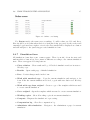
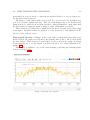
In the current HVAC, there is also a script called ’MPC Viewer’, which reads the
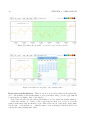
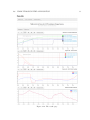
results, and plots them on a web page, which serves as a diagnostic tool for the online
process.
Another group of YAML files is used to store the information about which data is
plotted and about grouping of these data into charts. The structure of these files is:
• Root of the file is a dictionary with only one key, named PlotDefinition. The
value under this key is a list, which contains a number of dictionaries. Structure of
each that dictionary is:
– Title – Determines the title of the chart.
– Variables – Groups variables, which should be displayed all in one figure. It
is a list of dictionaries, each of them with following items:
∗ ID – Identifies, which variable, specified in YAML definition files, will be
plotted.
∗ Color – Color to plot the series, expressed as a hexadecimal RRGGBB triplet.
∗ Description – Name of the series to be displayed in the legend.
1.3.1
The off-line simulation of the system
Running the system without the connection to the underlying PLC is used to tune the
controller, to explore energy savings and to study possible failure of the controller.
The simulations run are short-term, covering the length of the prediction horizon. This
strategy of studying the MPC is based on the idea that when the system behaves well on
one prediction horizon (typically three or four days long) in all characteristic situations
(heating up after a weekend, day-night transitions etc.), this induces that it will be likely
to behave well also in closed loop. This is in contrast in long-term approaches (BACTool
[3], for example), which evaluate a mean behaviour of the controlled system over a long
time in order of months or a year.
1.4
Motivation of the application
When the engineer wants to run a simulation of a control problem, he or she has many
possibilities, how to do that. The system plentifully mentioned throughout this work,
MATLAB, is only one example.