1
Functions and
characteristics
Presentation of sensors
Sensors for VIP300
To obtain the indicated performance characteristics, VIP300 relays must be used
with the specified sensors. The relay/sensor assembly is defined to respect the
technical characteristics indicated, in particular:
b operation over the enitre range
b response time
b accuracy
b short-circuit thermal withstand.
The three sensors must be of the same type.
Sensors for VIP300LL and VIP300P
b CRa 200/1 and CRb 1250/1 sensors are used on RM6 units (models since 1998).
b CSa 200/1 and CSb 1250/1 sensors are used on SFset circuit breakers.
CSa and CSb sensors have the same number of secondary turns as the CRa et CRb
sensors respectively.
b CEa 200/1 and CEb 1250/1 sensors are used on 24 kV Evolis integrated circuit
breakers (lateral versions).
Sensors for VIP300LH
b 200/1 and 800/1 are used on Ringmaster circuit breakers.
VIP300 sensor input ratings
Each VIP 300 has two input ratings corresponding to two different operating ranges.
For this reason, the input transformers have an intermediate tapping point on their
primary winding. Each tapping point corresponds to a rating with a different operating
range.
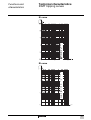
Choosing the right sensor
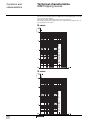
Choose the sensor to be used and the VIP300 connection range in accordance with
the desired current setting range.
VIP300LL / VIP300P sensors
Rating
Current setting range
CRa, CSa, CEa 200/1
x1
10 A - 50 A
x4
40 A - 200 A
CRb, CSb, CEb, 1250/1
x1
63 A - 312 A
x4
250 A - 1250 A
VIP300LH sensors
Rating
Current setting range
Ringmaster 200/1
x2
20 A - 100 A
x4
40 A - 200 A
Ringmaster 800/1
x2
80 A - 400 A
x4
160 A - 800 A
For a given operating range, the bottom of the current setting range represents the
minimum operating current of the relay.
3