1
136
Chapter 4. Reference
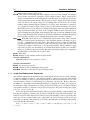
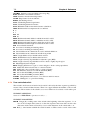
noise is defined as the difference between the total noise and the phase noise. Waveforms that can
be stored in memory and made available to the control analysis are the computed noise spectrum
and its phase and amplitude components. These vectors can be retrieved through the statements
’get("AnalysisName.out")’, ’get("AnalysisName.out:pm")’ and ’get("AnalysisName.out:am")’.
The frequency axis can be retrived through the stateemnt ”get("AnalysisName.freq")’.
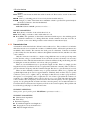
ANALYSIS DEFINITION:
Name pnoise <parameter=value> . . .
ANALYSIS PARAMETERS:
annotate Degree of annotation. It is an integer number values from 1 to 7 turn on displaying
of generic informations about the analysis run. Values above 7 are bitwise and turn on
specific printouts:
0x08: printout the state transition matrix. 0x10: save the state transition matrix in a file
named as the analysis.
start Start sweep limit
stop Stop sweep limit
center Center of sweep
span Sweep limit span
step Step size, linear sweep
lin Number of points, linear sweep
dec Points per decade
log Number of points, log sweep
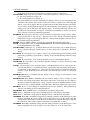
sweeptype Integer (2): type of frequency sweep. Possible ones are:
0: absolute sweep; 1: relative sweep. 2: offset sweep
When ’absolute sweep’ is chosen the frequency is swept in the interval defined exclusively
by the sweep. When the ’relative sweep’ is chosen the frequency is swept in the interval
specified by the sweep with respect to the fundamental frequency corresponding to the
working period determined by the large signal steady state analysis. In other words the
frequency of the sweep add to the oscillator fundamental. When the ’offset sweep’ is
chosen the frequency is swept as in the ’relative sweep’ but the results are referred to the
frequency of the sweep. This parameter acts also in single frequency analysis define by
the <"freq"> parameter.
refh Integer (1): the harmonic to which a relative sweep refers to.
freq Real (-): the frequency value in single frequency analysis. This parameter must not be
specified contemporary to the frequency sweeping command.
onodes List (-): the list containing the pair of nodes (the ground node can be omitted) at which
the noise is computed. The format is <onodes=["node1","node2"]>.
harms Real (7): the number of harmonics of the large signal spectra of the unperturbed circuit
that are considered in this analysis.
samples Integer (-): the number of time points employed to sample the large signal steady state
solution and to define the size of the related variational model. When not specified, it is
derived from the number of harmonics defined by the <"harms"> parameter.
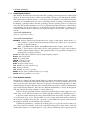
type Integer (7): types of noise sources that are considered during the analysis. Possible choices
are:
0x1 : thermal noise; 0x2 : shot noise; 0x4 : flicker noise.
The value of this parameter can be the result of the bitwise-or of types of noise sources.
decomp Boolean (false): when true the resulting component of the noise spectra along the
’u1(t)’ eigenfunction and those obtained by difference with it are computed. These
components have meaning only for autonomous circuits. The component along the ’u1(t)’