1
FLINTLOCK AND CAPLOCK–HOW THEY WORK
The Flintlock
Today's flintlock evolved around 1600 in Europe and was the most efficient
lock for firearms use until the percussion system was perfected in the early
1800s. Even so, flintlock rifles remained in service in some of America's more
rural areas until, perhaps, the turn of the century.
Simplicity of operation typifies the flintlock since all the shooter must have is a
bit of priming powder and a flint for the hammer's jaws. This flint must be held
securely and wrapping it in a bit of leather or thin sheet of lead gives the upper
and lower jaws of the "cock" something to hold onto–and the flint as well.
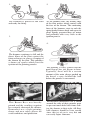
The flintlock operates in the following manner: The hammer is placed on full
cock, the pan is charged with either 4Fg or 3Fg powder and the frizzen is
snapped down over the powder pan. Now the lock is ready for firing. Usually
the hammer is lowered to half cock unless the shot will be taken immediately.
To fire the gun, the hammer is brought back to the full cock position, the gun
raised and aimed–the trigger pulled. The hammer falls and the fireworks begin.
The flint strikes the face of the frizzen and this forceful scraping causes a
shower of sparks–which are actually tiny pieces of molten metal from the
frizzen face. These sparks drop into the powder pan and–usually–ignite the
charge of priming powder. The flash of the igniting primer charge travels
through the barrel's touch hole and ignites the main charge. In all cases,
successful firing is contingent on having a sharp flint tightly held in the hammer, a clean hard face on the frizzen, fine dry powder in the pan, a clean touch
hole and main charge properly loaded in good condition.
That is how the chain of events should go anyway. Sometimes the main charge
decides to "play dead" and all the shooter gets is the poof of the igniting primer
charge ... hence the old saying of "flash in the pan."
The flintlock isn't perfect but the shooter can go a long way towards minimizing
most of the problems if he takes the time to understand the gun's needs. Here are
some of the major points:
Vulnerable Priming–Wind and water can cause misfires without too much
trouble. The solution lies in awareness of the problem and the possible use of a
waterproof hood which fits over the lock area. Bullet lube or grease applied to
the outer edge of the frizzen and powder pan will help to keep water away from
the powder. Flints should be clamped tightly in the hammer's jaws and replaced
when they are dull.
Pan Flash–This can be a real problem for any flintlock shooter since the
eruption of the priming is a very real and spectacular event! The shooter can
minimize this distraction by using priming powder sparingly.
Long Lock Time–Only practice and experience can teach the shooter to
control his particular gun.
To the uninitiated the combination of a heavy hammer striking the
springloaded frizzen (which snaps open adding yet another force to confound
aiming efforts) and the resultant “whoosh” of the igniting primer charge is
more than distracting. By the time the main charge goes off, the sights may be
way off target and the shooter's eyes screwed shut while he wonders when all
the commotion will stop!
The solution? Keep practicing. Get to know your flintlock and take care
of it. Wear shooting glasses for extra confidence and protection.