1
HOW TO LOAD ...
The Patched Roundball
Without a doubt, the most popular and widely used muzzle-loading projectile is the patched roundball. This combination of a soft lead sphere and a
scrap of lubricated cloth is peculiarly American and has been with us ever
since its worth was proven prior to and during our Revolutionary War.
Over the years different styles of rifling have been devised and used with
some degree of success. Characteristics ran from extremely deep grooves to
relatively shallow ones; from two or three lands to eight or more.
Throughout this period and up through today the most constant single factor
has been the patch around the ball–that hasn't changed ... nor has the lead
ball, for that matter.
A roundball, whether fired from a rifle or a smoothbore, needs the patch to
take up the slack, called "windage", between the ball and barrel walls. A
properly fitted ball and patch will seal the bore and keep propellant gases
behind the bullet where they do the most good. At the same time the ball is
held rigidly in position and not allowed to wander from side to side as it
speeds towards the muzzle. In a smoothbore this means the ball leaves the
muzzle the same way each shot; it does the same in a rifle plus the ball is
stabilized by the rifling and given a high degree of accuracy.
Use of the patched roundball in a single-shot pistol is virtually identical to its
use in a long gun in terms of interior ballistics and loading operations.
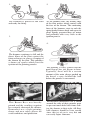
Loading the patched roundball requires the same techniques regardless
whether the gun is rifled or smoothbore, flintlock or caplock. The following
preliminaries should be performed before the first charge of the day is poured
down the barrel:
Since oil and any other form of moisture is the enemy of the successful black
powder shooter, the bore and chamber area should receive a good cleaning
just before the gun is loaded. Run fresh patches down the barrel until they
come out clean and dry. Clean the flash channels of both flintlocks and
caplocks with pipe cleaners–pushing the flexible stem on into the barrel.
Next, while outdoors, place a #11 cap on the nipple of the caplock, hold the
muzzle near a blade of grass, bit of dust, etc. and drop the gun's hammer on
the cap. Detonation of the fulminate will cause a small but noticeable blast to
emanate from the muzzle moving the blade of grass or bit of dust. If the blast
does not manifest itself, the shooter must go back over the gun to clear away
the obstruction.
Finally, after all is clear, run a last clean patch down the barrel to catch any
freshly dislodged lubricant. Now the gun is ready to be loaded.