1
1.1 - General
1.1.1
Measuring Principle
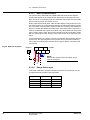
Pulp properties is measured at four (five for UV) discrete wavelengths. This is
done by pulsing four (five for UV) groups of LEDs which are exemplary light
sources thanks to their longevity, predictable beam pattern and
monochromatic output, therefore no need for rotating color filters and motors.
Color, brightness, ERIC, and flourescence (UV) with their different requirement
on applied wavelength can be measured. In BT-5400 the four wavelengths can
be combined to find the optimum correlation to lab in a specific application.
Light from the LEDs is directed into the process stream via flexible transmitting
fiber optics. It passes through the probe window and is diffused by the pulp or
other medium. The scattered light is then gathered by receiving fiber optics
and conducted to a photo detector.
Optical feedback and software control routines, based on the tried and tested
BTG 4-BeamTM Principle that minimizes drift due to temperature or aging of
optical components, enable continuous compensation for changes in process
temperature and allow for inevitable degradation of signal sources and
detectors. These active equalization techniques give the signal stability
needed.
The UV-channel in the BT-5400 UV measures fluorescence, which may
appear from FWA (Fluorescent Whitening Agents) present in the pulp. An
optical filter is used in front of the detector transmitting only the part of the
emitted UV-light which is reflected in the visible wavelength region. Thus, the
part of the UV-light which is reflected as UV is removed. Subsequently, pulps
without FWA will have a measured signal at zero, or very close to zero, for the
UV channel.
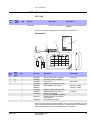
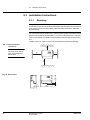
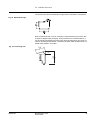
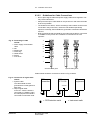
Fig
1 BT-5400 probe
source/detector
arrangement
BT-5400 UV
Detectors
Blue sources
Red/Green sources
UV sources
IR sources
BT-5400 IR
2
BT-5400 Product Introduction
© BTG 2007
M2067/1en