1
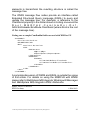
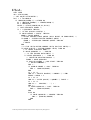
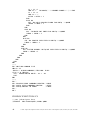
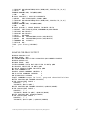
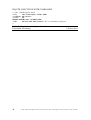
A property and a group within a folder cannot share the same name independently of their relation. This restriction does not apply to properties and groups within different folders, each of which may be regarded as occupying a different name space. A property value can consist of any characters in the character set specified in NameValueCCSID. As in most XML character data, the ampersand character (‘&’) and the left-angle bracket (‘<’) must be escaped using the strings ‘&’ and ‘<’ respectively. Since XML CDATA sections are not supported in folders there is no need to escape the right angle bracket (‘>’), single quote (‘'’), or double quote (‘"’). However, the escape sequences ‘>’, ‘'’, and ‘"’ are supported in values. Blanks within values are considered significant and should not be removed by WMQ or its applications when processing the MQRFH2 structure. Other blanks within a folder are insignificant. In addition to its value a property can contain an optional data type; for example, where boolean is the data type: <IsStatus dt='boolean'>Ø</IsStatus> The data type can be used to restrict the type of values that a property can take or to signal to the application programmer or user that a value is to be interpreted as being of a certain type. In the example, explicitly specifying the boolean data type elucidates the meaning of the value 0 to the reader although it will generally not affect the behaviour of an application that uses this property. Refer to the WebSphere MQ Application Programming Reference or WebSphere MQ Integrator Programming Guide for a complete list of supported data types and their use. As in XML, a name (of a folder, group, or property) is a token beginning with a letter or one of a few allowed punctuation characters and continuing with letters, digits, hyphens, underscores, or full stops. Note that the colon (‘:’), which in XML is used for the namespace construct, is not allowed in a name. As in XML , names are case-sensitive. Again, please refer to the above publications for a detailed list of Unicode characters that can be used in names. © 2003. Reproduction prohibited. Please inform Xephon of any infringement. 39