1
}
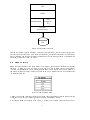
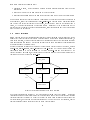
In the multi-paradigm interface, queries are represented internally using an object-oriented canonical
form represented using ADAM objects accessed through the internal form attribute of query mixin.
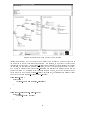
EDEN objects which represent the visual aspects of a particular interface are dened on paradigmspecic classes (e.g. the attribute picture window on graph interface). Furthermore, when the user interacts with the EDEN objects used to represent a query (for example, to extend the query graph), the
callback behaviour associated with the interaction can directly invoke the methods of graph interface
or query mixin, as both parts of the interface are implemented in ADAM.
5 Conclusions
This paper has shown how an object-oriented graphical toolkit can be fully integrated with an OODB,
in such a way that the database language is used to implement higher-level interface functionality.
Such a close integration of the interface with the database has a number of advantages over more conventional architectures { a single language is used for implementing the interface, the application, and
entensions to the data model; interface data can be stored in the database, and accessed/manipulated
using existing database facilities; the object-oriented facilities of the data model of the database can
be used for sharing useful interface data and for extending interface functionality.
Several examples of such extended functionality have been presented in this paper { a simple map
drawing program, an extensible direct-manipulation schema design tool/object browser and a multiparadigm query interface. EDEN has also been used to develop a debugger for an active rule system
[10]. The uniform representation of instances, classes, interface components and modelling constructs
as objects has thus been exploited to provide a powerful environment for the development of advanced
data-intensive applications.
Acknowledgements The second author is supported by a grant from the British Council and Arab
Student Aid International and the third by the UK Science and Engineering Research Council. We
are grateful to Alistair Kilgour, Oscar Diaz and Arturo Jaime for helpful discussions relating to the
topic of this paper.
References
[1] Laguna Beach Participants, Future Directions In DBMS Research. SIGMOD Record, 18(1), pages
17{26, 1989.
[2] A.I. Abdelmoty, M.H. Williams, and J.M.P Quinn. A Rule-Based Approach To Computerized
Map Reading. Information and Software Technology, 35(10):587{602, October 1993.
[3] G. Al-Qaimari. A Direct Manipulation Interface to an Extensible Object-Oriented Database. PhD
thesis, Computing and Electrical Engineering Department, Heriot-Watt University, Edinburgh,
Scotland, 1994.
[4] G. Al-Qaimari and N. W. Paton. Design and Evaluation of Visualisations for Advanced Data
Modelling Constructs. In C. Chrisment, editor, Basque International Workshop on IT (BIWIT),
pages 169{182. Cepadues Press, 1994.
[5] J. Almarode and T. Lougenia Anderson. GemStone Visual Interface Designer: A Tool for ObjectOriented Database Design. In Object-Oriented Databases: Analysis, Design and Construction
(DS-4), pages 73{94. North-Holland, 1991. W. Meersman et al (Eds).
[6] T. Lougeia Anderson, E. F. Ecklund, and D. Maier. PROTEUS: The DBMS User Interface as
an Object. In On Object-Oriented DB Systems, pages 139{156. Springer-Verlag, 1991. K. R.
Dittrich and U. Dayal (Eds).
13