1
Maintenance
Tire Load and Inflation Information
How Overloading Affects Your Tires
Maintaining proper tire inflation pressure is essential for
both tire safety and performance.
Tire pressure is what enables your trailer tire to
support loads; thus, overloading can have serious
consequences. Too much weight can cause stress
on the suspension system components, brake failure,
handling and steering problems, irregular tire wear, and
possible tire failure. If you discover your tires cannot
handle the load, lighten the weight of the load on your
tires.
Proper Tire Inflation
The level of air in your tires affects your vehicle’s
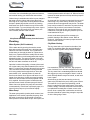
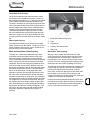
overall performance. A maximum inflation pressure
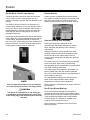
specification is found on the trailer’s exterior on a metal
tag riveted to the lower front, roadside of the trailer, as
well as on the original equipment tires.
Air pressure should be checked based on the load on
each individual tire. Cold Inflation Pressure should be
adjusted to handle the maximum tire load, and all tires
on the axle should carry the same inflation pressure.
Cold tire inflation pressure is the tire pressure checked
in the morning before you drive more than a few miles,
or before rising ambient temperatures or the sun’s
radiant heat affects it.
Underinflated Tires
Underinflation brings a higher risk of damage due to
road hazards, reduces casing durability, causes a loss
in fuel economy, and will result in uneven or irregular
tire wear. Severe underinflation brings about an
increased risk of tread separation, handling difficulties,
and possible tire failure, caused by overheating.
When minimum inflation pressure requirements are not
met, tire durability and optimum operating conditions
are compromised. Tire inflation pressure should always
meet the guidelines for vehicle weight.
Weighing Your Trailer or Towed Vehicle
Since a trailer or towed vehicle adds to the load on
the tires, it is crucial to properly weigh towed vehicles.
Refer to Section 7 - Towing section for important
detailed information on loading and weighing of the
trailer.
Tire Care
The most important function of tires is to provide
traction while moving and grip when steering or
stopping. The tires on your trailer are designed for
highway use and must be properly maintained in order
to maximize tire life, as well to provide a safe mode of
transportation.
Tire Care Tips
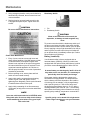
To reduce the risk of tire failure, we strongly
recommend the following:
• It may be necessary to inflate your tires at a truck
stop or truck service center in order to achieve
adequate air pressure for your trailer’s needs.
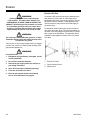
1. Check the pressure in your tires, including
your spare, at least monthly when the tires are
cool (after the vehicle has been stopped for 3
hours and then driven less than 1 mile). Do not
reduce pressure when tires are hot. Use a tire
gauge to check pressure and maintain it at the
recommended level.
• Only permanent air seal metal valve caps should be
used.
2. Never overload your tires. Heed the maximum
load-carrying capability of your tires.
• Be safe - if a tire has been run in a 20 percent
underinflated condition, it must be dismounted and
inspected by a trained professional. It should not be
aired up without a full inspection or without using a
safety cage. Use a calibrated gauge. If your tire is
rated for higher inflation pressures, a special gauge
will be required designed for larger tires.
3. Check your tires frequently for scrapes, bulges,
separations, cuts, or snags resulting from use. See
your tire dealer immediately if any such condition is
discovered.
Observe the following:
• Do not bleed air from warm tires to reduce pressure
buildup.
• Do not inflate tires to cold psi rating beyond rim
specifications.
8-8
4. Never operate your vehicle in excess of lawful
speeds, the maximum speeds justified by driving
conditions, or in excess of speeds recommended
for the tires you are using.
5. Make every effort to avoid running over objects
that may damage the tire through impact or cutting,
such as chuck holes, glass, metal, etc.
Land Yacht