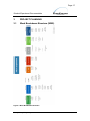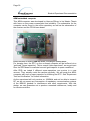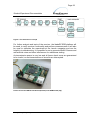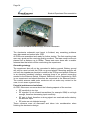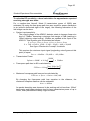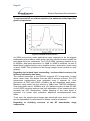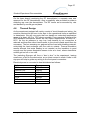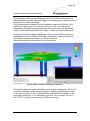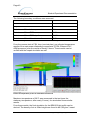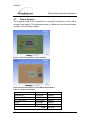
1
SED Student Experiment Documentation Document ID: BX18_ARCA_SED_v5-0_12JAN15 Mission: BEXUS 18 Team Name: ARCA Experiment Title: Advanced Receiver Concepts for ADS-B Team Name University Student Team Leader: Haas, Severin EAH Jena Team Members: Biereigel, Stefan EAH Jena Udich, Sebastian EAH Jena Willenbücher, Johannes HS Mannheim Zöllner, Hannes EAH Jena Version: Issue Date: Document Type: Valid from: 5.0 12 January 2015 EAR 12 Jan. 15 Issued by: ARCA Team Approved by: - BX18_ARCA_SED_v5-0_12JAN15.docx -2- CHANGE RECORD Version Date Changed chapters Remarks 0 1 1.1 2013-12-11 2014-02-14 2014-02-24 Blank Book 2013 PDR 2 2014-04-20 3 2014-06-21 3.1 2014-07-07 New Version All 1.3, 2.1, 2.2, 2.3, 2.4, 3.1, 4.5 1.2, 1.3, 1.4, 1.5.1, 2.1, 2.2, 2.3, 2.4, 3.1, 3.2, 3.3.2, 3.3.3, 3.4, 3.5, 4.2.1, 4.2.2, 4.2.3, 4.2.4, 4.4, 4.5, 4.6, 4.7, 4.8, 5.1, 5.2, 5.3, 6.1.2, 6.1.4, 6.3, 7.2, 7.3, 8.1, 8.2, Appendix B, Appendix C, References 1.1, 1.3, 1.4, 1.5.2, 2.1, 3.3.2, 3.4, 4.2.1, 4.2.2, 4.2.3, 4.3, 4.5, 4.6, 4.7, 4.8, 4.9, 5.2, 5.3, 6.1.1, 6.1.2, 6.2, 6.4, 6.5, 7.1, Preface, 2.3, 3.1, 3.2, 3.3.2, 3.4, 5.2, 6.1.1 3.2 2014-07-09 4 2014-08-31 5 2015-01-12 CDR IPR 3.1, 3.3.2, 6.1.3, 6.1.4, 6.1.5, 6.3 3.2, 3.4, 4.2.2, 4.4, EAR, Pre-Campaign 4.5, 5.1, 5.2, 5.3, 6.1.1, 6.1.5, 6.2, 6.3 1.5.1, 3.2, 3.4, 5.1, Final report 5.2, 5.3, 7.3, 7.4, 7.5 Abstract: BX18_ARCA_SED_v5-0_12JAN15.docx -3- Keywords: BEXUS, SED – Student Experiment Documentation, ARCA, Aircraft, ADS-B BX18_ARCA_SED_v5-0_12JAN15.docx -5- CONTENTS CHANGE RECORD ................................................................................................ 2 CONTENTS ............................................................................................................ 5 PREFACE ............................................................................................................... 9 ABSTRACT ........................................................................................................... 10 1 INTRODUCTION .......................................................................................... 11 1.1 Scientific/Technical Background .......................................................... 11 1.2 Mission Statement ............................................................................... 11 1.3 Experiment Objectives ......................................................................... 11 1.4 Experiment Concept............................................................................. 12 1.5 Team Details ........................................................................................ 12 1.5.1 Contact Point ........................................................................... 12 1.5.2 Team Members ....................................................................... 12 2 EXPERIMENT REQUIREMENTS AND CONSTRAINTS ............................. 15 2.1 Functional Requirements ..................................................................... 15 2.2 Performance requirements................................................................... 15 2.3 Design Requirements........................................................................... 15 2.4 Operational Requirements ................................................................... 16 2.5 Constraints ........................................................................................... 16 3 PROJECT PLANNING ................................................................................. 17 3.1 Work Breakdown Structure (WBS) ....................................................... 17 3.2 Schedule .............................................................................................. 20 3.3 Resources ............................................................................................ 21 3.3.1 Manpower................................................................................ 21 3.3.2 Budget ..................................................................................... 21 3.3.3 External Support...................................................................... 22 3.4 Outreach Approach .............................................................................. 22 3.5 Risk Register ........................................................................................ 23 4 EXPERIMENT DESCRIPTION ..................................................................... 26 4.1 Experiment Setup ................................................................................ 26 4.2 Experiment Interfaces .......................................................................... 26 4.2.1 Mechanical .............................................................................. 26 4.2.2 Electrical .................................................................................. 27 4.2.3 Radio Frequencies .................................................................. 27 4.2.4 Thermal ................................................................................... 28 4.3 Experiment Components...................................................................... 29 4.4 Mechanical Design ............................................................................... 29 4.5 Electronics Design ............................................................................... 31 BX18_ARCA_SED_v5-0_12JAN15.docx -6- 4.6 Thermal Design .................................................................................... 37 4.7 Power System ...................................................................................... 42 4.8 Software Design ................................................................................... 44 4.8.1 FPGA Design .......................................................................... 45 4.8.2 ARM Software design .............................................................. 46 4.9 Ground Support Equipment ................................................................. 48 5 EXPERIMENT VERIFICATION AND TESTING ........................................... 50 5.1 Verification Matrix ................................................................................ 50 5.2 Test Plan .............................................................................................. 52 5.3 Test Results ......................................................................................... 57 6 LAUNCH CAMPAIGN PREPARATION ........................................................ 68 6.1 Input for the Campaign / Flight Requirement Plans ............................. 68 6.1.1 Dimensions and Mass ............................................................. 68 6.1.2 Safety Risks ............................................................................ 68 6.1.3 Electrical Interfaces ................................................................. 69 6.1.4 Launch Site Requirements ...................................................... 69 6.1.5 Experiment Shipping ............................................................... 70 6.2 Preparation and Test Activities at Esrange .......................................... 70 6.3 Timeline for Countdown and Flight ...................................................... 70 6.4 Post-Flight Activities ............................................................................. 71 6.5 System success ................................................................................... 71 7 DATA ANALYSIS AND RESULTS ............................................................... 73 7.1 Data Analysis Plan ............................................................................... 73 7.2 Legal issues ......................................................................................... 73 7.3 Launch Campaign ................................................................................ 73 7.4 Results ................................................................................................. 75 7.4.1 Experiment results ................................................................... 75 7.4.2 Hardware design ..................................................................... 76 7.4.3 Electronics design ................................................................... 77 7.4.4 Software .................................................................................. 77 7.4.5 Thermal ................................................................................... 77 7.5 Lessons Learned ................................................................................. 78 7.5.1 Antenna ................................................................................... 78 7.5.2 Electronics ............................................................................... 79 8 ABBREVIATIONS AND REFERENCES....................................................... 80 8.1 Abbreviations ....................................................................................... 80 8.2 References........................................................................................... 82 Appendix A – Experiment Reviews ....................................................................... 83 Appendix B – Outreach and Media Coverage ....................................................... 85 Appendix C – Additional Technical Information .................................................... 86 BX18_ARCA_SED_v5-0_12JAN15.docx -7- Appendix D – Request for Waivers ....................................................................... 87 BX18_ARCA_SED_v5-0_12JAN15.docx Page 9 Student Experiment Documentation PREFACE ARCA (Advanced Receiver Concepts for ADS-B) is a team from the university for applied sciences in Jena which was selected for the BEXUS (Balloon Experiments for University Students) 18 project. The team wants to build a Mode-S ADS-B receiver which receives messages from aircrafts. For the team this project represents the first step into the space business. Because of the increasing number of aircrafts in the modern world such a receiver could be mounted on a small satellite to be used as a relay station for Mode-S ADS-B messages. BX18_ARCA_SED_v5-0_12JAN15.docx Page 10 Student Experiment Documentation ABSTRACT In the modern world, the aircraft is a common way of transportation. With thousands of flights every day, of course, the need for tracking planes, monitoring their position and health status arises. At the moment, most airplanes are only tracked in densely populated areas. The main goal of the experiment is to show, which advantages an aircraftbased ADS-B surveillance system could have, using a stratospheric balloon for demonstration and evaluation. One experiment goal is not to resort to using pre-built electronics, but instead develop, verify and produce the different parts of the experiment ourselves. The receiver will listen to Mode-S aircraft traffic, decoding DF17 position reports and log them on-board as well as downlink them to the ground station. There the data will be plotted by user interface software for a quick look analysis and be saved for careful interpretation afterwards. BX18_ARCA_SED_v5-0_12JAN15.docx Page 11 Student Experiment Documentation 1 INTRODUCTION 1.1 Scientific/Technical Background In the modern world, the aircraft is a common way of transportation. With thousands of flights every day, of course the need for tracking planes, monitoring their position and health status arises. As flight numbers increase, there is a chance that people tend to lose track of flights and for example a crash may not be noticed instantly. Our experiment tries to evaluate the feasibility of high altitude monitoring of Mode-S (ADS-B) transmissions to allow less dense areas to be monitored. Future possibilities may include a net of Pico-satellites in orbit to monitor the whole earth surface. Other possible uses arise, for example making flight routes more effective by saving fuel – if flight route changes could be made more flexibly. The subject doesn‟t seem to be far-fetched, as Iridium NEXT satellites will include a system to monitor ADS-B-transmissions and Iridium will provide that data for money to airlines as soon as 2015. 1.2 Mission Statement Many aircrafts (about 80%) transmit tracking data via Mode-S (ADS-B). The status quo is that this data is only observed in regions with dense population. The objective of the ARCA experiment is to receive Mode-S transmissions in high altitude and evaluate the possible problems and advantages such surveillance would have. To do that, the electronics, including the receiver will be developed, built and tested by the team on its own. 1.3 Experiment Objectives Primary Objectives: Analysing Mode-S (esp. ADS-B) data reception possibilities in great height (scientific) Developing and building a system, which is able to receive ADS-B data without relying on pre-built hardware (technical) Characterisation of the implemented systems and algorithms (technical) Secondary Objectives: Evaluating the maximum radius, in which airplanes can be received BX18_ARCA_SED_v5-0_12JAN15.docx Page 12 Student Experiment Documentation 1.4 Experiment Concept The payload will, consist of an electronic box and an externally mounted antenna. The electronics box contains a RF receiver and demodulator, an FPGA decoder and an ARM SoC running Linux for data storage, analysis and communication to ground support. The received and demodulated signals (Mode-S downlink at 1 Mbit/s) are processed by an FPGA, decoding the data in real time and are then transmitted to the main processor to be logged and transferred to ground support. 1.5 Team Details 1.5.1 Contact Point For any questions regarding our experiment, please contact the team leader, Severin Haas. You can reach him via mail ([email protected]) or via mobile phone +49 178 8287 494. Address: Jenertal 1 07749 Jena Germany For mails concerning the whole team you can also write to: [email protected] 1.5.2 Team Members Severin Haas, Project leader Severin studies Electrical Engineering with the main focus on embedded systems at the University of Applied Science in Jena. Besides that he is interested in signal processing, astronomy and likes to photograph. In the ARCA team he is responsible for project management, testing, outreach work and the ground control software. Hannes Zöllner, Electronics developer Hannes is currently working on his Ph.D. in the topic of analyzing COTSmicrocontrollers and –memories for the usage in space applications. His main interest is the development of hardware. Therefore he is responsible for the electronics development in the project. Stefan Biereigel, Software developer Stefan studies Electrical Engineering with focus on embedded Systems at the University of Applied Sciences Jena. His personal interest lies in the Radio BX18_ARCA_SED_v5-0_12JAN15.docx Page 13 Student Experiment Documentation Communication field, with special focus on Software Defined Radio (SDR) technology. He is responsible for Software implementation and the FPGA Receiver Design. Johannes Willenbücher, Mechanical designer Johannes studies Mechatronics with focus on information technology at the University of Applied Science Mannheim. Before university, he completed an apprenticeship as a motor mechanic and electrician. Having experience with construction and CAD software, he is responsible for the mechanical design of the experiment. Sebastian Udich, Thermal simulation engineer Sebastian Udich finished his engineer‟s degree in Mechatronics and his Master of Science in Space Electronics at Ernst-Abbe-Hochschule Jena. He is now writing his doctorate (in cooperation with Technical University Ilmenau) about modeling and simulation of ceramic semiconductors. He is responsible for thermal management and simulation of the experiment payload. BX18_ARCA_SED_v5-0_12JAN15.docx Page 15 Student Experiment Documentation 2 EXPERIMENT REQUIREMENTS AND CONSTRAINTS 2.1 Functional Requirements F1: Removed. F2: The experiment shall detect data from airplanes (ADS-B) during the whole flight. F3: The experiment shall distinguish between different airplanes. F4: The received data shall be saved on a flash card. 2.2 Performance requirements P1: Deleted. P2: The experiment shall only receive data at a frequency of 1090MHz. P3: The experiment shall have a storage capacity of 16GB. P4: The experiment shall be able to receive a minimum of 5 messages per second. P5: The experiment shall receive Mode-S ADS-B data with a data rate of 1Mbit/s. 2.3 Design Requirements D1.1: After CDR deleted. D1.2: The experiment shall be designed to prevent the electronics from temperatures below -20°C to ensure safe operating conditions. D2: The experiment shall work at the vibration profile of the BEXUS balloon. D3: The experiment should not harm the gondola and other experiments. D4.1: The experiment must be designed to use the E-Link downlink. D4.2: The experiment must be designed to use the E-Link uplink. D5: The experiment shall not use more than 0.5 Ah of the gondola battery. D6: The experiment shall not be air-tight and be equipped with holes. D7: The experiment shall not be heavier than 2kg. D8: The experiment box shall not be bigger than 0,2m x 0,2m x 0,2m. D9: The receiver should decode the incoming data at a frequency of 1090MHz. D10: moved to F4. BX18_ARCA_SED_v5-0_12JAN15.docx Page 16 Student Experiment Documentation D11: The antenna shall have a gain of at least +7dBi and be optimized for 1090 MHz D12: An antenna shall be mounted outside of the gondola, facing downwards while flight. D13: The antenna shall receive with omnidirectional characteristics. 2.4 Operational Requirements O1: The experiment shall be able to work autonomously, without control by the ground station. O2: The experiment shall save all data before the balloon is cut off to prevent data loss in case of short power outages. O3: Removed. O4: Moved to D12. O5: Moved to D13. O6: The other BEXUS experiment must not emit any EM-interference at a frequency of 1090MHz. 2.5 Constraints The experiment must comply with the BEXUS schedule and guidelines. BX18_ARCA_SED_v5-0_12JAN15.docx Page 17 Student Experiment Documentation 3 PROJECT PLANNING 3.1 Work Breakdown Structure (WBS) Figure 1 Work Breakdown Structure BX18_ARCA_SED_v5-0_12JAN15.docx Page 18 Student Experiment Documentation WP Task Responsible Person Supporter 1.1 Create timetable Severin Haas 1.2 Planning Severin Haas 1.3 Communication Severin Haas 2.1 Build antenna Hannes Zöllner Stefan Biereigel, Severin Haas 2.2 Design frontend Severin Haas Stefan Biereigel 2.3 Design decoder Hannes Zöllner Stefan Biereigel 2.4 Design power supply Hannes Zöllner 2.5 Build frontend Hannes Zöllner Stefan Biereigel, Severin Haas 2.6 Build decoder Hannes Zöllner Stefan Biereigel, Severin Haas 2.7 Build power-supply Hannes Zöllner Stefan Biereigel, Severin Haas 3.1 Write decoder software Stefan Biereigel Severin Haas 3.2 Write main computer software Stefan Biereigel Severin Haas, Hannes Zöllner 3.3 Write ground station software Severin Haas 4.1 Create structure Johannes Willenbücher 4.2 Draw CAD Johannes Willenbücher 5.1 Create concept thermo simulation Sebastian Udich 5.2 Design simulation Sebastian Udich 6.1 Temperature test Severin Haas Team 6.2 Vacuum test Severin Haas Team 6.3 Shock test Severin Haas Team 6.4 EMC test Severin Haas Team 6.5 Endurance run Severin Haas Team 7.1 Create homepage Severin Haas Team Stefan Biereigel Team BX18_ARCA_SED_v5-0_12JAN15.docx Page 19 Student Experiment Documentation 7.2 Twitter Severin Haas Team 7.3 Planning events Severin Haas Team 7.4 Produce podcast Severin Haas Stefan Biereigel 8.1 Write PDR SED Severin Haas Team 8.2 Write CDR SED Severin Haas Team 8.3 Write IPR SED Severin Haas Team 8.4 Write EAR SED Severin Haas Team 8.5 Write final SED version Severin Haas Team BX18_ARCA_SED_v5-0_12JAN15.docx Page 20 Student Experiment Documentation 3.2 Schedule Figure 2 Schedule BX18_ARCA_SED_v5-0_12JAN15.docx Page 21 Student Experiment Documentation 3.3 Resources 3.3.1 Manpower Stefan Biereigel spends about 15 hours per week to work on the experiment. In peak times much more. From 30.06.2014 to 19.07.2014 he is writing exams, so the available time is lower. Severin Haas spends about 15 hours per week to work on the experiment. In peak times much more. From 30.06.2014 to 19.07.2014 he is writing exams, so the available time is lower. From mid November 2014 to end of January 2015 he is going to write his bachelor thesis. In this time he has to reduce the work to a lower level. Sebastian Udich will spend about 5 hours per week to work on the experiment. Johannes Willenbücher can spend 7.5 hours per week to work on the experiment. In peak times he can spend much more time. Hannes Zöllner can spend about 7.5 hours per week to work at the experiment. In peak times, of course much more. 3.3.2 Budget Overview over project budget: Item Price Parts Main computer 150€ PCBs Main Computer 200€ Parts Baseboard 120€ PCBs baseboard 160€ Antenna 40€ Aluminium case 100€ Cabling, Connectors, etc. 80€ bladeRF-Board (Test and Verification equipment) 430€ Software license 25€ Shipping 120€ Total 1425€ BX18_ARCA_SED_v5-0_12JAN15.docx Page 22 Student Experiment Documentation All components listed above will be the costs for 2 experiments, which are sponsored by BMWi/DLR and administrated by ZARM. At the moment, the team consists of 5 team members. We want to give all team members the possibility to travel to the launch campaign in October 2014. To finance the fifth person, we made an application at our university to support us with paying the open flight ticket to Kiruna. Our project was funded by the “Studentische Forschungs und Entwicklungsprojekte”-program with 1500€. We will use this money to give all team members the possibility to travel to launch campaign and for buying some of the components needed for the experiment. If the self-built receiver cannot be finished in time or does not work well enough, there will always be the possibility to buy a semi-professional receiver (Mode-S beast). One receiver costs around 400€. See Risk Register for further information. 3.3.3 External Support During the whole process we are consulted by Prof. Burkart Voss from our faculty. He is also the leader of the master course space electronic. Additionally, we will get technical support from the "institute of integrated circuits" of Prof. Jürgen Kampe. There, we can use the available climatic cabinet for testing. To test the electromagnetic compatibility of the experiment, we can use the GTEM cell from Prof. Ludwig Niebel in our university. Vacuum tests can be done at the physics department of Friedrich Schiller University, Jena and with desiccators available at EAH Jena. 3.4 Outreach Approach To inform the public about our project and the results we have done the following things: Website: We created a website (http://bexus-arca.de) where we describe our experiment and the concept in detail. Additionally there will be updates about reached milestones and general project status updates. Currently the website is still in progress, so there is not much content. We will update it in the next weeks. Twitter: During the whole project we are tweeting news and information at the short message service Twitter. The account name is @BEXUS_ARCA (http://twitter.com/BEXUS_ARCA) Podcasts: In January 2014, we talked to Markus Völter, responsible for podcast 'OmegaTau' (http://omegataupodcast.net). Together we planned a BX18_ARCA_SED_v5-0_12JAN15.docx Page 23 Student Experiment Documentation few podcast episodes about the REXUS/BEXUS program, ESRANGE and science done with high altitude rockets and balloons, including the ARCA experiment. For the first mentioned subjects he is planning to talk to scientists and experts from ESA, SSC, and DLR etc in the end of this year (2014). In addition, the following the outreach actions have taken place or will take place: 3.5 We presented our experiment at the open house event of our university on 12.04.2014. We gave an interview to the public relations department of EAH Jena, which led to the publication of some articles in print media (TLZ, OTZ papers) and online (Jenapolis, JenaTV). At the training week, we got the possibility to present our experiment and the REXUS/BEXUS program to a film team. The interview and presentation will be aired on ServusTV in “TM Wissen”, a science show broadcasted on a weekly basis. Our university hosts a picture gallery of the student training week, featuring our experiment and experiences. On the website of the electronic engineering department of EAH Jena, a project page will be hosted, making available technical information on the experiment For the university, a poster was designed, presenting different experiment aspects as well as the REXUS/BEXUS-programme in general. This poster was shown during the day of research (“Tag der Forschung”) at our university. We presented the REXUS/BEXUS-program in a Masters course for Space Electronics at EAH Jena, and got in contact with possibly interested people. We presented the REXUS/BEXUS-program to pupils of tenth grade from Friedrich-Schiller-Gymnasium Zeulenroda. We are going to give an interview to our local university student radio station „Campusradio Jena“. We created a poster about the launch campaign in Kiruna which is shown to everyone in our university department. A newspaper article about the ARCA project, REXUS/BEXUS and the launch campaign was published at Jenapolis, a regional news website. At the website of our university department a picture gallery was created. Risk Register Risk ID TC – technical/implementation BX18_ARCA_SED_v5-0_12JAN15.docx Page 24 Student Experiment Documentation MS – mission (operational performance) SF – safety VE – vehicle PE – personnel EN – environmental Probability (P) A. Minimum – Almost impossible to occur B. Low – Small chance to occur C. Medium – Reasonable chance to occur D. High – Quite likely to occur E. Maximum – Certain to occur, maybe more than once Severity (S) 1. Negligible – Minimal or no impact 2. Significant – Leads to reduced experiment performance 3. Major – Leads to failure of subsystem or loss of flight data 4. Critical – Leads to experiment failure or creates minor health hazards 5. Catastrophic – Leads to termination of the project, damage to the vehicle or injury to personnel Table 3-1: Risk Register ID Risk (& consequence if not obvious) P S PxS Action TC10 Components are damaged during test A 1 A1 Redundant components MS10 Deleted after PDR. - - - - MS20 EM interference by e.g. other experiments on the ADS-B frequency (1090 MHz) C 2 C3 Other experiments must be sure that their experiment is not transmitting RF at this frequency MS30 Loss of connection to E-Link B 1 B1 Store data to flash during flight MS40 Water landing A 3 A3 The data storage shall be water resistant; data is transmitted to ground support while the experiment is in flight. MS50 Short power outage A 1 A1 Electronics shall reboot automatically MS60 Too few airplanes to receive A 2 A2 Prefer a day flight to have a higher chance to receive airplanes BX18_ARCA_SED_v5-0_12JAN15.docx Page 25 Student Experiment Documentation SF10 Loss of the Antenna BX18_ARCA_SED_v5-0_12JAN15.docx A 4 A4 The antenna should have a good mounting at the gondola. Page 26 Student Experiment Documentation 4 EXPERIMENT DESCRIPTION 4.1 Experiment Setup The ARCA experiment will consist of a radio frequency receiver, listening on the ADS-B frequency (1090 MHz). The received signals will be processed by the demodulator and a signal processor. They will be filtered and logged with the help of an embedded computer. Some of the received data will be downlinked to ground support, where the team can monitor the correct operation of the experiment. There will be an uplink command interface available to the team, with help of which the experiment can be reset and controlled manually. 4.2 Experiment Interfaces 4.2.1 Mechanical The experiment will be contained in a small aluminium box. The antenna, to be mounted outside of the gondola will be strapped to the gondola frame. The drawing below gives an overview of the mechanical interfaces. Picture 1 Experiment Case BX18_ARCA_SED_v5-0_12JAN15.docx Page 27 Student Experiment Documentation The antenna will not be mounted on a bracket (as was planned up to CDR), but instead the feeding coaxial cable will be fixed to the horizontal gondola frame bars with the help of cable ties. This technique has advantages: While the antenna is rigid (to maintain its RF properties), it can swing freely and will not break off by touching the ground. It also reduces security risks; as such a flexible construction is unlikely to hurt someone. The antenna is kept in place and from falling off the gondola this way. This way of mounting the antenna was suggested in the CDR, as the bracket may have imposed mechanical difficulties. 4.2.2 Electrical The experiment needs connections to the power system. We will use the recommended connector type MIL–C-26482P with 8-4 insert arrangement MS3112E8-4P. As we want to be able to use the up-/downlink of the E-Link system, there will be an Ethernet connector Amphenol RJF21B with insert code A. To see if different subsystems of the experiment are running there will be 3 5mm LEDs mounted at the front panel: Dual LED I: o Green, Power, experiment is connected to a power source o Red, Alive, the on-board computer is running. This will be indicated with a flashing of the second LED Dual LED II: o Green, The experiment is connected to Ethernet and a link is established o Red, Data is transmitted/received via Ethernet Single LED: o Red, ADS-B data packet was received (Flashing) All LEDs are mounted in LED mounts, to increase visibility in bright light conditions. 4.2.3 Radio Frequencies The experiment will use the standard Mode-S ADS-B frequency of 1090MHz. As the antenna needed for reception will be mounted outside the gondola, there will be an N-female connector next to the power and network connectors on the front panel. The Antenna will be a collinear antenna, consisting of at least seven stacked elements, giving a length of about 1m. BX18_ARCA_SED_v5-0_12JAN15.docx Page 28 Student Experiment Documentation The use of this frequency was discussed again at CDR, as it usually is restricted for BEXUS experiments. We are aware of the ATC transponder on the E-BASS-System. 4.2.4 Thermal There will be no thermal interfaces. The box is shielded as outlined in the “thermal design” section below in a way that the experiment can stay at a comfortable temperature while on BEXUS flight. BX18_ARCA_SED_v5-0_12JAN15.docx Page 29 Student Experiment Documentation 4.3 Experiment Components Table 4-1: Experiment summary table Experiment mass (in kg): 2 Experiment dimensions (in m): 0,2x0,2x0,1 2 Experiment footprint area (in m ): 0,04 3 Experiment volume (in m ): 0,004 Experiment expected COG (centre of near the base of the gravity) position: box, in the middle of the footprint area The information in the table lists the dimensions of the E-Box. For mounting purposes, the experiment spans two L-profiles between the gondola rails. Antenna Dimensions: Antenna mass (in kg) Antenna length (in m) Antenna diameter (in m) Antenna COG: 4.4 <0,5 1 < 0,05 In the middle Mechanical Design As the experiment consists mostly of electronic components (circuit boards), the design will be quite small. It will be housed in an aluminium box and will be fastened to the gondola via the provided mounting brackets. The drawing in Chapter 4.2.1 shows mechanical dimensions of the experiment box, as seen from the outside. The experiment box mainly consists of two bent aluminium sheets and multiple L sections, which are screwed together and attached to the experiments mounting rails. To ensure easy access to the experiment setup, the top is made of a separate aluminium sheet. To protect the electronics inside the box against temperature influence, the experiment will be using anti-static Styropor parts cut in shape to insulate the box and to support any cabling to the front panel. The PCBs are fixed by bolts to the base of the box, which are guided through the Styropor. This mounting technique is very weight-efficient and guards efficiently against shock and temperature transients, as Styropor has high thermal resistance. BX18_ARCA_SED_v5-0_12JAN15.docx Page 30 Student Experiment Documentation Mounting of the PCBs is visualized in the following image: Picture 2 PCB mounting in the experiment case The experiments mounting rails provide elongated holes to account for any tolerances. All Screws will be secured by lock washers (where applicable), nuts and thread lock adhesive, as suggested in training week. To ensure maximum safety, all sharp edges will be removed in the manufacturing process. In picture 3 you can see the ready built case for the experiment. Picture 3 Case BX18_ARCA_SED_v5-0_12JAN15.docx Page 31 Student Experiment Documentation Note: To avoid duplicating text, the relevant aspects of the antenna mechanical design and mounting is written about in 4.2.1. 4.5 Electronics Design The electronics are made up of various blocks, distributed on the two experiment PCBs as follows: RF receiver – on baseboard ADC and FPGA demodulator / decoder – on baseboard ARM computer – on ARM computer board Ethernet PHY for ARM computer – on baseboard RF receiver The first design of the RF receiver and demodulator used the well-known and often-used “miniADSB” circuit. As it proved not to be working well enough under BEXUS operating conditions (heavy oscillation, leading to reduced input sensitivity), we redesigned it to fit our needs. It now consists of an input SAW filter tuned to 1090 MHz with low insertion loss (2.3dB), an amplifier stage (15dB), followed by another filter (2.3dB) and yet another amplifier (15dB) feeding into the final filter and detector to demodulate the (On-Off-Keying) amplitude modulation. The achieved goal of splitting the high input gain of the first design (35dB) into two amplifiers is that the system does not oscillate anymore, because feedback into the sensitive LNAs is reduced. The demodulated data is low-pass filtered and brought into the digital domain by a 16MS/s ADC. The RF receiver is located on the experiment baseboard. FPGA-based demodulator The following FPGA will be an Altera Cyclone IV FPGA that carries out the necessary signal processing to decode the ADS-B signal. It filters noise and interference from the received signal, demodulates the data and transmits the correctly decoded frames to the embedded ARM computer. The FPGA and ADC is located on the experiment baseboard. Backup Plan: If problems arise with the self-build Front-End and the FPGA decoding unit (we are not able to finish in time, or results are not good enough), there will be the opportunity to buy a finished semi-professional Mode-S (ADS-B) receiver. This receiver will cost around 400€. See risk register for more information. There will be no huge changes in the software of the ARM computer required, as the protocol implemented on the FPGA is compatible to the protocol used in the Mode-S Beast and nearly every other Mode-S receiver on the market. BX18_ARCA_SED_v5-0_12JAN15.docx Page 32 Student Experiment Documentation ARM embedded computer This ARM computer was developed by Hannes Zöllner in his Master Thesis with focus on low power consumption and reliability. The schematics for the computer can be found in the online repository as well as the schematics of the receiver and the FPGA base board. Picture 4 Picture of existing ARM SoC board, including an old base board For keeping time, the RTC on the on-board computer will be buffered via a “gold-cap” (super-capacitor). This is a small “side-experiment”, as we got input from the PDR board to evaluate how well gold-caps do in space conditions. After PDR, we tested if different super-capacitors can survive in a near vacuum. They actually resist the vacuum perfectly. We will equip the ARMcomputer with such a super-capacitor for buffering the RTC. See “Experiment Test and Verification” for further information. As the experiment will only receive on 1090MHz and not be able to transmit RF, we do not expect any interception of mandatory communication systems of the BEXUS gondola or interference with other experiments. With this design, we can guarantee not to produce unwanted interference, locally and for remote receivers. BX18_ARCA_SED_v5-0_12JAN15.docx Page 33 Student Experiment Documentation Figure 3 The electronics concept For further analysis and tests of the receiver, the bladeRF-SDR-platform will be used, to verify receiver functionality and perform measurements. It will also be used to stimulate the experiment at the launch campaign and can be helpful in troubleshooting. It is possible for us to generate Mode-S frames and add artificial noise and other interference for robustness-testing. As transmission power is very low and all frame check sums are guaranteed to be invalid, no real transmissions of aircrafts are intercepted. Picture 5 The built ARCA baseboard (bottom) with ARM-board (top) BX18_ARCA_SED_v5-0_12JAN15.docx Page 34 Student Experiment Documentation Picture 6 The built ARCA baseboard (top) and some connectors The electronics schematic and layout is finished, any remaining problems were discussed and solved after CDR. All PCBs are assembled and ready for further testing. The first receiving tests were very good and the receiving quality excellent. The team could receive air planes from a distance up to 380km. These tests were done with a smaller antenna than that which will be used during the experiment. Grounding strategy The experiment box will not be connected to battery ground. Battery ground will only be used on both the PCBs on ground planes. Mounting spacers will not have low impedance electrical contact to the PCB ground planes. Ethernet is an electrical insulated interface, meaning there is no ground connection needed to the Ethernet Switch. Ethernet Shield will not be connected to GND in our experiment and should therefore be connected in the Ethernet Switch. The coaxial antenna cable outer conductor will not make any contact to the case, to not cause a ground loop. Potential problems and solutions: At CDR, there were concerns about the following aspects of the receiver: RF sensitivity is too low RF rejection of out-of-band transmitters (for example GSM) is not high enough, therefore decreasing input sensitivity RF gain is fixed, therefore a strong signal can overload and/or destroy the receiver input RF parts are not shielded enough These concerns were all discussed and taken into consideration when finishing the electronics design: BX18_ARCA_SED_v5-0_12JAN15.docx Page 35 Student Experiment Documentation To calculate RF sensitivity, a hand calculation for approximate expected receiving strength was done: For a medium-size Aircraft, Mode S transmission power of 200W was estimated. By using the free-space path loss as a model for power distribution in air (without obstructed sight of the target), the following estimation of the link budget can be done. System input sensitivity The output voltage of the AD8313 detector starts to become linear at a level of -70dBm. Assuming a minimum link margin of 5dB (resulting in 100mV detector output swing), -65dBm are needed at the input of the AD8313. Total System gain is calculated as follows: See figure “Electronics Concept” for details. This requires the minimum input signal (neglecting noise figures at this point) to equal . Transmission Power ( Free-space path loss in dB is calculated by ( ) [ ] [ ] ) Maximum free space path loss can be calculated by By changing the free-space path loss equation to the distance, the maximum reception distance can be estimated. As packet decoding was observed to be working well at less than 100mV input swing and bigger airplanes tend to have transmission power of up to 500W, even planes further away might be heard. BX18_ARCA_SED_v5-0_12JAN15.docx Page 36 Student Experiment Documentation To approximate RF out of band rejection, the datasheet of the input filter gives an impression: Figure 4 TA0232A transfer function As GSM and primary radar applications were expected to be the biggest problematic jammer above urban areas, the filter transfer function outside the pass band has to be considered. For P-/E-/R-GSM, operating downlink at up to 960MHz, stop band attenuation of -50dB to -60dB is achieved. As one of these filters is applied before every amplifier section, attenuation (worst case) is about -85dB. This is believed to be enough margin for the receiver to work properly. Regarding the in-band input overloading / receiver defect concerns, the following calculation was done: The nearest transmitter is the BEXUS on-board ATC transponder, located about (worst case) 10m distant from the ARCA receiver antenna. The ATC transponder transmissions were estimated every 6 seconds for <1ms (discussion at CDR) with 200W (=53dBm) (as per datasheet) peak power. Maximum input power into the receiver is 0dBm (see TA0232A datasheet). Free-space path loss at 1090MHz at a 10m distance equals at least 53.2dB. As the ARCA receiving antenna has high attenuation in the upward direction (towards the ATC transponder), further damping of the input signal is expected. For further input protection, additional countermeasures were taken. To be sure, the experiment prototype was tested with input levels of >0dBm and no degradation of performance or defects could be measured. Regarding to shielding concerns of the RF demodulator stage components BX18_ARCA_SED_v5-0_12JAN15.docx Page 37 Student Experiment Documentation On the base board (containing the RF demodulator) a separate area was reserved for the RF demodulator. Also a possibility was provided to solder a shielding cap over the demodulator. The RF traces are surrounded by vias and backed by a solid ground plane. 4.6 Thermal Design As the experiment payload will mainly consist of circuit boards and wiring, the sensitive electronics will have to be kept in the operational limits as specified in datasheets. We will use parts that can handle an extended temperature range of at least -40°C to 75°C where possible. From previous flights and the ISO Standard Atmosphere Model we can expect temperatures of down to 80°C. As the air pressure is very low, heat transfer by air convection is reduced and therefore direct heat transfer to the circuit boards would then be necessary. The box encasing our payload will be lined with shielding material, minimizing the heat exchange with the cold air outside. Thermal simulation results showed, that extra heating is not needed, as the insulation is good enough and the power dissipation seems to be at a level, where electronics neither get too hot or too cold. The insulating Styropor will form a “box in box” in the experiment, leaving small room of air for the electronics, so no direct contact is made. Holes in the styropor will help to guide any wiring to the front panel connectors. Electrical power is converted to heat distributed as follows: Device ARM board Ethernet PHY Ethernet Jack RF Front-End FPGA ADC P 200mW 145mW 145mW 100mW 250mW 80mW Sum: 920 mW BX18_ARCA_SED_v5-0_12JAN15.docx Page 38 Student Experiment Documentation Picture 3 Thermal insulation concept BX18_ARCA_SED_v5-0_12JAN15.docx Page 39 Student Experiment Documentation After discussion with the thermal design experts at CDR and reviewing our thermal simulation model thoroughly again, we found the error that caused the Ethernet PHY to be overheating: Even though power dissipation in the datasheet is said to be 290mW, only about half of that power is converted to heat in the IC. The other half is dissipated in the magnetics (transformers) of the LAN-Jack. An application note by Texas Instruments (AN-1540, Page 7, Table 4) confirms this theory. By using the corrected power dissipation values and the preliminary power dissipation of the up to date FPGA design, simulation results are now very close to the measurements taken in real-life conditions. Simulation results and comments can be seen below. Picture 4 Static simulation (laboratory conditions) This picture shows the static simulation result at room temperature (25°C) and normal air conditions (sea level air pressure). Maximum temperature is seen on the Ethernet PHY at 36°C. Measurements with an IR thermometer on the prototype yielded 34.5°C, so simulation error is at <5%. All other ICs are in the 31°C-33°C range, warming up the PCBs very evenly. BX18_ARCA_SED_v5-0_12JAN15.docx Page 40 Student Experiment Documentation The following boundary conditions were assumed: Condition Value Environment Temperature 25 °C Air pressure 1013 mbar Emission coefficient el. components 0,9 Emission coefficient PCB 0,35 Emission coefficient ESD-styrofoam 0,042 Emission coefficient Aluminium surfaces 0,09 Table: Boundary conditions for static simulation at room temperature From the vacuum test at FSU Jena (see test plan), we collected temperature results of the main power dissipating components (FPGA, Ethernet PHY, ARM processor) over the course of nearly 2 hours. These results can be verified with the Icepak simulation as well: Picture 5 Temperature profile of simulated vacuum test Maximum temperatures of 39°C were measured in the test (near the stationary temperature, after nearly 2 hours), the simulation shows similar results. From these results, the final simulation for the BEXUS flight profile can be derived. The density of air at 35km height was found to be 0,02g/cm³, based BX18_ARCA_SED_v5-0_12JAN15.docx Page 41 Student Experiment Documentation on which Icepak can calculate the remaining convection. Temperature was assumed to be -60°C. Picture 6 Static Simulation Result of -60°C environment, near vacuum This simulation assumes the inside air temperature of the box to be -60°C at the start of the simulation. As this is not true (BEXUS gondola will happen at ~0°C), the temperatures in the box will be higher than -43°C. But, this static simulation tells us that no experiment components overheat (because of missing convection) nor cool down too low (worst case inside air temperature was assumed) even in heavy conditions. As the model behaviour now fits the prototype and meets our expectations, a final transient simulation can be done, where a full BEXUS flight profile (preparation, waiting for launch, ascend, float, descent) is modelled. As the correctness of the thermal design model is an experiment goal as well, various temperature sensors will be placed on the experiment PCBs and on the experiment box wall. The logged data can be used for post-flight analysis. BX18_ARCA_SED_v5-0_12JAN15.docx Page 42 Student Experiment Documentation 4.7 Power System The supplied power to the experiment is internally converted to various other voltages (see below). The dissipated power is distributed over the two boards as seen in the following images. Picture 7 Power dissipation on the baseboard Picture 8 Power dissipation on the ARM Computer Board Table 4-7: Power consumption Device ARM board Ethernet PHY HF Front- End FPGA ADC U/I 5V/40mA 3,3V/88mA 3,3V/30mA 5V/50mA 3,3V/25mA Sum: P 200mW 290mW 100mW 250mW 80mW 920 mW BX18_ARCA_SED_v5-0_12JAN15.docx Page 43 Student Experiment Documentation As reception and decoding are running the entire mission, peak and average power are the same for every part of the electronics. Note: As we were not able to measure the currents for every supply voltage on the FPGA and ARM boards, the current and power is based on the supply voltage for the entire board (5V for the FPGA development board and the ARM board). Appropriate maximum ratings for the load-bearing capacity of the voltage regulators are taken into consideration by sticking to the design of development boards and reference implementations in datasheets and by using datasheet values for maximum currents on every voltage rail. Power supply concept The experiment will get a 28V power supply from the BEXUS gondola. This voltage will be distributed to different voltages which will be needed by the experiment. The first switching regulator will convert a big range of input voltages to 5V. These are used as an intermediate voltage. On the ARM board, 1.0V, 1.8V and 3.3V are needed. 3.3V and 1.0V can be used as the I/O and core-voltages of the FPGA, as well as the 3.3V supply the Ethernet PHY, the ADC and the RF receiver. The FPGA needs one more voltage for the analogue PLLs, which is 2.5V. It is generated by a LDO regulator directly on the base board. Figure 5 Power supply concept BX18_ARCA_SED_v5-0_12JAN15.docx Page 44 Student Experiment Documentation 4.8 Software Design Outline The software running on our payload will be divided in two main parts: Mode S Data decoding, done completely in an FPGA Data processing and up/downlink management on an embedded Linux ARM SoC The FPGA was chosen because ADS-B Data has a high data rate of 1Mbit/s. The experiment concept includes oversampling that signal with a factor of 16 with 10 bits of digital resolution. Processing that amount of data in real time seems unfeasible in a microcontroller with sufficient power consumption and will therefore be realized inside an FPGA. The Digital Signal Processing architecture is outlined in the image below. The signal processing flow was first implemented in MATLAB and fed with various test signals, sampled by a fast DSO (Digital Storage Oscilloscope). That way we are able to verify operability and correctness of the algorithm implemented. Afterwards the algorithm was implemented in VHDL and verified with the MATLAB results. Figure 6 Signal processing concept For the on board computer, GNU/Linux was chosen as the operating system because of its widespread use in embedded computing, high reliability and because it is available on the ARM platform. Various daemons monitor health status of the experiment (temperature inside the box) and process the incoming data from the FPGA and handle the up/downlink commands issued. BX18_ARCA_SED_v5-0_12JAN15.docx Page 45 Student Experiment Documentation Figure 7 ARM Software concept The ARM SoC also interfaces to a 100Mbit/s Ethernet PHY, which enables communication with the Up-/Downlink system. Various statistics and raw data will be downlinked to ground support. The SoC will also be able to receive uplink commands for manual control of the experiment. 4.8.1 FPGA Design The DSP architecture outlined above works as follows: Any incoming Signal, demodulated by the RF frontend and digitized by the ADC is read into the FPGA. The Matched filter in the first stage optimizes signal/noise ratio of incoming ADS-B signals and improves SNR for interfering signals. This is also known as a correlation receiver, as the matched filter effectively carries out correlation between the (known) symbol waveform and the input signal. The data slicer recovers digital (1/0) information from the input signal. A threshold for the data slicer is generated by a pair of peak-detecting, discrete RC filter equivalents. The filters are working at a higher precision than the input signal. In order to not degrade the input signal, a margin of about 20dB should be done, corresponding to >3bit more processing width on internal calculations. The digital data is constantly monitored for appearance of preamble patterns. If a preamble is present, a 'start of frame' signal is issued to the timing clock recovery, to the frame decoder and to the Manchester decoder. The recovered clock can be used to decode the Manchester-encoded bits in the data stream, which is then done by the Manchester decoder. The decoded bits are fed into the frame controller, which keeps track of position in the packet, possible errors and decides between long and short packets used in Mode S transmissions. The decoded packets are fed into a FIFO which is connected to an UART module. Through the UART, data is sent to the ARM computer for analysis, error correction and logging. The timing recovery unit will only be BX18_ARCA_SED_v5-0_12JAN15.docx Page 46 Student Experiment Documentation implemented if it is needed. Previous experiments show, that the timing holds well enough for all data packets, so that fixed symbol timing is sufficient. The FPGA design source code is publically available at github [9] and open for review by all team members. For testing of implementation correctness, an ADS-B data generator was implemented as well, to be able to “close the loop” and verify the receiver correctness. A 1090MHz generator and a RF switch (stimulated by the implemented ADS-B generator) were used to generate input to the RF frontend, connected to an ADC breakout board. It was possible to decode the sent packets correctly. Tests showed that no significant bit errors occur even at low voltage levels (therefore assuring us of the working dynamics in the RX design). 4.8.2 ARM Software design All software running on the ARM with Linux will be programmed in the C programming language. This allows us to access hardware like the serial port in a direct manner. As the ARM CPU is running at just 400MHz, the increased overhead generated by high level languages is avoided. Uplink/Downlink modules These software modules manage the communication via E-Link over Ethernet to ground support. They offer connection to the frame logging module. Each of the two modules is listening on one network socket for incoming connections. A TCP port is reserved for uplink commands and requests, on another port, status data and ADS-B frames will be sent to ground support. They use inter-process communication to get status data and ADS-B frames and to talk to the health/status monitor. See 4.9 for supported uplink commands. Frame logging module This software module listens to the decoded frames from the FPGA coming in over the ARM serial port. It logs all incoming frames into an appropriately (uniquely) named file for later analysis including timestamps. Via interprocess-communication the incoming frames and statistic information is communicated to the uplink/downlink module. Health/status monitor module This module will monitor the different temperature sensors placed on the PCBs of the experiment. It is also able to issue reset commands to the internal watchdog and the FPGA to handle software failures. Watchdog The watchdogd software of Linux is used to continually send activity information to the watchdog. If, for example because of a software failure, this information is missing for too long, the system automatically performs a hard reset. This will hopefully help recovering from unforeseen software conditions. BX18_ARCA_SED_v5-0_12JAN15.docx Page 47 Student Experiment Documentation Ethernet communication The connection between the experiment and the ground support is done via Ethernet, utilizing the E-Link system. Data is transmitted using TCP/IP. Usage of TCP is justified for two main reasons: The connection has to be initiated by ground support, which makes sure data is only sent when ground support equipment is operating. Also, the connection is flow-controlled, which includes acknowledgement of packet delivery and retrying in case of delivery failure. This is a useful feature for radio links (such as the E-Link System), because packet loss may go unnoticed. There are two types of data transmitted via such a connection by the ARCA experiment: Type 1 data are status messages. These include health information (temperature, state of the experiment) and received ADS-B data. These are sent once per second if less than N ADS-B frames are received. If there are more, every N received ADS-B frames one message is sent to ground support. Data Length in Bytes Frame Type Indicator (0x01) 1 Temperature data Max. 8 (depending on number of installed temperature sensors on board) Timestamp in standard UNIX time format 4 Length indicator for following payload, in Number 2 of Frames (N) Payload (ADS-B data packets) N*14 Type 2 packets are uplink command acknowledgements. These messages include the remotely executed command number and an acknowledgement indicator or the returned error code. Data Length in Bytes Frame Type Indicator (0x02) 1 Command Number repeated 1 ACK (0x00), NAK (error code) 1 BX18_ARCA_SED_v5-0_12JAN15.docx Page 48 Student Experiment Documentation For uplink, only one type of data message is used, which includes uplink command requests. These messages include the remote command number and an execution parameter. Data Length in Bytes Frame Type Indicator (0x03) 1 Command Number to be executed 1 Optional parameter 1 4.9 Ground Support Equipment As ground Support Equipment, only a standard consumer-grade notebook with an Ethernet port will be necessary, as all information from our experiment can be visualized on such a device. To have a good tracking of the whole experiment during the flight, we will have ground station software, where all necessary parameters are displayed. Two different kinds of data sets are defined: Health-data payload data (ADS-B messages) The ground station software handles all E-Link (Ethernet) communication with the experiment. This software also splits the received data into health data and payload data. All necessary information is displayed on a GUI. This information includes: Temperature data of all temperature sensors CPU load Besides that, there will be possibility to send commands to the experiment. These commands are: Get temperature Get CPU Load Reset FPGA Reboot the ARM computer Write out all files which are opened at the moment The ground support software will be programmed in the Python programming language, using wxPython for easy visualisation of health data (temperatures on the PCBs and in the box) and for issuing remote commands. The ground support notebook will also run a copy of the “PlanePlotter”Software for visualizing the planes received by the experiment (payload data). BX18_ARCA_SED_v5-0_12JAN15.docx Page 49 Student Experiment Documentation PlanePlotter data is input via the TCP/IP-Interface of the remote experiment control software. BX18_ARCA_SED_v5-0_12JAN15.docx Page 50 Student Experiment Documentation 5 EXPERIMENT VERIFICATION AND TESTING 5.1 Verification Matrix Table 5-1: Verification table ID Requirement text Verification Status Test No. F2 The experiment shall detect data from airplanes (ADS-B). T, R Done 9 F3 Removed - - - F4 The received data shall be saved on a flash card. R Done - P2 The experiment shall only receive data at a frequency of 1090MHz. A, S Done - P3 The experiment should have a storage capacity of 16GB. R Done - P4 The experiment shall be able to receive a minimum of 5 messages per second. T, R Done 9 P5 The experiment shall receive data with a data rate of 1Mbit/s. A Done - D1 The experiment shall work at the temperature profile of the BEXUS balloon. A, T Done 2 D2 The experiment shall work at the vibration profile of the BEXUS balloon. T Done 3 D3 The experiment shall not harm the gondola and other experiments. T Done 4 R, T Done 8 D4.1 The experiments shall be designed to use the E- BX18_ARCA_SED_v5-0_12JAN15.docx Page 51 Student Experiment Documentation Link downlink. The experiments shall be D4.2 designed to use the ELink uplink. R, T Done 8 D5 The experiment shall not use more than 0.5 Ah of the gondola battery. A, R, T Done 5 D6 The experiment shall work at the air pressure profile of the BEXUS balloon. T Done 1 D7 The experiment should be not heavier than 2kg. A, T Done 7 D8 The experiment size should not be bigger than 0,2m x 0,2m x 0,2m. A Done - D9 The receiver should decode the incoming data at a frequency of 1090MHz for the duration of the BEXUS mission. R, T Done 9 D11 The antenna shall be designed to receive optimally at a frequency of 1090MHz. A, T Done 9, 10 D12 The antenna shall have omnidirectional characteristics for optimal receiving performance. A Done - O1 The experiment shall work autonomously, without control by the ground station. R Done - O2 The experiment shall be able to enter a secure mode after the balloon is cut off. R Done - O3 Removed. - - - O6 The other BEXUS T Done 11 BX18_ARCA_SED_v5-0_12JAN15.docx Page 52 Student Experiment Documentation experiments shall not emit any EM-interference at a frequency of 1090MHz. 5.2 Test Plan Table 5-2: Vacuum test Test number 1 Test type Vacuum test. Test facility Friedrich Schiller University Jena or Ernst-Abbe-University for applied science (EAH-Jena). Tested item The whole experiment (system level test). Test level/procedure Acceptance test, 24h and duration Test campaign duration - Test campaign date First week of September 2014. Test completed It was difficult to arrange an appointment for this second test and the component vacuum test went very well, this test was skipped. Table 5-3: Thermal test Test number 2 Test type Thermal test. Test facility EAH-Jena. Tested item ARM-Board, baseboard, RF-front-end (component test). Later: the whole experiment (system level test). Test level/procedure Acceptance test, 3h and duration Test duration campaign - BX18_ARCA_SED_v5-0_12JAN15.docx Page 53 Student Experiment Documentation Test campaign date First half of September 2014. Test completed Done, see test report 5-3-1 and 5-3-2 Table 5-4: Mechanical test Test number 3 Test type Shock test. Test facility EAH-Jena. Solid surface. Tested item The whole experiment (system level test). Test level/procedure Qualification test. 1s and duration Test duration campaign - Test campaign date First week of September 2014. Test completed Not done, because the experiment worked well after the transport to Kiruna. Table 5-5: EMC test Test number 4 Test type EMC test. Test facility EAH-Jena. GTEM chamber. Tested item ARM-Board, baseboard, front-end, the whole experiment (system level test). Test level/procedure Acceptance test, 1h and duration Test duration campaign - Test campaign date First half of September 2014. Test completed Done, see report 5-3-6. Table 5-6: power consumption test Test number 5 Test type Power consumption test Test facility EAH-Jena. Tested item The whole experiment. BX18_ARCA_SED_v5-0_12JAN15.docx Page 54 Student Experiment Documentation Test level/procedure Qualification test. and duration Test duration campaign 10min. Test campaign date 27.08.2014 Test completed Done. See test protocol 5-3-5. Table 5-7: Experiment size test Removed Table 5-8: Weight test Test number 7 Test type Weight measurements. Test facility EAH-Jena. Tested item The whole experiment. Test level/procedure Qualification test. and duration Test duration campaign - Test campaign date First week of September 2014. Test completed Done, see test protocol 5-3-7. Table 5-9: Experiment E-Link test Test number 8 Test type E-Link test. Test facility Esrange Tested item The whole experiment. Test duration campaign - Test campaign date October 2014. Test completed Done, see test protocol 5-3-8. BX18_ARCA_SED_v5-0_12JAN15.docx Page 55 Student Experiment Documentation Table 5-10: Endurance run test Test number 9 Test type Endurance Run. Test facility EAH Jena. Tested item The whole experiment. Test duration campaign Many hours. Test campaign date First half of September 2014. Test completed Done, see test result 5-3-9. Table 5-11: Antenna test Test number 10 Test type Antenna test. Test facility EAH-Jena. Tested item The receiving antenna. Test duration campaign - Test campaign date First week of September 2014. Test completed Done, see test result 5-3-10. Table 5-12: Experiment interference test Test number 11 Test type Interference test. Test facility Esrange Tested item The whole experiment together with all other experiments of BX18. Test duration campaign - Test campaign date 08. October 2014. Test completed Done, see test report 5-3-11. BX18_ARCA_SED_v5-0_12JAN15.docx Page 56 Student Experiment Documentation Table 5-13: Super-capacitor test Test number 12 Test type Vacuum test. Test facility EAH-Jena Tested item Super-capacitors (also called gold-caps), different types of foam for thermal insulation. Test duration campaign ~24h in near vacuum. Test date 15. – 16.04.2014 Test completed Successfully done. See test protocol 5-3-3. Table 5-14: Vacuum test II Test number 13 Test type Vacuum test. Test facility FSU Jena Tested item All experiment components (FPGA Eval Board, ARM Computer, Ethernet PCB) except RF front end Test duration campaign ~2h in near vacuum. (1mBar) Test date 18.06.2014 Test completed Successfully done. See test protocol 5-3-4. Table 5-15: static load test Test number 14 Test type Static load test Test facility EAH Jena Tested item Experiment box. Test duration campaign 2min. max. 60kg load. Test date First week of September 2014. Test completed Done, see report 5-3-12. BX18_ARCA_SED_v5-0_12JAN15.docx Page 57 Student Experiment Documentation 5.3 Test Results Table 5-3-1: Thermal test Test number 2 Test type Thermal test. Test facility EAH-Jena. Tested item Component test: ARM-Board, FPGA Base Board, RF-front-end. Procedure and duration Acceptance test, 1.5h The above mentioned items were put into a temperature chamber and powered up. Then the following cooling/heating procedures was done: Cooling down from 23°C to -60°C in 30min Holding a temperature of -60°C for 30min Warming up again to 23°C in 30min During the whole time each component was monitored separately: Test duration ARM-Board: During the test a Linux system was running and monitored via serial connection. To see if it‟s running the program top was executed. RF-front-end: With a spectrum analyser running in tracking mode a signal of 1090MHz was fed into the front-end. With a voltage meter the amplitude at the front-end output was measured. FPGA board: During the test the FPGA runs a program which generates ADS-B frames and receives them with the current working receiver design. Input and output data was monitored with an oscilloscope. campaign 6h, including build-up and 1.5h testing. Test date 15.04.2014 Test completed Done. All components worked well at a temperature of -60°C for 30min. We experienced a short drop out of serial data from the FPGA for about 30 seconds, which is OK for testing the FPGA out of its specification (down to -40°C). BX18_ARCA_SED_v5-0_12JAN15.docx Page 58 Student Experiment Documentation Test installation: Picture 9 Thermal Test Setup 1 BX18_ARCA_SED_v5-0_12JAN15.docx Page 59 Student Experiment Documentation Components placed in temperature chamber: Picture 10 Thermal Test Setup 2 Table 5-3-2: Thermal test II Test number 2 Test type Thermal test. Test facility EAH-Jena. Tested item Whole experiment. Procedure and duration Acceptance test, 1.5h The experiment was put into a temperature chamber and powered up. Then the following cooling/heating procedures was done: Cooling down from 23°C to -60°C in 30min Holding a temperature of -60°C for 30min Warming up again to 23°C in 30min During the whole time the experiment was monitored and used in the same mode as it will be running during the BEXUS flight. Test duration campaign 3h, including build-up and 1.5h testing. Test date 15. September 2014 Test completed Done. Everything worked fine. BX18_ARCA_SED_v5-0_12JAN15.docx Page 60 Student Experiment Documentation Picture 11: Temperature plot during the temperature chamber test. Table 5-3-3: super-capacitor test Test number 12 Test type Vacuum test. Test facility EAH-Jena. Tested item 3 different aerogel super-capacitors. Procedure and duration 3 different aerogel super-capacitors were placed in a vacuum chamber. The air was pumped out and the chamber was closed for nearly 24h. Test date 15. – 16.04.2014 Test completed Successfully done. After air was filled in the chamber all 3 capacitors were ok and resisted the vacuum. No mechanical deformation or measurable electrical degradation occurred. Table 5-3-4: Vacuum test II Test number 13 Test type Vacuum test. Test facility FSU Jena Tested item All experiment components, these include The FPGA evaluation board BX18_ARCA_SED_v5-0_12JAN15.docx Page 61 Student Experiment Documentation Procedure and duration The ARM computer Connected to the Ethernet PHY The FPGA was permanently loaded with the most recent receiver design and the ADS-B generator was used to generate dummy data for the receiver to decode. The ARM was running Linux, listening to data from the FPGA via UART. The Ethernet PHY was connected to the ARM CPU. TMP100 Temperature sensors were fixed on all three main components, where doubts of thermal properties remained. An independent computer was used to read the temperature sensors every minute and record the data for future analysis. The vacuum chamber was evacuated very fast (much faster than at ascend of the BEXUS gondola) to about 1mBar, where it was held for nearly 2 hours. After that, temperatures were expected to be within small margin of stationary levels and air was let in again. Test date 18.06.2014 Test completed Successfully done. The temperature trend can be seen in Chapter 4.6. As expected from the thermal simulation, no problems were found. The highest measured temperatures were about 40°C, which is <20K difference to room temperature. BX18_ARCA_SED_v5-0_12JAN15.docx Page 62 Student Experiment Documentation Test Setup for Vacuum Tests: All components are equipped with temperature sensors Picture 11 Vacuum Test Setup Table 5-4-5: Power test Test number 5 Test type Power test Test facility EAH-Jena. Tested item Whole experiment. Procedure and duration The whole experiment was switched on and the power consumption was measured. Measured current: 100mA at a voltage of 10V. P = 100mA * 10V = 1W Test duration campaign 10min. BX18_ARCA_SED_v5-0_12JAN15.docx Page 63 Student Experiment Documentation Test date 27.08.2014 Test completed Done. The test result shows requirements. that the experiment fulfils the Table 5-3-6: EMC test Test number 3 Test type EMC test. Test facility EAH-Jena. Tested item Whole experiment. Procedure and duration Acceptance test, 30min. Test duration The experiment was put into a GTEM chamber and powered up. Then the electro-magnetic levels of the experiment were measured in every direction. campaign 2h, including build up and measurements. Test date 18. September 2014 Test completed Done. Some spikes are higher than the maximum ratings (thin blue line). But the thin blue line is basically for consumer electronic devices and therefore a bit more restrictive than the industry regulations. BX18_ARCA_SED_v5-0_12JAN15.docx Page 64 Student Experiment Documentation Picture 12: EMC test results Picture 12: Experiment placed into the GTEM chamber BX18_ARCA_SED_v5-0_12JAN15.docx Page 65 Student Experiment Documentation Table 5-3-7: Weight test Test number 7 Test type Weight test. Test facility EAH-Jena. Tested item Whole experiment. Procedure and duration The experiment was put onto the weight and the weight was measured. Test duration campaign 2min. Test date 15. September 2014 Test completed Done. Weight: 1.5kg Table 5-3-8: E-Link test Test number 8 Test type E-Link test. Test facility Esrange, Kiruna. Tested item Whole experiment. Procedure and duration Acceptance test. Test duration All experiments were build into the gondola. The experiments were powered up and different tests with different E-Link signal strengths were made. campaign 4h. Test date 08 & 09. October 2014 Test completed Done. Table 5-3-9: Endurance run Test number 9 Test type Endurance run Test facility EAH-Jena BX18_ARCA_SED_v5-0_12JAN15.docx Page 66 Student Experiment Documentation Tested item Whole experiment. Procedure and duration Acceptance test. Test duration The experiment was build up and the groundstation was set up next to it. Everything was powered up and ran for 12h. campaign 12h. Test date Mid September 2014 Test completed Done, everything works fine. Table 5-3-10: Antenna test Test number 10 Test type Antenna test Test facility EAH-Jena Tested item Antenna. Procedure and duration Acceptance test. The experiment was build up and the antenna was placed outside the building. We could receive air-planes from a distance of 380km, so we can say, that the antenna works fine. Test duration campaign 12h. Test date Mid September 2014 Test completed Done. Table 5-3-11: Interference test Test number 11 Test type Interference test. Test facility Esrange, Kiruna. Tested item Whole experiment together with the other experiments of BEXUS18. Procedure and duration Acceptance test. The experiment was placed into the gondola and every experiment was switched on one after another. BX18_ARCA_SED_v5-0_12JAN15.docx Page 67 Student Experiment Documentation Test duration campaign 12h. Test date 08. October 2014 Test completed Done, everything works fine. Table 5-3-12: Static load test Test number 14 Test type Static load test. Test facility EAH-Jena Tested item Experiment case. Procedure and duration Acceptance test. Test duration The experiment placed onto the floor and a load of 65kg was placed onto the case. campaign 5min. Test date Mid September 2014 Test completed Done, everything works fine. BX18_ARCA_SED_v5-0_12JAN15.docx Page 68 Student Experiment Documentation 6 LAUNCH CAMPAIGN PREPARATION 6.1 Input for the Campaign / Flight Requirement Plans 6.1.1 Dimensions and Mass Table 6-1: Experiment mass Component Aluminium box Baseboard ARM board Cables Antenna Weight 0,95kg 0,1kg 0,05kg 0,1kg 0,3kg Sum: ~1,5kg Table 6-2: Experiment mass and volume Experiment mass (in kg): Experiment dimensions (in m): ~1,5kg 1 box: 0,2 x 0,2 x 0,1 1 downward facing antenna: 1,5 x 0,05 x 0,05 2 Experiment footprint area (in m ): Box: 0,04 Antenna: 0,0025 3 Experiment volume (in m ): Box: 0,008 Antenna: 0,00375 Experiment expected COG (centre of Box: [0.1, 0.1, 0.05] gravity) position: Antenna: [0.75, 0.025, 0.025] 6.1.2 Safety Risks The only safety risk that exists in our opinion is a mechanical fault of the antenna, causing it to fall off the gondola and injuring people on the ground. This case can be surely prevented with a good mounting. As the antenna feeding cable is used to hold the antenna itself, there will be no additional safety line. This was discussed at CDR and confirmed to be OK. BX18_ARCA_SED_v5-0_12JAN15.docx Page 69 Student Experiment Documentation 6.1.3 Electrical Interfaces Table 6-3: Electrical interfaces applicable to BEXUS BEXUS Electrical Interfaces E-Link Interface: E-Link required? Yes Number of E-Link interfaces: 1 Data rate - downlink: ~20kByte/s Data rate – uplink ~1kByte/s Interface type (RS-232, Ethernet): Ethernet Power system: Gondola power required? Yes Peak power (or current) consumption: 1W Average power (or current) consumption: 1W Power system: Experiment includes batteries? No Type of batteries: - Number of batteries: - Capacity (1 battery): - Voltage (1 battery): - 6.1.4 Launch Site Requirements Space for 5 people (5 chairs + tables) If possible, an external monitor for the ground station Tests to be performed before the launch: The system should be powered on and running in its normal mode Test if ADS-B messages are received (see the flashing LED at the experiment box) All messages from the experiment (scientific data and housekeeping data) will be analysed to ensure a fully operational experiment. An external power supply is required Internet access via cable or WIFI. BX18_ARCA_SED_v5-0_12JAN15.docx Page 70 Student Experiment Documentation 6.1.5 Experiment Shipping Both built experiments were shipped via a spedition to Kiruna. During IPR this idea was mentioned by ZARM. They organized everything with the spedition. The experiments and all other needed stuff were packed into an aluminium box (Zarges box) with the dimension of 80x60x60cm. As discussed at IPR the parcel was picked up in Jena on 19. September 2014. Additional equipment for experiment testing in Kiruna was either be brought in the flight baggage or shipped in the parcel. 6.2 Preparation and Test Activities at Esrange The following tests should be possible after the experiment is mounted in the gondola and power is applied: Power is applied: Power LED (LED1, green) comes on <1 min later: „Alive‟ LED (LED1, red) blinks periodically (ca. 1 Hz) E-Link is connected: Link LED (LED2, green) is on E-Link data is transmitted/received: Act LED (LED2, red) flashes Stimulation with bladeRF test transmitter: RX LED (LED3, red) flashes, also if ADS-B is received from planes To verify, that the experiment is working, in phases where E-Link is not available before start of the balloon, visual inspection of the LEDs is sufficient. For testing the experiment out on the launch pad (before launch preparations have begun), a portable power supply was built. This way, the experiment (especially the RF receiver) functionality can be tested far from EM interference sources. 6.3 Timeline for Countdown and Flight The experiment will capture data from the release of the balloon till the end. There is no special timeline planed. During the flight every 5min a new file will be written to reduce the risk of data loss during the flight caused by e.g. power failures. Before launch and during rollout at Hercules the antenna will be fixed to the gondola structure to prevent a damage. Before the launch we have to release the antenna from the gondola premounting. Because of that we need a late access to the experiment and the possibility to speak to the ARCA ground station via radio-communication. After the release of the antenna there have to be 2m space between gondola and ground to prevent a damage of the antenna. BX18_ARCA_SED_v5-0_12JAN15.docx Page 71 Student Experiment Documentation ARCA would like to capture data in high altitude as long as possible at daylight. This means around 2h at flight level. We would like to be notified 15min before the balloon cut off to have the possibility to save and downlink the data. 6.4 Post-Flight Activities After the experiment is finally back at Esrange, the memory flash will be taken off the experiment and the data will be copied. This data includes all log files taken by the experiment containing the received ADS-B packets. This action requires opening the experiment (Unscrewing the top), removing the Locktite from the SD card and taking it out. A Micro-SD adapter configured for read only access is used to access the data, to prevent accidental data deletion. 6.5 System success Table 6-4: System success table Subsystem Description Percentage RF front end Receive data from airplanes in a 30% distance of <300km. Receive data from airplanes in >300km 40% distance. FPGA receiver The data stream is received but a few 5% message decoding problems exist. The data stream is received and all 30% messages are decoded correctly. ARM computer The data is received but minor 5% problems (e.g. communication, restarts necessary etc.) existed. The data is received and all data is 15% saved correctly. Ground support Data is correctly received by the ground station but the commands do not work perfectly. Data is correctly received by the ground station and the commands do work perfectly. BX18_ARCA_SED_v5-0_12JAN15.docx Page 72 Student Experiment Documentation Thermal Some components get too hot or cold 1% to work perfectly but do still work. Simulation results are off. All components are in the right 5% temperature profile and are working correct. Simulation results are according to real behavior. Power System Power system fails to work stable 0% All components receive their necessary 5% power to work correct. BX18_ARCA_SED_v5-0_12JAN15.docx Page 73 Student Experiment Documentation 7 DATA ANALYSIS AND RESULTS 7.1 Data Analysis Plan Because the goal of the experiment is, to evaluate which advantages an aircraft-based ADS-B monitoring system could have, the received data will be analysed under the following criteria: What is the average range of received planes? What is the maximum range of received planes? Number of packets per second/minute o Is there a need for other (better performing) reception concepts? Are single planes traceable without interruption? But, as stated in the experiment objectives, not only the receiver performance matters for the success of our experiment. As a whole system was developed, without relying on off-the-shelf parts, the following criteria are also to be analysed: 7.2 Did all parts of the electronics work as they should? Why and where did errors occur? How well does the thermal simulation match the measured temperatures? Did the mechanical design prove robust enough? Legal issues The reception and publication of ADS-B data received from airplanes is not illegal (see [8], German article). To make sure the experiment is not problematic for legal reasons, we will not publicize any raw ADS-B data received during the whole flight, but only statistical information. By doing that we can guarantee that nobody‟s privacy will be invaded by publishing the SED. 7.3 Launch Campaign At the first day everything was unpacked from the shipping box and the last things were assembled. After that the experiments were tested. Therefore the antenna and the experiment were placed outside of the dome and were connected via Ethernet cable to the ground-station. After some time we could see 2 airplanes which travelled in the NorthWestern part of Scandinavia. Even when there were only 2 airplanes received, this was a good sign, because the Esrange facility is placed in a valley, were the reception conditions are relatively bad. After that last power cut-off tests and communication tests were done and all were absolved successfully without any incidents. BX18_ARCA_SED_v5-0_12JAN15.docx Page 74 Student Experiment Documentation The remaining days at Esrange were quite calm and gave us room to prepare for the upcoming launch. Picture 13: Experiment test outside the dome Picture 13: ARCA Experiment placed into the gondola BX18_ARCA_SED_v5-0_12JAN15.docx Page 75 Student Experiment Documentation 7.4 Results 7.4.1 Experiment results During flight, we faced several unexpected conditions. First, at an altitude of ~7km, we noticed first “drop outs” of received packets. It seemed that there were periods (~30 seconds long), where not a single packet was received. This was unusual because in these altitudes many planes should have been „visible‟ and always seemed to cause a continuous stream of packets. As the balloon ascended further, these dropouts seemed to get more frequent and longer. Eventually, the data rate in peaks dropped from >50 packets per second to about 2-5 packets per second. Dropouts seemed not to be periodic and occurring before the receiver. After arriving back at home, a receiver test indicated that the receiver is still intact and was not the cause of the problem. The data rate over time is indicated in the following diagram. Nevertheless, we were able to track airplane routes continuously as seen in the following picture: BX18_ARCA_SED_v5-0_12JAN15.docx Page 76 Student Experiment Documentation Picture 14: Recorded airplane tracks during the flight, visualised with planeplotter. 7.4.2 Hardware design The plain case structure turned out to be pretty robust and reliable. We used vibration-reducing dampers for the attachment of the experiment to the gondola to protect the PCBs at the gondola landing. Afterwards, there were no shock-related damages visible on the experiment. Picture 15: Experiment mounted in the gondola onto shock dampers. Also, the application of thread lock adhesive and lock washers has proven itself. After the flight and landing, there were no loose screws and even the threads of the screws for the lid fixation in the aluminium l-sections, which BX18_ARCA_SED_v5-0_12JAN15.docx Page 77 Student Experiment Documentation have been tightened and loosened several times during assembly and testing were in a good shape. 7.4.3 Electronics design All over, the electronics development was very successful. During the fabrication, only some minor directly fixable bugs were detected. In detail they were: An unpopulated power-connection-resistor for the supply of the ethernet-PHY-chip. A swapped population of a series- and a pullup-resistor. So, the PHY was not configurable at all because a config-interface-line was stuck at VCC. A missing power-connection at one FPGA-power-pin due to a text in the schematics at the position where the connection should have been. This resulted in a non-responding FPGA. This bug was fixed with a 5mm long wire bridge at the PCB. After fixing these points, the electronics worked always reliable until the end of the project including all absolved tests. 7.4.4 Software As software development was finished long enough before launch campaign, we were able to conduct many software tests on flight software. This, combined with an open, git-based software development model, led to very well-tested software that exposed no problems during flight. All communications worked as expected and no crashes or other difficulties could be noticed. By design, each software module had its own watchdog, which would have reset it eventually and log every crash. The FPGA code proved also to be very reliable, eliminating needs for additional security measures. 7.4.5 Thermal The measured temperature trend is shown below: BX18_ARCA_SED_v5-0_12JAN15.docx Page 78 Student Experiment Documentation Picture 14: Recorded airplane tracks during the flight. Before launch, outside temperatures were at approx. 0°C and a thermal steady state was reached before launch at 08:49 UTC. While ascending, the temperatures outside dropped to -40°C quite fast, caused by the cooler air in higher altitudes. Interestingly, the temperatures began to rise again approx. 1 hour after launch. This was most probably caused by the increasing solar radiation experienced. In the late float phases we reached equilibrium temperatures of little below 0°C on the case outside and ~20°C inside the experiment. All measured temperatures are well within operating conditions. To be honest, we did not take solar loads into consideration when making thermal approximations, as none of the former BEXUS flights we looked into had sun-exposed experiments. From our experience, solar heat radiation can clearly be taken into account for thermal design of a BEXUS experiment when conducting a day flight. Luckily, we developed our experiment to withstand both day- and night-flight conditions, so were not affected in problematic ways. 7.5 Lessons Learned 7.5.1 Antenna The antenna was the part that caused the most severe trouble. BX18_ARCA_SED_v5-0_12JAN15.docx Page 79 Student Experiment Documentation After the flight, we only got back the cable with the first segment of the antenna-wire and – later - the housing-pipe. Many speculations were made about the reason of that. One option is, that it was torn apart in trees during landing. But that doesn't correlate with the data dropout during ascend. Another option and the most probable cause is in the antenna construction itself. The segments were movable inside the protecting pipe. And maybe, during fabrication of the device, the shielding wires were partially damaged while cutting the isolation off the used coaxial wire. Those two points in combination with thousands of shakings during tests, using, and especially the transport to Esrange let the antenna brake during flight at an altitude of about 7km. What has been learned out of that is that a better construction would have been putting the cable segments into one long transparent heat shrinkable tubing without any plastic-pipe around. So, the antenna is completely flexible, inspectable and has no 'moving parts'. Possibly, this trouble might have also been avoided by more team internal reviews. So, maybe the damaged shielding wires would have been detected. Picture 14: Broken antenna after the flight. 7.5.2 Electronics The fabrication of new ARM-Boards caused trouble. We wanted to order from the same company like some years ago, where the first revision of the PCBs were produced with the same specification. Their response was, that the parameters are out of spec and not producible. So, another company and some layout changes were needed, what took several more days for fabrication than planned. For next projects it is important to check the design rules of companies again, also when there were prior orders with same parameters. BX18_ARCA_SED_v5-0_12JAN15.docx Page 80 Student Experiment Documentation 8 ABBREVIATIONS AND REFERENCES 8.1 Abbreviations Add abbreviations to the list below, as appropriate and delete unused abbreviations. ADS-B AIT ASAP BO CDR COG CRP FPGA DLR DSP EAT EAR EIT EPM ESA Esrange ESTEC ESW FAR FST FRP FRR GSE HK H/W ICD I/F IPR LDO LED LNA LO Automatic Dependent Surveillance - Broadcast Assembly, Integration and Test as soon as possible Bonn, DLR, German Space Agency Critical Design Review Centre of Gravity Campaign Requirement Plan Field Programmable Gate Array Deutsches Zentrum für Luft- und Raumfahrt Digital Signal Processing Experiment Acceptance Test Experiment Acceptance Review Electrical Interface Test Esrange Project Manager European Space Agency Esrange Space Center European Space Research and Technology Centre, ESA (NL) Experiment Selection Workshop Flight Acceptance Review Flight Simulation Test Flight Requirement Plan Flight Readiness Review Ground Support Equipment House Keeping Hardware Interface Control Document Interface Interim Progress Review Low Dropout Voltage (Regulator) Light Emitting Diode Low Noise Amplifier Lift Off BX18_ARCA_SED_v5-0_12JAN15.docx Page 81 Student Experiment Documentation LT LOS Mbps MFH PCB PDR PST RBF RTC SED SNSB SNR SODS SOE STW S/W T TBC TBD WBS ZARM Local Time Line of sight Mega Bits per second Mission Flight Handbook Printed Circuit Board (electronic card) Preliminary Design Review Payload System Test Remove before Flight Real Time Clock Student Experiment Documentation Swedish National Space Board Signal to Noise Ratio Start of Data Storage Start of Experiment Student Training Week Software Time before and after launch noted with + or To be confirmed To be determined Work Breakdown Structure Zentrums für angewandte Raumfahrttechnologie Mikrogravitation BX18_ARCA_SED_v5-0_12JAN15.docx und Page 82 Student Experiment Documentation 8.2 References (Books, Paper, Proceedings) [1] EuroLaunch: BEXUS User Manual (2012), REXUS User Manual (2012) [2] European Cooperation for Space Standardization ECSS: Space Project Management, Project Planning and Implementation, ECSSM-ST-10C Rev.1, 6 March 2009 [3] SSC Esrange: Esrange Safety Manual, REA00-E60 , 23 June 2010 [4] European Cooperation for Space Standardization ECSS: Space Engineering, Technical Requirements Specification, ECSS-E-ST10-06C, 6 March 2009 [5] European Cooperation for Space Standardization ECSS, Space Project Management, Risk Management, ECSS-M-ST-80C, 31 July 2008 [6] European Cooperation for Space Standardization ECSS: Space Engineering, Verification, ECSS-E-ST-10-02C, 6 March 2009 [7] Project Management Institute, Practice Standard for Work Breakdown Structures – second Edition, Project Management Institute, Pennsylvania, USA, 2006 Empfang und Dekodierung von Flugzeug-Positionsdaten erlaubt. Rechtsanwalt Michael Riedel, DG2KAR. http://www.lawfactory.de/PDF/FUNKAMATEUR_2010_03.pdf ARCA-FPGA github repository http://www.github.com/thasti/arca-fpga [8] [9] BX18_ARCA_SED_v5-0_12JAN15.docx Page 83 Student Experiment Documentation APPENDIX A – EXPERIMENT REVIEWS Preliminary Design Review – PDR PDR took place in Kiruna, Sweden. All team members, except Johannes Willenbücher, have been there. Most feedback received from the PDR board was positive, but the following problems were identified: Heating should not be necessary as planned It would be more sensible to invest in better thermal insulation Having 5 people in the team could prove being not enough It could be hard to collaborate well, if one team member is from a university far away FPGA design is a high risk factor, because it constitutes a single point of failure We tried to overcome these problems: The thermal concept was reworked and is in stable condition. For an experiment of our size, five people seem to be enough, work is progressing well. For eliminating the point of failure (FPGA design), a backup plan (using a commercial ADS-B receiver) was derived. Critical Design Review – CDR CDR took place in Noordwijk, Netherlands. All team members have been there. The SED was described as containing too little information, lacking some experiment details. We tried to address this problem until IPR, but as the issue date of the IPR SED is directly in the middle of our exam phase, we were not able to successfully fix all mentioned problems. This fact was mentioned to ZARM and acknowledged. Interim Progress Review – IPR IPR was held at EAH Jena with all team members from Jena and Julia Grünhage, Dieter Bischoff and Simon Mawn from ZARM. Also attending was Prof. Voß, our mentor from university during this project. The overall experiment progress was reviewd and last good advices concerning the mechanical design practise were given. All open topics were discussed with satisfying results. Experiment Acceptance Review - EAR The EAR took place in our university in Jena. During EAR all team members were involved and could participate. Also Prof. Voß, our mentor during the whole project, took part during the meeting with the experts from ZARM. BX18_ARCA_SED_v5-0_12JAN15.docx Page 84 Student Experiment Documentation After a discussion about the building process of the experiment and a detailed talk about the upcoming launch campaign, we made a demonstration of the working experiment. BX18_ARCA_SED_v5-0_12JAN15.docx Page 85 Student Experiment Documentation APPENDIX B – OUTREACH AND MEDIA COVERAGE After the PDR and trainings week in Esrange we wrote a press release together with our university press office. It was published in the following newspapers and their websites: Our university website: http://www.fhjena.de/fhj/fhjena/de/presse/ap/Seiten/140409_Wissenschaftliche_Feu ertaufe.aspx JenaTV: http://www.jenatv.de/wissenschaft/Wissenschaftliche_Feuertaufe21338.html Jenapolis.de http://www.jenapolis.de/2014/04/09/studenten-der-fh-jena-entwickelnraumfahrttechnologie/ TLZ, Friday 11. April 2014. TLZ is a local newspaper for Jena. Jenapolis, 07. Januar 2015: http://www.jenapolis.de/2015/01/07/ballonexperiment-aufschwedischer-raumfahrtbasis/ BX18_ARCA_SED_v5-0_12JAN15.docx Page 86 Student Experiment Documentation APPENDIX C – ADDITIONAL TECHNICAL INFORMATION All Schematics and technical drawings can be found in the project repository, as including them here would degrade quality significantly. As the schematics are relatively complex, they wouldn‟t be readable in this document. BX18_ARCA_SED_v5-0_12JAN15.docx Page 87 Student Experiment Documentation APPENDIX D – REQUEST FOR WAIVERS BX18_ARCA_SED_v5-0_12JAN15.docx