1
Chapter One - Overview
knowledge bases by using automated reasoning techniques (widely used in the field of
artificial intelligence) are also available. A task language allows more advanced users to
make their own reasoning tools appropriate to their particular decision support tasks by
customising the existing tools or by writing new tools.
1.2 WHAT DO WE MEAN BY ‘KNOWLEDGE’?
To define knowledge is to enter a philosophical minefield but in order to work with AKT we
must state explicitly what we mean by ‘knowledge’ in this context. For the purposes of AKT we
define knowledge as the outcome of the interpretation of data, independent of the interpreter.
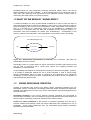
Data is a recorded set of observations (which may be quantitative or qualitative) and
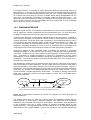
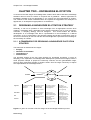
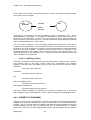
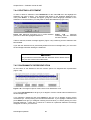
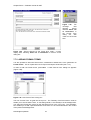
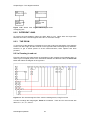
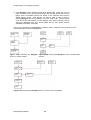
information is a continuum that has data and knowledge as two extremes (Figure 1.1).
Information, data and knowledge are distinct from understanding. Understanding is the
outcome, specific to the interpreter, of the interpretation of information, data or knowledge.
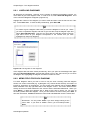
INFORMATION
understanding
data
knowledge
human mind
Figure 1.1. Diagrammatic representation of Information as a continuum, with Data and
Knowledge as the two extremes.
Knowledge is seen as a central aspect of culture, derived from education and experience, that
may be used in conjunction with a certain value system and competing priorities and
possibilities, to make decisions.
Local knowledge and indigenous knowledge have often been used interchangeably. However,
it is possible to distinguish between the two if ‘local knowledge’ is used to denote locally
derived understanding which is based on experience and observation and ‘indigenous
knowledge’ is used to denote that same understanding but modified by the incorporation of
cultural beliefs and values as well.
1.3
KNOWLEDGE BASE CREATION
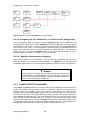
Creating a knowledge base involves four distinct stages; knowledge elicitation from the
appropriate sources, converting the knowledge elicited into simple unambiguous statements,
inputting those statements into AKT using formal representation and specifying/defining the
formal terms used.
Knowledge elicitation is the process whereby selected informants are encouraged to
articulate their knowledge. This is normally done through repeated interviews with farmers and
domain experts. Knowledge can also be abstracted from written material.
Creation of unitary statements is the process of extracting knowledge from the text or
interview material, and breaking it down into simple statements each containing one ‘unit’ of
knowledge. These ‘unitary statements’ form the intermediate stage between knowledge
articulation and representation.
Methodology
2