1
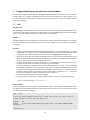
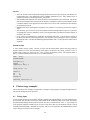
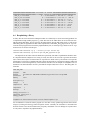
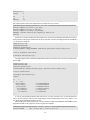
restart 0
1D
1
nfreq_bifurcate 0
matings 0
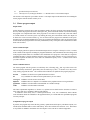
to only request a single 1D build of the fragment, which really is the whole structure, to be optimized. The
input structure, stored as an external fragment, is a linear structure known to have imaginary frequencies. If
the symmetry of a converged maximum is low, it may be possible that the opposite directions of following
the lowest frequency can give rise to different structures, in which case one may benefit from the default
nfreq_bifurcate value, as was seen in Section 6.4. In this case the input structure and the maximum
are linear structures so the displacement in the opposite direction will result in the same solution and the
nfreq_bifurcate was set to 0.
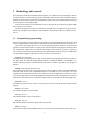
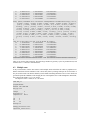
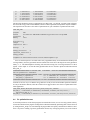
The output created does indeed show that a viable candidate was created from this:
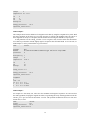
########################## CREATING 1D CANDIDATES (1) ##########################
Si4Li_1: 1D Build
E = inf R = 221.950 v = None
Si4Li_1: Opt 1 Converged
E = -0.575560063 R = 228.936 v = None
Si4Li_1: Frequencies
E = -0.575560062 R = 228.936 v = -98.08557
Si4Li_1: Aborted
E = -0.575560062 R = 228.936 v = -98.08557
Si4Li_1p: Opt 2 Not Converged
E = -0.640778775 R = 268.970 v = None
Si4Li_1p: Opt 3 Converged
E = -0.692719694 R = 276.828 v = None
Si4Li_1p: ## Viable ##
E = -0.692719704 R = 276.828 v = 24.27
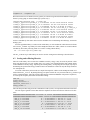
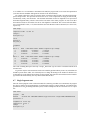
############################## INITIAL POPULATION ##############################
Si4Li_1p: population
E = -0.692719704 R = 276.828 v = 24.27
############################### START ALGORITHM ################################
##################### ALGORITHM END: CONSIDERED 0 MATINGS ######################
The run generated 1 candidate.
############################### FINAL POPULATION ###############################
Si4Li_1p: population
E = -0.692719704 R = 276.828 v = 24.27
################################### TIMINGS ####################################
6.8
Using templates
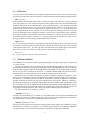
The use of templates can be a bit tricky, so one may want to make use of utility runs to verify that the input
files are created as you think the templates should, as well as that the computational program does not have
problems with it. If the latter were to happen during a regular run of the cluster program, it may quickly
generate a lot of Failed candidates.
The easiest way to get started using templates is to use the cluster program to generate the template files
that it needs based on the defaults for the program. Here we will choose a Gaussian input and work with a
system for which we have to define the basis set, i.e., the Li4 system using the def2-TZVPP basis set and
B3LYP calculations. Since initially the folder examples/tempate does not contain g09 template files the
program will create them for us and exit.
We will use two input files Li4a.in and Li4b.in where the only difference is that the Li4b.in does
not have the test 1 line in it since that is the one that will actually do the cluster search. The Li4a.in
will be used twice: first to create the template files needed and second to run the tests on the template files
after they have been modified.
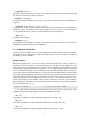
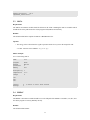
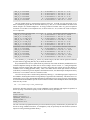
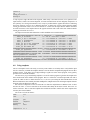
The Li4a.in looks as follows:
name
test
Li4
1
program
method
processors
memory
g09
template
8
6000
composition
Li 4
29