1
US 8,402,382 B2
3
4
fore required to manually rotate icons to vieW the additional
information. In addition, representing information on every
object properties and meta-data as Well as enhanced broWsing
techniques. What is further needed is a method, system and
side of the object constrain the potential shape of the object in
computer program product having effective and coherent
order to maintain readability of each of the sides. Represent
interaction and visualization techniques for virtual environ
ment organization.
ing information on each side of an icon can also Waste screen
real estate as there may not be any relevant information to
display for particular objects.
SUMMARY OF THE INVENTION
US. Pat. Nos. 5,838,326 and 5,847,709 to Card et al.
describes a “?ick gesture” to move documents around to
The present invention provides an improved method, sys
tem and computer program product for organizing and visu
alizing display objects Within a virtual environment.
different components of an electronic Workspace. The system
is limited because it alloWs the documents to be tossed to
?nite areas only. “Flick gestures” in the cardinal directions
In an aspect, the present invention is a method for organiz
are mapped to one-to-one onto speci?c Workspace areas. This
ing and visualizing display objects in a virtual environment
comprising: displaying the display objects in the virtual envi
limits the expressive range and number of places documents
may be moved With this technique. As Well, the use of time
ronment, the display objects representing one or more collec
tions of data; and enabling real-time user interaction With the
based gesture detection has inherent problems in recognition
resulting in inaccuracy and false positives.
In US. Pat. No. 6,677,965 to Ullmann et al. a virtual
rubber-band is created betWeen the cursor and a GUI control
such as a slider or scrollbar. This provides visual feedback and
variable rate control of the slider dependent on hoW the cursor
display objects in the virtual environment, Wherein the user
interaction With the display objects in the virtual environment
20
is moved from the GUI control. The technique is only applied
to discrete 1-dimensional positioning of GUI controls.
US. Pat. No. 6,915,489 to Gargi discloses a system that
stacks images diagonally and alloWs moving the mouse in a
is de?ned by pre-determined mechanics rules. The pre-deter
mined mechanics rules are in essence computationally simu
lated physics implemented as an interface for enriched user
interaction With display objects, e.g., ?le icons on a virtual
desktop.
25
direction to broWse them at a disjoint screen location. This
A virtual environment With simulated mechanics is advan
tageous as it alloWs objects to be dragged and tossed around
diagonal arrangement With disjoint secondary-image
With the feel of realistic characteristics such as friction and
requires a large amount of screen real estate and does not
mass, and objects can collide and displace others. Interactions
feel more continuous, analog, natural and realistic to the user,
scale Well to a very large number of items. The diagonal
layout also does not e?iciently use the space to the top-right
30
or bottom-left of the diagonal arrangement of images. Also,
this stacking technique occludes much of the images With the
ones on top of it.
US. Pat. Nos. 6,928,621, 5,583,984 and 6,307,545 to Con
rad et al. describe a “spring loaded folders” technique. Mov
35
ing the mouse and pausing over an “enclosure” opens its
WindoW temporarily While the mouse is doWn. The neW Win
doW may occlude items behind it, and broWsing Will require
40
leveraged.
an organizational entity for desktop display objects. In gen
eral, piles represent an ordered sequence display objects. In
US. Pat. No. 6,907,580 to Michelman et al. describes a
another aspect of the present invention, piles can be used to
45
convey playlists in a media context.
In yet another aspect of the present invention, ?uid inter
action techniques are used for committing actions associated
interaction, Which breaks user How and is not continuous.
In addition, US. Pat. Nos. 6,613,101 and 6,243,724 to
Mander et al. discloses a mode-based piling approach to
document organization. Gestures and interaction techniques
Were disclosed for broWsing and manipulating piles and
tion in a manner Where users are not forced to commit to
In another aspect of the present invention, piles are used as
folders.
moveable user interface element containing displayed
options for further manipulation of a selected object. HoW
ever, user interface elements are triggered by point-and-click
digital computing. This alloWs users to use the strategies they
employ in the real World to both implicitly and explicitly
convey information about the objects they oWn. The present
invention also supports the casual organization of informa
categorization, such as the immediate naming and ?ling of
documents. In this regard, users’ spatial memory and knoWl
edge of hoW things move physically in the real World is
moving the mouse cursor outside the layers of sprung open
WindoWs, and then reacquisition of potentially occluded other
rather than the discrete, rigid, mechnical style imposed by
With desktop objects.
Advantageously, the present invention provides for the
“casual organization” on a desktop. HoWever, mode-based
integration of interaction and visualization techniques into a
coherent interface that provides for the easy selection of
interaction techniques are knoWn to be problematic as users
multiple objects, distinguishing objects, enhanced interaction
often forget What mode they are in or that they need to sWitch.
and realism of objects, and enhanced broWsing techniques,
among other things.
In further aspects of the present invention, various system
In addition, their approach uses idiosyncratic gestures Which
are prone to imperfect recognition and requiring memoriza
50
55
tion are used to trigger interaction. Also, some of the tech
niques disclosed are in isolation and not integrated With each
implementations are disclosed. Furthermore, a computer pro
gram product of the present invention, in one aspect thereof,
other. For instance, sorting piles required a special mode With
is best understood as a computer application or computer
applications that When loaded on a computer is operable to
its oWn interface inside a dialog box, and is not integrated
With the main display.
In light of the foregoing, What is needed is an improved
method, system and computer program for organizing and
visualizing display objects Within a virtual environment. In
particular, What is needed is a method, system and computer
program that enables easy selection of multiple objects, dis
tinguishing objects, enhanced interaction of objects,
enhanced organization of objects, enhanced visualization of
60
facilitate the interaction and visualization techniques
described above.
BRIEF DESCRIPTION OF THE DRAWINGS
65
A detailed description of the preferred embodiments is
provided herein beloW by Way of example only and With
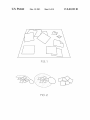
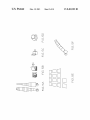
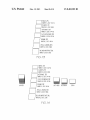
reference to the folloWing draWings, in Which: