1
Overview
intervention. Consequently, the host CPU setup and service times for each timer event are
minimized or eliminated.
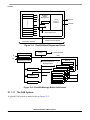
The eTPU is an enhanced version of the TPU module implemented on the MC68332 and MPC500
products. Enhancements of the eTPU include a more powerful processor which handles high-level
C code efficiently and allows for more functionality and increased performance. Although there is
no compatibility at microcode level, the eTPU maintains several features of older TPU versions
and is conceptually almost identical. The eTPU library is a superset of the standard TPU library
functions modified to take advantage of enhancements in the eTPU. These, along with a C
compiler, make it relatively easy to port older applications. By providing source code for the
Freescale library, it is possible for the eTPU to support the users own function development.
The eTPU has up to 32 timer channels in addition to having 6 Kbytes of code memory and 1.5
Kbytes of data memory that stores software modules downloaded at boot time and that can be
mixed and matched as required for any specific application.
1.3.3.1
eTPU Functions
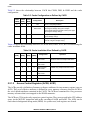
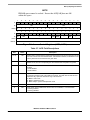
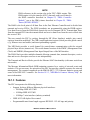
Any one of the following four sets of functions can be loaded into the device.
1.3.3.1.1 Set 1 (General)
• PWM – Full featured Pulse Width modulation
• ICOC – Input Capture / Output Compare
• PFM – Pulse and frequency measurement
• PPA – Pulse / Period Accumulate
• SM – Stepper motor
• QOM – Queued Output Match for complex outputs
• UART – Serial interface
• SPI – Synchronous serial interface
• POC – Protected Output Compare
• SPWM – Synchronized Pulse Width Modulation
• GPIO – General purpose I/O
1.3.3.1.2 Set 2 (Automotive)
• All functions from set 1
• AngleClock - Engine position decoding based on the crank tooth signal
• CamDecode - Engine position synchronization based on the cam signal
• FuelControl - Control the fuel pulse delivery
• SparkControl - Control the spark firing angle and dwell time
MCF5235 Reference Manual, Rev. 2
1-10
Freescale Semiconductor