1
AN10047
ST-NXP Wireless
Handheld devices using the ISP1582/3
1. Introduction
This document explains the application of handheld devices using the ISP1582 or
ISP1583.
2. Power mode
Handheld devices can be powered using either power-sharing mode or bus-powered
mode.
The ISP1582 supports bus-powered mode and the ISP1583 supports both bus-powered
and power-sharing modes.
2.1 Power-sharing mode
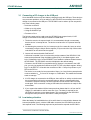
As can be seen in Fig 1, in power-sharing mode, VCC(3V3) is supplied by the output of the
5 V-to-3.3 V voltage regulator. The input to the regulator is from VBUS. VCC(I/O) is supplied
through the power source of the system. When the USB cable is plugged in, the ISP1583
goes through the power-on reset cycle. In this mode, OTG is disabled.
In power-sharing mode, it is recommended that you connect pull-up signals to VCC(I/O)
instead of VCC(3V3). This is to ensure that when VBUS is lost, interfacing signals are
properly handled. Connect RPU to VCC(3V3) through a 1.5 kΩ pull-up resistor.
Fig 1. Power-sharing mode
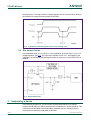
In power-sharing mode, the processor will experience continuous interrupt when VBUS is
lost; see Fig 2. This is because the default status of the interrupt pin when operating in
sharing mode with VBUS not present is LOW. To overcome this, implement external VBUS
AN10047_4
Application note
© ST-NXP Wireless. All rights reserved.
Rev. 04 — 20 February 2009
3 of 8