1
PICkit™ Serial Analyzer Firmware
11.10.3.2 TAG: SDATA:
TAG commands and data returned from the PICkit Serial Analyzer.
TABLE 11-47:
TAG /
SDATA
0x80
0x81
0x82
0x83
LEN
2
2
2
1
NAME
LIN_EVENT_BYTE_RX
LIN _EVENT_BYTE_TX
LIN _EVENT_STATUS_ERR
LIN _EVENT_BREAK_RX
DESCRIPTION
BYTE received
0
TAG
1
data
BYTE transmitted
0
TAG
1
data
status error
0
TAG
1
error byte
BREAK received
0
0x84
1
LIN _EVENT_BREAK_TX
BREAK transmitted
0
0x85
3
LIN _EVENT_AUTOBAUD
TAG
TAG
AUTOBAUD event
0
TAG
1
BAUD CODE (LSB)
2
BAUD CODE (MSB)
Those TAGs (above) identified as ‘EVENT’, generally mark the occurrence of LIN bus
activity. As with all other supported PKSA serial protocols, the ‘EVENT’ TAGs are generated when/as are detected in real time and queued in a circular buffer for transmission to the HOST. Each TAG can be individually enabled/disabled using the appropriate
configuration bit in the CONTROL BLOCK.
11.10.4 Parameter Detail
11.10.4.1 BAUD
The PKSA BAUD rate is configured by a 2-byte code as detailed in the table(s) below.
Upon initialization, the PKSA is configured with the ‘default’ BAUD specified in the
CONTROL BLOCK (bytes 22 & 23) as documented in the table above. Additionally, the
BAUD rate can be changed in the context of script execution (real time) using the
appropriate script/SCMND TAG. At all times the STATUS BLOCK reflects the currently
active BAUD rate. This BAUD rate applies to all data transmitted by the PKSA.
AUTOBAUD
The PKSA-LIN ‘monitor’ function has the flexibility to auto baud detect and modify the
PKSA hardware configuration to receive ‘messages’ from the LIN bus at the BAUD rate
being transmitted. This ‘flexibility’ must be enabled using the configuration bit in the
CONTROL BLOCK (byte 16 bit 7). The HOST can be apprised of the ‘auto baud’ detect
action through an event marker TAG.
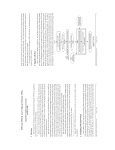
The AUTOBAUD operation depends on receiving a ‘BREAK’ (13 bits of 0s) followed by
a ‘SYNC’ (byte 0x55). Referring to the timing diagram below – the BREAK begins at ‘A’.
At ‘B’ the PKSA expected a STOP bit – the USART interrupts the PKSA (RCIF – receive
interrupt flag) and sets FERR (framing error). The PKSA interprets (1) DATA=0 and (2)
FERR (framing error) as having received a BREAK; therefore, the FERR is automati-
© 2007 Microchip Technology Inc.
DS51647B-page 123